Executive Intelligence. Industrial Risk. Geopolitics.
Strategic Sparring
for Decision-Makers
Risk intelligence across technology, law, markets and power dynamics.


Verdeckte Geschäftsrisiken, strategische Widersprüche und kritische Abhängigkeiten frühzeitig erkennen.
Kostenlose Analyse starten →
Verdeckte Machtstrukturen, Führungsrisiken und organisatorische Blockaden frühzeitig erkennen.
Kostenlose Analyse starten →
Geopolitische Risiken, globale Abhängigkeiten und kritische Lieferkettenrisiken frühzeitig erkennen.
Kostenlose Analyse starten →
Identify hidden business risks, strategic contradictions and critical dependencies at an early stage.
Start Free Analysis →
Identify hidden power structures, leadership risks and organizational blockers at an early stage.
Start Free Analysis →
Identify geopolitical risks, global dependencies and critical supply-chain vulnerabilities at an early stage.
Start Free Analysis →
Verdeckte Geschäftsrisiken, strategische Widersprüche und kritische Abhängigkeiten frühzeitig erkennen.
Kostenlose Analyse starten →
Verdeckte Machtstrukturen, Führungsrisiken und organisatorische Blockaden frühzeitig erkennen.
Kostenlose Analyse starten →
Geopolitische Risiken, globale Abhängigkeiten und kritische Lieferkettenrisiken frühzeitig erkennen.
Kostenlose Analyse starten →
Identify hidden business risks, strategic contradictions and critical dependencies at an early stage.
Start Free Analysis →
Identify hidden power structures, leadership risks and organizational blockers at an early stage.
Start Free Analysis →
Identify geopolitical risks, global dependencies and critical supply-chain vulnerabilities at an early stage.
Start Free Analysis →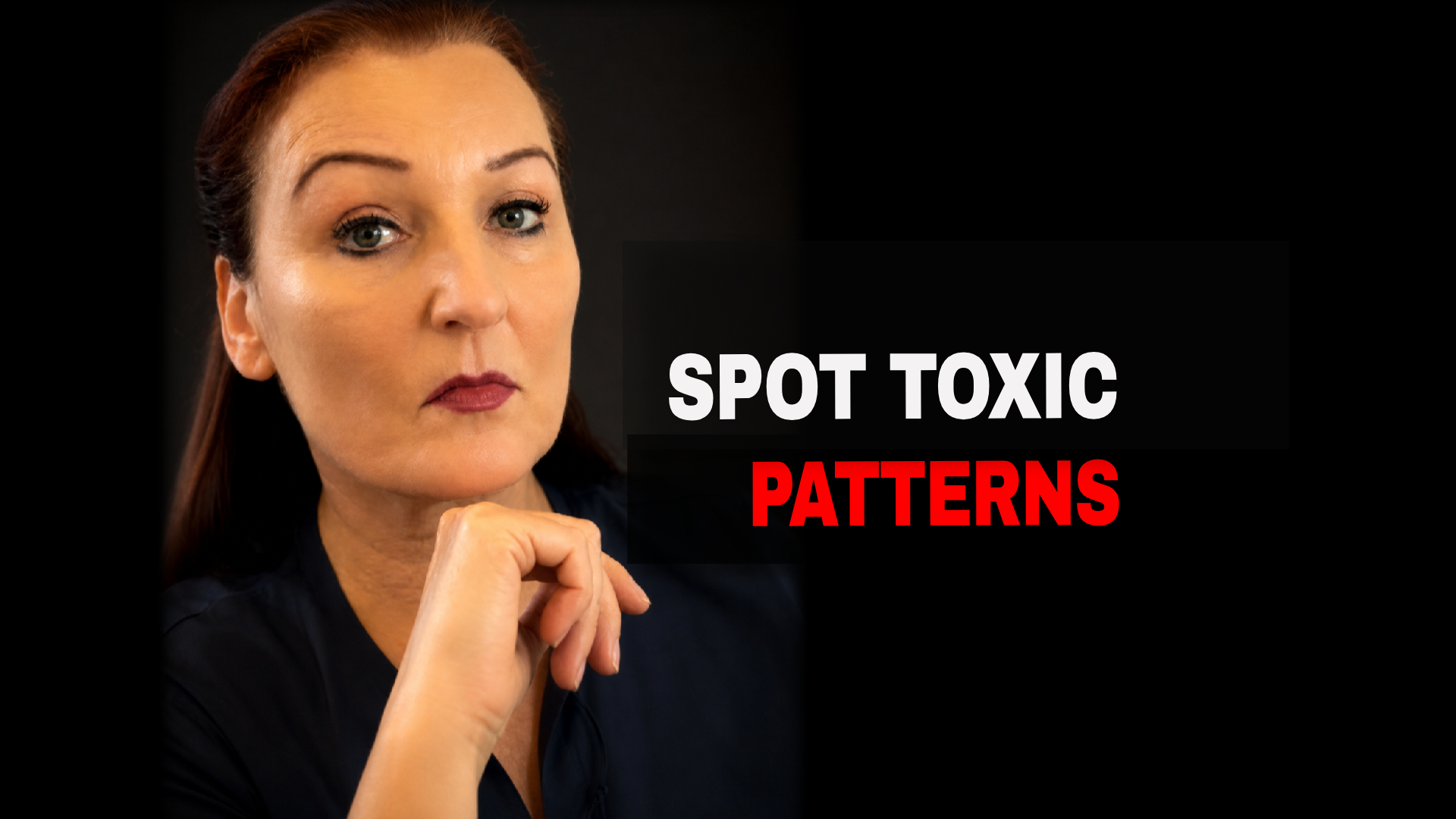
Strategic Risk Intelligence Brief by Global Insight Group.
This analysis is based on the GFDD Framework™ developed by Michaela Schaaf-Hoffelner and is designed for executives, investors and strategic decision-makers.
Updated: August 15, 2026
Have you ever walked out of a negotiation that felt calm, professional, and almost effortless, yet something still felt wrong?
There was no open conflict. No aggressive demand. No obvious pressure.
And yet you left with the uneasy sense:
Something just happened. I may have been maneuvered into a weaker position.
Often, that feeling is not caused by a stronger argument. It can come from a subtle shift in the conversational frame, where you suddenly find yourself discussing a different issue, defending a position you never took, or accepting an assumption that was never yours in the first place.
This is where communication can turn into a form of power.
The person who controls the frame can increasingly control what is discussed, what must be defended, and which position appears legitimate.
Not every difficult question is manipulative. Not every disagreement is toxic.
The problem begins when the original argument is no longer examined on its merits. Instead, the conversational frame shifts and one side is pushed into defending a position they never actually expressed.
That is the key mechanism.
Manipulative communication does not always need to defeat your argument. Sometimes it only needs to make you defend a different one.
Consider a simple, anonymized example.
Someone presents an analytical assessment. The other person does not engage with the actual reasoning. Instead, they respond with an abstract question.
That question links the original analysis to a much broader position that was never stated. The newly constructed position is then associated with negative moral or social consequences.
The exchange ends with a suggestion that the original speaker should reconsider what they supposedly want.
At first glance, this can sound sophisticated.
But look more closely.
The original argument was never answered. The frame was replaced.
“Whoever asks the questions leads the conversation” is a familiar principle in communication and negotiation.
There is nothing inherently problematic about that. Questions are essential for gathering information, testing assumptions, and clarifying positions.
The important issue is this:
What assumption is already embedded in the question?
An original position such as:
“I am arguing A.”
can quietly become:
“So are you saying B?”
If you answer immediately, you are no longer discussing A.
You are now discussing B.
The first frame shift has already occurred.
The technique becomes more effective when the new argument sounds complex, abstract, or highly conceptual.
The natural reaction may be:
“Have I overlooked something?”
That is precisely when a much simpler question becomes useful:
Does this conclusion actually follow from what I said?
If it does not, the conversation may have moved into a classic straw man argument.
A straw man argument replaces an actual position with a modified, exaggerated, or simplified version that is easier to attack.
The structure looks like this:
Statement A
→ attributed position B
→ attack on B
The key point is that statement A still has not been disproved.
The next step makes the dynamic significantly more powerful.
The newly attributed position is given a moral dimension.
The question is no longer:
“Is my analysis correct?”
It becomes:
“Am I supporting something morally questionable?”
At that point, the entire communication dynamic changes.
The recipient may feel a strong impulse to explain themselves immediately.
A factual disagreement has turned into personal justification.
The power imbalance becomes even clearer when the relationship between the two participants changes.
What began as:
Peer ↔ Peer
can become:
Lecturer → Person being lectured
or:
Evaluator → Person being evaluated
Phrases such as:
“Perhaps you should think about what you are really saying.”
can create exactly this kind of shift.
The speaker is no longer simply challenging an argument. They are positioning themselves as someone entitled to judge how the other person thinks, what they understand, or what they should reconsider.
In transactional analysis, this can resemble a shift away from adult-to-adult communication toward a parent-child dynamic.
The label is less important than the effect.
The conversation is no longer taking place on equal footing.
This is the critical moment.
The instinctive response is often:
“No, that is not what I meant.”
And that is where the defensive cycle begins.
By explaining why you do not believe B, even though you originally argued A, you make B the new centre of the discussion.
The original point disappears.
The sequence is straightforward:
Factual statement
→ frame shift
→ new position attributed
→ moral framing
→ role shift
→ pressure to justify
→ defence of the attributed position
A healthy disagreement follows a very different path:
Statement
→ clarification
→ argument tested
→ counterargument
→ evidence
→ evaluation
The decisive question is not whether someone disagrees with you.
It is whether your original argument is still being discussed at all.
Three mechanisms can reinforce each other.
First, complex language creates cognitive workload. Instead of testing the premise, the recipient starts trying to understand and answer the new construction.
Second, moral framing increases emotional pressure. What began as an analytical discussion suddenly feels personal.
Third, a lecturing or corrective tone can create a subtle authority imbalance. The other person appears to have understood something that you have supposedly failed to see.
None of this means the pattern is always deliberate.
People can use these communication habits unconsciously.
The more useful question is therefore not:
“Is this person manipulative?”
but:
“What is happening to the structure of the conversation?”
This becomes particularly relevant in negotiations.
Most negotiation techniques focus on interests, positions, questions, concessions, leverage, and information.
Those tools work well as long as both sides remain reasonably clear about what is actually being negotiated.
The situation changes when one position is quietly redefined.
If position A becomes position B without being noticed, the first task is no longer to defend B more effectively.
The first task is to recognize that the frame has changed.
This matters because whoever controls the frame can influence which risks, alternatives, assumptions, and positions are considered legitimate in the first place.
Good negotiators know how to use questions.
Strong negotiators also know how to detect the assumptions hidden inside them.
Suppose someone asks:
“So you want X?”
The intuitive response is:
“No, of course I do not want X.”
But the moment you answer that way, X has already become the subject of the discussion.
A stronger analytical response begins one step earlier:
“Where exactly does X follow from what I said?”
Now you are not defending the attributed position.
You are asking the other person to justify how that position was constructed in the first place.
That is the difference between defending yourself and testing the frame.
Before replying to a highly charged, moralised, or strongly reframed statement, ask yourself three questions:
You do not need to counter every provocation or untangle every complicated argument.
Sometimes the most important communication decision is much simpler:
First check whether it is actually your argument before you start defending it.
Author of Global Insight Group Intelligence:
Michaela Schaaf-Hoffelner has more than 35 years of experience in strategic and technical project and product management, particularly in IT, control systems and intralogistics. Through her long-standing work with complex systems, she identifies structural risks and dynamic misalignments at an early stage – risks that are often overlooked in conventional analysis.
Her focus is on making causal relationships and systemic dependencies visible and translating them into concrete strategic advantages for investors and decision-makers. Her analyses combine deep technical systems understanding with geopolitical and economic developments.
GFDD Framework™ and GFDD Diagnostics™ are proprietary analytical concepts developed by Michaela Schaaf-Hoffelner. © 2026 Global Insight Group LLC. All rights reserved.
You are currently viewing a placeholder content from X. To access the actual content, click the button below. Please note that doing so will share data with third-party providers.
More Information