Executive Intelligence. Industrial Risk. Geopolitics.
Strategic Sparring
for Decision-Makers
Risk intelligence across technology, law, markets and power dynamics.

Verdeckte Geschäftsrisiken, strategische Widersprüche und kritische Abhängigkeiten frühzeitig erkennen.
Kostenlose Analyse starten →
Verdeckte Machtstrukturen, Führungsrisiken und organisatorische Blockaden frühzeitig erkennen.
Kostenlose Analyse starten →
Geopolitische Risiken, globale Abhängigkeiten und kritische Lieferkettenrisiken frühzeitig erkennen.
Kostenlose Analyse starten →
Identify hidden business risks, strategic contradictions and critical dependencies at an early stage.
Start Free Analysis →
Identify hidden power structures, leadership risks and organizational blockers at an early stage.
Start Free Analysis →
Identify geopolitical risks, global dependencies and critical supply-chain vulnerabilities at an early stage.
Start Free Analysis →
Verdeckte Geschäftsrisiken, strategische Widersprüche und kritische Abhängigkeiten frühzeitig erkennen.
Kostenlose Analyse starten →
Verdeckte Machtstrukturen, Führungsrisiken und organisatorische Blockaden frühzeitig erkennen.
Kostenlose Analyse starten →
Geopolitische Risiken, globale Abhängigkeiten und kritische Lieferkettenrisiken frühzeitig erkennen.
Kostenlose Analyse starten →
Identify hidden business risks, strategic contradictions and critical dependencies at an early stage.
Start Free Analysis →
Identify hidden power structures, leadership risks and organizational blockers at an early stage.
Start Free Analysis →
Identify geopolitical risks, global dependencies and critical supply-chain vulnerabilities at an early stage.
Start Free Analysis →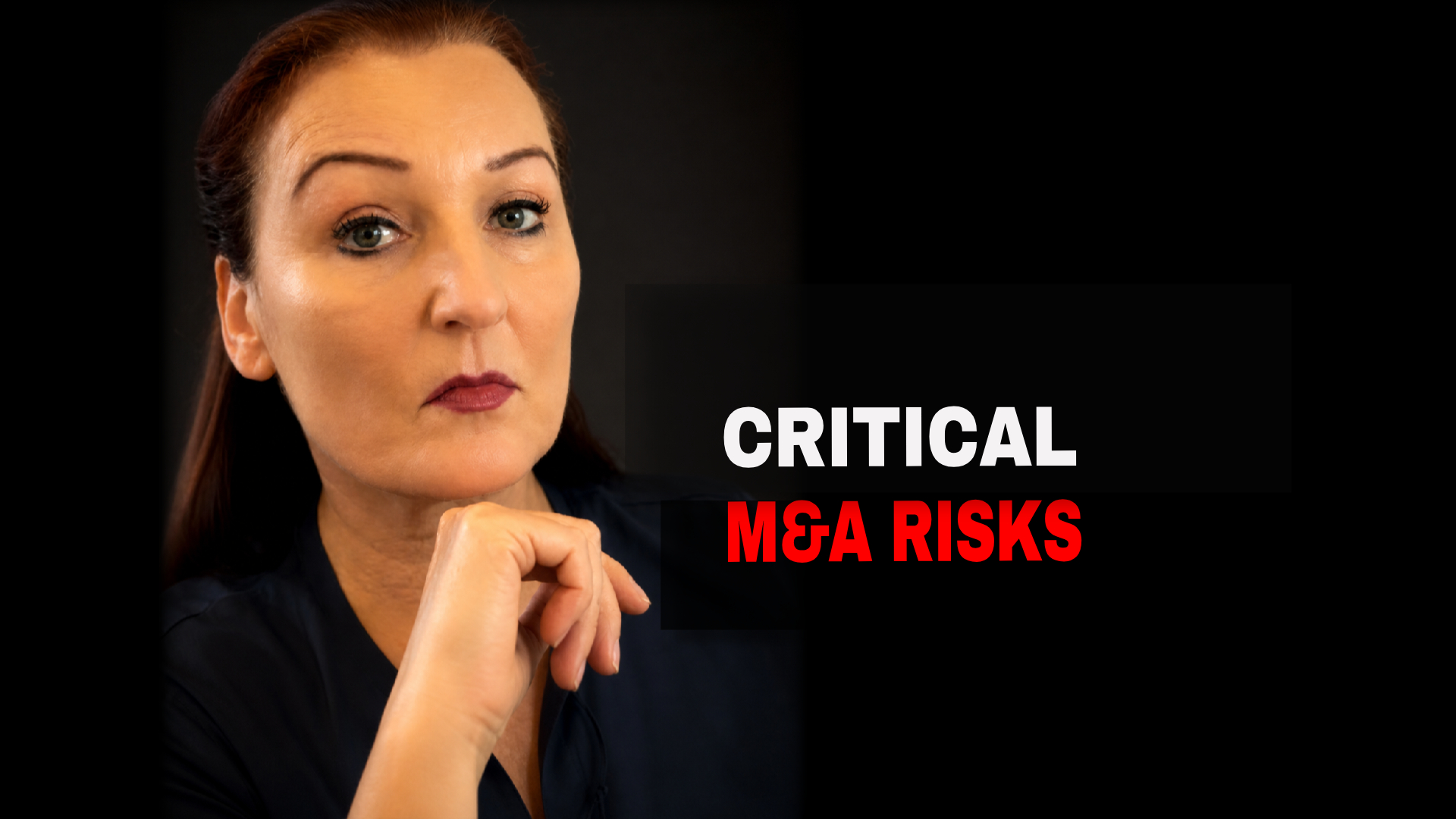
Strategic Risk Intelligence Brief by Global Insight Group.
This analysis is based on the GFDD Framework™ developed by Michaela Schaaf-Hoffelner and is designed for executives, investors and strategic decision-makers.
Updated: August 22, 2026
Internal power politics, toxic leadership, and organized denial of reality for investors, not a soft HR-topic. You can destroy expertise, information, distort, customers, scare, and a seemingly attractive company for a cultural renovation of the case to make.
It begins rarely spectacular.
No Board wakes up in the morning and decides:
Today we destroy competence, trust, and value of the company.
It happens quietly.
A Manager wants to get rid of an employee.
Do not have a clear, transparent process.
But by enough pressure so she announces best self.
You don’t do it.
So the story goes.
Later there is a new boss.
Actually, this could be all over.
But the former supervisor is familiar with the new.
We speak to each other.
Informal. Friendly. Among men who can decide about another person without that person sits on the table.
Information about Hiking.
Assessments Hiking.
And all of a sudden a termination in the room again.
In between sexual Assaults are reported.
An employee says:
Here, a limit has been exceeded.
A functioning company should now be noisy.
Instead, the operation continues to run.
The employee continues to work.
She tries to remain professional.
She tries to do even more.
She tries again and again to find a place in a System that has already begun by the time you launch.
At the end of the next termination follows.
Again, she loses her job.
The company remains the same.
At some point, this staff member will return your documents.
Not as rebellious winner.
Not as someone who is just satisfied with a poor company behind.
But a hard hit from the years before.
HR knows at least parts of the story.
And then this sentence:
‘I hope you learn something out of it.’
You must make this set.
For in him all the hubris of a dysfunctional system.
A Chef is trying to make a self-termination to enforce.
Information can be worn informally between executives.
The next job under pressure.
Reported sexual Assaults do not result from the point of view of the protection you would have expected.
It dismissals follow.
A man is leaving the company severely damaged.
And who’s going to learn something from it?
You.
Not the Management.
Not HR.
Not the organization.
You.
The story would be bad enough if they were to end here.
But she doesn’t.
Later, involved managers leave the company.
Then we speak with former employees.
You hear the complaints.
To speak with customers.
A Number Of Complaints.
Other People.
Other Situations.
And yet parts of the same pattern emerge again and again.
By now, a Governance from a personal story-question:
How many warning signals required by a company, actually, before it ceases to explain the Warner to the Problem?
Staff warn.
Former employees warn.
Warn customers.
And the organization still holds to her own narrative.
This is no more.
The organized denial of reality.
And if an organization remains in spite of new signals are convinced that, in principle, the other two are the Problem, this Governance failure a second name:
The size of madness.
The kununu culture echo 2026 is based on approximately 1.7 million culture reviews, and 42.5 million individual culture data.
And behind these millions of data points to an uncomfortable truth:
Companies tell to the outside of development, future, confidence, flexibility, and modern leadership.
Employees experience something different.
Even harder is the image management: companies with a particularly well-rated leadership, according to kununu an average recommendation rate of 96.6 percent.
In the case of particularly bad rated leadership remain just 9.3 percent left.
This is not a small difference.
This is the difference between an organization that people seem to stay, trust, and recommend and organization, prior to almost every warns that knows you from the inside.
And then perhaps the most brutal realization comes:
Performance is produced according to the employees there, where people can be more closely controlled.
It is where you familiar is.
In Germany, trust was connected to about three times more common, with a performance as a control.
Companies can call on for years, for more power, professionals are looking for, a Transformation challenge and Innovation to summon and at the same time by precisely those governance structures to prevent, to enable all of this.
You pay high salaries for competence.
You write to ‘show initiative’ in places.
They are looking for people who solve problems.
And when these people start to think for themselves, to identify the problems or make existing decisions of the question, it is exactly these expertise, suddenly uncomfortable.
Buy brains, and prohibit them from then the Thinking.
That’s not a bad mood.
This is burning potential.
And, for the first time from burning potential-burnt the value of the company.
Here, the employee ends the story.
Here begins the M&A Due Diligence.
Because what an Investor is buying, when he takes over a company in which such patterns are deeply anchored?
Patents?
Machines?
Customers?
Sales?
Yes.
But he may have bought at the same time an invisible second company:
informal power axes.
Silence culture.
damaged information.
Executives that interpret opposition as an attack.
To tell the employees that have learned nothing.
Customer frustration, which could internally be known.
And an organization, the filters of their own reality to the top until it looks pleasant.
You will not be repaired, after Closing with a two-day Leadership Workshop.
A deep damage to a firm’s culture must in the worst case, virtually rebuilt in order to be.
And that’s precisely why company culture should not be treated in the case of Acquisition as a friendly ESG in addition to a sentence.
She belongs in the assessment.
At a certain point, an Investor must face an even more unpleasant question:
What are the parts of this company I want to buy anyway?
Maybe patents are valuable.
Technology.
Infrastructure.
Customer relationships.
Single Key People.
But the growing Organisation itself is really an Asset?
Or of the buyer with their takes on the next restructuring case?
If employees, former employees and customers to deliver independently of each other similar to the warning signs, not to look a Investor in more detail.
He should be a Culture at Discount pricing.
Or go.
After all, who buys a company that sorted out his Warner and his own reality denied, buys not only assets.
He buys the bill for years of extruded problems.
And this bill can be damn expensive.
Hybris is in the M&A not unsympathetic.
Hybris is a cost risk.
Author of Global Insight Group Intelligence:
Michaela Schaaf-Hoffelner has more than 35 years of experience in strategic and technical project and product management, particularly in IT, control systems and intralogistics. Through her long-standing work with complex systems, she identifies structural risks and dynamic misalignments at an early stage – risks that are often overlooked in conventional analysis.
Her focus is on making causal relationships and systemic dependencies visible and translating them into concrete strategic advantages for investors and decision-makers. Her analyses combine deep technical systems understanding with geopolitical and economic developments.
GFDD Framework™ and GFDD Diagnostics™ are proprietary analytical concepts developed by Michaela Schaaf-Hoffelner. © 2026 Global Insight Group LLC. All rights reserved.
You are currently viewing a placeholder content from X. To access the actual content, click the button below. Please note that doing so will share data with third-party providers.
More Information