Executive Intelligence. Industrial Risk. Geopolitics.
Strategic Sparring
for Decision-Makers
Risk intelligence across technology, law, markets and power dynamics.


Verdeckte Geschäftsrisiken, strategische Widersprüche und kritische Abhängigkeiten frühzeitig erkennen.
Kostenlose Analyse starten →
Verdeckte Machtstrukturen, Führungsrisiken und organisatorische Blockaden frühzeitig erkennen.
Kostenlose Analyse starten →
Geopolitische Risiken, globale Abhängigkeiten und kritische Lieferkettenrisiken frühzeitig erkennen.
Kostenlose Analyse starten →
Identify hidden business risks, strategic contradictions and critical dependencies at an early stage.
Start Free Analysis →
Identify hidden power structures, leadership risks and organizational blockers at an early stage.
Start Free Analysis →
Identify geopolitical risks, global dependencies and critical supply-chain vulnerabilities at an early stage.
Start Free Analysis →
Verdeckte Geschäftsrisiken, strategische Widersprüche und kritische Abhängigkeiten frühzeitig erkennen.
Kostenlose Analyse starten →
Verdeckte Machtstrukturen, Führungsrisiken und organisatorische Blockaden frühzeitig erkennen.
Kostenlose Analyse starten →
Geopolitische Risiken, globale Abhängigkeiten und kritische Lieferkettenrisiken frühzeitig erkennen.
Kostenlose Analyse starten →
Identify hidden business risks, strategic contradictions and critical dependencies at an early stage.
Start Free Analysis →
Identify hidden power structures, leadership risks and organizational blockers at an early stage.
Start Free Analysis →
Identify geopolitical risks, global dependencies and critical supply-chain vulnerabilities at an early stage.
Start Free Analysis →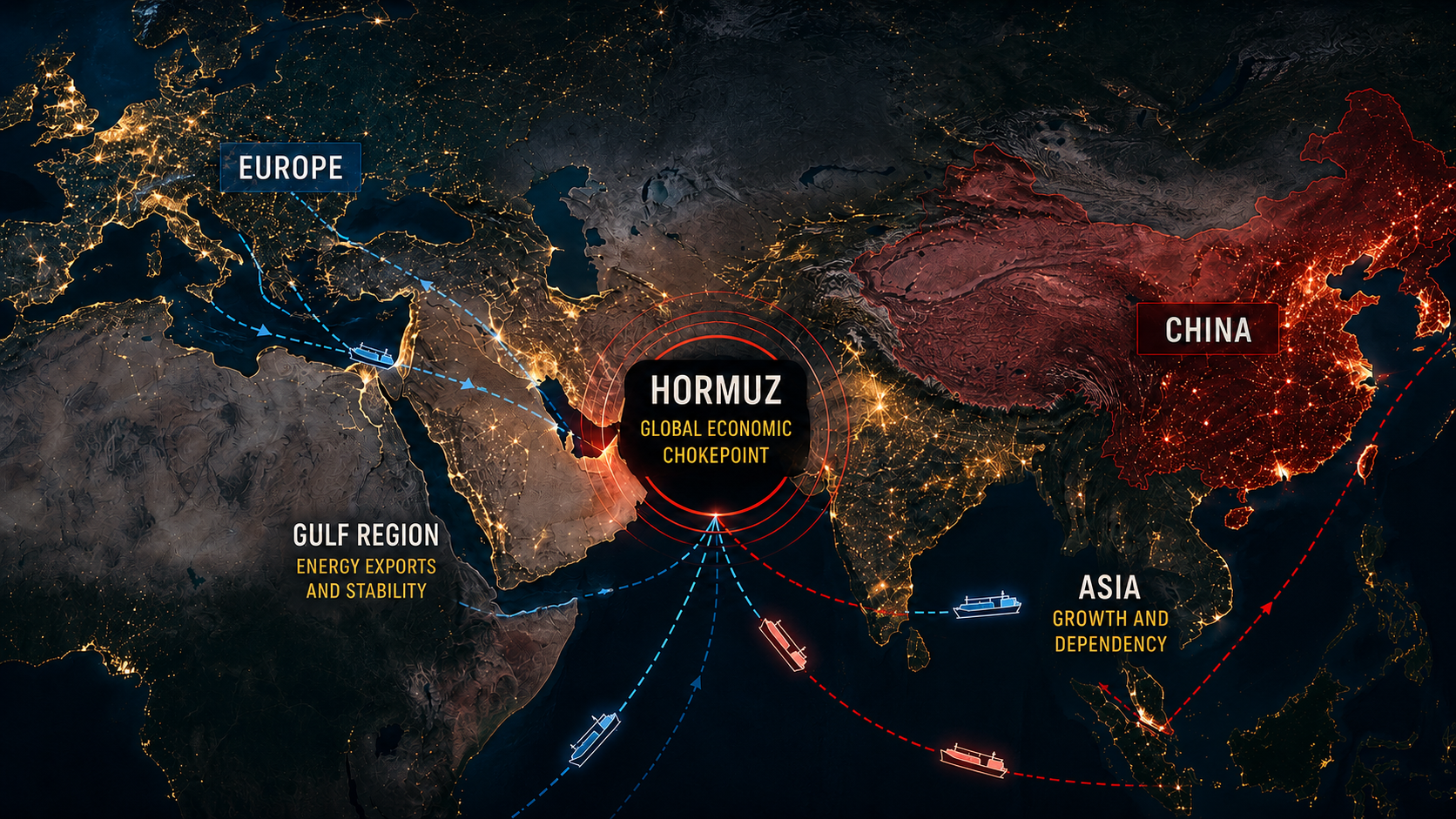
This Chokepoint Check assesses the current pressure on the Strait of Hormuz, Bab al-Mandab and critical water, power, port and energy infrastructure across the Gulf region. The key question is not merely whether a route remains geographically open, but whether transport, insurance, energy supply and site operations remain operationally viable.
Mine risk and repeated attacks are increasing the physical threat to large tankers and commercial vessels at the same time.
Iran reported a mine strike on a supertanker carrying more than two million barrels of crude oil. Two additional vessels were attacked off Saudi Arabia.
The Yemen conflict is intensifying simultaneously around civilian aviation infrastructure and along the strategic Red Sea coast.
Two missiles struck the grounds of Aden Airport. In parallel, the Saudi-led coalition attacked alleged Houthi smuggling targets in Hodeidah.
For the first time, Yanbu, a central Saudi export hub designed to bypass Hormuz, has moved directly into the target spectrum.
The Saudi-led coalition intercepted a ballistic missile heading toward Yanbu. No damage was reported.
Iran’s Revolutionary Guards reported that a supertanker carrying more than two million barrels of crude oil struck a naval mine and caught fire.
The vessel’s name, flag and extent of damage were initially not disclosed. UKMTO also reported two additional attacks on vessels off Saudi Arabia’s Gulf coast.
Mine risk fundamentally changes navigation and insurability. Large crude tankers also face significant total-loss and environmental risks.
Verification status: partially confirmed. The additional vessel attacks are under investigation by UKMTO; the supertanker mine strike is so far based on Iranian statements. Associated Press, October 17, 2026 · SchaafMedia: Iran Check – 5 Escalation Signals from October 16, 2026
Two missiles struck the grounds of Aden Airport. A Yemenia aircraft bound for Cairo was preparing for departure at the time.
The impacts were around 500 metres from the aircraft and approximately 100 metres from the runway. No casualties were reported.
The attack increases risks for passengers, crews and cargo. Airlines must prepare for short-notice disruptions and diversions.
Verification status: confirmed for the missile impacts and their proximity to the aircraft. Yemeni authorities blame the Houthis; no immediate Houthi confirmation was initially available. The National, October 17, 2026 · SchaafMedia: Middle East Escalation Check from October 15, 2026
The Saudi-led coalition reported intercepting a ballistic missile heading toward the Red Sea city of Yanbu.
Yanbu is a key Saudi oil export hub through which crude can reach global markets without transiting Hormuz.
A successful strike could weaken Saudi Arabia’s most important logistics alternative to Hormuz and increase export, insurance and price risks.
Verification status: confirmed for the missile flight and interception. The coalition initially did not publicly identify the attacker. Reuters / Internazionale, October 17, 2026 · SchaafMedia: Chokepoint Check – Hormuz, Trade Routes & Supply Chain Risks
The Saudi-led coalition released footage of strikes on trucks, boats and storage sites in Hodeidah from October 16.
The coalition describes the targets as part of a maritime Houthi weapons-smuggling network. Two missile launchers in Saada were also destroyed.
Intensification along the Red Sea coast increases risks for port logistics, coastal shipping and Bab al-Mandab. No direct port disruption was reported.
Verification status: confirmed for the executed air strikes. The classification of the targeted facilities as a smuggling network comes from the coalition. Arab News, October 17, 2026 · SchaafMedia: Middle East Escalation Check from October 15, 2026
President Abdel Fattah El Sisi called an extraordinary parliamentary session for October 17 on possible defence support for Saudi Arabia.
Sisi said Egypt would support measures to protect Saudi security and sovereignty if requested. He explicitly described such support as defensive.
Egyptian involvement would broaden the circle of external actors. This could alter Red Sea security, air defence and regional deterrence.
Verification status: confirmed for Sisi’s statement and the parliamentary initiative. No concrete Egyptian troop deployment or combat mission has yet been approved. Gulf News, October 17, 2026 · SchaafMedia: Iran Check – 5 Escalation Signals from October 16, 2026
A supertanker reportedly hits a mine, Aden Airport is struck and Yanbu is threatened by a ballistic missile.
Ships must avoid mine and attack zones, aviation becomes less predictable and Saudi air defence protects alternative export corridors.
If Hormuz and Yanbu are threatened simultaneously, Gulf exports lose part of their most important logistics redundancy.
War-risk, freight, energy and sourcing costs remain high and become more sensitive to further attacks.
Mine risk, further vessel attacks and repeated physical strikes are simultaneously affecting Gulf shipping.
Geographic passage remains possible · normal safe and insurable commercial use is not guaranteedAden Airport is struck, while Yanbu is simultaneously targeted as a strategic oil export hub.
Civil aviation and strategic energy-export infrastructure are simultaneously within the direct target spectrumHormuz risk, Red Sea fighting, export hubs and external actors are escalating in parallel.
Maritime security, energy exports, aviation and regional security architecture are simultaneously interconnectedOverall risk rises back to critical. The 5/5 Hormuz signal is reinforced by two high-to-critical operational developments: the attack on Aden Airport and the direct threat to the Yanbu oil export hub. At the same time, the Red Sea front is intensifying, while Egypt is emerging as an additional external actor considering possible defence support.
Disclaimer: This assessment was prepared with support from our Geo AI. AI can make mistakes. This analysis is intended as a source-based radar for potential escalation signals and does not constitute fully verified intelligence, security, insurance or investment advice. In fast-moving situations, status, source availability and risk assessments may change at short notice.
Independent of the subject covered in this article, this separate Executive Briefing provides an in-depth analysis of another critical risk domain affecting European companies.
The 27-page Executive Briefing “Black Swan Risk Mapping for Europe’s Next Mobility and Infrastructure Shock” examines how geopolitical, infrastructural and administrative developments that are currently viewed in isolation could reinforce one another.
Based on the GFDD Framework™, the report shows how these dynamics could affect operational continuity, access to critical resources and the strategic resilience of companies.
The briefing includes a structured systemic-shock analysis and a directly applicable Business Exposure Checklist for CEOs, CFOs, COOs, investors and strategy teams.
You are currently viewing a placeholder content from X. To access the actual content, click the button below. Please note that doing so will share data with third-party providers.
More Information