Executive Intelligence. Industrial Risk. Geopolitics.
Strategic Sparring
for Decision-Makers
Risk intelligence across technology, law, markets and power dynamics.


Verdeckte Geschäftsrisiken, strategische Widersprüche und kritische Abhängigkeiten frühzeitig erkennen.
Kostenlose Analyse starten →
Verdeckte Machtstrukturen, Führungsrisiken und organisatorische Blockaden frühzeitig erkennen.
Kostenlose Analyse starten →
Geopolitische Risiken, globale Abhängigkeiten und kritische Lieferkettenrisiken frühzeitig erkennen.
Kostenlose Analyse starten →
Identify hidden business risks, strategic contradictions and critical dependencies at an early stage.
Start Free Analysis →
Identify hidden power structures, leadership risks and organizational blockers at an early stage.
Start Free Analysis →
Identify geopolitical risks, global dependencies and critical supply-chain vulnerabilities at an early stage.
Start Free Analysis →
Verdeckte Geschäftsrisiken, strategische Widersprüche und kritische Abhängigkeiten frühzeitig erkennen.
Kostenlose Analyse starten →
Verdeckte Machtstrukturen, Führungsrisiken und organisatorische Blockaden frühzeitig erkennen.
Kostenlose Analyse starten →
Geopolitische Risiken, globale Abhängigkeiten und kritische Lieferkettenrisiken frühzeitig erkennen.
Kostenlose Analyse starten →
Identify hidden business risks, strategic contradictions and critical dependencies at an early stage.
Start Free Analysis →
Identify hidden power structures, leadership risks and organizational blockers at an early stage.
Start Free Analysis →
Identify geopolitical risks, global dependencies and critical supply-chain vulnerabilities at an early stage.
Start Free Analysis →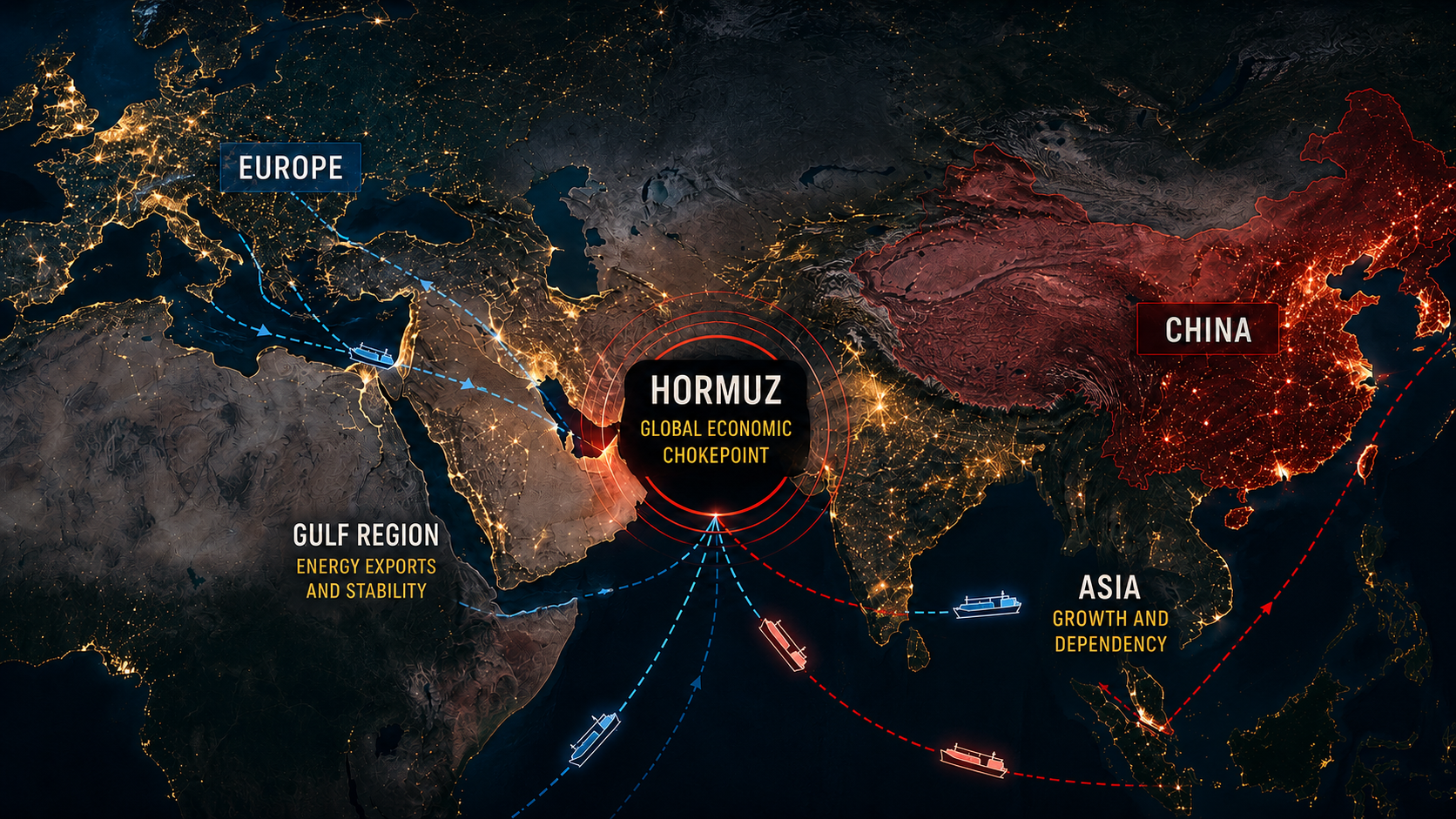
This Chokepoint Check assesses the current pressure on the Strait of Hormuz, Bab al-Mandab and critical water, power, port and energy infrastructure across the Gulf region. The key question is not merely whether a route remains geographically open, but whether transport, insurance, energy supply and site operations remain operationally viable.
The mine threat is adding another severe layer of physical risk to the Gulf’s most important chokepoint.
According to the IRGC, two tankers carrying around two million barrels of crude each caught fire after striking naval mines. Their identities and full damage remain partly unclear.
The Yemen front is escalating further; a major attack in Shabwa increases military pressure across the southern Red Sea theatre.
Three ballistic missiles struck the Al-Alam training camp. At least 53 people were killed and around 200 injured.
Saudi aviation, energy and military infrastructure remains continuously exposed despite successful interceptions.
Two ballistic missiles and several drones were intercepted. Additional UAVs were destroyed over Riyadh and the Eastern Region.
According to the IRGC, two tankers carrying around two million barrels of crude each struck naval mines and subsequently caught fire.
The vessel names and origin of the cargo were initially not disclosed. The new mine report nevertheless follows an already sharply elevated level of attacks around Hormuz.
Mines significantly increase navigation, crew and total-loss risks. Transit planning and war-risk coverage become even more difficult.
Verification status: partially confirmed. The mine strikes are based on Iranian statements; the identities and full extent of damage to the vessels remain unclear. Al Jazeera / AFP, October 18, 2026 · SchaafMedia: Iran Check – 5 Escalation Signals from October 18, 2026
Three ballistic missiles struck the Al-Alam training camp in the southern province of Shabwa on October 19.
At least 53 government fighters were killed and around 200 injured. The attack marks a significant expansion of heavy missile warfare inside Yemen.
Further escalation in southern Yemen increases risks for personnel, port logistics, inland transport and Red Sea access routes.
Verification status: confirmed by local government and military authorities as well as Associated Press. Casualty figures may still change. Associated Press, October 19, 2026 · SchaafMedia: Middle East Escalation Check from October 17, 2026
Egypt’s National Defence Council decided on October 18 to provide Saudi Arabia with all necessary and possible forms of support.
Parliament continues to discuss the specific authorisation. No troop deployment has yet been approved, but the political threshold has clearly fallen.
Potential Egyptian involvement expands the regional security architecture to include a major military power and could affect Red Sea security and air defence.
Verification status: confirmed by the Egyptian Presidency. The scope and operational form of support have not yet been finalised. Egyptian Presidency, October 18, 2026 · SchaafMedia: Middle East Escalation Check from October 17, 2026
Pakistan’s military spokesman said Islamabad is already providing Saudi Arabia with all necessary support for the defence of the Kingdom.
He referred to the joint defence framework involving Saudi Arabia and Türkiye, including its General Secretariat and Strategic Political and Defence Committee. Specific operational details remain undisclosed.
Regional deterrence is gaining greater operational depth. At the same time, interdependencies and potential mutual-support responses to further attacks are increasing.
Verification status: confirmed for Pakistan’s support commitment. The type and scale of any ongoing operational assistance were not disclosed. Radio Pakistan / ISPR, October 19, 2026 · SchaafMedia: Iran Check – 5 Escalation Signals from October 18, 2026
Saudi air defences destroyed two ballistic missiles as well as several drones. Additional UAVs were intercepted over Riyadh and the Eastern Region.
The interceptions prevented confirmed major damage. The intensity of attacks nevertheless shows that civilian, military and energy infrastructure remains exposed.
Site, travel and business-continuity risks remain high. Repeated alerts increase security and operating costs.
Verification status: confirmed by the Saudi-led coalition. No major damage from the intercepted attacks was reported. Arab News, October 18, 2026 · SchaafMedia: Iran Check – 5 Escalation Signals from October 18, 2026
Mines threaten large tankers in Hormuz, while ballistic missiles cause heavy losses in Yemen and trigger further air-defence operations in Saudi Arabia.
Ships, air defences and regional armed forces continuously adapt routes, protection measures and defence cooperation.
More military resources are tied up in protecting shipping, airspace and regional mutual-support mechanisms.
War-risk, energy, transport and site-continuity costs remain high and increasingly sensitive to further attacks.
Two new mine strikes on loaded tankers are being reported, while attacks have already risen sharply.
Passage remains geographically possible · mine and attack intensity prevent reliably safe commercial useSaudi Arabia reports new missile and drone attacks across several regions and continued air-defence activity.
Civilian, military and energy infrastructure remains continuously exposed to a real aerial attack riskHormuz mine risk, heavy fighting in Yemen and new Egyptian and Pakistani support signals are unfolding simultaneously.
Chokepoint, infrastructure, military and alliance risks are now systemically interconnectedOverall risk remains critical. The 5/5 Hormuz signal is reinforced by the high-to-critical missile strike in Shabwa as well as three confirmed 3/5 signals: growing Egyptian and Pakistani defence support and continued air-defence pressure on Saudi Arabia. The escalation is therefore becoming interconnected not only geographically, but increasingly institutionally as well.
Disclaimer: This assessment was prepared with support from our Geo AI. AI can make mistakes. This analysis is intended as a source-based radar for potential escalation signals and does not constitute fully verified intelligence, security, insurance or investment advice. In fast-moving situations, status, source availability and risk assessments may change at short notice.
Independent of the subject covered in this article, this separate Executive Briefing provides an in-depth analysis of another critical risk domain affecting European companies.
The 27-page Executive Briefing “Black Swan Risk Mapping for Europe’s Next Mobility and Infrastructure Shock” examines how geopolitical, infrastructural and administrative developments that are currently viewed in isolation could reinforce one another.
Based on the GFDD Framework™, the report shows how these dynamics could affect operational continuity, access to critical resources and the strategic resilience of companies.
The briefing includes a structured systemic-shock analysis and a directly applicable Business Exposure Checklist for CEOs, CFOs, COOs, investors and strategy teams.
You are currently viewing a placeholder content from X. To access the actual content, click the button below. Please note that doing so will share data with third-party providers.
More Information