Executive Intelligence. Industrial Risk. Geopolitics.
Strategic Sparring
for Decision-Makers
Risk intelligence across technology, law, markets and power dynamics.


Verdeckte Geschäftsrisiken, strategische Widersprüche und kritische Abhängigkeiten frühzeitig erkennen.
Kostenlose Analyse starten →
Verdeckte Machtstrukturen, Führungsrisiken und organisatorische Blockaden frühzeitig erkennen.
Kostenlose Analyse starten →
Geopolitische Risiken, globale Abhängigkeiten und kritische Lieferkettenrisiken frühzeitig erkennen.
Kostenlose Analyse starten →
Identify hidden business risks, strategic contradictions and critical dependencies at an early stage.
Start Free Analysis →
Identify hidden power structures, leadership risks and organizational blockers at an early stage.
Start Free Analysis →
Identify geopolitical risks, global dependencies and critical supply-chain vulnerabilities at an early stage.
Start Free Analysis →
Verdeckte Geschäftsrisiken, strategische Widersprüche und kritische Abhängigkeiten frühzeitig erkennen.
Kostenlose Analyse starten →
Verdeckte Machtstrukturen, Führungsrisiken und organisatorische Blockaden frühzeitig erkennen.
Kostenlose Analyse starten →
Geopolitische Risiken, globale Abhängigkeiten und kritische Lieferkettenrisiken frühzeitig erkennen.
Kostenlose Analyse starten →
Identify hidden business risks, strategic contradictions and critical dependencies at an early stage.
Start Free Analysis →
Identify hidden power structures, leadership risks and organizational blockers at an early stage.
Start Free Analysis →
Identify geopolitical risks, global dependencies and critical supply-chain vulnerabilities at an early stage.
Start Free Analysis →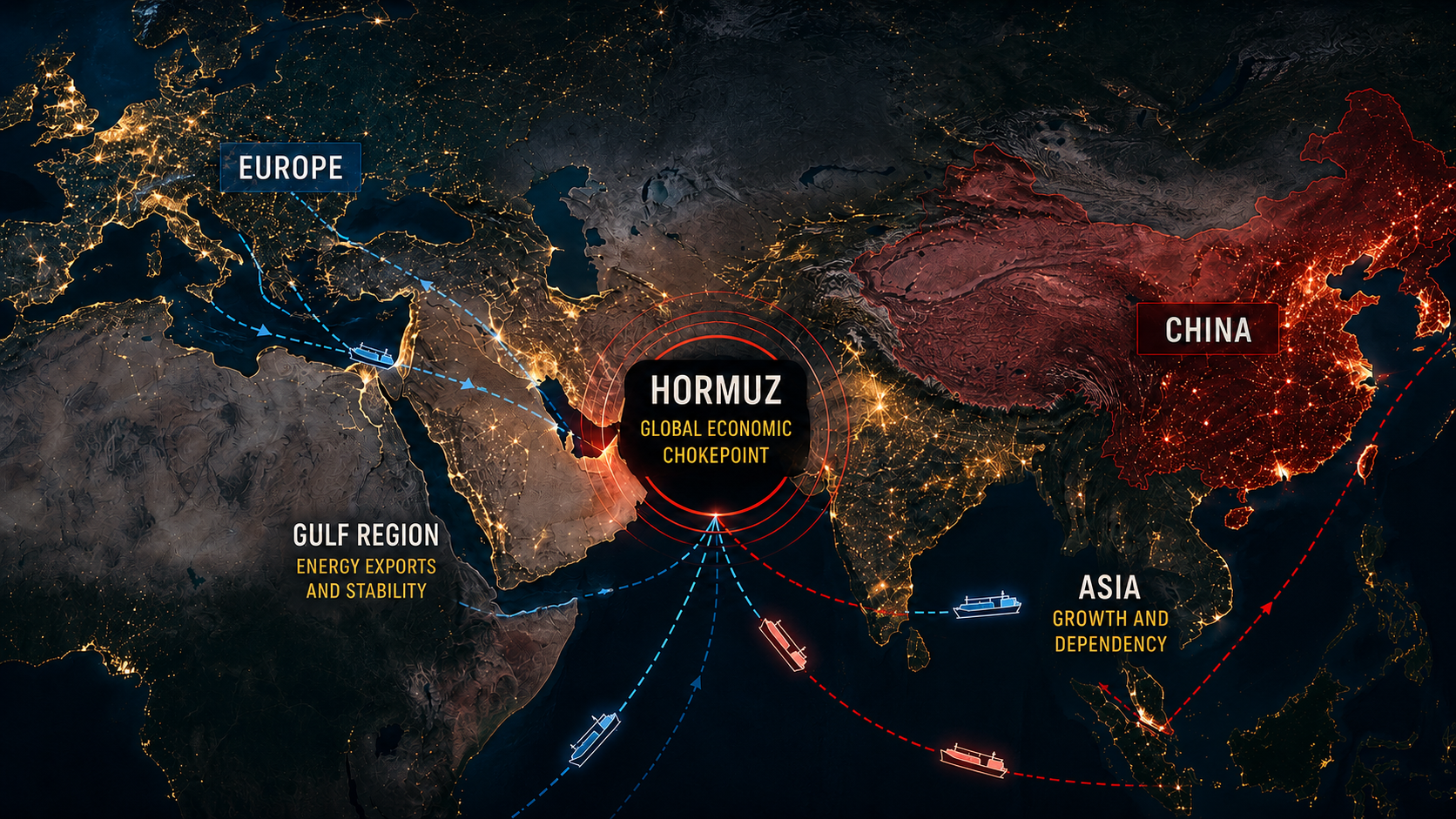
This Chokepoint Check assesses current pressure on the Strait of Hormuz, Bab al-Mandab and critical water, power, port and energy infrastructure across the Gulf region. The key question is not simply whether a route remains geographically open, but whether shipping, insurance, energy supply and business operations remain operationally viable.
On November 14, Iran reported that an oil tanker caught fire after allegedly striking a naval mine in the eastern Strait of Hormuz. Reuters could not independently verify the incident.
Previous confirmed vessel strikes demonstrate the continuing maritime threat. The US blockade of Iranian ports and Iranian transit restrictions remain in place.
On November 13, the Houthis claimed two ballistic missile attacks against Saudi forces in Jazan, along with strikes against additional infrastructure.
Saudi Arabia has not confirmed these reported strikes. No sufficiently verified new attack directly against commercial vessels in Bab al-Mandab has been identified for November 13–14.
The Houthis claim to have attacked Riyadh airport, a pumping station along the East-West Pipeline and Saudi military targets in Jazan.
No new impacts or production shutdowns have been independently confirmed. The pipeline nevertheless remains strategically exposed as an alternative export route bypassing Hormuz.
On November 14, Iran’s navy stated that an oil tanker had struck a naval mine that morning in the eastern Strait of Hormuz and subsequently caught fire.
Reuters could not independently verify the new incident. Iran had already reported further mine strikes on November 13. Previously confirmed vessel damage demonstrates that the maritime threat remains real.
Repeated reports increase uncertainty over safe transit corridors, vessel protection and insurability. No specific new cargo losses or supply disruptions arising from the alleged incident have been established.
Verification status: unclear for the new mine strike. Iran’s statement is documented, but the alleged vessel fire remains independently unverified. Reuters, November 14, 2026 · SchaafMedia: Iran Check from November 13, 2026 – Tanker and Mine Risks
On November 13, CENTCOM confirmed shooting down two Iranian attack drones heading towards Bahrain. Iran’s Revolutionary Guards simultaneously claimed to have struck an American early-warning radar installation.
Washington denies that the radar was struck and reports no damage or casualties. Iran described the attack as retaliation for a strike on a telecommunications facility in the southern Iranian region of Sirik.
The confirmed drone incident increases the risk of direct military retaliation between Iran and the United States in the Gulf. US bases, aviation, port facilities and international businesses in Bahrain remain exposed to security threats.
Verification status: partially confirmed. The US interception of two drones is officially confirmed; the alleged radar strike is not. Reuters, November 13, 2026 · SchaafMedia: Iran Check from November 13, 2026 – US and Bahrain
Turkey and Qatar signed a mutual defence agreement on November 13. On November 14, Turkish legislation approving ratification of the Makkah Pact with Saudi Arabia and Pakistan also entered into force.
Both agreements strengthen military cooperation and collective deterrence. The Makkah Pact provides for assistance following attacks, but does not automatically require combat deployment. Its entry into force depends on completion of the required ratification procedures.
Turkey is becoming a more important strategic link between Qatar, Saudi Arabia and Pakistan. This reshapes regional security guarantees, military logistics and long-term business location decisions. No immediate troop deployment has been confirmed.
Verification status: confirmed for both political and legal developments. Neither step automatically triggers joint military intervention. The National, November 14, 2026 · SchaafMedia: Middle East Escalation Check from November 12, 2026 – Regional Security Context
On November 13, the Houthis claimed to have launched two ballistic missiles at Saudi forces near Al-Tuwal in Jazan. They also claimed attacks on Riyadh airport and a pumping station along the East-West Pipeline.
Saudi Arabia has not confirmed these alleged strikes. Civil defence authorities had previously issued an all-clear for Jazan. The region hosts an Aramco refinery with a capacity of 400,000 barrels per day. No new refinery shutdown was reported.
The claimed attacks target military, aviation and energy infrastructure. The East-West Pipeline remains particularly sensitive, carrying approximately four million barrels of crude oil per day to Yanbu as an alternative to Hormuz.
Verification status: unclear for the alleged strikes. Houthi claims are documented, but Saudi confirmation of damage is lacking. Reuters, November 13, 2026 · SchaafMedia: Middle East Escalation Check from November 12, 2026 – Saudi Arabia and Infrastructure
Reuters reported on November 14 that Trump was considering postponing further large-scale strikes against Iran unless new provocations occurred. Saudi Arabia and Turkey are urging restraint, while Israel is advocating renewed US attacks.
The assessment relies partly on anonymous government sources. No final decision is known. Meanwhile, the US military is deploying a third aircraft carrier to the region. Diplomatic restraint and military preparedness are therefore proceeding simultaneously.
Avoiding further large-scale strikes could limit the near-term risk of escalation. However, continued military deployments and conflicting interests between Israel and regional mediators prevent any reliable all-clear for businesses.
Verification status: partially confirmed. Reuters reports on policy deliberations and military deployments; no binding decision to refrain from further strikes has been made. Reuters, November 14, 2026 · SchaafMedia: Iran Check from November 13, 2026 – US, Israel and Gulf States
Further mine strikes are reported. Iranian drones threaten Bahrain, while the Houthis claim attacks on Saudi targets.
US air defences engage incoming threats. Shipping operators and energy companies must strengthen security and transport planning.
Hormuz remains restricted, while Saudi Arabia’s alternative export pipeline remains exposed. No new confirmed export shutdowns have been reported.
Oil, LNG, insurability and delivery schedules remain exposed to significant risks. New defence agreements are reshaping the longer-term regional security architecture.
Iran reports further mine strikes. Previous vessel damage and continuing transit restrictions confirm the substantial risk to maritime operations.
Maritime security threat confirmed · new Iranian mine-strike claims remain unverifiedIranian attack drones are intercepted while heading towards Bahrain. The Houthis report further attacks on Saudi airport and pipeline infrastructure.
Direct military threat confirmed · no new large-scale infrastructure outages establishedIran-US incidents, Hormuz-related risks and two new Turkish defence initiatives are simultaneously reshaping the regional security order.
Military conflict linkages and alliance formation confirmed · no automatic alliance interventionOverall risk remains high to critical (4/5). Three signals at 4/5 concern Hormuz, the confirmed Iran-US drone confrontation and the emerging defence architecture. One signal at 3/5 concerns Houthi missiles and Saudi infrastructure. One signal at 2/5 reflects Washington’s potential restraint. Operational threats and regional alliance formation outweigh de-escalation initiatives that have yet to become binding.
Disclaimer: This assessment was prepared with support from our Geo AI. AI can make mistakes. This overview serves as a source-based radar for potential escalation signals and does not constitute fully verified intelligence, security, insurance or investment advice. In rapidly evolving situations, operational status, source availability and risk assessments may change at short notice.
You are currently viewing a placeholder content from X. To access the actual content, click the button below. Please note that doing so will share data with third-party providers.
More Information