Executive Intelligence. Industrial Risk. Geopolitics.
Strategic Sparring
for Decision-Makers
Risk intelligence across technology, law, markets and power dynamics.


Verdeckte Geschäftsrisiken, strategische Widersprüche und kritische Abhängigkeiten frühzeitig erkennen.
Kostenlose Analyse starten →
Verdeckte Machtstrukturen, Führungsrisiken und organisatorische Blockaden frühzeitig erkennen.
Kostenlose Analyse starten →
Geopolitische Risiken, globale Abhängigkeiten und kritische Lieferkettenrisiken frühzeitig erkennen.
Kostenlose Analyse starten →
Identify hidden business risks, strategic contradictions and critical dependencies at an early stage.
Start Free Analysis →
Identify hidden power structures, leadership risks and organizational blockers at an early stage.
Start Free Analysis →
Identify geopolitical risks, global dependencies and critical supply-chain vulnerabilities at an early stage.
Start Free Analysis →
Verdeckte Geschäftsrisiken, strategische Widersprüche und kritische Abhängigkeiten frühzeitig erkennen.
Kostenlose Analyse starten →
Verdeckte Machtstrukturen, Führungsrisiken und organisatorische Blockaden frühzeitig erkennen.
Kostenlose Analyse starten →
Geopolitische Risiken, globale Abhängigkeiten und kritische Lieferkettenrisiken frühzeitig erkennen.
Kostenlose Analyse starten →
Identify hidden business risks, strategic contradictions and critical dependencies at an early stage.
Start Free Analysis →
Identify hidden power structures, leadership risks and organizational blockers at an early stage.
Start Free Analysis →
Identify geopolitical risks, global dependencies and critical supply-chain vulnerabilities at an early stage.
Start Free Analysis →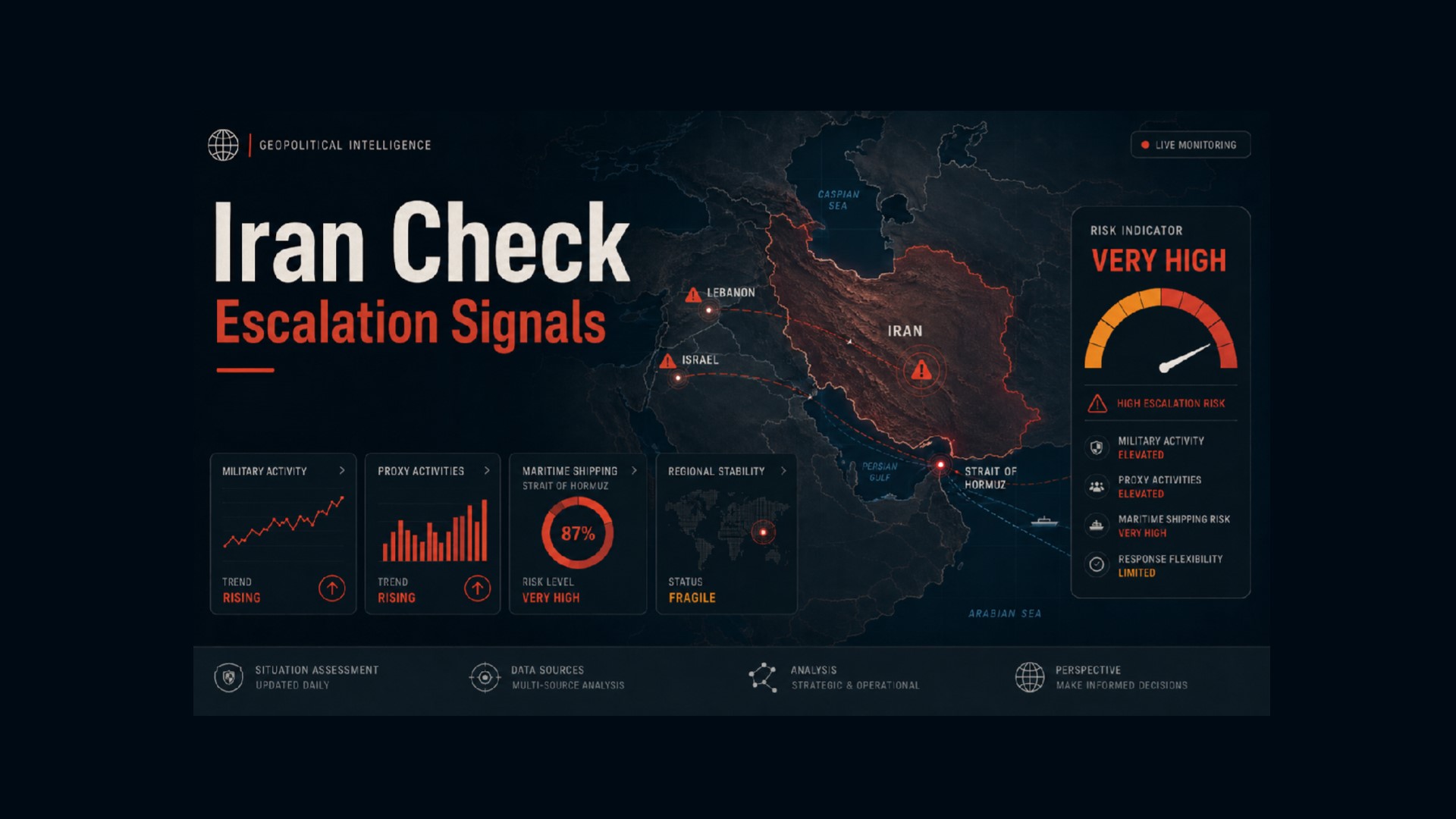
This escalation radar summarizes five relevant signals from 10.06.2026 and the period since 06.06.2026. The focus is on verifiable official statements and events with potential impact on energy prices, supply chains, markets, and regional security.
After US strikes near Hormuz, Iran reported attacks on US targets in Jordan, Kuwait, and Bahrain.
The US President warned that Iran would “have to pay the price” after attacks on US targets.
Israeli strikes on Beirut and continued Hezbollah activity keep the Iran-Israel escalation dynamic open.
| Actor | Type | Severity | Status | Source / Verification status | Business impact |
|---|---|---|---|---|---|
| Iran / Revolutionary Guards / Foreign Ministry | Retaliation against US targets | Critical | Iran reported attacks on US bases in Jordan, Kuwait, and Bahrain in response to US strikes against Iranian targets near the Strait of Hormuz. Iran’s Foreign Ministry condemned the US attacks as a further violation of the ceasefire and indicated that Tehran would reassess its diplomatic approach toward Washington. | Confirmed by Reuters, 10.06.2026. The exact hit assessment and military effect of individual attacks require separate verification. | Very high risk for US bases, regional air defense, oil and LNG routes, insurance, Gulf markets, and short-term corporate planning. |
| USA / Donald Trump / US military | Direct military escalation and threat | Critical | The United States carried out strikes against Iranian air defense, radar systems, and military infrastructure near the Strait of Hormuz. President Donald Trump then warned that Iran would “have to pay the price”. | Confirmed by Reuters, 10.06.2026 and additionally reported by The Guardian, 10.06.2026. The US side framed the strikes as a response to the downing or loss of a US Apache helicopter near the Hormuz region. | Increased risk of a direct USA-Iran confrontation with potential effects on oil prices, shipping, air traffic, defense, financial markets, and investment decisions. |
| Israel / IDF / Netanyahu / Israel Katz | Military escalation in Lebanon | High to critical | Israel confirmed strikes on what it described as a terrorist headquarters in the southern suburbs of Beirut. The strikes were presented as a response to Hezbollah fire toward Israeli territory. | Confirmed by Reuters, 07.06.2026. The statement was part of joint Israeli government communication by Prime Minister Netanyahu and Defense Minister Israel Katz. | High risk for Lebanon exposure, evacuations, infrastructure, banks, insurance premiums, the humanitarian situation, and regional supply chains. |
| Lebanon / Hezbollah / Lebanese government | Continued escalation trigger in Lebanon | High | Lebanese information points to almost 3,500 Israeli strikes during the ceasefire. At the same time, Hezbollah fire toward northern Israel remains a central escalation factor. The wider regional picture includes Hezbollah activity, Israeli strikes on Beirut, and direct Iran-Israel missile exchanges. | Partially confirmed by Reuters, 04.06.2026 and the UK Government statement, 09.06.2026. Specific new Hezbollah original statements directly from 10.06.2026 require separate verification. | Increased risk for Lebanon, northern Israel, the humanitarian situation, regional stability, transport routes, insurance, and companies with Middle East exposure. |
| Hormuz / Gulf states / energy and financial markets | Shipping, oil price, and market risk | Critical | The new direct USA-Iran confrontation near the Strait of Hormuz is weighing on energy and financial markets. According to Reuters, oil prices rose by around 2 percent after Trump threatened Iran with further consequences. The key concern remains possible disruption to oil and gas transport through the Strait of Hormuz. | Confirmed by Reuters, 10.06.2026. Market reactions, insurance premiums, and concrete transit conditions must be monitored continuously. | Direct business impact on oil, LNG, tanker routing, marine insurance, Gulf markets, supply-chain costs, inflation risks, and risk premiums. |
You are currently viewing a placeholder content from X. To access the actual content, click the button below. Please note that doing so will share data with third-party providers.
More Information