Executive Intelligence. Industrial Risk. Geopolitics.
Strategic Sparring
for Decision-Makers
Risk intelligence across technology, law, markets and power dynamics.


Verdeckte Geschäftsrisiken, strategische Widersprüche und kritische Abhängigkeiten frühzeitig erkennen.
Kostenlose Analyse starten →
Verdeckte Machtstrukturen, Führungsrisiken und organisatorische Blockaden frühzeitig erkennen.
Kostenlose Analyse starten →
Geopolitische Risiken, globale Abhängigkeiten und kritische Lieferkettenrisiken frühzeitig erkennen.
Kostenlose Analyse starten →
Identify hidden business risks, strategic contradictions and critical dependencies at an early stage.
Start Free Analysis →
Identify hidden power structures, leadership risks and organizational blockers at an early stage.
Start Free Analysis →
Identify geopolitical risks, global dependencies and critical supply-chain vulnerabilities at an early stage.
Start Free Analysis →
Verdeckte Geschäftsrisiken, strategische Widersprüche und kritische Abhängigkeiten frühzeitig erkennen.
Kostenlose Analyse starten →
Verdeckte Machtstrukturen, Führungsrisiken und organisatorische Blockaden frühzeitig erkennen.
Kostenlose Analyse starten →
Geopolitische Risiken, globale Abhängigkeiten und kritische Lieferkettenrisiken frühzeitig erkennen.
Kostenlose Analyse starten →
Identify hidden business risks, strategic contradictions and critical dependencies at an early stage.
Start Free Analysis →
Identify hidden power structures, leadership risks and organizational blockers at an early stage.
Start Free Analysis →
Identify geopolitical risks, global dependencies and critical supply-chain vulnerabilities at an early stage.
Start Free Analysis →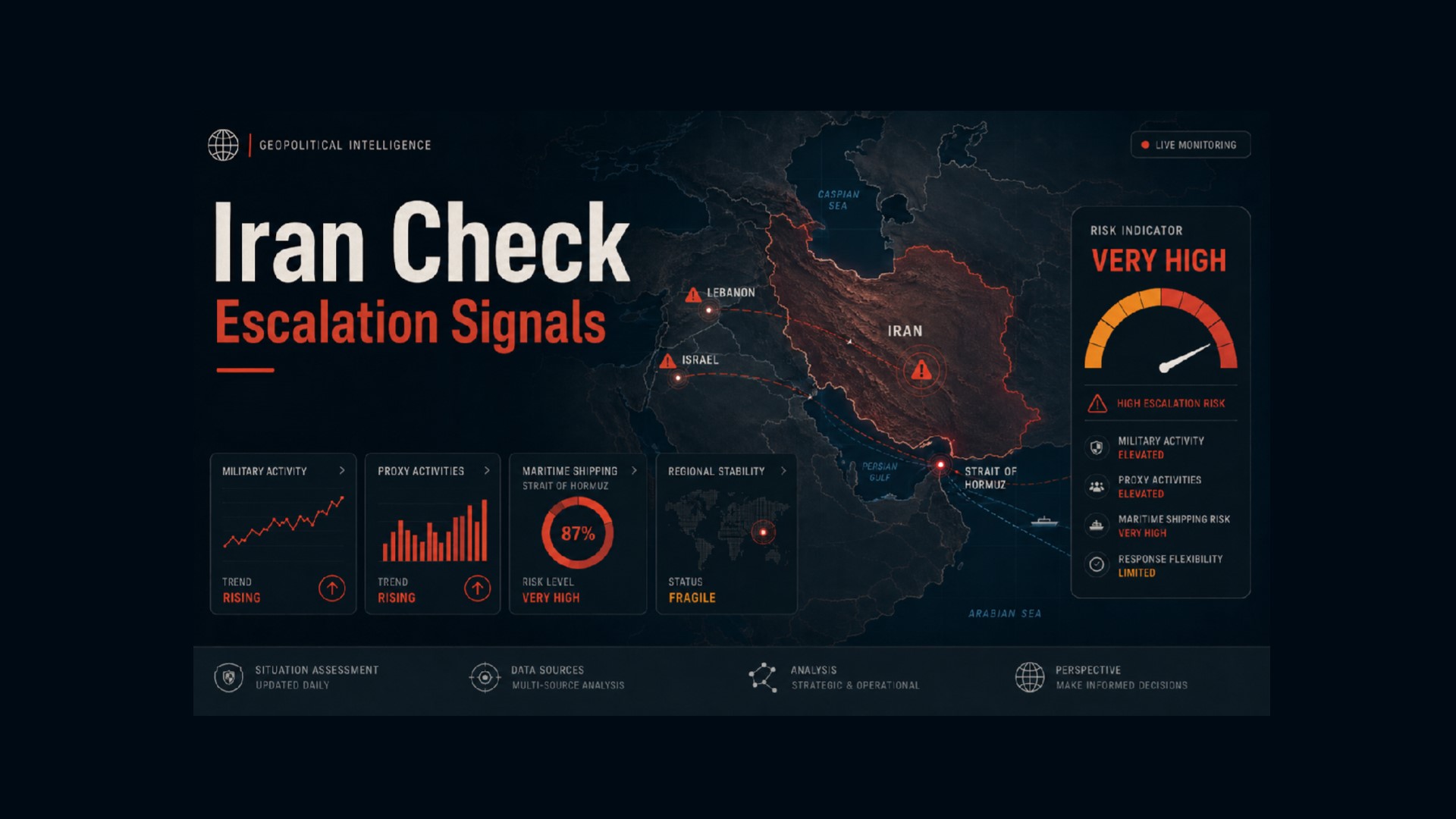
This escalation radar summarizes five relevant signals as of July 4, 2026. The focus is on verifiable statements by official actors, confirmed events and monitoring sources with potential impact on energy prices, supply chains, markets, maritime security, aviation and regional stability.
Iran is warning tankers to use only approved routes through the Strait of Hormuz. This shifts the risk from the question of “open or closed” to a more concrete question: who controls passage, routes, security and costs?
Oil prices and Gulf exports indicate some relief as more vessels move again and producers increase deliveries. However, this is not full normalization as long as Hormuz administration, fees and security remain contested.
Khamenei’s multi-day funeral is becoming a political stage. Iran is warning the United States and Israel against attacks during the mourning period, while Israel and Hezbollah continue military activity in Lebanon.
| Actor | Type | Severity | Status | Source / verification status | Business impact |
|---|---|---|---|---|---|
| Iran / United States / Israel / Hormuz | Tanker route warning, funeral symbolism and threat of retaliation | Critical · Level 5/5 | Sky News reports that Iran’s military leadership is warning the United States and Israel against attacks during the state funeral of Ali Khamenei. At the same time, Iran’s joint military command is warning all oil tankers in the Strait of Hormuz to use only Iranian-approved routes or face a “forceful response”. This shifts the operational risk: the issue is no longer only free passage, but route authority, approvals and maritime control. The power dynamic: Iran is using the mourning period for domestic mobilization and linking national symbolism with military deterrence in the Gulf. | Confirmed by Sky News, July 3/4, 2026. Verification status: confirmed for the Iranian warnings to the United States and Israel, the tanker route warning and the funeral situation; individual operational details on the actual enforcement of the routes require further verification. | Critical business impact on tanker routing, oil and LNG transport, war-risk premiums, insurability, charter costs, delivery times, port planning and companies with Gulf or energy exposure. |
| United States / Trump / Iran / Qatar / Pakistan | Optimistic U.S. negotiation line, but still militarized language | High to critical · Level 4/5 | Anadolu Agency reports that President Trump said Iran had agreed to “just about everything we need” in the talks. At the same time, Trump emphasized that the United States was not seeking regime change, but wanted to prevent Iran from obtaining a nuclear weapon. This de-escalation message is nevertheless overlaid by hard military language: Trump describes Iran as militarily defeated and refers to the United States having struck Iran multiple times. Qatari and Pakistani mediators announced the next round of talks after the funeral ceremonies for Khamenei. The power dynamic: Washington is selling negotiation progress from a position of strength, while Tehran can hardly afford to appear as if it is yielding domestically. | Confirmed by Anadolu Agency, July 3, 2026. Verification status: confirmed for Trump’s statements, the U.S. objective of “no nuclear weapon” and the reference to further talks after the funeral ceremonies; it remains open how reliable the alleged Iranian concessions actually are. | High relevance for market volatility, sanctions assumptions, oil price hedging, Iran exposure, investment decisions, management communication and short-term scenario planning. |
| Oil market / Gulf producers / Hormuz / OPEC | Market relief through higher supply volumes, but Hormuz remains fragile | High · Level 3/5 | Reuters reports that oil prices were little changed toward the end of the week, with traders still betting on a successful outcome of U.S.-Iran peace efforts. Brent and WTI are trading close to pre-war levels, while part of the shipping traffic through Hormuz has resumed. At the same time, the situation remains fragile: Reuters notes that the administration and possible fees of the Strait of Hormuz remain contested. Gulf producers are increasing deliveries, OPEC output and regional exports are rising, and the market structure signals lower expectations of shortage. The operational takeaway: markets are easing, but they remain tied to a politically unresolved chokepoint. | Confirmed by Reuters, July 3, 2026. Verification status: confirmed for stable oil prices, resumed shipping, higher Gulf production and the still-contested administration of Hormuz; price developments remain highly news-driven in the short term. | High relevance for energy procurement, hedging, working capital, raw material costs, inflation expectations, freight planning, price pass-through and companies with energy-intensive supply chains. |
| Israel / Lebanon / Hezbollah | Continued clashes despite framework, security zone and disarmament issue | High to critical · Level 4/5 | The Times of Israel reports that an IDF reservist was seriously wounded in a clash with a Hezbollah gunman in southern Lebanon. Israel said it responded with tank fire and airstrikes against several Hezbollah targets. According to the IDF, around ten additional Hezbollah sites in southern Lebanon were hit, including in Bint Jbeil, Beit Yahoun, Kounine and Baraashit. At the same time, the new Israel-Lebanon framework remains politically fragile: it is intended to connect Israel’s withdrawal with the disarmament of non-state armed groups, while Hezbollah and its allies reject the framework. The power dynamic: Israel is maintaining military pressure and security zones, while Hezbollah does not want to give up its armed role. This keeps Lebanon as a separate escalation arena, even while the United States and Iran are discussing de-escalation in parallel. | Confirmed by The Times of Israel, July 3, 2026. Verification status: confirmed for the wounded IDF soldier, Israeli counterstrikes and the official account of the Hezbollah targets hit; information on Hezbollah structures is based largely on Israeli military statements, while the political framework assessment is source-based and analytically evaluated. | High relevance for Lebanon and northern Israel exposure, evacuation planning, aviation, insurance, security services, regional supply chains, crisis logistics and political risk premiums. |
| EASA / Iran / Iraq / Lebanon / Gulf region | Active aviation warning and operational restrictions for aviation and air freight | High to critical · Level 4/5 | EASA continues to list its conflict zone warning for the Middle East and the Persian Gulf as active. Warning 2026-03-R14 was revised on July 1, 2026 and is valid until July 8, 2026. This means the operational environment for aviation and air freight remains tense, even though oil market prices are already signaling relief. This is important for companies: diplomatic talks and falling energy prices do not automatically mean safe flight routes, stable air freight or normal crisis logistics. | Confirmed by EASA Conflict Zones Advisories, 2026-03-R14, active until July 8, 2026. Verification status: official EU aviation source; active and valid until July 8, 2026, unless reviewed earlier. | High relevance for air freight, airlines, rerouting, spare parts chains, insurance, business travel, crisis logistics, airport risk and companies with exposure to the Middle East or the Gulf. |
The central escalation knot on July 4, 2026 lies in the simultaneity of market relief and political-operational uncertainty. Oil prices and Gulf exports signal that parts of the market are again betting on normalization. At the same time, Iran is making clear that Hormuz is not merely a sea lane, but a power instrument: who is allowed to pass, which route is used and which rules apply remain politically contested.
For companies, the most important change is this: the risk has not disappeared; it has shifted. Instead of an acute major escalation, the focus is now on control over infrastructure, routes, airspace, security zones and political obligations. Hormuz, the aviation warning environment, the Israel-Hezbollah front in Lebanon and the question of whether the United States and Iran can keep the negotiation process stable beyond the Khamenei mourning period remain particularly critical.
The five most important signals for a German business risk picture are: Iran’s warning to tankers to use only approved Hormuz routes, Trump’s optimistic but militarily hard Iran rhetoric, visible relief in the oil market while Hormuz administration remains contested, the continued Israel-Hezbollah escalation logic in Lebanon, and the still-active EASA warning for Iran, Iraq, Lebanon and the Gulf region until July 8, 2026.
Note: This assessment was created with support from our Geo-AI. AI can make mistakes. The analysis is intended as a radar for potential escalation signals and does not replace a fully verified situation assessment.
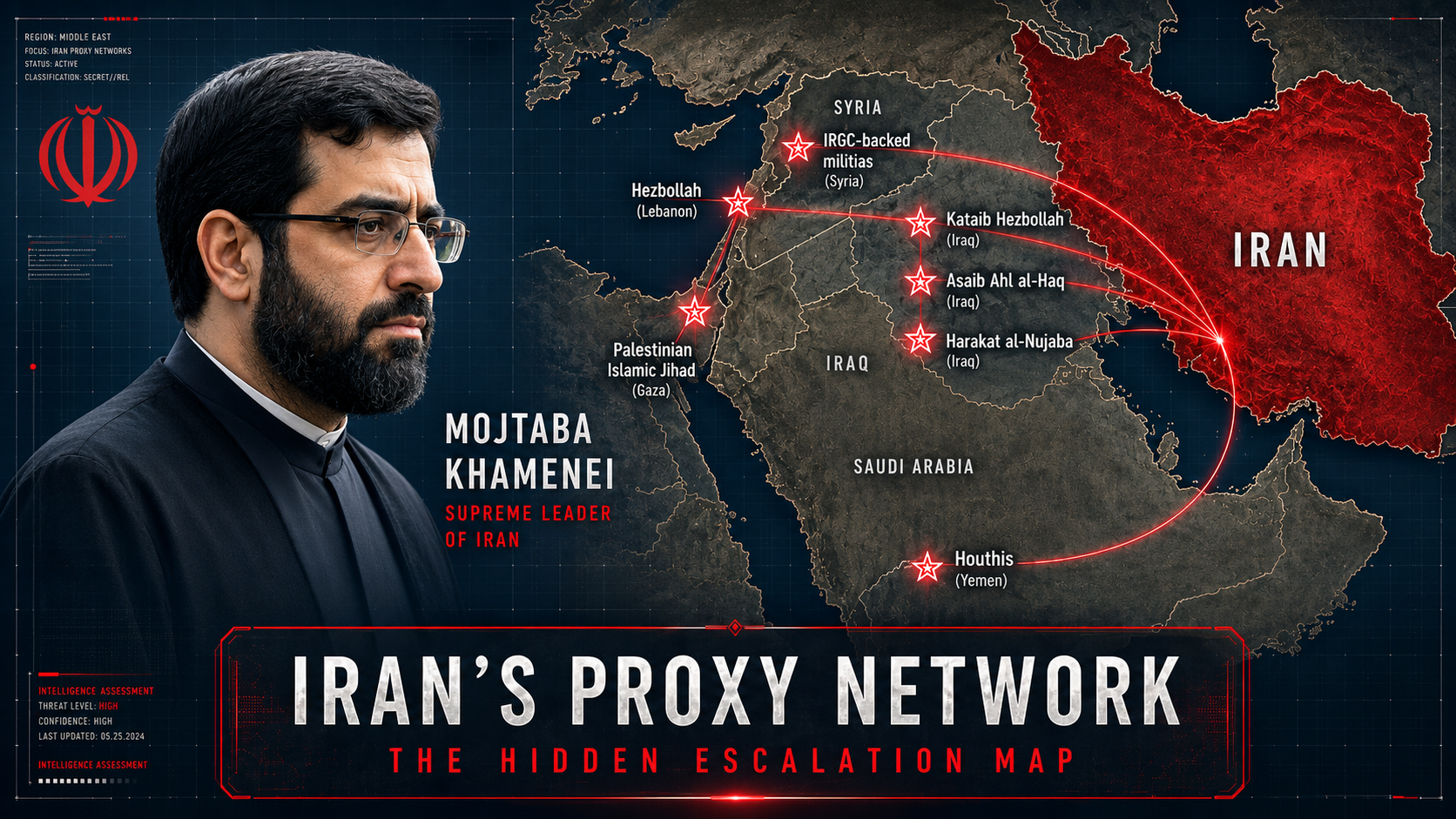
What decision-makers should watch now — before proxy escalation becomes a cost, compliance or supply-chain shock.
This 17-page executive briefing translates Iran’s proxy network into concrete business risks: energy price exposure, maritime chokepoints, war-risk premiums, sanctions, shadow fleets, supply-chain disruption and early-warning indicators for board-level decisions.
You are currently viewing a placeholder content from X. To access the actual content, click the button below. Please note that doing so will share data with third-party providers.
More Information