Executive Intelligence. Industrial Risk. Geopolitics.
Strategic Sparring
for Decision-Makers
Risk intelligence across technology, law, markets and power dynamics.


Verdeckte Geschäftsrisiken, strategische Widersprüche und kritische Abhängigkeiten frühzeitig erkennen.
Kostenlose Analyse starten →
Verdeckte Machtstrukturen, Führungsrisiken und organisatorische Blockaden frühzeitig erkennen.
Kostenlose Analyse starten →
Geopolitische Risiken, globale Abhängigkeiten und kritische Lieferkettenrisiken frühzeitig erkennen.
Kostenlose Analyse starten →
Identify hidden business risks, strategic contradictions and critical dependencies at an early stage.
Start Free Analysis →
Identify hidden power structures, leadership risks and organizational blockers at an early stage.
Start Free Analysis →
Identify geopolitical risks, global dependencies and critical supply-chain vulnerabilities at an early stage.
Start Free Analysis →
Verdeckte Geschäftsrisiken, strategische Widersprüche und kritische Abhängigkeiten frühzeitig erkennen.
Kostenlose Analyse starten →
Verdeckte Machtstrukturen, Führungsrisiken und organisatorische Blockaden frühzeitig erkennen.
Kostenlose Analyse starten →
Geopolitische Risiken, globale Abhängigkeiten und kritische Lieferkettenrisiken frühzeitig erkennen.
Kostenlose Analyse starten →
Identify hidden business risks, strategic contradictions and critical dependencies at an early stage.
Start Free Analysis →
Identify hidden power structures, leadership risks and organizational blockers at an early stage.
Start Free Analysis →
Identify geopolitical risks, global dependencies and critical supply-chain vulnerabilities at an early stage.
Start Free Analysis →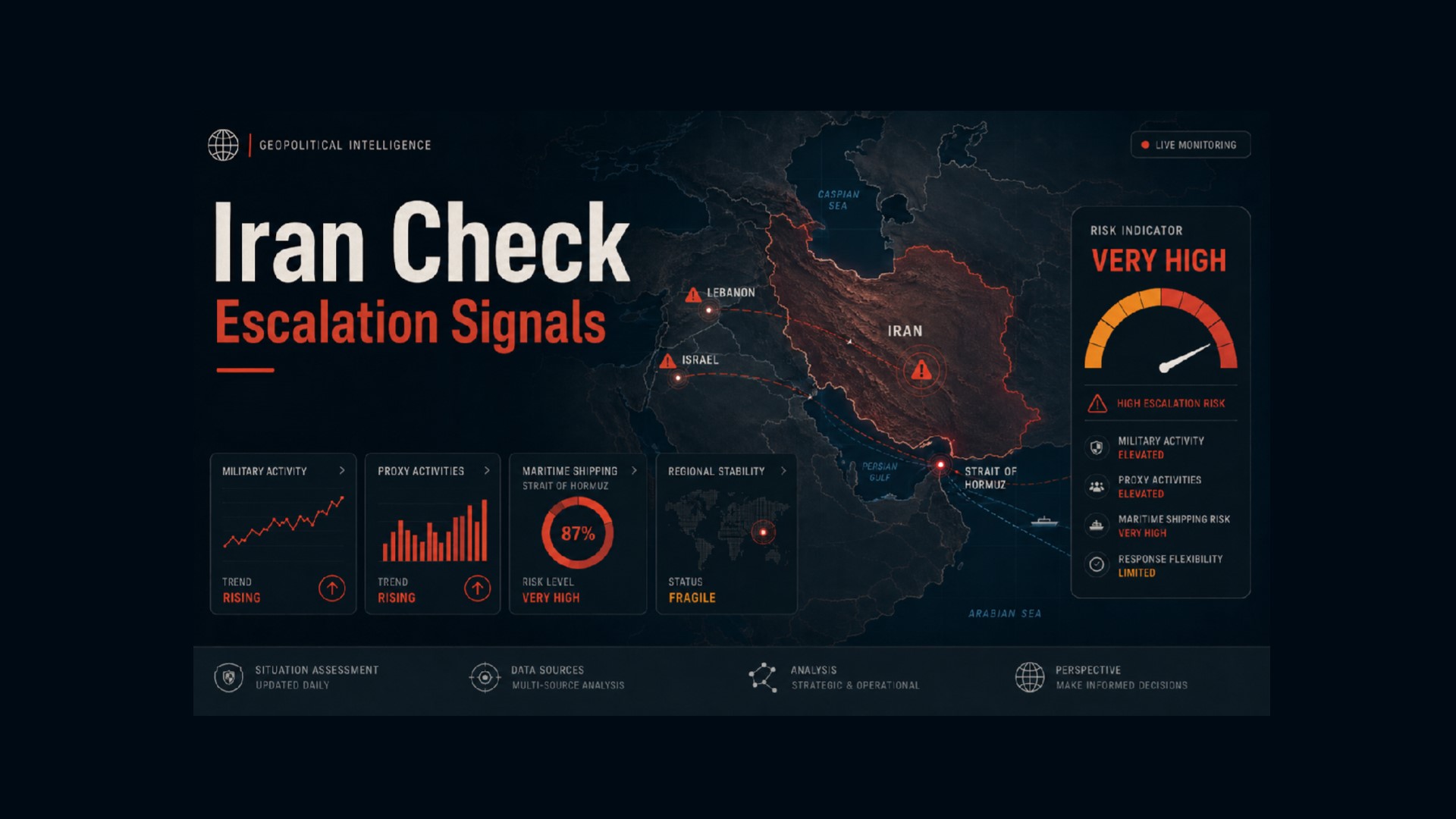
This escalation radar summarizes five relevant signals as of July 10, 2026. The focus is on verifiable statements by official actors, confirmed events and monitoring sources with potential impact on energy prices, supply chains, markets, maritime security, aviation and regional stability.
The key change: the escalation has not faded, but has shifted into an unstable strike-and-counterstrike pattern. Iran reports attacks on US military targets in Gulf states, while the United States confirms new strikes against Iranian military targets. Both sides frame their actions as responses to treaty breach, security interests or legitimate retaliation.
New on July 10: more LNG tankers and Japan-linked vessels are again transiting the Strait of Hormuz. This is a de-escalation signal for physical flows, but not a normalization. The passage remains burdened by higher insurance, charter and security costs – effectively creating a risk premium on energy and supply chains.
Hezbollah wants to politically challenge the Israel-Lebanon framework. The disarmament question is shifting the conflict from the border into Lebanese domestic politics. Lebanon is therefore becoming a stress test: who controls security, who carries sovereignty, and who can actually push back armed power?
| Actor | Type | Severity | Status | Source / verification status | Business impact |
|---|---|---|---|---|---|
| United States / Iran / IRGC / Gulf states | Continued military escalation, retaliation strikes and damaged ceasefire | Critical · Level 5/5 | The US-Iran situation remains highly critical on July 10, 2026. Reuters reports that Iran attacked US military targets in several Gulf states, including Kuwait, Qatar, Bahrain and Jordan. The attacks followed US airstrikes against Iranian targets in southern and eastern provinces. According to Reuters, US Central Command in turn confirmed strikes against around 90 Iranian military targets in response to Iranian attacks on shipping and Gulf infrastructure. At the same time, the escalation coincides with Khamenei’s burial, further intensifying domestic mobilization inside Iran. The power dynamic: Washington is trying to restore deterrence and freedom of navigation militarily. Tehran is showing that US bases and US-aligned Gulf states remain part of its retaliation logic. This turns the previous ceasefire framework into an unstable pressure system with immediate regional reach. | Confirmed by Reuters, 09./10.07.2026. Verification status: confirmed for Iranian attacks on US targets in Gulf states, US strikes against Iranian military targets and mutual escalation accusations; the exact damage picture, strike effects and political room for maneuver remain partly unclear. | Critical business impact on Gulf exposure, energy prices, insurance, security costs, military risk premiums, expat safety, site continuity, banking and payment risks, crisis logistics, and companies with offices, suppliers or customers in Kuwait, Bahrain, Qatar, Jordan, Saudi Arabia, Oman and the United Arab Emirates. |
| Hormuz / LNG / Japan / QatarEnergy / shipowners | Partial resumption of transits amid continued elevated risk and hidden costs | High to critical · Level 4/5 | The operational picture around Hormuz is mixed on July 10. Reuters reports that more LNG tankers and Japan-linked vessels are again transiting the Strait of Hormuz. At least five ballast LNG tankers, including QatarEnergy-linked vessels and the GasLog Shanghai, re-entered the strait according to ship-tracking data. Japan reported that 22 Japan-linked vessels, including six large crude carriers, left the Gulf via Hormuz between July 7 and July 9. At the same time, the situation is not normalized: previous attacks have changed route selection, insurability, charter costs and security measures. Reuters Breakingviews describes the effect as a de facto “toll”: not formally paid to Iran, but as a risk premium through insurance and charter costs. The power dynamic: Iran cannot fully block transit, but it can influence costs and route decisions. Shipowners, insurers and energy traders are cautiously testing which passage remains calculable. | Confirmed by Reuters, 10.07.2026 and Reuters Breakingviews, 09./10.07.2026. Verification status: confirmed for the partial resumption of LNG transits and transits by Japan-linked vessels, as well as for elevated indirect costs through insurance and chartering; it remains open whether this stabilization will hold or immediately reverse in the event of renewed attacks. | High to critical business impact on LNG availability, oil transport, tanker routing, war-risk premiums, insurability, charter costs, spot rates, delivery times, port planning, energy procurement, hedging, commodity prices and companies with Gulf, energy, chemicals, fertilizer, air freight or heavy industry exposure. |
| Israel / Iran / United States / Katz / Netanyahu | Israeli readiness for renewed strikes on Iran and US-Israel coordination | High to critical · Level 4/5 | Israel is further sharpening its deterrence posture toward Iran. The Guardian reports that Israel is prepared to strike Iran again and “with even greater force” if necessary. According to The Guardian, Israel Katz said the IDF remains vigilant and ready to resume the campaign against Iran, restore air superiority and act again against Iranian threats. Netanyahu also stated that the conflict is not over. The power dynamic: Israel is positioning itself as a military reserve and escalation option if Iran directly targets Israel or if the United States needs additional deterrence. For Iran, this means that any move against US positions can also reactivate an Israeli second front. | Confirmed by The Guardian Live, 09./10.07.2026. Verification status: confirmed for Israel’s renewed deterrence rhetoric, Katz’s readiness statement and Netanyahu’s indication that the campaign is not finished; it remains open whether Israel will actually resume active strikes inside Iran in the short term or whether the threat is primarily intended as deterrence. | High relevance for regional risk premiums, insurance, flight routes, security planning, executive travel risks, crisis communication, Middle East exposure, Israel sites, Gulf routes and companies with suppliers or partners in Israel, Iran, Jordan or the Gulf states. |
| Lebanon / Hezbollah / Israel / United States | Rome talks under conditions, withdrawal demand and unresolved Hezbollah disarmament | High to critical · Level 4/5 | The Lebanon situation is not escalating on July 10 through one single major new operation, but through the political blockage surrounding the Israel-Lebanon framework. L’Orient Today reports that Lebanon will attend the planned Rome talks only if Israel withdraws from two “pilot zones” in southern Lebanon. The framework links a gradual Israeli withdrawal to Hezbollah’s disarmament and the deployment of the Lebanese army in these zones. At the same time, there is no clear timeline for a full Israeli withdrawal, while Israeli officials signal that troops should remain in a security zone as long as Hezbollah remains armed. The power dynamic: Washington and Israel define stability through disarmament, security zones and state control. Lebanon, by contrast, sets Israeli withdrawal as a precondition for further talks. Hezbollah can use this blockage to frame the US-Israeli security logic as a pressure instrument against Lebanese sovereignty. This keeps Lebanon a political flashpoint, even without a new major offensive. | Confirmed by L’Orient Today, 09./10.07.2026. Verification status: confirmed for Lebanon’s condition for attending the Rome talks, the demand for Israeli withdrawal from two pilot zones, the linkage between withdrawal, Lebanese army deployment and Hezbollah disarmament, as well as the absence of a clear timeline for full Israeli withdrawal; operational details on individual border incidents require separate daily verification. | High relevance for Lebanon and northern Israel exposure, security planning, evacuation, insurance, humanitarian logistics, regional supply chains, border risks, political risk premiums and companies with personnel, partners or projects in the Levant. |
| EASA / Iran / Iraq / Lebanon / Gulf region | Active aviation warning amid missile, drone, air-defense and GNSS risk | Critical · Level 5/5 | The aviation situation remains critical on July 10. EASA continues to list its Conflict Zone Advisories for the Middle East and the Persian Gulf as an active risk baseline. Iran, Iraq and Lebanon are especially relevant; for further Gulf states such as Bahrain, Kuwait, Qatar, Oman, the United Arab Emirates, Saudi Arabia, Israel and Jordan, robust daily risk assessment remains necessary. The current escalation confirms this risk picture: Iranian missile and drone attacks on US targets in Gulf states, US strikes against Iranian military targets, regional air-defense activity, military movements around Hormuz and possible GNSS/navigation disruptions increase the risk for flight routes, air freight and business travel. The operational takeaway: aviation and air freight risk cannot be inferred from oil price or shipping signals alone. | Confirmed by EASA Conflict Zones Advisories, accessed 10.07.2026. Verification status: confirmed for active EASA warning logic and continued risk assessment for Iran, Iraq, Lebanon and the wider Gulf region; specific airline route decisions remain dependent on operators, states, insurers and daily risk assessments. | Critical business impact on air freight, airlines, rerouting, spare-parts supply chains, business travel, crisis logistics, airport risk, just-in-time supply chains, insurance, personnel movement and companies with Middle East, Gulf or Asia-Europe air-corridor exposure. |
The central escalation node on July 10, 2026 lies in the combination of military escalation and partial operational stabilization. Compared with July 8, the situation has not simply escalated in a linear way, but has shifted into a dangerous intermediate phase: the United States and Iran continue to exchange strikes and threats, while more LNG tankers and Japan-linked vessels are again transiting Hormuz. This does not mean an all-clear; it means risk displacement.
Operationally, Hormuz remains the most important supply-chain lever. The resumption of individual transits shows that shipowners and energy actors are not fully abandoning the route. At the same time, de facto additional costs are emerging through insurance, chartering, security measures, route selection and possible AIS/navigation risks. For companies, the key question is therefore not only whether ships are moving, but at what cost, with what delays, under what insurability conditions and with how much escalation buffer.
Politically, the situation is especially dangerous because several escalation logics are running in parallel. Iran frames its attacks as a legitimate response to US strikes and interference in Hormuz. Washington frames its strikes as protection of freedom of navigation and deterrence. Israel signals readiness for renewed strikes on Iran with greater force. In Lebanon, the unresolved withdrawal and Hezbollah disarmament question turns the Israel-Lebanon framework into a potential destabilization factor.
The five most important signals for a European business risk picture are: continued US-Iran strikes and attacks on US targets in Gulf states, partially resumed LNG transits and transits by Japan-linked vessels despite elevated costs, Israel’s readiness for renewed strikes on Iran, Lebanon’s condition for Rome talks and the unresolved withdrawal/disarmament issue as a domestic destabilization risk, and the continued critical aviation warning environment for Iran, Iraq, Lebanon and the wider Gulf region.
Note: This assessment was created with support from our Geo AI. AI can make mistakes. This document serves as a radar for potential escalation signals and does not replace a fully verified final intelligence assessment.
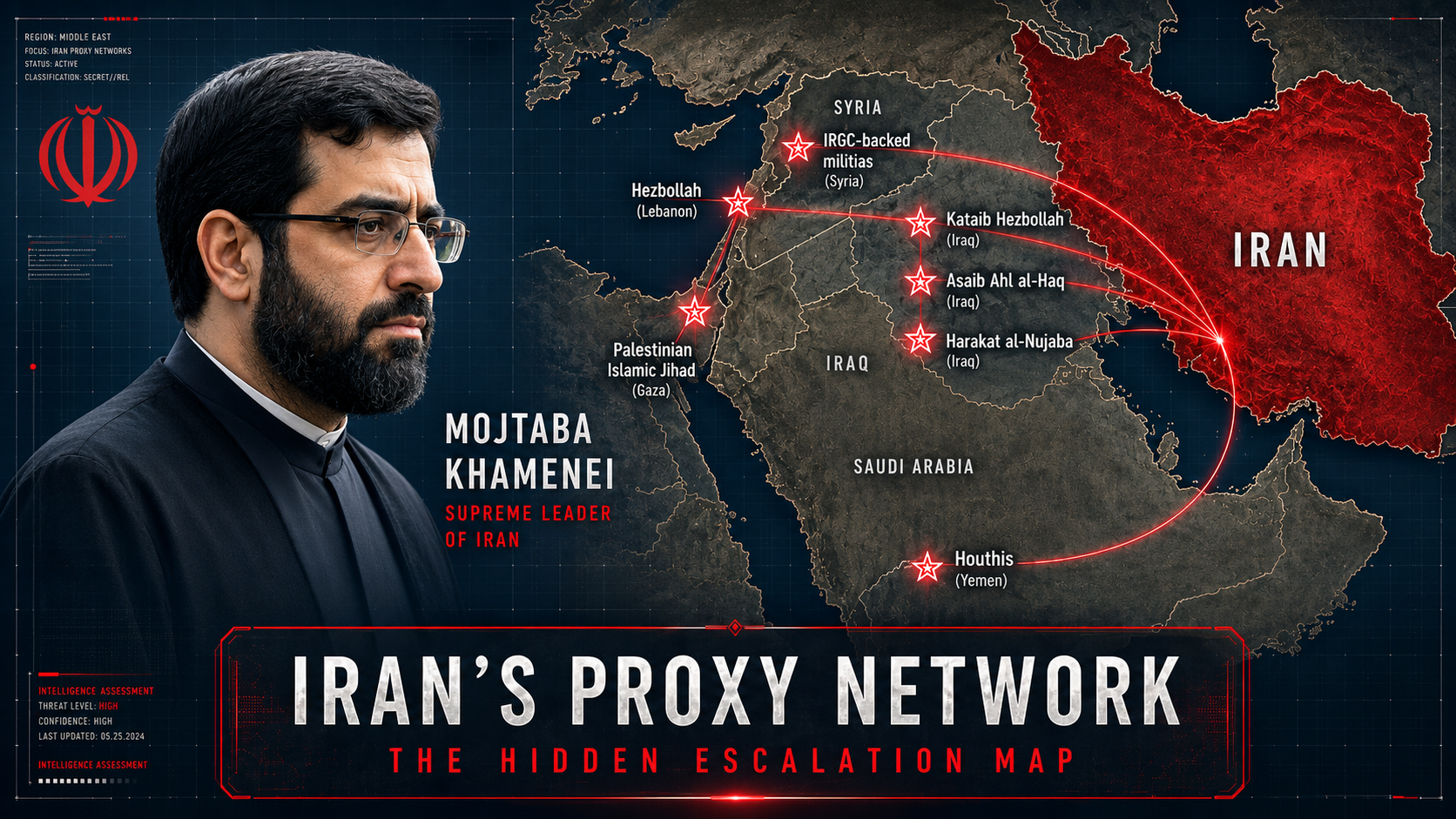
What decision-makers should watch now — before proxy escalation becomes a cost, compliance or supply-chain shock.
This 17-page executive briefing translates Iran’s proxy network into concrete business risks: energy price exposure, maritime chokepoints, war-risk premiums, sanctions, shadow fleets, supply-chain disruption and early-warning indicators for board-level decisions.
You are currently viewing a placeholder content from X. To access the actual content, click the button below. Please note that doing so will share data with third-party providers.
More Information