Executive Intelligence. Industrial Risk. Geopolitics.
Strategic Sparring
for Decision-Makers
Risk intelligence across technology, law, markets and power dynamics.


Verdeckte Geschäftsrisiken, strategische Widersprüche und kritische Abhängigkeiten frühzeitig erkennen.
Kostenlose Analyse starten →
Verdeckte Machtstrukturen, Führungsrisiken und organisatorische Blockaden frühzeitig erkennen.
Kostenlose Analyse starten →
Geopolitische Risiken, globale Abhängigkeiten und kritische Lieferkettenrisiken frühzeitig erkennen.
Kostenlose Analyse starten →
Identify hidden business risks, strategic contradictions and critical dependencies at an early stage.
Start Free Analysis →
Identify hidden power structures, leadership risks and organizational blockers at an early stage.
Start Free Analysis →
Identify geopolitical risks, global dependencies and critical supply-chain vulnerabilities at an early stage.
Start Free Analysis →
Verdeckte Geschäftsrisiken, strategische Widersprüche und kritische Abhängigkeiten frühzeitig erkennen.
Kostenlose Analyse starten →
Verdeckte Machtstrukturen, Führungsrisiken und organisatorische Blockaden frühzeitig erkennen.
Kostenlose Analyse starten →
Geopolitische Risiken, globale Abhängigkeiten und kritische Lieferkettenrisiken frühzeitig erkennen.
Kostenlose Analyse starten →
Identify hidden business risks, strategic contradictions and critical dependencies at an early stage.
Start Free Analysis →
Identify hidden power structures, leadership risks and organizational blockers at an early stage.
Start Free Analysis →
Identify geopolitical risks, global dependencies and critical supply-chain vulnerabilities at an early stage.
Start Free Analysis →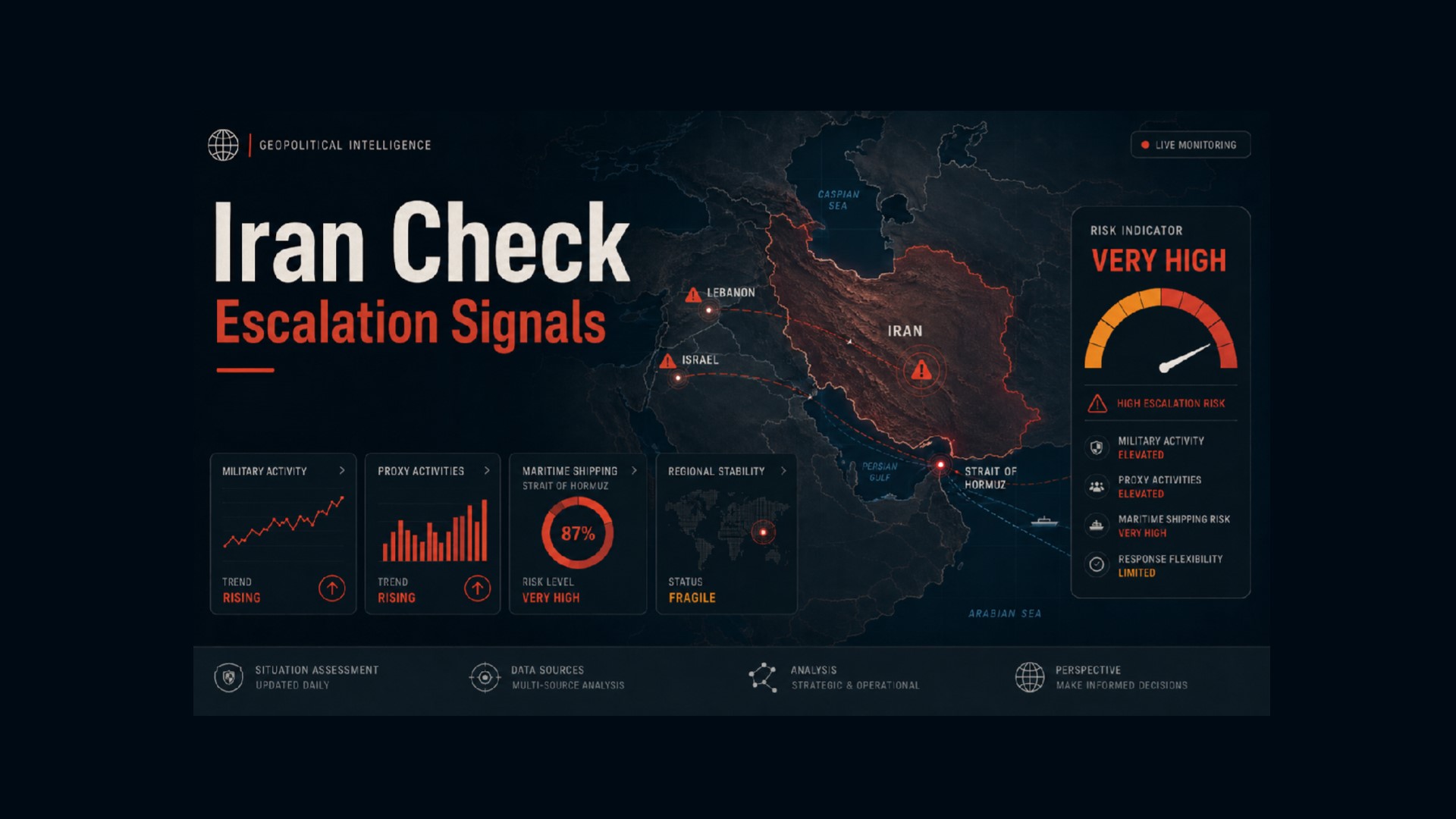
This escalation radar summarises five relevant signals as of August 5, 2026. It focuses on substantiated statements by official bodies, verified events and monitoring sources with potential implications for energy prices, supply chains, markets, maritime security, aviation and regional stability.
The most important political change on August 5: Trump says that talks with Iran have been very good following a full day of negotiations and states that Hormuz could reopen very soon. Iran, however, denies conducting direct peace talks with Washington, while key disputes over control, fees, sanctions and the US blockade mechanism remain unresolved.
The operational relief is immediately undermined by a new attack in the Red Sea. The Iran-aligned Houthis stated that they had hit a Saudi oil tanker near the major export port of Yanbu with a missile. The attack pushed oil prices higher again and demonstrates that even a Hormuz agreement would not automatically end the parallel energy and shipping crisis in the Red Sea.
A senior adviser to Iran’s Supreme Leader stated that Iran had prepared attacks against three targets in Ukraine and cancelled them only after an alleged apology from Kyiv. Even without an executed strike, this is a significant cross-theatre signal: the Iran conflict risks becoming directly connected to the Russia-Ukraine war and military logistics in the Caspian Sea.
| Actor | Type | Severity | Status | Source / Verification Status | Business Impact |
|---|---|---|---|---|---|
| United States / Iran / Trump / Oman / Qatar / Hormuz | Advanced negotiations on a provisional reopening of Hormuz amid continuing contradictory political messaging | High to critical · Level 4/5 | The political situation shifted again towards a possible interim agreement on August 5. US President Donald Trump stated after a full day of negotiations that the United States and Iran had held very good talks. He said that the Strait of Hormuz would reopen very soon, while also warning Iran of severe consequences if Tehran abandoned the negotiations. Reports on the state of the talks indicate a possible initially time-limited agreement brokered by Oman. The discussions reportedly concern a mechanism that could increase shipping traffic again while creating a political path back to nuclear negotiations. Iran, however, rejects the description of direct peace negotiations with the United States. According to the Iranian account, the substantive discussions are primarily taking place with Oman. Tehran also continues to insist on its sovereignty over the strait and rejects models that would completely remove its control. The question of whether Iran may charge fees for security or environmental services also remains disputed. Washington regards Hormuz as an international waterway and rejects Iranian toll or sovereignty claims. Power dynamics: Washington is attempting to convert its military threat, blockade of Iranian vessels and economic pressure into a rapid agreement. Iran, by contrast, is using restricted passage through Hormuz, its geographical position and the dependence of Gulf exports as negotiating leverage. Oman and Qatar are gaining importance as mediators. The likely outcome would therefore not be a comprehensive peace agreement, but a fragile, time-limited arrangement governing shipping and further talks. | Confirmed by Reuters, August 5, 2026 and AP News, August 5, 2026 . Verification status: confirmed regarding Trump’s statement about very good talks, the expectation of a possible near-term reopening, Oman’s mediation role and the continuing disputes over Iranian control and possible fees. A signed or published agreement has not yet been confirmed. Its duration, specific routing arrangements, control mechanism, sanctions issues, Iranian concessions and connection to a future nuclear agreement remain unresolved. | High to critical business impact on oil and LNG prices, tanker and container shipping, insurance, charter agreements, sanctions planning, payment flows, energy procurement, investment decisions, delivery times and companies whose planning depends on a stable reopening of Hormuz. A political announcement alone should not yet be treated as operational normalisation. |
| Houthis / Iran / Saudi Arabia / Yanbu / Red Sea / oil tanker | Houthi missile attack on Saudi oil tanker near Yanbu undermines diplomatic relief | Critical · Level 5/5 | Maritime escalation in the Red Sea continued on August 5. The Iran-aligned Houthis stated that they had attacked a Saudi oil tanker near the port of Yanbu with a missile. Yanbu is strategically important to Saudi Arabia because the Red Sea port provides an alternative export route to Gulf ports and the Strait of Hormuz. An attack in this area therefore affects more than a single vessel. It threatens precisely the infrastructure through which Saudi Arabia can route part of its oil exports around Hormuz. The report triggered a renewed rise in oil prices, after prices had previously declined sharply on expectations of progress in the Iran negotiations. This creates a direct counterforce to the diplomatic relief: even if Hormuz gradually reopens, Houthi attacks could continue to destabilise Bab el-Mandeb, the Red Sea, Saudi west-coast ports and alternative energy routes. Power dynamics: The Houthis are demonstrating that they can threaten Saudi energy and shipping interests independently of the immediate status of the Hormuz negotiations. Iran thereby gains indirect additional leverage over Saudi Arabia and the United States without launching a new overt attack in the Gulf itself. Riyadh therefore faces a choice: expand military protection of the Red Sea further or push for the Houthi issue to be incorporated into a broader agreement with Iran. | Confirmed by Reuters, August 5, 2026 . Verification status: confirmed regarding the Houthi claim of a missile attack on a Saudi oil tanker near Yanbu and the immediate reaction in the oil market. The precise extent of damage, possible casualties, the technical type of missile used and independent confirmation of all operational details remain unresolved. | Critical business impact on Saudi oil exports, Yanbu, Red Sea and Suez routes, tanker charters, war-risk premiums, port security, naval escorts, energy prices, delivery times and companies that have planned Saudi west-coast infrastructure as an alternative to Hormuz. Combined scenarios are particularly relevant in which Hormuz reopens only partially while the Red Sea remains under attack pressure. |
| Iran / Oman / UAE / ADNOC / India / international shipping | Only eight visible Hormuz transits and a single ADNOC LNG departure show continued extreme underutilisation | Critical · Level 5/5 | The operational situation in Hormuz remained far from normal on August 5. Vessel-tracking data showed that only eight visible vessels recently passed through the strait: five tankers and three bulk carriers. This was approximately the same level as the previous day, but dramatically below the approximately 130 to 140 daily passages that were typical before the war began. The figures show that negotiations have not yet triggered a broad operational return of international shipping. At the same time, the ADNOC-operated LNG tanker Mubaraz was observed off India’s west coast. It is carrying an LNG cargo from Das Island to India’s Dahej terminal. According to Reuters, this is the vessel’s third voyage through Hormuz since the war began. This individual passage is strategically significant, but does not demonstrate a freely and reliably open maritime route. Visible passages through Bab el-Mandeb also remained limited at approximately 20 vessels. Ships with switched-off transponders may additionally be missing from the data. Power dynamics: Individual state-backed or politically secured vessels can continue to pass through the strait. Iran can present such movements as evidence that the waterway is not completely closed. For international shipping companies, however, the decisive issue remains that isolated passage does not replace a generally reliable security guarantee. | Confirmed by Reuters, August 5, 2026 . Verification status: confirmed regarding eight visible Hormuz transits, the breakdown into five tankers and three bulk carriers, the sharp reduction in activity compared with pre-war levels and the voyage of the ADNOC LNG tanker Mubaraz to India. Vessels operating with AIS switched off, informally coordinated movements and undisclosed Iranian clearance conditions cannot be fully captured. | Critical business impact on LNG and crude oil deliveries, exposure to India and Asia, tanker and bulk shipping, delivery schedules, port windows, insurance, alternative sourcing, security planning and production continuity. Companies should distinguish between individual successful passages and a reliable, scalable reopening of the strait. |
| Iran / Ukraine / Russia / Caspian Sea / Mohsen Rezaei | Iran states that it prepared three attacks against Ukraine and cancelled them only after an alleged apology | High to critical · Level 4/5 | The conflict linkage between Iran and the Russia-Ukraine war became significantly more concrete on August 4 and 5. Mohsen Rezaei, a senior adviser to Iran’s Supreme Leader, stated on Iranian state television that Iran had prepared attacks against three targets in Ukraine. According to his account, the military preparations had been completed. The operation was cancelled, however, after Ukraine apologised for the attack on an Iranian vessel in the Caspian Sea. No official Ukrainian confirmation of such an apology is available. The alleged Iranian targets, capabilities involved and actual level of operational readiness have also not been independently confirmed. Nevertheless, the statement is strategically significant. For the first time, a senior Iranian official is publicly claiming that Tehran had prepared direct military strikes against Ukrainian territory in retaliation for an attack on its maritime logistics. This connects three conflict theatres: the Iran war, the Russia-Ukraine war and military transport and shipping logistics in the Caspian Sea. Power dynamics: Iran is signalling that attacks on its suspected routes connected to Russia will not go unanswered. Tehran is also presenting the alleged cancellation as controlled restraint: Iran was militarily prepared, but chose not to escalate following a political gesture. Russia benefits indirectly when Iran treats Ukrainian attacks on shared or connected logistics routes as an Iranian red line. Ukraine faces the risk that maritime or covert operations in the Caspian region could trigger direct Iranian retaliation threats in the future. | Reported by Anadolu Agency, August 4, 2026 . Verification status: partially confirmed. The publicly broadcast statement by the Iranian adviser that Iran had prepared and subsequently cancelled three attacks is confirmed. The actual operational planning, selected targets, alleged Ukrainian apology and the assertion that this apology alone caused the cancellation have not been independently confirmed. | High to critical business impact on exposure to Ukraine, Russia, Iran and the Caspian Sea, shipping, rail and road corridors, military and dual-use logistics, drone and missile risks, insurability, sanctions, export controls, cyber risks and companies whose supply chains run through the Caucasus, Central Asia or the Caspian region. The statement significantly increases the risk that conflict scenarios previously assessed separately may converge operationally. |
| United States / Israel / Lebanon / Hezbollah / Rome / southern Lebanon | New US-facilitated Israel-Lebanon talks on security and state control in the south | High · Level 3/5 | The political situation on the Israel-Lebanon front gained a new negotiating channel on August 4 and 5. According to the US State Department, a new round of US-facilitated talks between Israel and Lebanon has begun. The talks are taking place in Rome and are scheduled to run from Tuesday to Thursday. According to the US account, their objective is to advance a durable security arrangement for both states, eliminate threats to Israel and restore the authority of the Lebanese government in southern Lebanon. This wording is indirectly, but clearly, directed at Hezbollah’s independent military infrastructure. For Lebanon, this means that any possible reduction in the Israeli military presence remains linked to the disarmament or containment of Hezbollah. For Israel, the talks offer an opportunity to secure its security demands politically without fully relinquishing the military option. Power dynamics: Washington is attempting to separate the Israel-Lebanon front from the unstable US-Iran situation and stabilise it through a distinct security process. At the same time, the front remains closely connected to Iran because any restriction on Hezbollah would directly weaken Tehran’s deterrence and influence architecture in the Levant. Progress could reduce the risk of regional escalation. Failure or renewed Israeli operations, however, could place additional pressure on the ongoing Hormuz negotiations. | Confirmed by Reuters, August 4/5, 2026 . Verification status: confirmed regarding the start of the talks in Rome, US facilitation, the scheduled timeframe and the stated objectives of a durable security arrangement and stronger Lebanese state control in the south. Specific Israeli withdrawal commitments, a disarmament mechanism for Hezbollah, monitoring and verification procedures and Hezbollah’s own position remain unresolved. | High business impact on exposure to Israel and Lebanon, southern Lebanon, Beirut, cross-border logistics, business travel, construction and reconstruction projects, insurance, ports, telecommunications, energy infrastructure and companies with personnel or partners in the Levant. A political agreement could limit regional risks, but cannot yet be incorporated into planning without a reliable implementation and verification mechanism. |
The central escalation point on August 5, 2026 lies in the contrast between significantly advanced negotiations and a continuing highly dangerous operational environment. Trump describes the talks as very good and says the Strait of Hormuz could reopen very soon. Iran, however, denies conducting direct peace negotiations with the United States and maintains its control and sovereignty claims over the strait. No signed and published agreement is yet available. The situation has therefore not normalised, but is in a decisive and still reversible negotiating phase.
Operationally, the maritime environment remains critical. Only eight visible vessels recently passed through Hormuz, compared with approximately 130 to 140 daily transits before the war. Individual LNG and oil tankers can continue to use the corridor, but these passages do not yet demonstrate a stable international transit mechanism. At the same time, the Houthis attacked a Saudi oil tanker near Yanbu. This makes one point clear: reopening Hormuz would resolve only part of the energy and supply-chain crisis. The Red Sea, Bab el-Mandeb, Yanbu and the Suez route remain separate areas exposed to attack.
The most important new conflict linkage concerns Iran and Ukraine. A senior Iranian adviser claims that Iran had prepared attacks against three Ukrainian targets and cancelled them only after an alleged apology from Kyiv. The actual planning has not been independently confirmed. The public statement itself nevertheless shows that Tehran could potentially respond to attacks on Iranian vessels or logistics in the Caspian Sea with direct retaliatory strikes against Ukraine. The Iran conflict, the Russia-Ukraine war and the Caspian logistics question are therefore becoming more closely interconnected.
Several negotiating tracks are proceeding in parallel. Oman and Qatar are mediating between Iran and the United States. At the same time, new US-facilitated talks between Israel and Lebanon have begun in Rome. These talks are intended to connect Israel’s security demands with stronger Lebanese state control over southern Lebanon. Because this directly affects Hezbollah’s military position and therefore Iran’s regional deterrence architecture, this process also remains closely linked to the broader Iran conflict.
The EASA warnings that remain in force for Iran, Iraq, Jordan and Lebanon, as well as the active warning environment for the Persian Gulf and the Gulf of Oman, were not tightened again on August 5. They nevertheless remain a substantial risk amplifier for flight planning, air freight, crew changes, business travel, evacuations and time-critical spare-parts supply chains.
The five most important signals for a European and German business risk assessment are: the advanced, but not yet concluded, negotiations on a provisional reopening of Hormuz, the Houthi missile attack on a Saudi oil tanker near Yanbu as a new threat to alternative export routes, the continued extremely low level of Hormuz traffic with only eight visible transits, Iran’s publicly stated preparation and subsequent cancellation of three attacks against Ukraine as a new cross-theatre escalation signal, and the newly launched US-facilitated Israel-Lebanon talks on security, Hezbollah and state control in southern Lebanon, while EASA warnings remain active for key regional air corridors.
Note: This assessment was prepared with the support of our Geo AI. AI can make mistakes. The analysis is intended as a radar for potential escalation signals and does not replace a fully verified intelligence assessment.
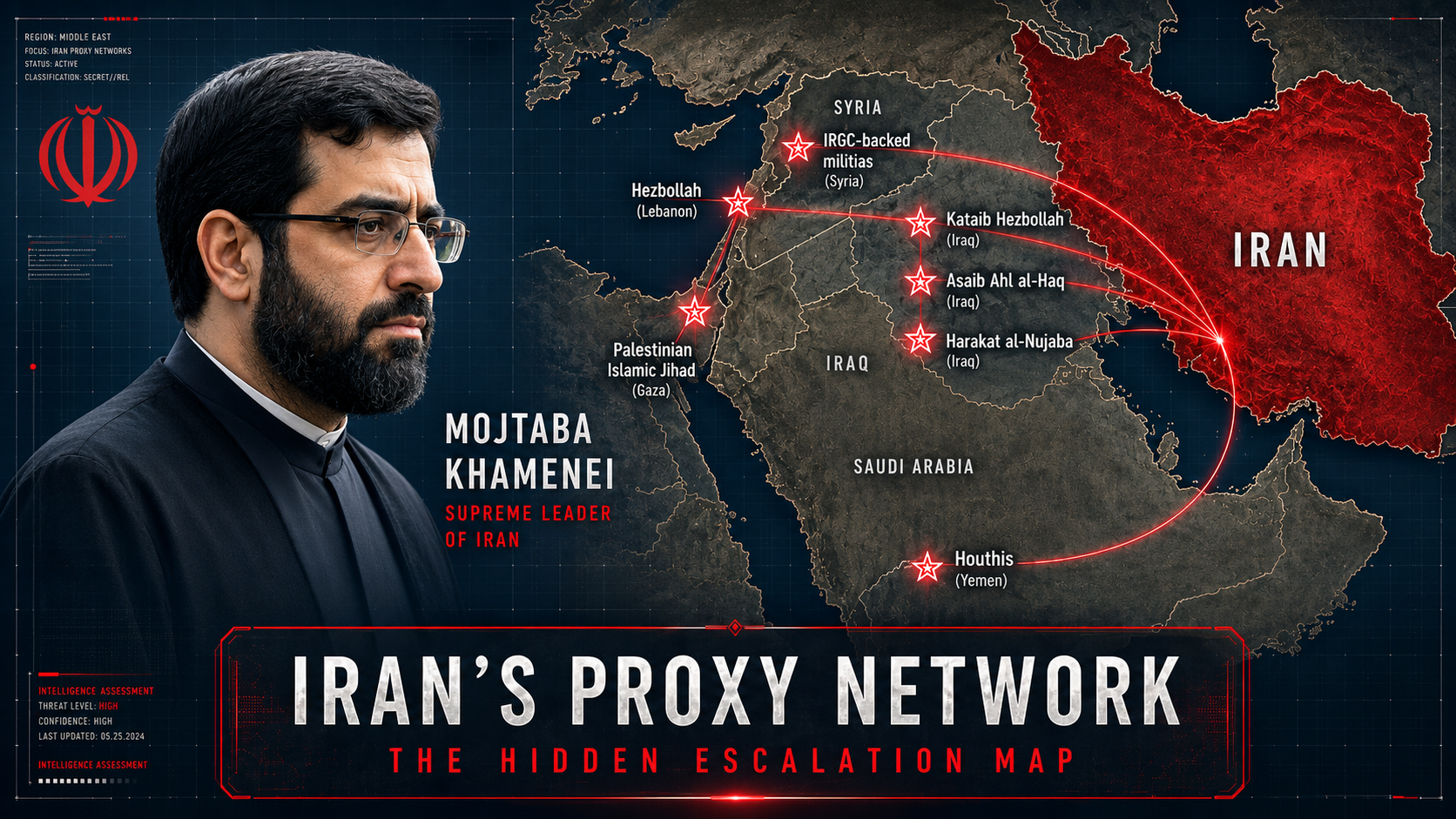
What decision-makers should watch now — before proxy escalation becomes a cost, compliance or supply-chain shock.
This 17-page executive briefing translates Iran’s proxy network into concrete business risks: energy price exposure, maritime chokepoints, war-risk premiums, sanctions, shadow fleets, supply-chain disruption and early-warning indicators for board-level decisions.
You are currently viewing a placeholder content from X. To access the actual content, click the button below. Please note that doing so will share data with third-party providers.
More Information