Executive Intelligence. Industrial Risk. Geopolitics.
Strategic Sparring
for Decision-Makers
Risk intelligence across technology, law, markets and power dynamics.


Verdeckte Geschäftsrisiken, strategische Widersprüche und kritische Abhängigkeiten frühzeitig erkennen.
Kostenlose Analyse starten →
Verdeckte Machtstrukturen, Führungsrisiken und organisatorische Blockaden frühzeitig erkennen.
Kostenlose Analyse starten →
Geopolitische Risiken, globale Abhängigkeiten und kritische Lieferkettenrisiken frühzeitig erkennen.
Kostenlose Analyse starten →
Identify hidden business risks, strategic contradictions and critical dependencies at an early stage.
Start Free Analysis →
Identify hidden power structures, leadership risks and organizational blockers at an early stage.
Start Free Analysis →
Identify geopolitical risks, global dependencies and critical supply-chain vulnerabilities at an early stage.
Start Free Analysis →
Verdeckte Geschäftsrisiken, strategische Widersprüche und kritische Abhängigkeiten frühzeitig erkennen.
Kostenlose Analyse starten →
Verdeckte Machtstrukturen, Führungsrisiken und organisatorische Blockaden frühzeitig erkennen.
Kostenlose Analyse starten →
Geopolitische Risiken, globale Abhängigkeiten und kritische Lieferkettenrisiken frühzeitig erkennen.
Kostenlose Analyse starten →
Identify hidden business risks, strategic contradictions and critical dependencies at an early stage.
Start Free Analysis →
Identify hidden power structures, leadership risks and organizational blockers at an early stage.
Start Free Analysis →
Identify geopolitical risks, global dependencies and critical supply-chain vulnerabilities at an early stage.
Start Free Analysis →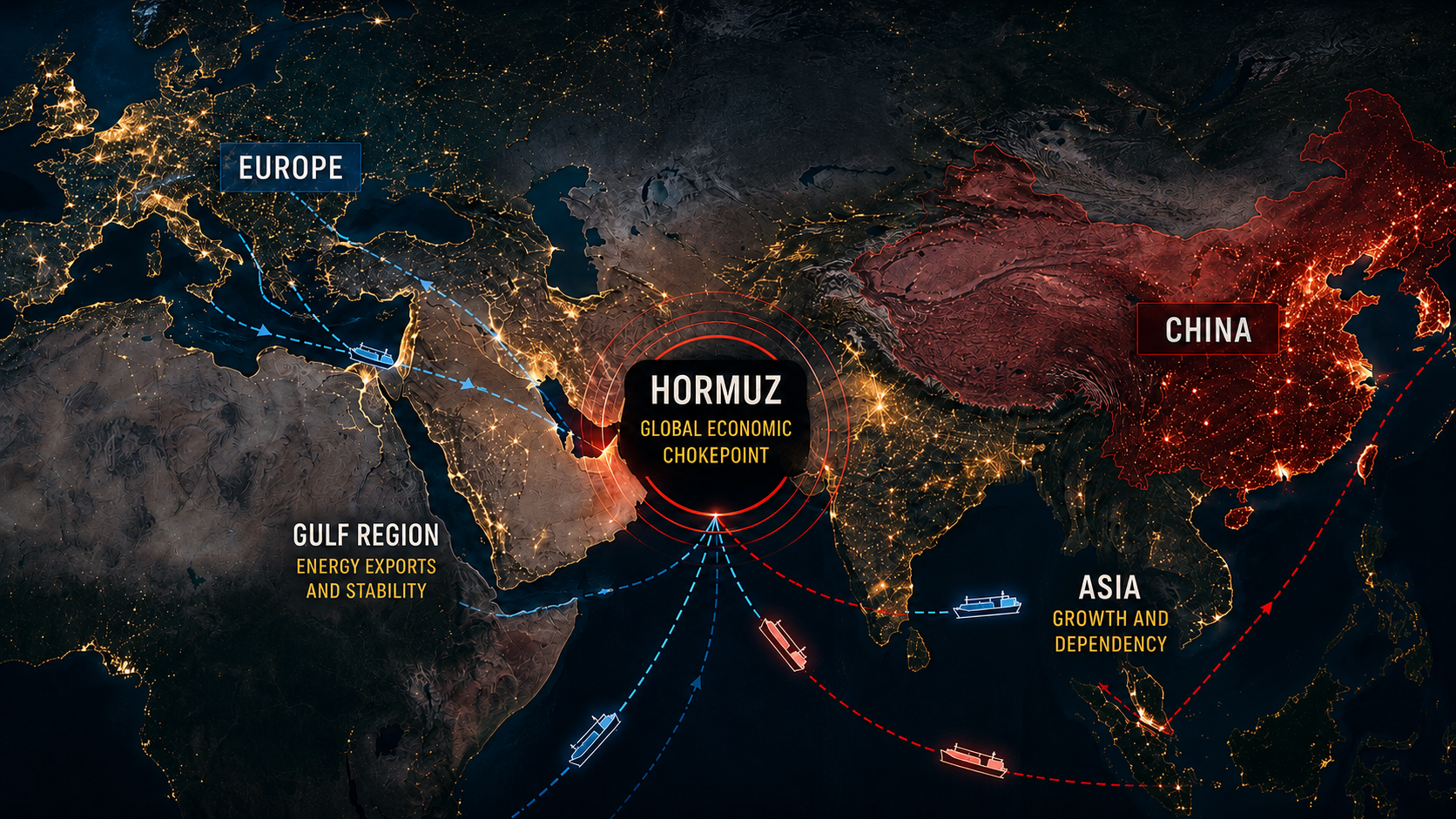
This Chokepoint Check assesses the current pressure on the Strait of Hormuz, Bab al-Mandab and critical water, power, port and energy infrastructure across the Gulf region. The key question is not merely whether a route remains geographically open, but whether transport, insurance, energy supply and site operations remain operationally viable.
Despite strongly recovering export volumes, repeated physical attacks keep commercial transit at critical risk.
A tanker was struck on October 4 by an unidentified projectile, causing damage to the engine room.
The planned offensive has shifted into active combat operations immediately adjacent to the strategic sea route.
Government forces attacked Houthi positions in Dhubab district today. Initial units of the Giants Brigades reached the Bab al-Mandab area.
Saudi energy infrastructure remains a target of missile and drone attacks; the actual extent of damage remains unclear.
The Houthis claimed attacks on Aramco facilities in Riyadh and the Khurais area. Saudi Arabia has not yet confirmed the claimed damage.
Yemeni government forces attacked Houthi positions on October 5 in Dhubab district, directly overlooking Bab al-Mandab. Initial contingents of the Giants Brigades reached the area.
The previously prepared offensive has now become an active military operation at the chokepoint. Control of Dhubab directly affects access to the southern Red Sea route.
Shipping, crew safety and insurability could deteriorate rapidly. Operational predictability across the Red Sea corridor is falling sharply.
Verification status: confirmed. Two military sources told Reuters about the attack; the Giants Brigades confirmed their arrival in the area. Jerusalem Post / Reuters, October 5, 2026 · SchaafMedia: Middle East Escalation Check from October 3, 2026
The refined-products tanker Chrystal Sky reported several explosions around 60 nautical miles south of Mokha. One explosion occurred only around 100 metres from the vessel.
The vessel was not damaged according to current information and continued its voyage. The incident nevertheless occurred directly within the southern Red Sea/Bab al-Mandab risk zone and coincides with the new ground offensive.
Shipping companies should expect higher protection and rerouting requirements. War-risk and crew exposure could rise further in the short term.
Verification status: confirmed for the explosions. Crew and vessel remained unharmed according to current information; no perpetrator has been confirmed. Seatrade Maritime / UKMTO, October 5, 2026 · SchaafMedia: Iran Check – 5 Escalation Signals from October 4, 2026
The Liberian-flagged tanker Lipsi was struck on October 4 by an unidentified projectile. UKMTO reported damage to the engine room; the crew remained safe.
The incident continues a series of physical tanker attacks. Hormuz therefore remains operationally risky despite higher export volumes and has not returned to commercial normality.
Engine-room damage increases outage, charter and insurance risks. Companies must continue to plan for disruption-prone transport chains.
Verification status: confirmed for the strike and engine-room damage. The perpetrator and projectile type remain unclear; no pollution was reported. Seatrade Maritime / UKMTO, October 5, 2026 · SchaafMedia: Chokepoint Check – Hormuz, Trade Routes & Supply Chain Risks
The Houthis said they had attacked Aramco facilities in Riyadh and the Khurais area using ballistic missiles and drones.
The selected targets involve core Saudi energy infrastructure. Saudi Arabia, however, has not confirmed all reported hits or the claimed extent of damage.
Production and site continuity remain exposed to direct attack. Even unconfirmed damage claims increase price and supply sensitivity.
Verification status: partially confirmed. The Houthi attacks were officially claimed; Saudi Arabia has not yet fully confirmed the reported damage. Business Recorder / Reuters, October 5, 2026 · SchaafMedia: Iran Check – 5 Escalation Signals from October 4, 2026
Foreign and defence ministers and chiefs of general staff from the three states are meeting in Riyadh today in the Strategic Political and Defence Committee.
The meeting is intended to address regional developments and the further institutionalisation of the Makkah Joint Defence Agreement. No new members or concrete new military operations have yet been agreed.
The regional deterrence architecture is becoming more institutionalised. In the short term, however, this does not yet create additional chokepoint guarantees.
Verification status: confirmed by the Turkish Foreign Ministry and Pakistani government sources. Today’s meeting concerns cooperation and institutionalisation. Türkiye Ministry of Foreign Affairs, October 4/5, 2026 · SchaafMedia: Middle East Escalation Check from October 3, 2026
Bab al-Mandab is becoming an active combat zone, while tankers are threatened in both the Red Sea and Hormuz.
Vessels require tighter security measures, while oil producers increasingly redirect exports through alternative routes.
Crude exports temporarily exceed pre-war levels, but around 40 percent bypass Hormuz via pipelines and alternative export routes.
Supply remains available, but transport, insurance and geopolitical risk costs remain structurally elevated.
Tankers continue to be hit in Hormuz, while explosions are being reported near Bab al-Mandab.
Both sea routes remain operationally usable · physical attacks nevertheless prevent a secure normalisationAramco sites remain targets of missile and drone attacks, even though some damage claims remain unconfirmed.
Saudi energy infrastructure remains directly exposed to the military escalationGround offensive, attacks on shipping, energy infrastructure and alliance responses are occurring simultaneously.
Maritime, military, energy and security-architecture risks are simultaneously interconnectedOverall risk remains critical. Two 5/5 signals affect both central chokepoints today or directly from the previous day: active combat near Bab al-Mandab and repeated physical tanker attacks in Hormuz. The 4/5 incident in the Red Sea adds further maritime pressure. The recovery in export volumes therefore does not reduce the accumulated security risk.
Disclaimer: This assessment was prepared with support from our Geo AI. AI can make mistakes. This analysis is intended as a source-based radar for potential escalation signals and does not constitute fully verified intelligence, security, insurance or investment advice. In fast-moving situations, status, source availability and risk assessments may change at short notice.
Independent of the subject covered in this article, this separate Executive Briefing provides an in-depth analysis of another critical risk domain affecting European companies.
The 27-page Executive Briefing “Black Swan Risk Mapping for Europe’s Next Mobility and Infrastructure Shock” examines how geopolitical, infrastructural and administrative developments that are currently viewed in isolation could reinforce one another.
Based on the GFDD Framework™, the report shows how these dynamics could affect operational continuity, access to critical resources and the strategic resilience of companies.
The briefing includes a structured systemic-shock analysis and a directly applicable Business Exposure Checklist for CEOs, CFOs, COOs, investors and strategy teams.
You are currently viewing a placeholder content from X. To access the actual content, click the button below. Please note that doing so will share data with third-party providers.
More Information