Executive Intelligence. Industrial Risk. Geopolitics.
Strategic Sparring
for Decision-Makers
Risk intelligence across technology, law, markets and power dynamics.

Verdeckte Geschäftsrisiken, strategische Widersprüche und kritische Abhängigkeiten frühzeitig erkennen.
Kostenlose Analyse starten →
Verdeckte Machtstrukturen, Führungsrisiken und organisatorische Blockaden frühzeitig erkennen.
Kostenlose Analyse starten →
Geopolitische Risiken, globale Abhängigkeiten und kritische Lieferkettenrisiken frühzeitig erkennen.
Kostenlose Analyse starten →
Identify hidden business risks, strategic contradictions and critical dependencies at an early stage.
Start Free Analysis →
Identify hidden power structures, leadership risks and organizational blockers at an early stage.
Start Free Analysis →
Identify geopolitical risks, global dependencies and critical supply-chain vulnerabilities at an early stage.
Start Free Analysis →
Verdeckte Geschäftsrisiken, strategische Widersprüche und kritische Abhängigkeiten frühzeitig erkennen.
Kostenlose Analyse starten →
Verdeckte Machtstrukturen, Führungsrisiken und organisatorische Blockaden frühzeitig erkennen.
Kostenlose Analyse starten →
Geopolitische Risiken, globale Abhängigkeiten und kritische Lieferkettenrisiken frühzeitig erkennen.
Kostenlose Analyse starten →
Identify hidden business risks, strategic contradictions and critical dependencies at an early stage.
Start Free Analysis →
Identify hidden power structures, leadership risks and organizational blockers at an early stage.
Start Free Analysis →
Identify geopolitical risks, global dependencies and critical supply-chain vulnerabilities at an early stage.
Start Free Analysis →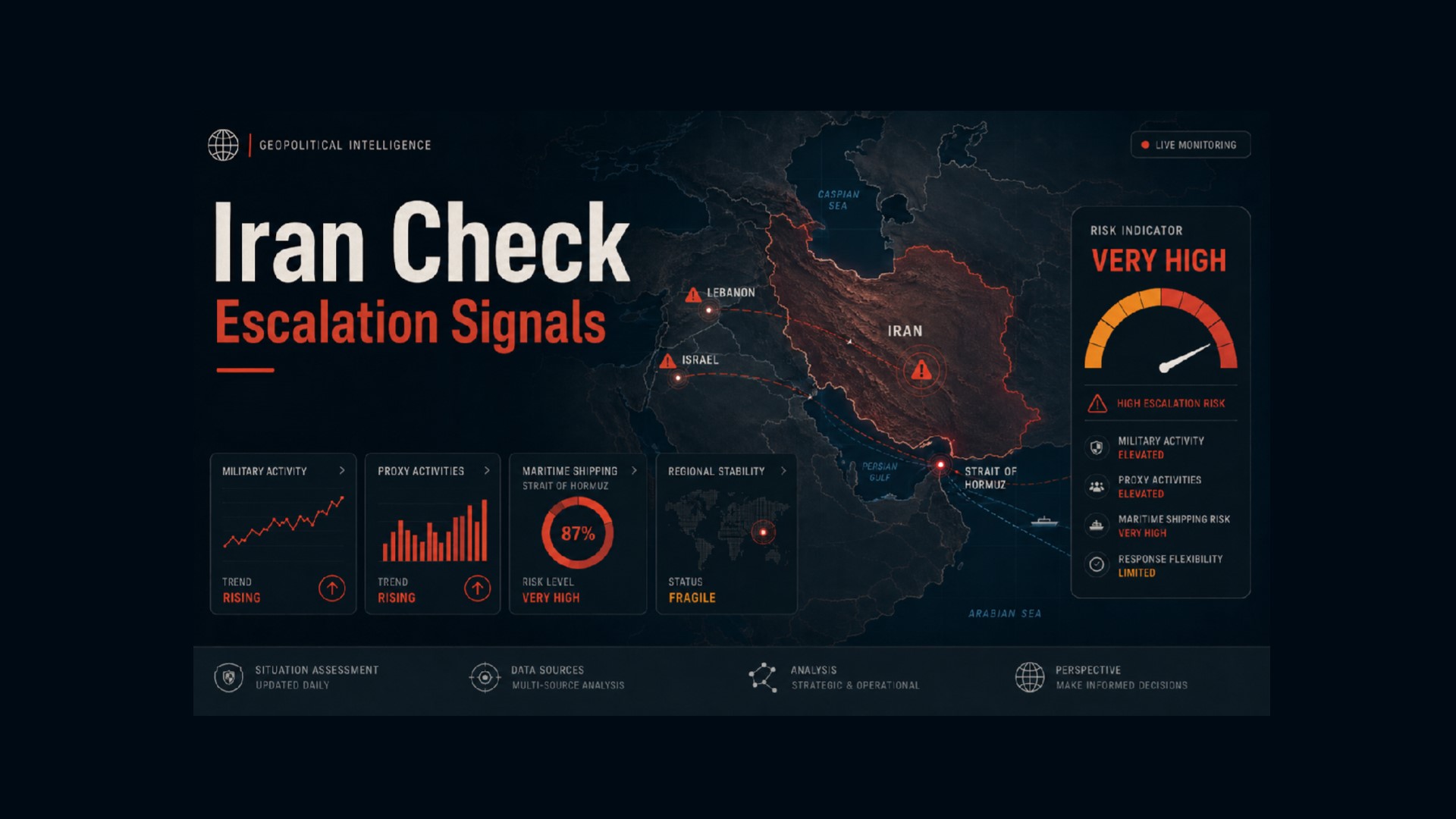
This escalation radar summarizes five relevant signals as of October 6, 2026. The focus is on verifiable statements by official sources, confirmed events and monitoring data with potential implications for energy prices, supply chains, markets, maritime security, aviation and regional stability.
Saudi Arabia, Pakistan and Türkiye agree to immediately begin practical implementation of their mutual-defence commitments. Agreed military forces and capabilities are to be prepared for rapid deployment to Saudi Arabia.
The Panama-flagged MT On Peace is hit by a projectile while transiting Hormuz. Twelve seafarers are injured, including eleven Indian nationals.
Saudi-backed Yemeni forces push the Houthis out of large parts of the coastal zone and say they have reached Mocha. This changes the operational balance around a second global chokepoint.
| Actor | Type | Severity | Status | Source / Verification | Business Impact |
|---|---|---|---|---|---|
| Saudi Arabia / Pakistan / Türkiye / Houthis | Makkah pact activates collective defence and rapid force deployment | Critical · Level 5/5 | The Makkah pact is moving for the first time from political deterrence into operational implementation. The Strategic Political and Defence Committee agrees to immediately implement its collective defence commitments in practical terms. Agreed military forces and capabilities are to be made available for rapid deployment to Saudi Arabia. At the same time, retired Pakistani Lieutenant General Nauman Mahmood is appointed the alliance’s first Secretary-General. The move follows continued attacks on Saudi cities, civilian infrastructure and attempted strikes against Makkah and Medina. Power dynamics: A mutual-defence pledge is becoming a real multinational defence structure for the first time. | Official confirmation: OIC News Agencies / SPA, October 6, 2026 . Verification status: confirmed for the activation, practical implementation of collective defence and rapid availability of agreed forces. The scale, troop numbers and specific rules of engagement have not yet been made public. Background: Schaaf Media · Middle East Escalation Check – October 5, 2026 . | Critical business impact on regional security architecture, Saudi Arabia, military logistics, aviation, energy infrastructure and investment risk. Actual deployment of Pakistani or Turkish forces would significantly internationalize the Yemen conflict. |
| Hormuz / Oman / India / commercial shipping | Commercial vessel hit in Hormuz – twelve seafarers injured | Critical · Level 5/5 | Maritime security is deteriorating again. The Panama-flagged MT On Peace is hit by a projectile while transiting the Strait of Hormuz. Twelve crew members are injured. Eleven of them are Indian nationals. The injured are taken to Khasab with support from Omani authorities. India explicitly condemns the attack and warns of the consequences of repeated attacks on international shipping. Responsibility has not been confirmed. Power dynamics: Despite higher oil flows, the passage remains physically dangerous and directly exposes third countries to risk. | Confirmed by Indian Express, October 6, 2026 . Verification status: confirmed for the impact, twelve injuries, evacuation to Oman and India’s response. The origin of the projectile has not been confirmed. Further analysis: Schaaf Media · Iran Check: 5 Escalation Signals – October 4, 2026 . | Critical business impact on tanker shipping, crew safety, oil, LNG, war-risk insurance and delivery times. Repeated strikes on commercial vessels immediately increase security and personnel costs. |
| Yemen / Saudi Arabia / Houthis / Bab el-Mandeb / Mocha | Saudi-backed government forces push Houthis back from Bab el-Mandeb | High to Critical · Level 4/5 | The operational situation at the second key Middle East chokepoint is shifting significantly. Saudi-backed Yemeni government forces advance along the coastline at Bab el-Mandeb. They seize key positions in the Dhubab district and, according to government statements, reach Mocha. Houthi fighters reportedly withdraw partly into the highlands. The Houthis dispute the extent of the territorial losses. The advance is supported by intensive Saudi air operations. Power dynamics: Control over one of the most important Red Sea routes is shifting back toward government forces. | Current Reuters reporting: Reuters / Internazionale, October 6, 2026 . Verification status: partially confirmed. A significant advance by government forces is confirmed. Reuters could not independently verify the full extent of the territorial gains. Background: Schaaf Media · Iran’s Proxies: The Hidden Escalation Map of the Middle East . | High to critical business impact on Bab el-Mandeb, Red Sea shipping, Suez connections, ports, land logistics and insurance. More stable government control of the coast could reduce chokepoint risk over the medium term. |
| Saudi Arabia / Gulf states / Hormuz / oil market | Gulf oil flows recover strongly – Saudi pipeline reaches 5.8 million barrels per day | High · Level 3/5 | Physical energy supply is stabilizing significantly. Gulf states outside Iran reached an average of more than 81 percent of their pre-war export volumes in September. Crude oil and condensates are already at around 91 percent. Saudi Arabia is increasing its exports particularly strongly. Energy Minister Abdulaziz bin Salman says on October 6 that 5.8 million barrels per day are now being transported through the East-West Pipeline. At the same time, Brent falls back below $100 per barrel. Power dynamics: Alternative routes and higher Gulf exports weaken Iran’s ability to influence global supply through Hormuz alone. | Confirmed by Reuters, October 6, 2026 . Verification status: confirmed for the recovery in regional export volumes and the strong Saudi increase. Iran itself remains largely excluded from this recovery. Background: Schaaf Media · Oil as a Power Instrument: Why Energy Dominates Geopolitics and Markets in 2026 . | High business impact on oil prices, inflation, refineries, transport costs and security of supply. Higher volumes ease physical supply constraints, while attacks, insurance premiums and logistics bottlenecks persist. |
| China / Iran / Iraq / Qatar / U.S. blockade | Chinese refiners increasingly replace Iranian oil with Iraqi and Qatari crude | High to Critical · Level 4/5 | The U.S. blockade is now visibly changing China’s actual procurement. Independent Chinese refiners are buying large volumes of Iraqi and Qatari crude for October and November. At least 12 million barrels have already been booked. Traders estimate total volumes at up to 20 million barrels. At the same time, China’s Iranian oil imports fell in September to around 590,000 barrels per day. This represents roughly a 50 percent decline year on year. Power dynamics: Chinese refiners are beginning to replace Iran operationally with other Gulf producers, while Washington increases pressure on Tehran’s most important export relationship. | Confirmed by Reuters, October 6, 2026 . Verification status: confirmed for the Chinese purchases, the shift toward Iraq and Qatar and the decline in Iranian deliveries. This does not indicate a political break between China and Iran. Further analysis: Schaaf Media · China, the U.S. & Europe: The Battle for Rare Earths . | High to critical business impact on Iran, China, refineries, oil trading, sanctions and pricing. Iran’s financial room for manoeuvre narrows, while Chinese buyers face higher procurement costs and new supply chains. |
The most important strategic development on October 6, 2026 is the activation of the Makkah defence pact. Saudi Arabia, Pakistan and Türkiye are moving from political mutual-defence rhetoric into practical collective defence. Agreed military forces are to be prepared for rapid deployment to Saudi Arabia. This creates an operational multinational security structure outside the United States for the first time.
At the same time, Hormuz remains immediately dangerous. The MT On Peace is hit by a projectile during its passage. Twelve seafarers are injured. India condemns the attack, while responsibility remains unclear. Higher oil flows therefore still do not mean that the sea route has safely normalized.
At Bab el-Mandeb, however, operational control is shifting. Saudi-backed government forces are pushing the Houthis out of key coastal positions and have reached Mocha. Combined with rising Saudi exports, this improves the short-term outlook for energy and transport markets. Military escalation risk in Yemen, however, remains high.
At the same time, the economic front shows growing pressure on Iran. Chinese refiners are increasingly replacing Iranian oil with supplies from Iraq and Qatar. The U.S. blockade is therefore beginning to structurally alter Tehran’s most important export relationship. The mandatory alliance review shows no Iranian accession to the Makkah pact as of October 6. EASA continues to list active CZIBs for Iran, Iraq, Jordan, Lebanon, the Persian Gulf/Gulf of Oman, Saudi Arabia and Yemen; no new revision was published on October 6.
The five most important signals for a European risk assessment are: the first operational activation of the Makkah pact with preparations for rapid military deployments to Saudi Arabia, the renewed attack on a commercial vessel in Hormuz with twelve injured seafarers, the territorial gains by Saudi-backed government forces at Bab el-Mandeb and around Mocha, the strong recovery in Gulf oil flows and throughput through Saudi Arabia’s East-West Pipeline, and the growing shift by Chinese refiners from Iranian crude toward Iraqi and Qatari oil under pressure from the U.S. blockade.
Note: This assessment was prepared with support from our Geo-AI. AI can make mistakes. The analysis is intended as a radar for potential escalation signals and does not replace a fully verified intelligence assessment.
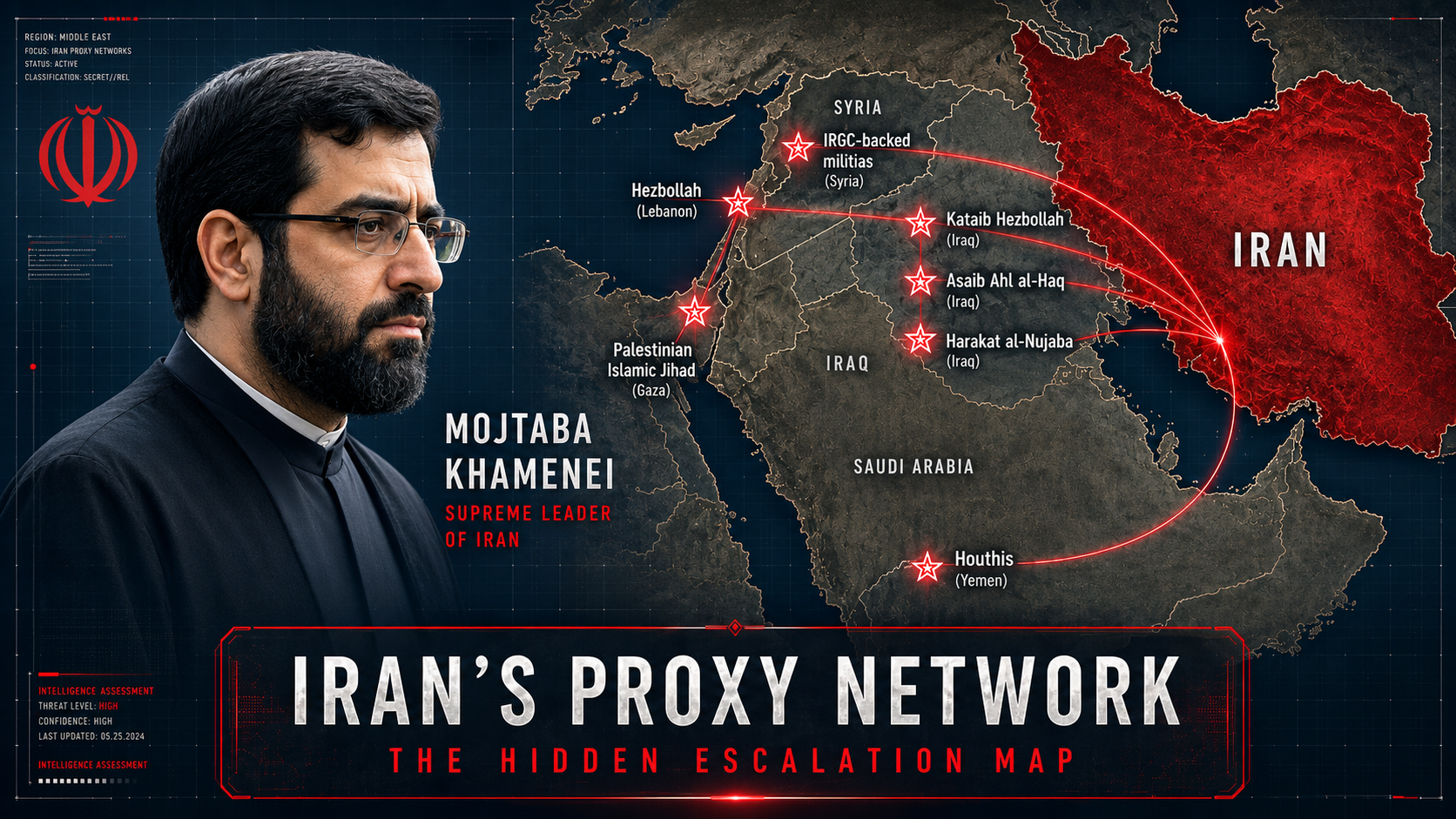
What decision-makers should watch now — before proxy escalation becomes a cost, compliance or supply-chain shock.
This 17-page executive briefing translates Iran’s proxy network into concrete business risks: energy price exposure, maritime chokepoints, war-risk premiums, sanctions, shadow fleets, supply-chain disruption and early-warning indicators for board-level decisions.
You are currently viewing a placeholder content from X. To access the actual content, click the button below. Please note that doing so will share data with third-party providers.
More Information