Executive Intelligence. Industrial Risk. Geopolitics.
Strategic Sparring
for Decision-Makers
Risk intelligence across technology, law, markets and power dynamics.


Verdeckte Geschäftsrisiken, strategische Widersprüche und kritische Abhängigkeiten frühzeitig erkennen.
Kostenlose Analyse starten →
Verdeckte Machtstrukturen, Führungsrisiken und organisatorische Blockaden frühzeitig erkennen.
Kostenlose Analyse starten →
Geopolitische Risiken, globale Abhängigkeiten und kritische Lieferkettenrisiken frühzeitig erkennen.
Kostenlose Analyse starten →
Identify hidden business risks, strategic contradictions and critical dependencies at an early stage.
Start Free Analysis →
Identify hidden power structures, leadership risks and organizational blockers at an early stage.
Start Free Analysis →
Identify geopolitical risks, global dependencies and critical supply-chain vulnerabilities at an early stage.
Start Free Analysis →
Verdeckte Geschäftsrisiken, strategische Widersprüche und kritische Abhängigkeiten frühzeitig erkennen.
Kostenlose Analyse starten →
Verdeckte Machtstrukturen, Führungsrisiken und organisatorische Blockaden frühzeitig erkennen.
Kostenlose Analyse starten →
Geopolitische Risiken, globale Abhängigkeiten und kritische Lieferkettenrisiken frühzeitig erkennen.
Kostenlose Analyse starten →
Identify hidden business risks, strategic contradictions and critical dependencies at an early stage.
Start Free Analysis →
Identify hidden power structures, leadership risks and organizational blockers at an early stage.
Start Free Analysis →
Identify geopolitical risks, global dependencies and critical supply-chain vulnerabilities at an early stage.
Start Free Analysis →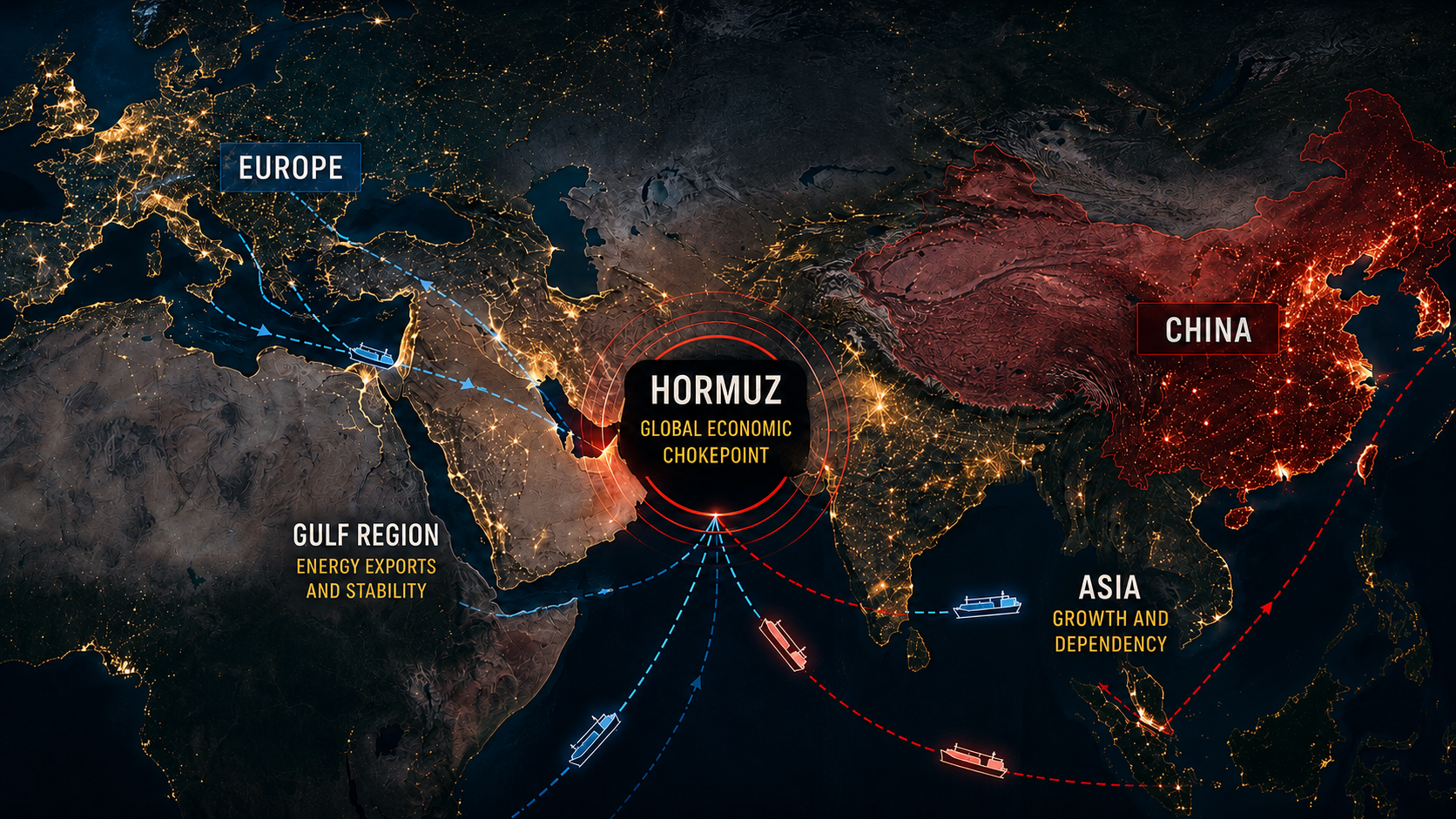
This Chokepoint Check assesses the current pressure on the Strait of Hormuz, Bab al-Mandab and critical water, power, port and energy infrastructure across the Gulf region. The key question is not merely whether a route remains geographically open, but whether transport, insurance, energy supply and site operations remain operationally viable.
Transit remains possible, but repeated attacks are now directly affecting crew safety and vessel operations.
Twelve crew members of the On Peace were injured. Oman evacuated those affected for medical treatment in Khasab.
Fighting along the Red Sea axis is now directly affecting southern Yemen’s most important international aviation link.
Missiles and drones struck the Aden Airport area. A flight from Cairo had to divert to Jeddah.
Missile and drone attacks are again targeting civilian and military infrastructure deep inside Saudi Arabia.
Targets included Riyadh, Abha and Khamis Mushait. Air traffic at King Khalid Airport was temporarily affected.
Twelve crew members of the Panama-flagged tanker On Peace were injured in the attack. Eleven of those injured are Indian nationals.
The projectile strike caused a fire in the engine room. The repeated Hormuz attacks have therefore reached a new operational threshold: crew safety is now directly affected.
Crew, charter and war-risk costs remain extremely high. Shipping companies must additionally factor in medical evacuation and operational downtime risks.
Verification status: confirmed. India confirmed twelve injuries; Oman supported the medical evacuation. The perpetrator remains unidentified. Al Jazeera, October 7, 2026 · SchaafMedia: Chokepoint Check – Hormuz, Trade Routes & Supply Chain Risks
Houthis attacked Aden Airport with ballistic missiles and explosive drones. One projectile struck shortly before the landing of a flight from Cairo.
The aircraft was diverted to Jeddah, while two aircraft on the ground were repositioned. The Bab al-Mandab escalation is therefore directly affecting southern Yemen’s main international aviation corridor.
Flight schedules, personnel rotations and cargo links are becoming less predictable. Companies must plan for diversions and short-notice operational disruptions.
Verification status: confirmed by the Yemeni Transport Ministry and Reuters reporting. No casualties were initially reported. Reuters, October 7, 2026 · SchaafMedia: Middle East Escalation Check from October 5, 2026
Houthis claimed new missile and drone attacks on Saudi Arabia. Targets included the Riyadh area, Abha Airport and military sites near Khamis Mushait and Najran.
Saudi Arabia reported at least one missile interception. Air traffic in Riyadh was briefly disrupted, directly affecting civilian infrastructure.
Aviation and site operations remain directly exposed to disruption. Security, travel and business-continuity costs are rising.
Verification status: partially confirmed. Saudi authorities confirmed interception activity; not all Houthi-claimed strikes were independently verified. Associated Press, October 7, 2026 · SchaafMedia: Iran Check – 5 Escalation Signals from October 6, 2026
US Vice President JD Vance said Iran must substantially reduce its uranium enrichment before Washington would agree to end the conflict.
The demand increases political pressure in the negotiations. At the same time, proposals to end the war and normalise Hormuz remain on the table.
A rapid political easing remains uncertain. Companies therefore need to treat maritime risk premiums as a potentially longer-term cost factor.
Verification status: confirmed through a Reuters interview. This is a political condition, not a new operational measure. Reuters, October 7, 2026 · SchaafMedia: Iran Check – 5 Escalation Signals from October 6, 2026
Chinese independent refiners purchased around 15 to 20 million barrels of additional oil from Iraq and Qatar for October and November delivery.
The shift follows a sharp decline in Iranian deliveries to China. The conflict is therefore already visibly reshaping Asian crude sourcing patterns.
Buyers are competing more aggressively for Iraqi and Qatari barrels. Premiums, sourcing costs and regional dependencies are increasing.
Verification status: confirmed by trader and Kpler data. Iran’s exports to China fell in September to their lowest level since early 2023. Reuters, October 6, 2026 · SchaafMedia: Iran Check – 5 Escalation Signals from October 6, 2026
Tanker crews are being injured in Hormuz, while missiles and drones threaten civilian airports in Yemen and Saudi Arabia.
Crews are evacuated, aircraft are diverted and energy importers are adjusting sourcing strategies.
Oil remains available but is increasingly sourced through costlier routes, alternative suppliers and more complex transport chains.
Insurance, freight, aviation and sourcing costs remain elevated even though physical energy supply continues to function.
Repeated tanker attacks are now causing direct injuries among crew members.
Transit remains possible · crew safety and insurability continue to prevent normal commercial useAden Airport as well as Saudi airports and military sites are being directly attacked.
Civil aviation and critical infrastructure are directly part of the military escalationVessel attacks, airport strikes, sourcing shifts and political war conditions are occurring simultaneously.
Maritime, aviation, energy and supply-chain risks are systemically interconnectedOverall risk remains critical. The 5/5 Hormuz signal is reinforced by two high-to-critical infrastructure and aviation signals. At the same time, China’s sourcing shift shows that the regional escalation is already transmitting into international energy flows. Supply continues to function, but operational security does not.
Disclaimer: This assessment was prepared with support from our Geo AI. AI can make mistakes. This analysis is intended as a source-based radar for potential escalation signals and does not constitute fully verified intelligence, security, insurance or investment advice. In fast-moving situations, status, source availability and risk assessments may change at short notice.
Independent of the subject covered in this article, this separate Executive Briefing provides an in-depth analysis of another critical risk domain affecting European companies.
The 27-page Executive Briefing “Black Swan Risk Mapping for Europe’s Next Mobility and Infrastructure Shock” examines how geopolitical, infrastructural and administrative developments that are currently viewed in isolation could reinforce one another.
Based on the GFDD Framework™, the report shows how these dynamics could affect operational continuity, access to critical resources and the strategic resilience of companies.
The briefing includes a structured systemic-shock analysis and a directly applicable Business Exposure Checklist for CEOs, CFOs, COOs, investors and strategy teams.
You are currently viewing a placeholder content from X. To access the actual content, click the button below. Please note that doing so will share data with third-party providers.
More Information