Executive Intelligence. Industrial Risk. Geopolitics.
Strategic Sparring
for Decision-Makers
Risk intelligence across technology, law, markets and power dynamics.


Verdeckte Geschäftsrisiken, strategische Widersprüche und kritische Abhängigkeiten frühzeitig erkennen.
Kostenlose Analyse starten →
Verdeckte Machtstrukturen, Führungsrisiken und organisatorische Blockaden frühzeitig erkennen.
Kostenlose Analyse starten →
Geopolitische Risiken, globale Abhängigkeiten und kritische Lieferkettenrisiken frühzeitig erkennen.
Kostenlose Analyse starten →
Identify hidden business risks, strategic contradictions and critical dependencies at an early stage.
Start Free Analysis →
Identify hidden power structures, leadership risks and organizational blockers at an early stage.
Start Free Analysis →
Identify geopolitical risks, global dependencies and critical supply-chain vulnerabilities at an early stage.
Start Free Analysis →
Verdeckte Geschäftsrisiken, strategische Widersprüche und kritische Abhängigkeiten frühzeitig erkennen.
Kostenlose Analyse starten →
Verdeckte Machtstrukturen, Führungsrisiken und organisatorische Blockaden frühzeitig erkennen.
Kostenlose Analyse starten →
Geopolitische Risiken, globale Abhängigkeiten und kritische Lieferkettenrisiken frühzeitig erkennen.
Kostenlose Analyse starten →
Identify hidden business risks, strategic contradictions and critical dependencies at an early stage.
Start Free Analysis →
Identify hidden power structures, leadership risks and organizational blockers at an early stage.
Start Free Analysis →
Identify geopolitical risks, global dependencies and critical supply-chain vulnerabilities at an early stage.
Start Free Analysis →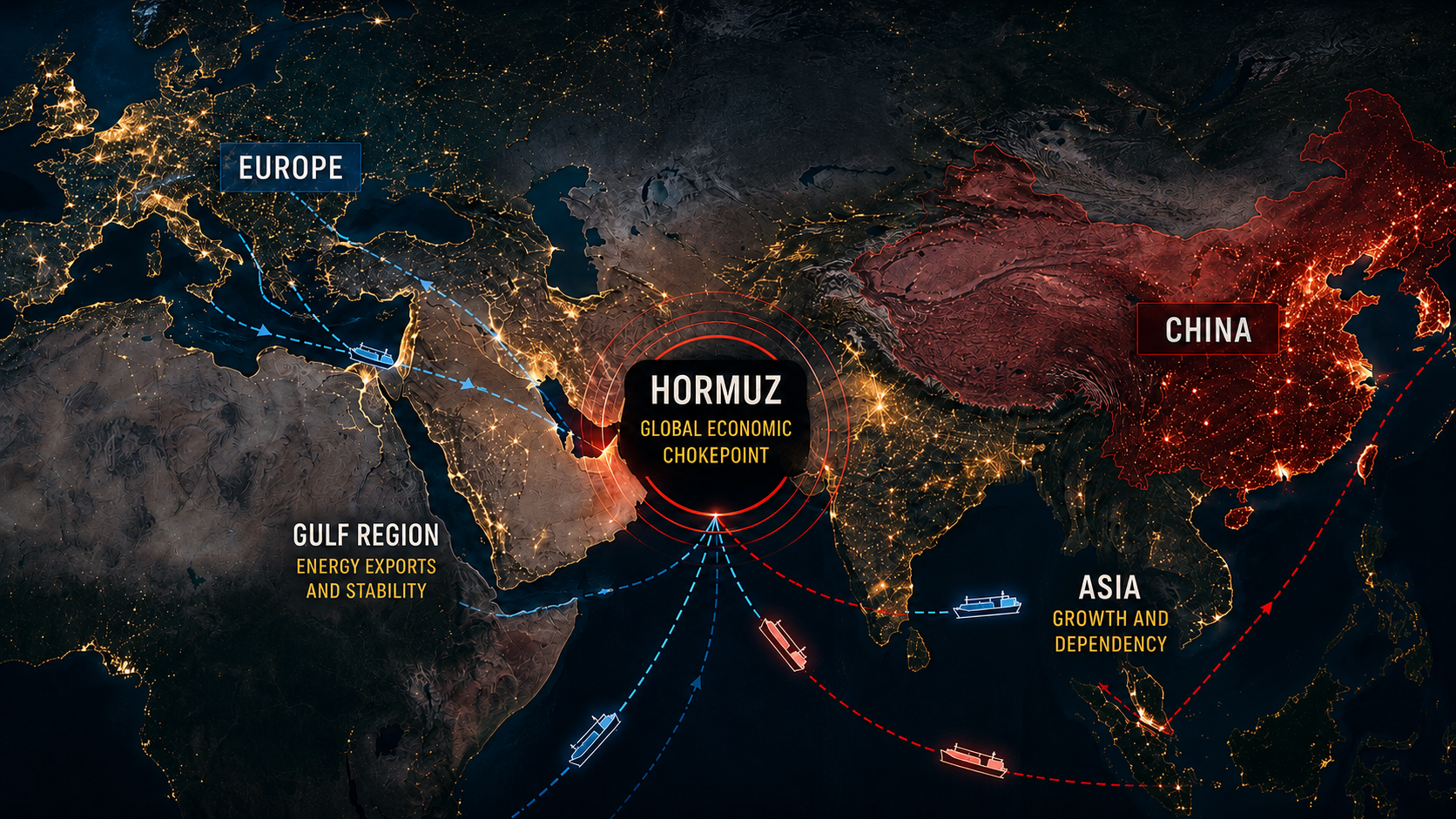
This Chokepoint Check assesses the current pressure on the Strait of Hormuz, Bab al-Mandab and critical water, power, port and energy infrastructure across the Gulf region. The key question is not merely whether a route remains geographically open, but whether transport, insurance, energy supply and site operations remain operationally viable.
Security conditions remain highly risky, but a concrete diplomatic path toward reopening is beginning to take shape.
Tehran is reviewing the US response to a proposal to reopen Hormuz to normal shipping within seven days.
Fighting along the Red Sea axis remains intense and is increasingly drawing in external military capabilities.
Türkiye is considering air defence, electronic warfare and technical support for Saudi Arabia, while ruling out offensive operations.
Repeated attacks on Saudi Arabia’s main international airport are causing fatalities, damage and international flight disruptions.
Saudi Arabia’s aviation authority confirmed three deaths today and several injuries following two attacks on October 8.
Saudi Arabia’s aviation authority confirmed on October 9 that three people were killed and several injured after two attacks on King Khalid International Airport.
The attacks took place on October 8 and also damaged a passenger aircraft. Repeated strikes on an international hub mark a major operational escalation compared with October 7.
Personnel, travel and cargo risks are rising sharply. Companies must plan for flight cancellations, diversions and higher security costs.
Verification status: confirmed by the Saudi General Authority of Civil Aviation as well as Reuters and AP. Airport operations later resumed. Reuters, October 9, 2026 · SchaafMedia: Iran Check – 5 Escalation Signals from October 8, 2026
Lufthansa Group as well as Air India, IndiGo and Akasa suspended flights to Riyadh. Several dozen international services were cancelled on October 8.
The military threat has therefore triggered a concrete international operational response. Some suspensions extend through October 16.
Business travel, staff rotations, air freight and onward connections are becoming less predictable. Alternative routings increase time and cost.
Verification status: confirmed by the affected airlines. The development was published on October 8 and remains directly operationally relevant on October 9. Reuters, October 8, 2026 · SchaafMedia: Iran Check – 5 Escalation Signals from October 8, 2026
Iran says it is reviewing the US response to its proposal to reopen Hormuz to normal shipping within seven days.
President Trump also said he did not plan a new attack on Iran before the US midterm elections. This creates room for diplomacy, but not yet an operational reopening.
An agreement could materially improve insurability and transit planning. Until concrete measures follow, security premiums remain in place.
Verification status: confirmed for the political statements. No agreement or actual normalisation of Hormuz has yet occurred. Reuters, October 9, 2026 · SchaafMedia: Middle East Escalation Check from October 7, 2026
The US Treasury sanctioned 17 vessels as well as additional individuals and networks involved in Iranian energy exports.
US officials said Iran had stopped loading and unloading crude tankers. This operational consequence has not yet been independently confirmed.
Owners, banks, insurers and trading partners involved with Iranian cargoes face higher compliance and sanctions exposure.
Verification status: partially confirmed. The sanctions are official; the claimed complete halt in loading and unloading comes from US government sources. Reuters, October 8, 2026 · SchaafMedia: Iran Check – 5 Escalation Signals from October 8, 2026
Foreign Minister Hakan Fidan said Türkiye was considering contributions in air defence, electronic warfare, logistics and technical support for Saudi Arabia.
Ankara explicitly ruled out offensive deployment of its own forces. Support is defensive for now; Turkish parliamentary ratification of the pact is still pending.
Saudi air defence and Red Sea security gain additional external capabilities. At the same time, dependence on a regional alliance architecture increases.
Verification status: confirmed. Türkiye confirms defensive support, but no offensive troop deployment. Full alliance ratification is still pending. Reuters, October 8, 2026 · SchaafMedia: Middle East Escalation Check from October 7, 2026
Repeated attacks hit an international airport while Hormuz and Iranian oil transport remain under pressure.
Airlines suspend flights, Saudi Arabia reinforces its defences and Iran reviews a possible reopening of Hormuz.
Air traffic reroutes, oil flows shift to alternative routes and additional alliance capabilities protect critical infrastructure.
Travel, insurance, freight, energy and compliance costs remain elevated despite diplomatic progress.
Hormuz remains under severe security pressure while negotiations on reopening continue.
Diplomatic opening possible · safe and normally insurable commercial use has not yet been restoredRepeated attacks on Riyadh Airport cause deaths, injuries and damage to an aircraft.
Civil aviation infrastructure is directly and repeatedly affected by the military escalationAviation disruptions, maritime sanctions, alliance support and chokepoint diplomacy are occurring simultaneously.
Aviation, energy, alliance and maritime risks remain systemically interconnectedOverall risk remains critical. The 5/5 infrastructure signal in Riyadh is reinforced by major operational aviation disruptions, new US sanctions and additional external defence support. Hormuz negotiations are now providing a clear counter-signal, but have not yet sufficiently normalised either the maritime security environment or the broader systemic risk picture.
Disclaimer: This assessment was prepared with support from our Geo AI. AI can make mistakes. This analysis is intended as a source-based radar for potential escalation signals and does not constitute fully verified intelligence, security, insurance or investment advice. In fast-moving situations, status, source availability and risk assessments may change at short notice.
Independent of the subject covered in this article, this separate Executive Briefing provides an in-depth analysis of another critical risk domain affecting European companies.
The 27-page Executive Briefing “Black Swan Risk Mapping for Europe’s Next Mobility and Infrastructure Shock” examines how geopolitical, infrastructural and administrative developments that are currently viewed in isolation could reinforce one another.
Based on the GFDD Framework™, the report shows how these dynamics could affect operational continuity, access to critical resources and the strategic resilience of companies.
The briefing includes a structured systemic-shock analysis and a directly applicable Business Exposure Checklist for CEOs, CFOs, COOs, investors and strategy teams.
You are currently viewing a placeholder content from X. To access the actual content, click the button below. Please note that doing so will share data with third-party providers.
More Information