Executive Intelligence. Industrial Risk. Geopolitics.
Strategic Sparring
for Decision-Makers
Risk intelligence across technology, law, markets and power dynamics.

Verdeckte Geschäftsrisiken, strategische Widersprüche und kritische Abhängigkeiten frühzeitig erkennen.
Kostenlose Analyse starten →
Verdeckte Machtstrukturen, Führungsrisiken und organisatorische Blockaden frühzeitig erkennen.
Kostenlose Analyse starten →
Geopolitische Risiken, globale Abhängigkeiten und kritische Lieferkettenrisiken frühzeitig erkennen.
Kostenlose Analyse starten →
Identify hidden business risks, strategic contradictions and critical dependencies at an early stage.
Start Free Analysis →
Identify hidden power structures, leadership risks and organizational blockers at an early stage.
Start Free Analysis →
Identify geopolitical risks, global dependencies and critical supply-chain vulnerabilities at an early stage.
Start Free Analysis →
Verdeckte Geschäftsrisiken, strategische Widersprüche und kritische Abhängigkeiten frühzeitig erkennen.
Kostenlose Analyse starten →
Verdeckte Machtstrukturen, Führungsrisiken und organisatorische Blockaden frühzeitig erkennen.
Kostenlose Analyse starten →
Geopolitische Risiken, globale Abhängigkeiten und kritische Lieferkettenrisiken frühzeitig erkennen.
Kostenlose Analyse starten →
Identify hidden business risks, strategic contradictions and critical dependencies at an early stage.
Start Free Analysis →
Identify hidden power structures, leadership risks and organizational blockers at an early stage.
Start Free Analysis →
Identify geopolitical risks, global dependencies and critical supply-chain vulnerabilities at an early stage.
Start Free Analysis →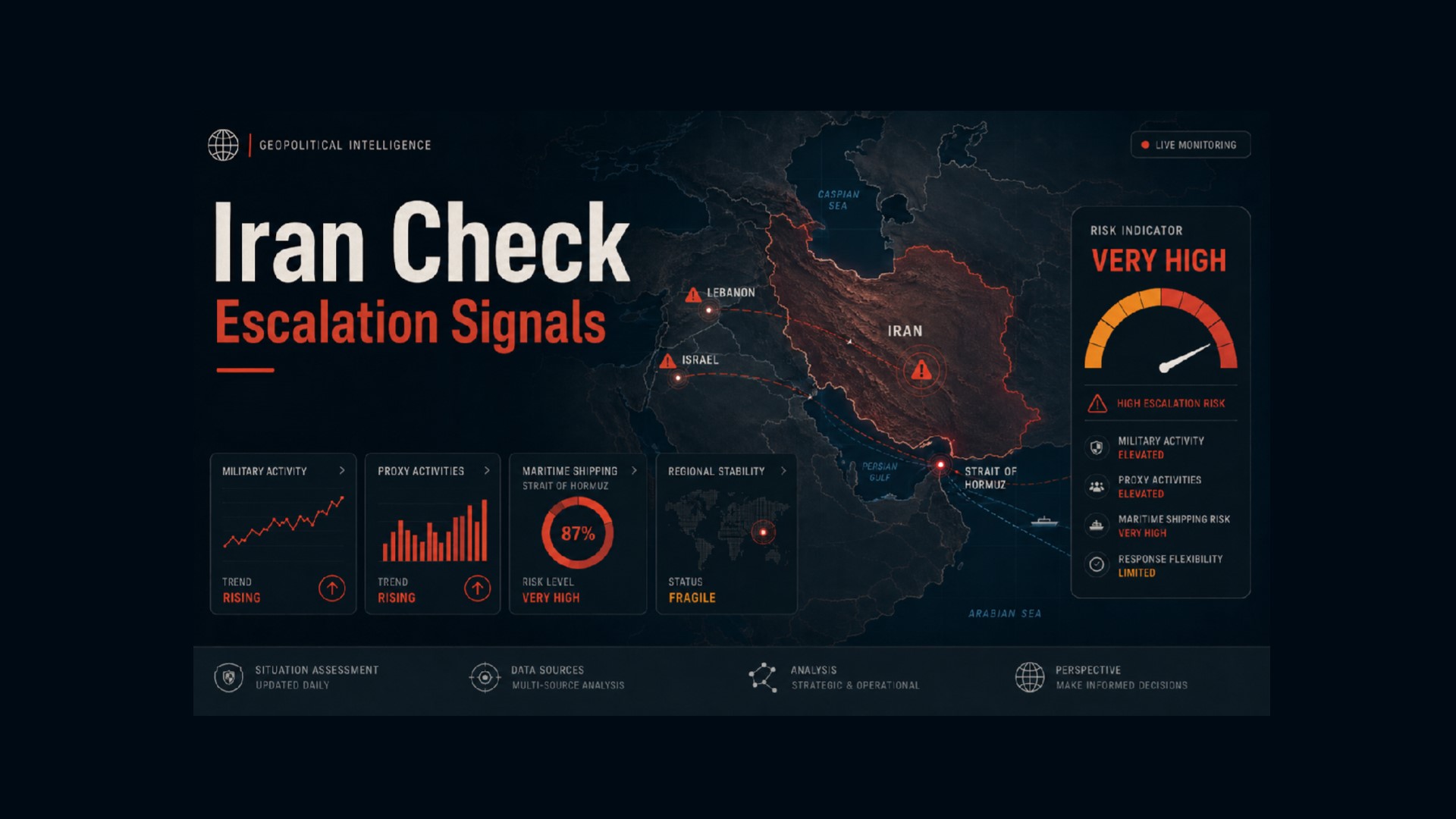
This escalation radar summarizes five relevant signals as of October 10, 2026. The focus is on verifiable statements by official sources, confirmed events and monitoring data with potential implications for energy prices, supply chains, markets, maritime security, aviation and regional stability.
Trump says he will not order new strikes on Iran before the U.S. midterm elections on November 3. At the same time, the blockade, the Hormuz dispute and nuclear issues remain unresolved.
The coalition reports 136 Houthi military targets destroyed and continuous air support. Government forces report more than 2,750 strikes within 24 hours.
The IRGC says vessels Iran considers non-compliant may also be pursued beyond the strait. This increases the risk for commercial shipping across the wider Persian Gulf.
| Actor | Type | Severity | Status | Source / Verification | Business Impact |
|---|---|---|---|---|---|
| United States / Iran / Hormuz | Trump rules out new strikes before U.S. midterms for now | High to Critical · Level 4/5 | Washington is sending a limited de-escalation signal. President Trump says the United States will not strike Iran again before the midterm elections on November 3. At the same time, he describes talks with Tehran as productive. The military option, however, remains on the table. Iran continues to demand an end to the U.S. blockade before a durable ceasefire can be reached. Disputes over Hormuz, uranium enrichment and sanctions also remain unresolved. Power dynamics: The immediate strike risk is declining, but the strategic confrontation remains in place. | Current assessment: AP News, October 10, 2026 . Verification status: confirmed for Trump’s decision not to launch new strikes before the midterms and the continuation of talks. No comprehensive agreement or ceasefire has been reached. Background: Schaaf Media · Iran Check: 5 Escalation Signals – October 8, 2026 . | High to critical business impact on energy, Hormuz, shipping, insurance and investment decisions. In the short term, the risk of a new U.S. strike declines, while in the longer term the blockade and escalation potential remain. |
| Russia / United States / Iran | Russia formally steps into Iran mediation | High to Critical · Level 4/5 | Russia is assuming a more visible role in Iran diplomacy. The Kremlin says on October 10 that Trump welcomed Russian involvement in efforts to reach an agreement with Iran. Putin had previously spoken with President Pezeshkian about the conflict. Moscow is also maintaining its offer to take custody of Iran’s highly enriched uranium. Iran has not yet accepted this proposal. Power dynamics: Russia is moving from being Iran’s strategic partner toward also becoming a potential mediator between Washington and Tehran. | Current reporting: Al Jazeera, October 10, 2026 . Verification status: confirmed for Russia’s willingness to mediate and Trump’s positive reaction according to the Kremlin. A formal mediation mandate or Iranian approval has not been confirmed. Further analysis: Schaaf Media · Iran War: How the West Is Fighting and Losing Its Dominance . | High to critical business impact on sanctions, oil trade, Iran risk, Russia-related exposure and geopolitical planning. Successful mediation could reduce risk; at the same time, Moscow would gain additional influence over the regional order. |
| Israel / Iran / Lebanon / Syria | Israel strikes alleged Iran-directed actor deep inside Lebanon | Critical · Level 5/5 | The Iran-Israel confrontation is once again directly linking Lebanon and Syria. An Israeli drone strike hits a vehicle in the Hermel district near the Syrian border. Six people are injured: five Syrians and one Lebanese national. Israel says the target was a Syrian actor who, under direction from the Iranian regime, was preparing attacks against Israeli forces in southern Syria. It is the first deeper Israeli strike inside Lebanon since the June agreement. Power dynamics: Israel is signaling that Iranian operational networks remain targets even beyond traditional front lines. | Confirmed by Al Jazeera, October 10, 2026 . Verification status: confirmed for the strike and six injuries. The alleged Iranian direction is based on statements by the Israeli military and has not been independently confirmed. Background: Schaaf Media · Iran’s Proxies: The Hidden Escalation Map of the Middle East . | Critical business impact on Lebanon, Syria, border regions, aviation, site continuity and insurance. A resumption of deeper strikes increases the risk that the Iran-Israel front expands geographically again. |
| Saudi Arabia / Yemen / Houthis / Makkah Pact | Saudi-led coalition massively expands operation – 136 Houthi targets reported | Critical · Level 5/5 | The Yemen front is escalating further on an operational level. The Saudi-led coalition announces a large-scale operation against Houthi forces on October 10. According to its own figures, 136 military targets in Houthi-controlled areas have been destroyed. The coalition is simultaneously providing round-the-clock air support to government forces. Yemeni government forces additionally report more than 2,750 strikes against Houthi positions within 24 hours. The reported Houthi casualty figures have not been independently confirmed. Power dynamics: A limited counteroffensive is developing into a large-scale air and ground war. | Current regional source: Anadolu Agency, October 10, 2026 . Verification status: confirmed for the announcement of the large-scale operation and the coalition’s claims. The extent of damage and Houthi losses have not been independently verified. Background: Schaaf Media · Middle East Escalation Check – October 9, 2026 . | Critical business impact on Yemen, Saudi Arabia, Bab el-Mandeb, Red Sea shipping, aviation and humanitarian supply. EASA has additionally expanded its Saudi Arabia advisory following the Houthi attacks. Flight diversions, cancellations and higher insurance costs remain likely. |
| Iran / IRGC / Hormuz / Persian Gulf / commercial shipping | Iran expands maritime threat zone beyond Hormuz into the Persian Gulf | Critical · Level 5/5 | Iran is significantly tightening its maritime strategy. The IRGC says measures against vessels Iran considers non-compliant will no longer be restricted to the Strait of Hormuz. Vessels classified by Tehran as using unauthorized routes may also be pursued and “punished” beyond the strait. Companies accused by Iran of cooperating with the United States may face sanctions, while their vessels could become potential targets. In parallel, the IRGC claims responsibility for an attack on the MV Sun Shine in Hormuz. Maritime authorities additionally report further strikes on commercial vessels in the Persian Gulf. However, no formal closure of the entire Persian Gulf has been declared. Power dynamics: Iran is attempting to expand its maritime deterrence zone from the Hormuz chokepoint into the wider Gulf. | Confirmed as an Iranian threat by Euronews, October 9, 2026 . Verification status: confirmed for the IRGC threat to pursue vessels beyond Hormuz, as well as for its claim of responsibility for the attack on the MV Sun Shine. A complete closure of the Persian Gulf has not been confirmed. Further analysis: Schaaf Media · Strait of Hormuz Blockade 2026: Protecting Margins and Supply Chains in the Chokepoint Shock . | Critical business impact on tankers, LNG and oil shipments, UAE, Qatar, marine insurance and delivery times. Particularly relevant: The security risk is no longer limited to passage through Hormuz. Shipping companies must now also account for elevated attack and diversion risks across the wider Persian Gulf. |
The most important political development on October 10, 2026 is a short-term easing of tensions between Washington and Tehran. Trump rules out new U.S. strikes before November 3 for now. At the same time, indirect talks continue. The blockade, Hormuz issue and nuclear disputes remain unresolved. The immediate risk declines, but the conflict itself is far from over.
At the same time, the diplomatic architecture is broadening. Russia is now visibly positioning itself as a mediator. According to the Kremlin, Trump welcomes Moscow’s involvement. This creates a new link between the Iran conflict, Russian foreign policy and global energy diplomacy.
Operationally, however, the situation continues to deteriorate. Israel strikes deep inside Lebanon near the Syrian border. In parallel, the Saudi-led coalition sharply intensifies its Yemen offensive. Government forces report more than 2,750 strikes within 24 hours. This increases the risk of further Houthi retaliation against Saudi Arabia, aviation and Bab el-Mandeb.
Particularly relevant is Iran’s new maritime threat. The IRGC says vessels classified by Tehran as non-compliant may in future be pursued and attacked even beyond Hormuz. This potentially expands the risk zone across the wider Persian Gulf. However, no formal closure of the entire Gulf has been declared. The mandatory alliance review shows no new Iranian membership, partner or observer status as of October 10. Pakistan confirms, however, that substantial forces and resources are already stationed in Saudi Arabia. The Makkah pact is intended to remain explicitly defensive; Pakistani forces are not to be used for attacks in Yemen. EASA has also expanded its Saudi Arabia advisory following the latest Houthi attacks.
The five most important signals for a European risk assessment are: Trump’s temporary decision not to launch new strikes on Iran before the U.S. midterm elections while core disputes remain unresolved, Russia’s newly visible mediation role between Washington and Tehran, the first deeper Israeli strike inside Lebanon since the June agreement against an alleged Iran-directed target, the major expansion of the Saudi-led Yemen offensive with more than 2,750 reported strikes within 24 hours, and Iran’s explicit threat to pursue and attack vessels Tehran considers non-compliant beyond Hormuz across the wider Persian Gulf.
Note: This assessment was prepared with support from our Geo-AI. AI can make mistakes. The analysis is intended as a radar for potential escalation signals and does not replace a fully verified intelligence assessment.
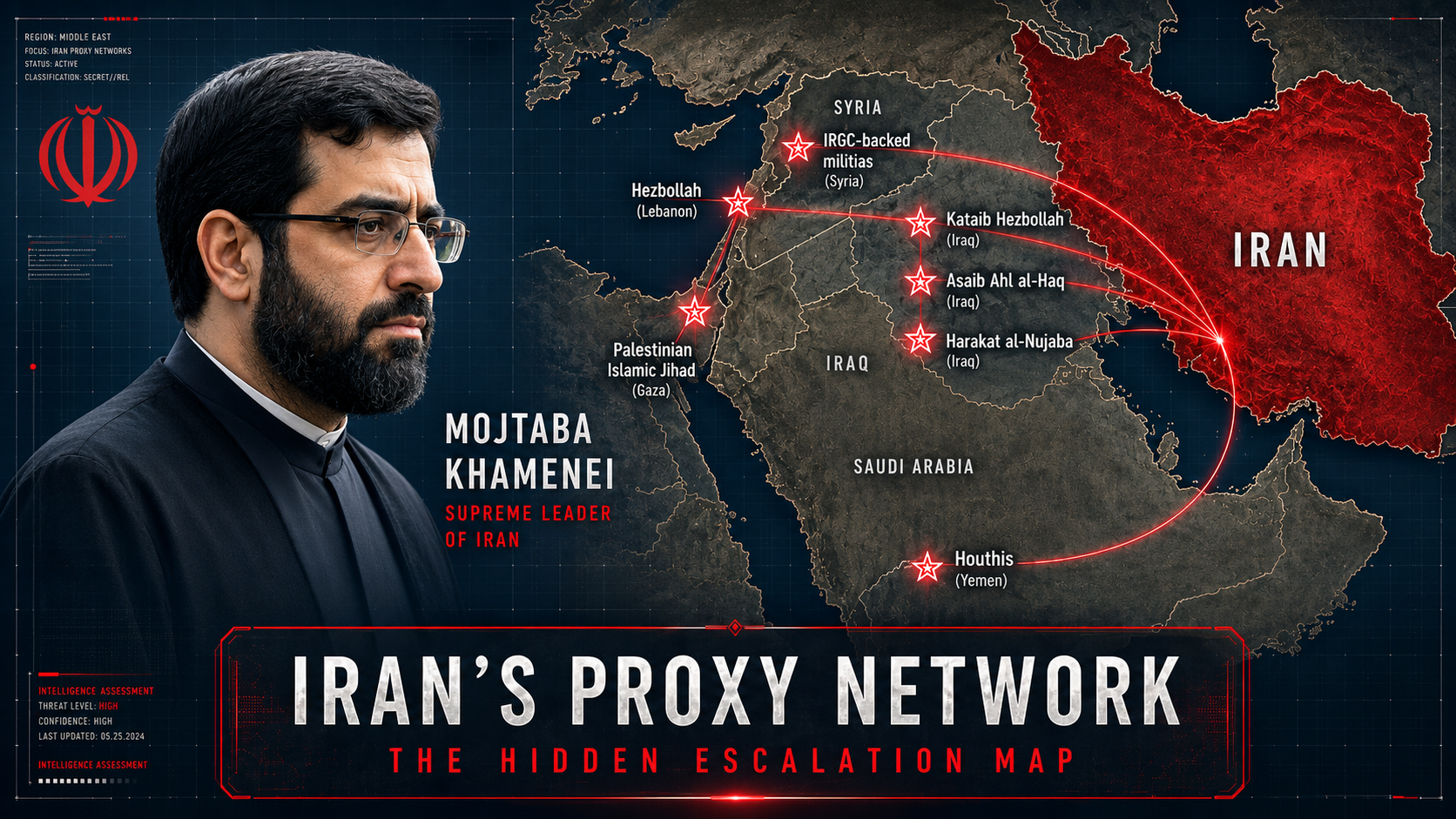
What decision-makers should watch now — before proxy escalation becomes a cost, compliance or supply-chain shock.
This 17-page executive briefing translates Iran’s proxy network into concrete business risks: energy price exposure, maritime chokepoints, war-risk premiums, sanctions, shadow fleets, supply-chain disruption and early-warning indicators for board-level decisions.
You are currently viewing a placeholder content from X. To access the actual content, click the button below. Please note that doing so will share data with third-party providers.
More Information