Executive Intelligence. Industrial Risk. Geopolitics.
Strategic Sparring
for Decision-Makers
Risk intelligence across technology, law, markets and power dynamics.


Verdeckte Geschäftsrisiken, strategische Widersprüche und kritische Abhängigkeiten frühzeitig erkennen.
Kostenlose Analyse starten →
Verdeckte Machtstrukturen, Führungsrisiken und organisatorische Blockaden frühzeitig erkennen.
Kostenlose Analyse starten →
Geopolitische Risiken, globale Abhängigkeiten und kritische Lieferkettenrisiken frühzeitig erkennen.
Kostenlose Analyse starten →
Identify hidden business risks, strategic contradictions and critical dependencies at an early stage.
Start Free Analysis →
Identify hidden power structures, leadership risks and organizational blockers at an early stage.
Start Free Analysis →
Identify geopolitical risks, global dependencies and critical supply-chain vulnerabilities at an early stage.
Start Free Analysis →
Verdeckte Geschäftsrisiken, strategische Widersprüche und kritische Abhängigkeiten frühzeitig erkennen.
Kostenlose Analyse starten →
Verdeckte Machtstrukturen, Führungsrisiken und organisatorische Blockaden frühzeitig erkennen.
Kostenlose Analyse starten →
Geopolitische Risiken, globale Abhängigkeiten und kritische Lieferkettenrisiken frühzeitig erkennen.
Kostenlose Analyse starten →
Identify hidden business risks, strategic contradictions and critical dependencies at an early stage.
Start Free Analysis →
Identify hidden power structures, leadership risks and organizational blockers at an early stage.
Start Free Analysis →
Identify geopolitical risks, global dependencies and critical supply-chain vulnerabilities at an early stage.
Start Free Analysis →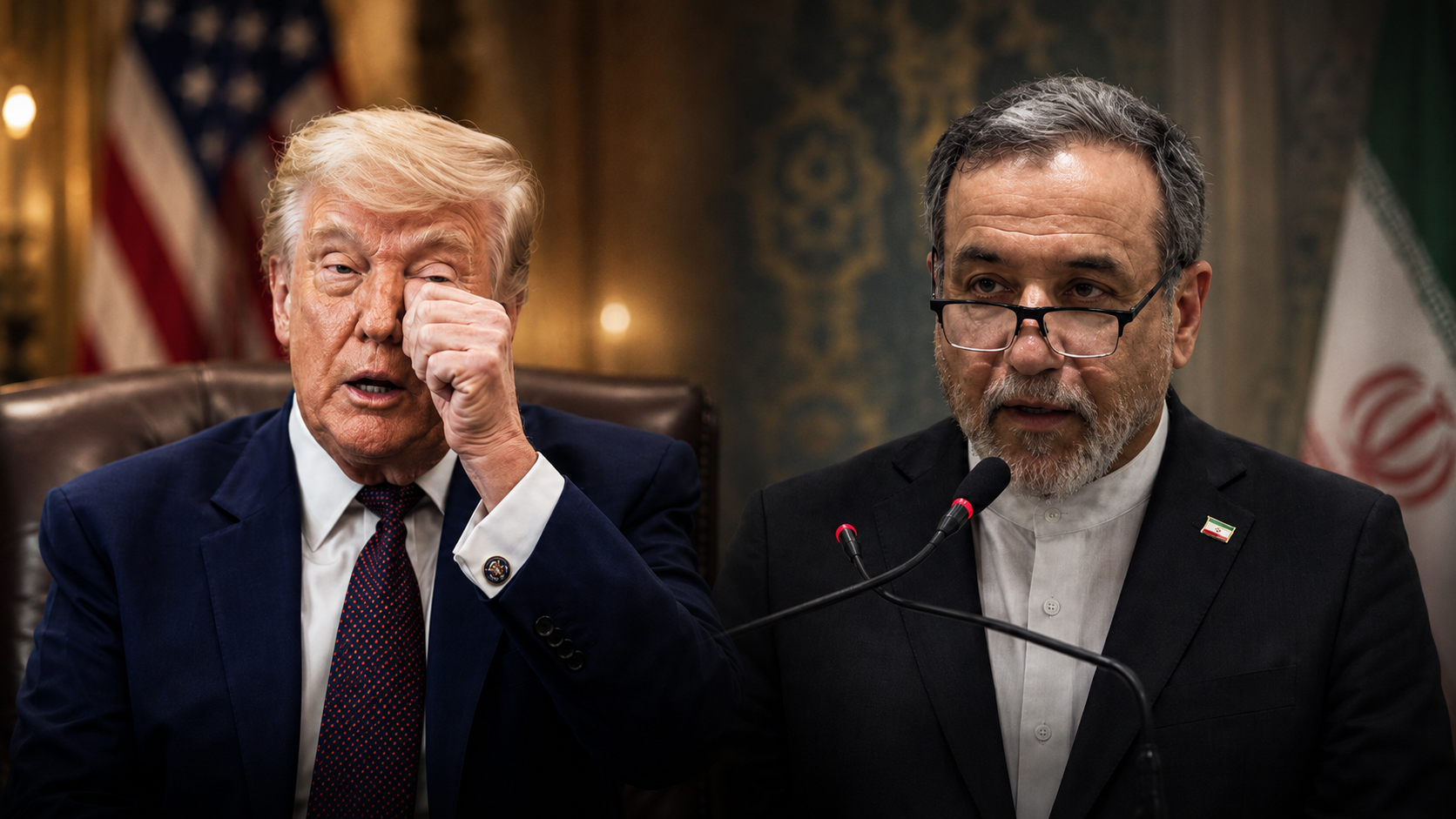
Updated: June 23, 2026
At first glance, the Iran conflict in 2026 looks like a crisis that may be contained through diplomacy: a US-Iran deal, a temporary framework, negotiations over sanctions, the Strait of Hormuz, and a possible return to controlled talks.
But this is exactly where the risk begins.
The official narrative says: the situation is moving toward de-escalation.
The operational reality tells a different story: attacks in the Gulf region, military threats from Washington, Iranian counter-signals, an unresolved Lebanon front, active proxy risks, and ongoing airspace warnings for the Middle East and the Persian Gulf.
The core assessment is clear: the Iran conflict is not resolved. It has simply changed form.
The Iran Check from June 28, 2026 highlights five escalation signals that matter for companies, investors, energy markets, logistics, aviation, insurance, and strategic risk management:
This creates a dangerous gap between diplomatic messaging and the actual risk environment.
For business leaders, the key question is not whether a deal exists.
The key question is whether the underlying conflict logic has changed.
So far, the answer appears to be no.
The official narrative sounds reassuring: the United States and Iran have agreed on a transitional framework. The Strait of Hormuz is expected to remain open. Sanctions could be eased in stages. Iran’s nuclear program may be addressed in later negotiations. A separate Israel-Lebanon framework is supposed to reduce the risk of escalation on Israel’s northern border.
For markets, this narrative matters.
It can temporarily calm oil prices, stabilize equities, reduce immediate geopolitical risk premiums, and create hope for a return to more predictable shipping routes.
But the official narrative has a major weakness: it assumes that all relevant actors are willing to subordinate their military, political, and symbolic interests to diplomacy.
That assumption is not yet supported by the facts on the ground.
A deal on paper does not automatically create strategic trust. It only means that all sides currently have an interest in making escalation appear politically manageable.
The hidden conflict logic is much harder than the official narrative suggests.
Washington must show that attacks on shipping, US assets, or regional partners will not go unanswered. Iran cannot afford to appear defeated, contained, or forced into submission. Israel will not abandon its security interests in Lebanon. Hezbollah cannot accept a framework that could be interpreted as disarmament or political retreat without damaging its own role.
This creates a classic escalation trap:
Every side needs de-escalation externally, but toughness internally.
That is what makes the situation so dangerous.
The conflict may look diplomatically frozen while operational risks continue through drones, missiles, tanker incidents, proxy groups, airspace restrictions, insurance premiums, and political threat communication.
For companies, this distinction is crucial.
Political de-escalation does not automatically mean operational de-risking.
The first and most important signal is the renewed escalation between the United States and Iran in the Gulf region.
Both sides accuse each other of violating the transition agreement. At the same time, attacks, counterattacks, and military warnings continue to shape the risk environment.
The Gulf region is therefore not a stabilized corridor. It remains an active pressure zone.
For companies, this matters because the Strait of Hormuz is not just a geopolitical symbol. It is a critical chokepoint for oil, LNG, maritime trade, insurance, and global supply chains.
Even if the Strait remains formally open, single incidents can be enough to change war-risk premiums, shipping routes, freight costs, delivery times, and procurement planning.
The operational risk does not begin when Hormuz is fully closed.
It begins when market participants start pricing the possibility of disruption.
The second signal concerns Lebanon.
The Israel-Lebanon agreement was designed to create a framework for reducing tensions along Israel’s northern border. But Hezbollah’s rejection of the arrangement keeps Lebanon open as a potential escalation channel.
Israel wants security control. Hezbollah wants to preserve its role as an armed resistance actor. The Lebanese government remains trapped between international pressure, domestic fragility, and the real power of armed groups.
This means Lebanon can become a trigger point for wider regional escalation at any time – even if Washington and Tehran continue talking at the diplomatic level.
For business risk analysis, this is highly relevant.
The Iran conflict is not limited to Iran and the United States. It also runs through Lebanon, Israel, Iraq, Yemen, Syria, the Gulf states, and the wider regional security architecture.
The third signal lies in Iran’s regional power structure.
Iran does not operate only through state institutions, military assets, and formal diplomacy. Tehran also relies on a network of regional allies and proxy forces, including Hezbollah in Lebanon, militias in Iraq, the Houthis in Yemen, and other influence channels across the region.
For the Gulf states, the central issue is not simply whether Iran signs an agreement.
The more important question is whether Tehran actually gives up operational leverage – or shifts pressure to proxy actors instead.
This is where the hidden conflict logic becomes visible.
Diplomatic stabilization can exist on the surface while escalation capacity remains active below the surface.
For companies, the implication is direct: a political agreement does not automatically reduce maritime, energy, aviation, or supply chain risks.
The fourth signal concerns Washington’s tone.
Military threats can create short-term deterrence. But they can also increase pressure on Iran not to back down publicly. The harsher Washington’s rhetoric becomes, the harder it becomes for Tehran to signal restraint without appearing weak domestically.
This is one of the most underestimated mechanisms in geopolitical crises.
Material interests matter. But so do prestige, deterrence, face-saving, symbolic power, and domestic legitimacy.
When one side publicly suggests that it could end the conflict militarily, the other side is pushed toward a counter-performance of strength.
That increases the risk that tactical incidents become strategically overloaded.
A single attack, interception, drone strike, or tanker incident can then trigger a much larger political reaction than the event itself would normally justify.
The fifth signal is especially important because it exposes the gap between political communication and operational risk assessment.
As long as aviation warnings remain active for Iran, Iraq, Lebanon, and the broader Middle East and Gulf region, the situation is not normalized from the perspective of airlines, air cargo operators, insurers, travel security teams, and crisis logistics planners.
This is a strong reality check.
Politicians can talk about de-escalation. Markets can temporarily trade relief. But operational risk functions still have to assess airspace safety, route planning, diversions, insurance exposure, crew security, and delivery reliability.
For companies, this is the level that matters most.
Not the political formula.
But whether people, goods, energy, insurance coverage, and transport routes remain reliably manageable.
One common misunderstanding is that escalation in the Gulf automatically leads to exploding oil prices.
That is not always the case.
Oil prices do not react only to geopolitical risk. They also react to whether actual supply volumes are disrupted. If tankers continue moving, the Strait of Hormuz remains open, and markets believe the escalation can be contained, prices may remain stable or even decline despite military incidents.
But that does not make the situation harmless.
It only means that markets are still pricing continuity.
The strategic risk remains: the more frequent the incidents become, the higher the probability that insurers, shipping companies, energy traders, and governments will reassess the risk model.
That reassessment can happen suddenly.
The real market shock often does not come from the first incident.
It comes when the risk environment becomes too unstable for normal pricing assumptions.
For business leaders, risk managers, investors, logistics teams, and energy-related industries, five operational questions matter most:
The most important management question is not:
Is there a deal?
The more important question is:
Which risks remain active despite the deal?
This is the difference between following the news and conducting strategic risk intelligence.
The Iran conflict in 2026 is neither a linear war nor a stable peace. It is a hybrid interim situation.
On the diplomatic level, there is a de-escalation narrative.
On the operational level, attacks, threats, proxy risks, and airspace warnings remain active.
On the economic level, markets may respond positively to signs of diplomatic relief, while supply chains, insurers, airlines, and logistics operators continue to plan around residual risk.
This is the central point:
The conflict is not over. It has been re-coded.
Open escalation becomes controlled instability. Direct confrontation becomes pressure through intermediaries. War becomes a memorandum. A memorandum becomes a stress test. And a stress test can turn back into an acute crisis at any time.
No. Based on the current risk environment, the US-Iran deal should be understood more as a tactical de-escalation or transition framework than as a real peace agreement. It may help prevent immediate direct escalation, but it does not resolve the structural conflict drivers: Iran’s nuclear program, sanctions, Hormuz, Israel’s security concerns, Hezbollah, and Iran’s regional proxy network.
The Strait of Hormuz is one of the world’s most important energy chokepoints. Oil, LNG, and critical maritime trade flows pass through this corridor. Even without a full closure, attacks, threats, or insurance risks can affect shipping costs, energy prices, logistics decisions, and global supply chain planning.
Lebanon matters because Hezbollah remains a central actor in the regional conflict structure. If Hezbollah rejects an Israel-Lebanon framework or remains militarily active, Lebanon can become a renewed escalation channel. This makes the Iran conflict a wider regional issue involving Israel, Lebanon, Iraq, Yemen, Syria, the Gulf states, and the United States.
No. Diplomatic de-escalation does not automatically mean operational de-risking. Companies still need to monitor airspace warnings, shipping insurance, freight costs, energy prices, maritime incidents, proxy activity, and regional military developments.
Markets often react to short-term continuity. If oil flows continue, tankers keep moving, and a political deal appears possible, markets may remain calm. However, the strategic risk can still increase below the surface. Once insurers, shipping firms, or governments reassess the risk environment, pricing can change quickly.
The key lesson is that official communication does not determine the real risk level. The hidden conflict logic matters more. As long as all sides need de-escalation externally but toughness internally, the situation remains unstable.
The US-Iran deal may help prevent immediate full-scale escalation. But it does not resolve the deeper conflict lines: the Strait of Hormuz, Iran’s nuclear program, Israel’s security concerns, Hezbollah’s role in Lebanon, the Gulf states’ security interests, and Iran’s regional proxy architecture.
That is why the risk level remains high to critical.
For companies, investors, energy firms, logistics operators, insurers, and political decision-makers, the decisive question is not whether official communication sounds reassuring.
The decisive question is whether the hidden conflict logic is actually weakening.
So far, the Iran Check from June 28, 2026 suggests the opposite: diplomacy is building a façade of stabilization while operational escalation signals remain active.
This is not a clear signal of relief.
It is a tactical pause under pressure.
This analysis is part of the ongoing Iran Check and belongs to Schaaf Media’s Geo-Radar: geopolitical news analysis of the last 48 hours for decision-makers, markets, energy, logistics, and strategic risk assessment.
Continue reading:
Author of Global Insight Group Intelligence:
Michaela Schaaf-Hoffelner has more than 35 years of experience in strategic and technical project and product management, particularly in IT, control systems and intralogistics. Through her long-standing work with complex systems, she identifies structural risks and dynamic misalignments at an early stage – risks that are often overlooked in conventional analysis.
Her focus is on making causal relationships and systemic dependencies visible and translating them into concrete strategic advantages for investors and decision-makers. Her analyses combine deep technical systems understanding with geopolitical and economic developments.
GFDD Framework™ and GFDD Diagnostics™ are proprietary analytical concepts developed by Michaela Schaaf-Hoffelner. © 2026 Global Insight Group LLC. All rights reserved.
You are currently viewing a placeholder content from X. To access the actual content, click the button below. Please note that doing so will share data with third-party providers.
More Information