Executive Intelligence. Industrial Risk. Geopolitics.
Strategic Sparring
for Decision-Makers
Risk intelligence across technology, law, markets and power dynamics.

Verdeckte Geschäftsrisiken, strategische Widersprüche und kritische Abhängigkeiten frühzeitig erkennen.
Kostenlose Analyse starten →
Verdeckte Machtstrukturen, Führungsrisiken und organisatorische Blockaden frühzeitig erkennen.
Kostenlose Analyse starten →
Geopolitische Risiken, globale Abhängigkeiten und kritische Lieferkettenrisiken frühzeitig erkennen.
Kostenlose Analyse starten →
Identify hidden business risks, strategic contradictions and critical dependencies at an early stage.
Start Free Analysis →
Identify hidden power structures, leadership risks and organizational blockers at an early stage.
Start Free Analysis →
Identify geopolitical risks, global dependencies and critical supply-chain vulnerabilities at an early stage.
Start Free Analysis →
Verdeckte Geschäftsrisiken, strategische Widersprüche und kritische Abhängigkeiten frühzeitig erkennen.
Kostenlose Analyse starten →
Verdeckte Machtstrukturen, Führungsrisiken und organisatorische Blockaden frühzeitig erkennen.
Kostenlose Analyse starten →
Geopolitische Risiken, globale Abhängigkeiten und kritische Lieferkettenrisiken frühzeitig erkennen.
Kostenlose Analyse starten →
Identify hidden business risks, strategic contradictions and critical dependencies at an early stage.
Start Free Analysis →
Identify hidden power structures, leadership risks and organizational blockers at an early stage.
Start Free Analysis →
Identify geopolitical risks, global dependencies and critical supply-chain vulnerabilities at an early stage.
Start Free Analysis →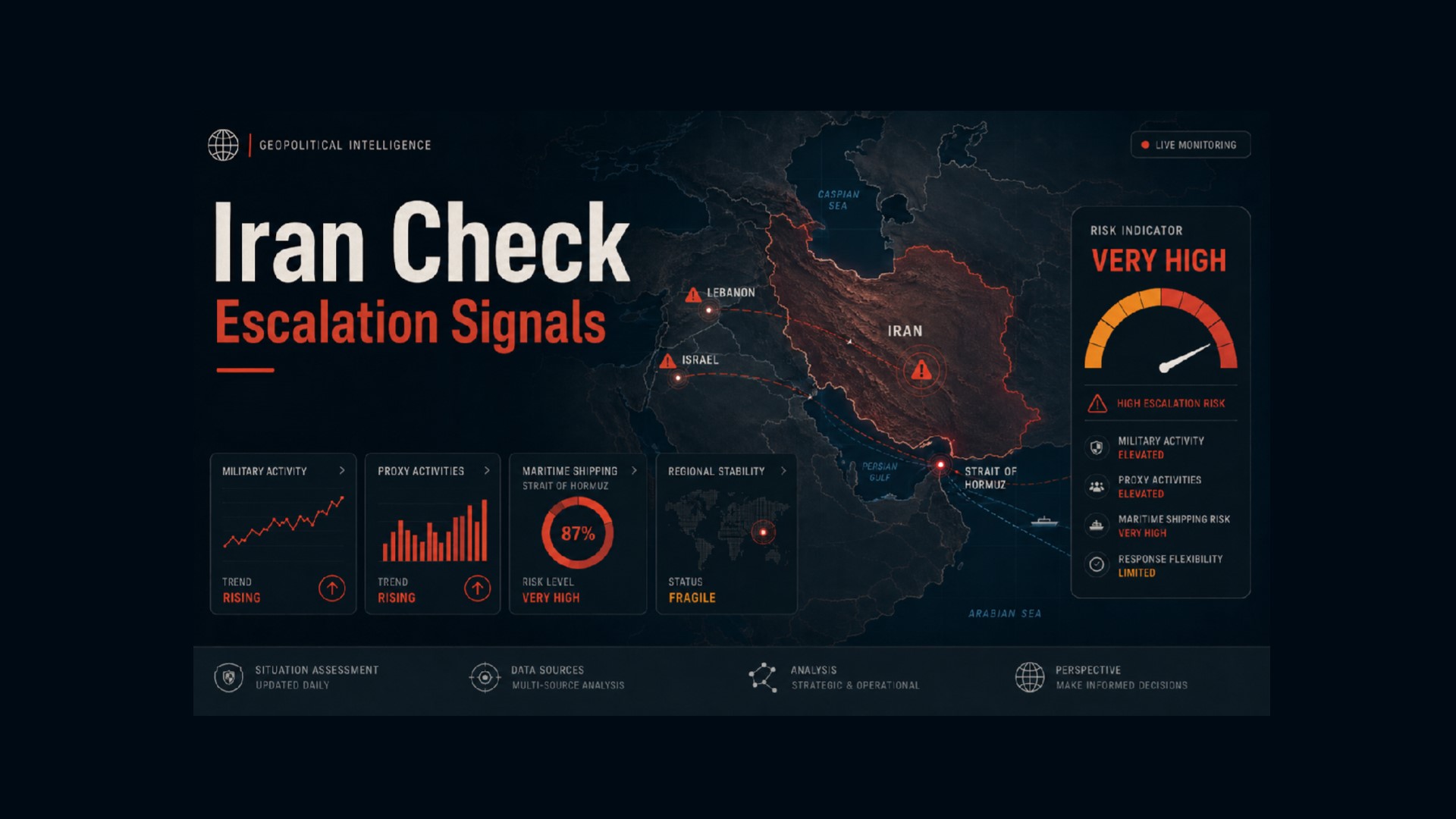
This escalation radar summarizes five relevant signals as of July 8, 2026. The focus is on verifiable statements by official actors, confirmed events and monitoring sources with potential impact on energy prices, supply chains, markets, maritime security, aviation and regional stability.
The key change: a fragile negotiation environment has turned back into direct military escalation. The United States is striking Iranian targets, Iran is attacking US positions in Bahrain and Kuwait, and both sides are accusing each other of breaking the ceasefire or the MOU.
Following attacks on commercial vessels, the risk for transits through the Strait of Hormuz was raised to “severe”. A Qatari LNG tanker and a Saudi oil tanker were damaged, and several oil and gas tankers turned back. This makes Hormuz an acute operational risk again, not just a political pressure instrument.
The Lebanon front remains dangerous because Israel is emphasizing its operational freedom of action against Hezbollah structures, while further strikes, drone surveillance and rescue risks continue to be reported in southern Lebanon. This makes the Lebanon ceasefire more of an unstable control regime than a genuine normalization process.
| Actor | Type | Severity | Status | Source / verification status | Business impact |
|---|---|---|---|---|---|
| United States / Iran / IRGC / Bahrain / Kuwait | Direct military escalation, retaliation strikes and risk of ceasefire breakdown | Critical · Level 5/5 | The escalation reached a new level on July 8, 2026. Reuters reports that the United States launched a new wave of military strikes against Iran following attacks on tankers in the Strait of Hormuz. According to Reuters, the targets included Iranian air defense systems, coastal surveillance, missile positions, drone launch sites and more than 60 IRGC boats. Iran responded, according to the Revolutionary Guards, with missile and drone attacks on US military positions in Bahrain and Kuwait. Bahrain and Kuwait also reported air alerts and active air defense activity. The power dynamic: Washington is trying to militarily restore freedom of navigation and its own role as security guarantor in the Gulf. Tehran is trying to raise the price immediately and is showing that US positions in Gulf states remain part of its retaliation logic. | Confirmed by Reuters, 08.07.2026 and AP News, 08.07.2026. Verification status: confirmed for US strikes, Iranian counterstrikes against US positions in Bahrain and Kuwait, air alerts in Gulf states and mutual accusations of a ceasefire breach; the exact damage picture and military effect remain partly unclear. | Critical business impact on Gulf exposure, energy prices, insurance, military risk premiums, aviation, expat safety, site continuity, crisis logistics, banking and payment risks, as well as companies with offices, suppliers or customers in Bahrain, Kuwait, Qatar, Saudi Arabia, Oman and the United Arab Emirates. |
| Hormuz / QatarEnergy / Saudi Arabia / JMIC / UKMTO | Commercial vessels hit, JMIC risk “severe”, tankers turn back | Critical · Level 5/5 | The operational situation in the Strait of Hormuz has deteriorated significantly. Reuters reports that a Qatari LNG tanker and a Saudi crude oil tanker were damaged near Hormuz. JMIC raised the risk level for vessels transiting the Strait of Hormuz from “substantial” to “severe”. In addition, according to Reuters ship-tracking data, at least four oil and gas tankers aborted their planned passage and turned back. These included empty LNG tankers heading to Ras Laffan and an Indian tanker carrying Kuwaiti crude oil. The power dynamic: Iran is effectively trying to sanction routes that are not approved or not coordinated. The United States, Qatar, Saudi Arabia and shipping actors interpret this as an attack on free passage and global energy security. | Confirmed by Reuters, 07.07.2026 and Reuters, 08.07.2026. Verification status: confirmed for damaged LNG/oil tankers, JMIC risk level “severe”, tanker turnbacks and significantly reduced willingness to transit; it is not fully clear whether Iran is directly responsible for all attacks or whether individual incidents are still subject to forensic verification. | Critical business impact on LNG availability, oil transport, tanker routing, war-risk premiums, insurability, charter costs, spot rates, delivery times, port planning, energy procurement, hedging, commodity prices and companies with Gulf, energy, chemicals, fertilizer, air freight or heavy industry exposure. |
| United States / Iran / oil market / sanctions | Revocation of Iran oil license, oil price jump and economic pressure lever | High to critical · Level 4/5 | In parallel with the military response, the United States has pulled an economic lever. Reuters reports that Washington revoked a general license that had allowed Iran to sell crude oil. The move followed the attacks on commercial vessels in the Strait of Hormuz. According to Reuters, oil prices rose significantly; Brent and WTI gained strongly after the attacks and the license revocation. The power dynamic: Washington is withdrawing a key concession from the previous de-escalation framework. Tehran views this as an additional breach of the MOU and as economic escalation. This shifts the situation from pure military logic to a combined military, energy and sanctions logic. | Confirmed by Reuters, 07.07.2026. Verification status: confirmed for the revocation of the Iran oil license, the oil price jump and the link to the attacks on commercial vessels; it remains open how strongly this step will limit Iran’s actual export capacity in the short term. | High to critical relevance for energy procurement, hedging, inflation expectations, working capital, price pass-through, raw material costs, sanctions assumptions, financial planning, supply contracts and companies whose margins strongly depend on oil, gas, petrochemicals, transport costs or energy intensity. |
| Israel / Lebanon / Hezbollah / United States / Iran | Continued Israeli operations, Hezbollah tunnels and ceasefire as an unstable control regime | High to critical · Level 4/5 | The Lebanon front remains an independent escalation lever, even though the acute main escalation on July 8 is unfolding through Hormuz, Iran, the United States and the Gulf states. L’Orient Today reported new Israeli strikes on Nabatieh al-Fawqa as well as a dangerous drone situation that temporarily prevented rescue teams from reaching the impact site. Netanyahu also stated, according to L’Orient Today, that Trump had not asked him to refrain from striking Hezbollah tunnels in Lebanon; Israel acts according to its own considerations. AP places the situation in a broader context: the Lebanon ceasefire is effectively not a real halt to violence, but a political instrument, while Israel continues to occupy large parts of southern Lebanon and operates against Hezbollah structures. The power dynamic: Israel defines stability through operational freedom of action, tunnel destruction, security zones and pressure on Hezbollah. Hezbollah and Iran, by contrast, define stability through withdrawal, sovereignty and armed deterrence. This means Lebanon remains not merely a secondary front, but a second escalation channel that can destabilize US-Iran de-escalation at any time. | Confirmed by L’Orient Today, 08.07.2026 – Live source, updated Verification status: confirmed for new Israeli strikes in southern Lebanon, operational drone risks for rescue teams and Netanyahu’s statement on Israel’s freedom of action against Hezbollah tunnels; the assessment of the Lebanon ceasefire as an unstable control regime is source-based and analytical. | High relevance for Lebanon and northern Israel exposure, security planning, evacuation, insurance, aviation, humanitarian logistics, regional supply chains, border risks, political risk premiums and companies with personnel, partners or projects in the Levant. |
| EASA / Iran / Iraq / Lebanon / Gulf region | Active aviation warning amid escalating missile, drone and air defense situation | Critical · Level 5/5 | The aviation situation has become even more critical due to the escalation on July 8. EASA continues to list the Conflict Zone Advisory for the Middle East and the Persian Gulf as active. The warning environment particularly affects Iran, Iraq and Lebanon; for other Gulf states such as Bahrain, Kuwait, Qatar, Oman, the United Arab Emirates, Saudi Arabia, Israel and Jordan, increased caution and robust risk assessment are recommended. The current escalation confirms exactly this risk picture: missile and drone attacks, air defense activity in Bahrain and Kuwait, US strikes against Iranian targets, GNSS/navigation risks and military movements around Hormuz are increasing risks for flight routes and air freight. The operational takeaway: aviation and air freight risk must not be inferred from oil price or diplomacy signals alone. | Confirmed by EASA Conflict Zones Advisories, accessed 08.07.2026 and supplemented by AP News, 08.07.2026. Verification status: confirmed for the active EASA warning environment and current military air/missile events in the Gulf region; specific airline route decisions remain dependent on operators, states, insurers and daily risk assessments. | Critical business impact on air freight, airlines, rerouting, spare-parts supply chains, business travel, crisis logistics, airport risk, just-in-time supply chains, insurance, personnel movements and companies with Middle East, Gulf or Asia-Europe air corridor exposure. |
The central escalation node on July 8, 2026 is the return of direct military violence between the United States and Iran. Compared with July 6, the situation has deteriorated significantly: it is no longer only about a negotiation pause, Hormuz control and political threat logic, but about concrete attacks on commercial vessels, US strikes against Iranian targets and Iranian counterstrikes against US positions in Bahrain and Kuwait.
Operationally, Hormuz is once again the most important risk lever. The upgrade of shipping risk to “severe”, damaged LNG and oil tankers, vessels turning back, rising oil prices and the revocation of the US oil license for Iran show that markets can no longer rely solely on diplomatic calming signals. The key question now is whether vessels can actually transit safely, which routes are accepted, who controls the passage and whether insurers, shipowners and energy traders still consider the risk calculable.
Politically, the situation is especially dangerous because both sides are framing their escalation as a response to treaty breach. The United States speaks of protecting freedom of navigation and responding to Iranian attacks. Iran speaks of US aggression, breach of the MOU and illegitimate interference in Hormuz. This dual victimhood and retaliation logic makes the situation more unstable than pure threat rhetoric. In parallel, Lebanon remains a second escalation lever because Israel claims operational freedom of action against Hezbollah structures, while Hezbollah and Iran counter with a logic of withdrawal, sovereignty and armed deterrence.
The five most important signals for a European business risk picture are: new US military strikes against Iran, Iranian attacks on US positions in Bahrain and Kuwait, damaged LNG and oil tankers with JMIC risk level “severe” for Hormuz, the revocation of the US oil license for Iran with an oil price jump, and the Lebanon ceasefire as an unstable control regime with continued Israeli operations against Hezbollah structures.
Note: This assessment was created with support from our Geo AI. AI can make mistakes. This document serves as a radar for potential escalation signals and does not replace a fully verified final intelligence assessment.
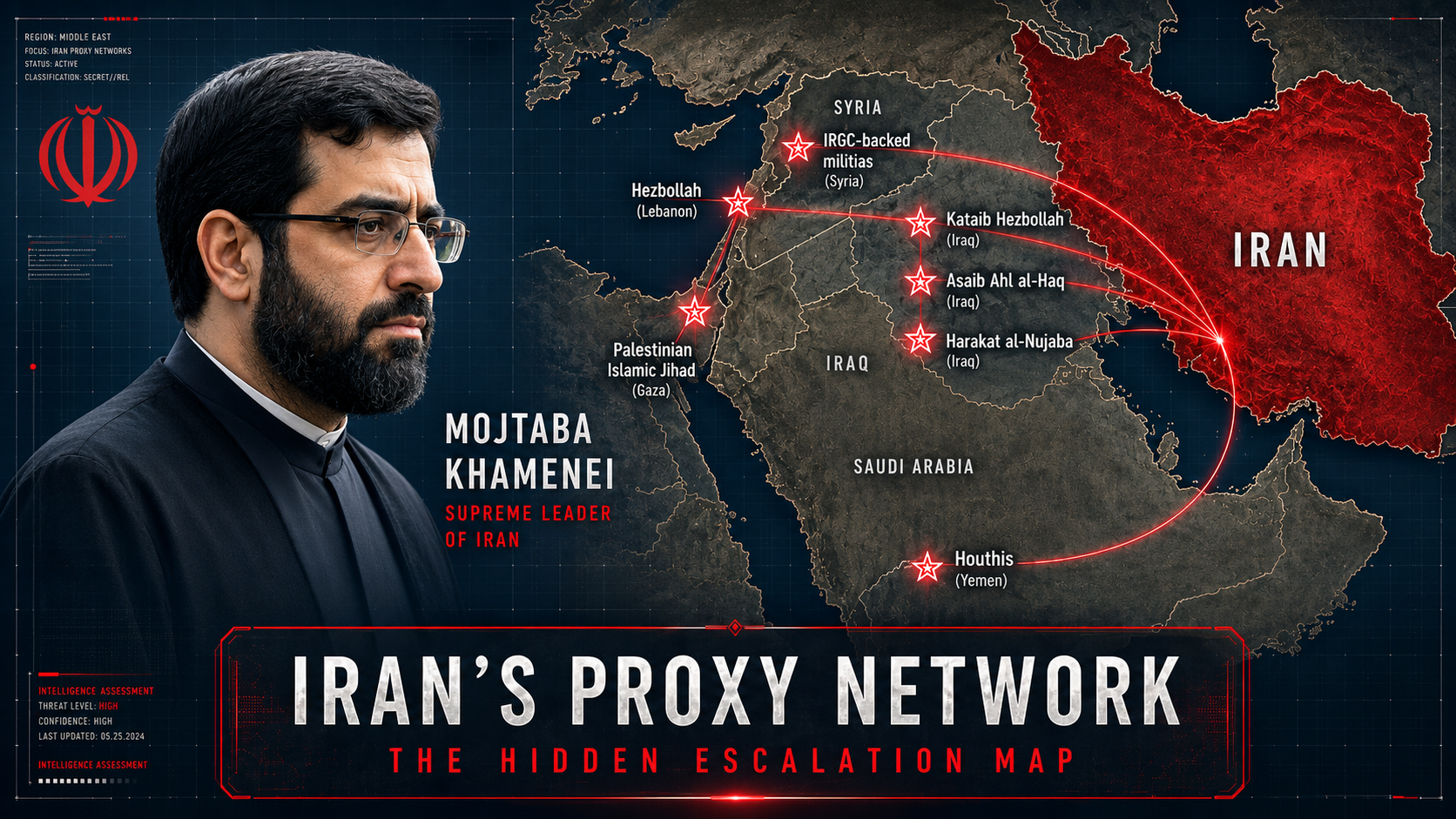
What decision-makers should watch now — before proxy escalation becomes a cost, compliance or supply-chain shock.
This 17-page executive briefing translates Iran’s proxy network into concrete business risks: energy price exposure, maritime chokepoints, war-risk premiums, sanctions, shadow fleets, supply-chain disruption and early-warning indicators for board-level decisions.
You are currently viewing a placeholder content from X. To access the actual content, click the button below. Please note that doing so will share data with third-party providers.
More Information