Executive Intelligence. Industrial Risk. Geopolitics.
Strategic Sparring
for Decision-Makers
Risk intelligence across technology, law, markets and power dynamics.

Verdeckte Geschäftsrisiken, strategische Widersprüche und kritische Abhängigkeiten frühzeitig erkennen.
Kostenlose Analyse starten →
Verdeckte Machtstrukturen, Führungsrisiken und organisatorische Blockaden frühzeitig erkennen.
Kostenlose Analyse starten →
Geopolitische Risiken, globale Abhängigkeiten und kritische Lieferkettenrisiken frühzeitig erkennen.
Kostenlose Analyse starten →
Identify hidden business risks, strategic contradictions and critical dependencies at an early stage.
Start Free Analysis →
Identify hidden power structures, leadership risks and organizational blockers at an early stage.
Start Free Analysis →
Identify geopolitical risks, global dependencies and critical supply-chain vulnerabilities at an early stage.
Start Free Analysis →
Verdeckte Geschäftsrisiken, strategische Widersprüche und kritische Abhängigkeiten frühzeitig erkennen.
Kostenlose Analyse starten →
Verdeckte Machtstrukturen, Führungsrisiken und organisatorische Blockaden frühzeitig erkennen.
Kostenlose Analyse starten →
Geopolitische Risiken, globale Abhängigkeiten und kritische Lieferkettenrisiken frühzeitig erkennen.
Kostenlose Analyse starten →
Identify hidden business risks, strategic contradictions and critical dependencies at an early stage.
Start Free Analysis →
Identify hidden power structures, leadership risks and organizational blockers at an early stage.
Start Free Analysis →
Identify geopolitical risks, global dependencies and critical supply-chain vulnerabilities at an early stage.
Start Free Analysis →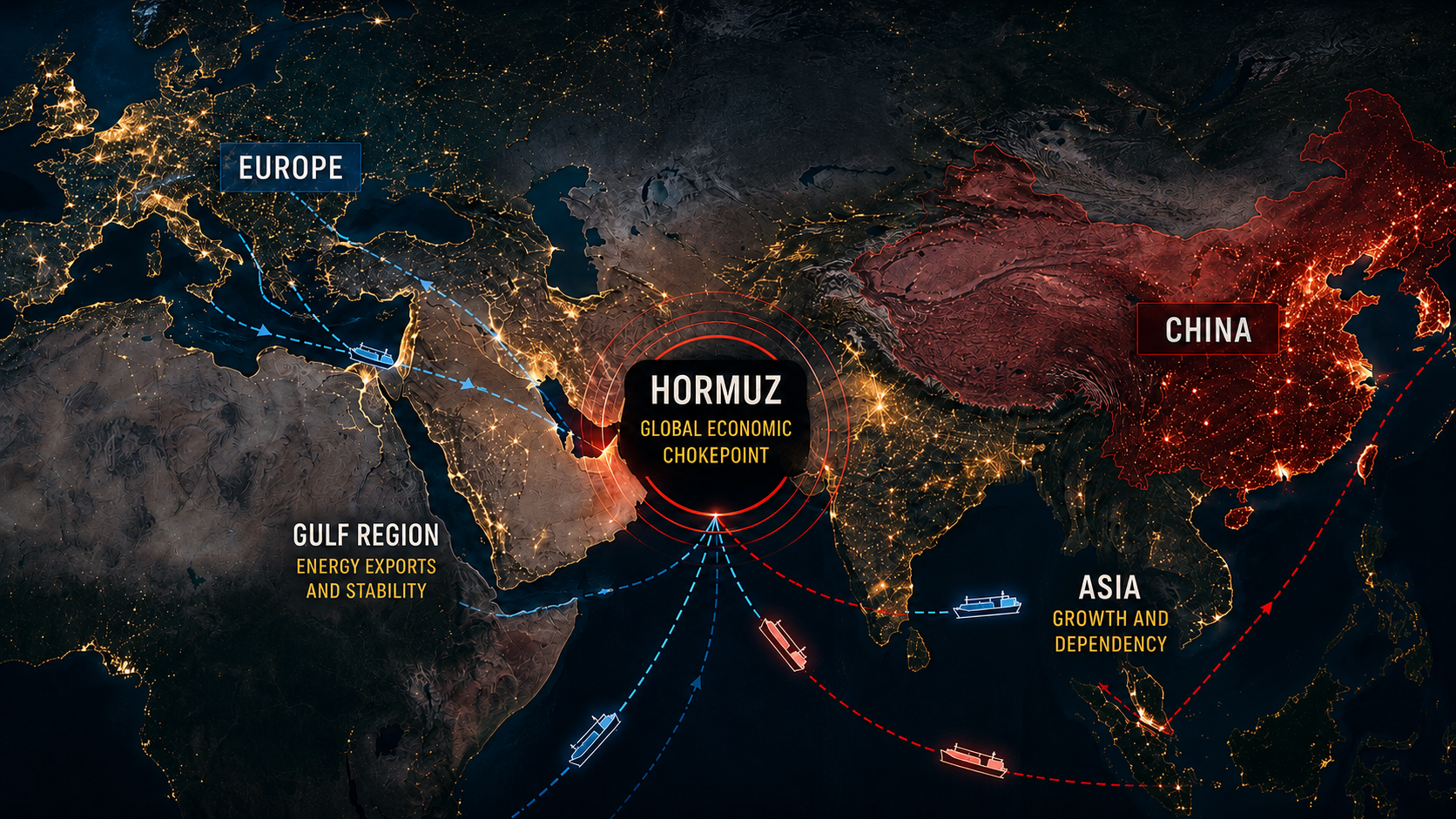
This Chokepoint Check assesses the current pressure on the Strait of Hormuz, Bab al-Mandab and the Gulf region’s critical water, power, port and energy infrastructure. The assessment considers not only whether a shipping route remains geographically open, but whether transport, supply, insurance and site operations remain operationally viable.
The corridor’s physical transport capacity continues to decline.
According to Reuters, only four commodity vessels crossed the strait on Monday, down from seven the previous day. The recorded transits included neither very large crude carriers nor LNG tankers. At the same time, another tanker was attacked and subsequently abandoned by its crew.
The announced Houthi blockade opens a second maritime front.
The Houthis have announced a maritime embargo against Saudi Arabia. A complete operational closure has not yet been confirmed. However, the threat alone is sufficient to increase uncertainty, misidentification risks and additional insurance costs for vessels operating in the Red Sea.
Water and electricity are becoming operational chokepoints.
Kuwait reported damage to a combined power-generation and water desalination facility. A fire was triggered and several generation units were affected. The escalation has therefore reached the utility layer on which cities, industry, cooling systems and business continuity depend.
According to Kpler data, only four commodity vessels crossed the Strait of Hormuz on Monday. Two tankers exited the strait and two vessels entered. No VLCC or LNG tanker transits were recorded.
The corridor is not facing only a political risk of closure. Its observed physical transport capacity has already been substantially reduced.
High relevance for oil and LNG availability, tanker rates, floating storage, charter costs, energy procurement, fertilisers, chemicals and Asia–Europe supply chains.
Verification status: confirmed for the reported vessel movements. AIS and vessel-tracking data may not capture every military or undisclosed movement. Reuters, July 21, 2026
AP reports that Iran attacked a tanker in the Strait of Hormuz, forcing the crew to abandon the vessel. A Greek shipping company separately confirmed that two of its vessels had been struck near Oman.
The risk is no longer limited to threats, jurisdictional claims or a potential closure. Commercial vessels are now directly exposed to physical attacks.
Rising war-risk premiums, potential coverage exclusions, crew-safety risks, higher security costs and further reluctance among shipowners and charterers.
Verification status: confirmed for the tanker attack and evacuation of the crew. The precise extent of the damage and longer-term implications for transit remain unclear. AP News, July 21, 2026
The Houthis declared a maritime embargo against Saudi Arabia. The announced measure targets access to Bab al-Mandab and therefore the southern gateway to the Red Sea.
The specific method of enforcing the blockade remains unclear. Nevertheless, a second risk front is emerging for Saudi exports and for vessels whose ownership or cargo links may be incorrectly assessed.
Red Sea routes, the Suez corridor, Saudi exports through Yanbu, container traffic and energy supply are exposed. Diversions around the Cape of Good Hope extend transit times and absorb additional vessel capacity.
Verification status: confirmed for the blockade announcement. A complete operational closure or systematic enforcement has not yet been confirmed. Reuters, July 20, 2026 · AP News, July 20–21, 2026
Kuwait reported an attack on a combined power-generation and water-desalination facility. A fire was triggered and several generation units were taken offline or otherwise affected.
The infrastructure threshold has therefore been breached. However, there is not yet sufficient evidence of a prolonged, widespread utility outage or the immediate shutdown of major export facilities.
Water and power outages could affect cooling systems, industrial operations, refineries, ports, data centres, airports, telecommunications, workforce support and business continuity.
Verification status: confirmed for the Kuwaiti government account, the fire and the affected generation units. The precise impact of the attack could not initially be fully verified independently. Reuters report on the Kuwaiti statement, July 19, 2026
Brent crude fell by approximately 1.4% on July 21 to around USD 88 per barrel. The decline followed reports of a possible ten-day ceasefire and renewed mediation efforts.
This represents a genuine de-escalation signal at both the political and pricing levels. However, it has neither normalised tanker traffic nor removed the Houthi threat or the physical risk of further attacks.
Companies should not interpret a short-term price decline as evidence that supply security has been restored. Physical availability, insurance conditions and routing remain the more important early-warning indicators.
Verification status: confirmed for the price movement and reported mediation efforts. A credible ceasefire has not yet been confirmed. Reuters, July 21, 2026
Water, power, port or energy infrastructure is struck.
Pumps, cooling systems, cranes, terminals or control systems fail.
Production, loading, exports and site operations slow down.
Prices, lead times, insurance costs and capacity constraints increase.
Tankers have been attacked, transits have fallen sharply and current tracking data show an absence of major crude-oil and LNG movements.
Operational disruption confirmedA combined power-generation and water-desalination facility has been damaged. A fire and affected generation units confirm an operational impact.
Local utility impact confirmedTwo maritime corridors and regional infrastructure are under simultaneous pressure. Evidence is still lacking that Bab al-Mandab or a central alternative route has become operationally unavailable.
Not yet demonstrably breachedOperational escalation signals continue to outweigh de-escalation signals by a significant margin. Political mediation efforts are under way and are already influencing oil prices, but they have not yet produced a visible normalisation of shipping activity, physical security risks or pressure on critical infrastructure.
Note: This assessment was prepared with support from our Geo AI. AI can make mistakes. This publication provides a source-based radar of potential escalation signals and does not replace a fully verified intelligence, security, insurance or investment assessment. In a rapidly evolving situation, the status, source base and risk assessment may change at short notice.
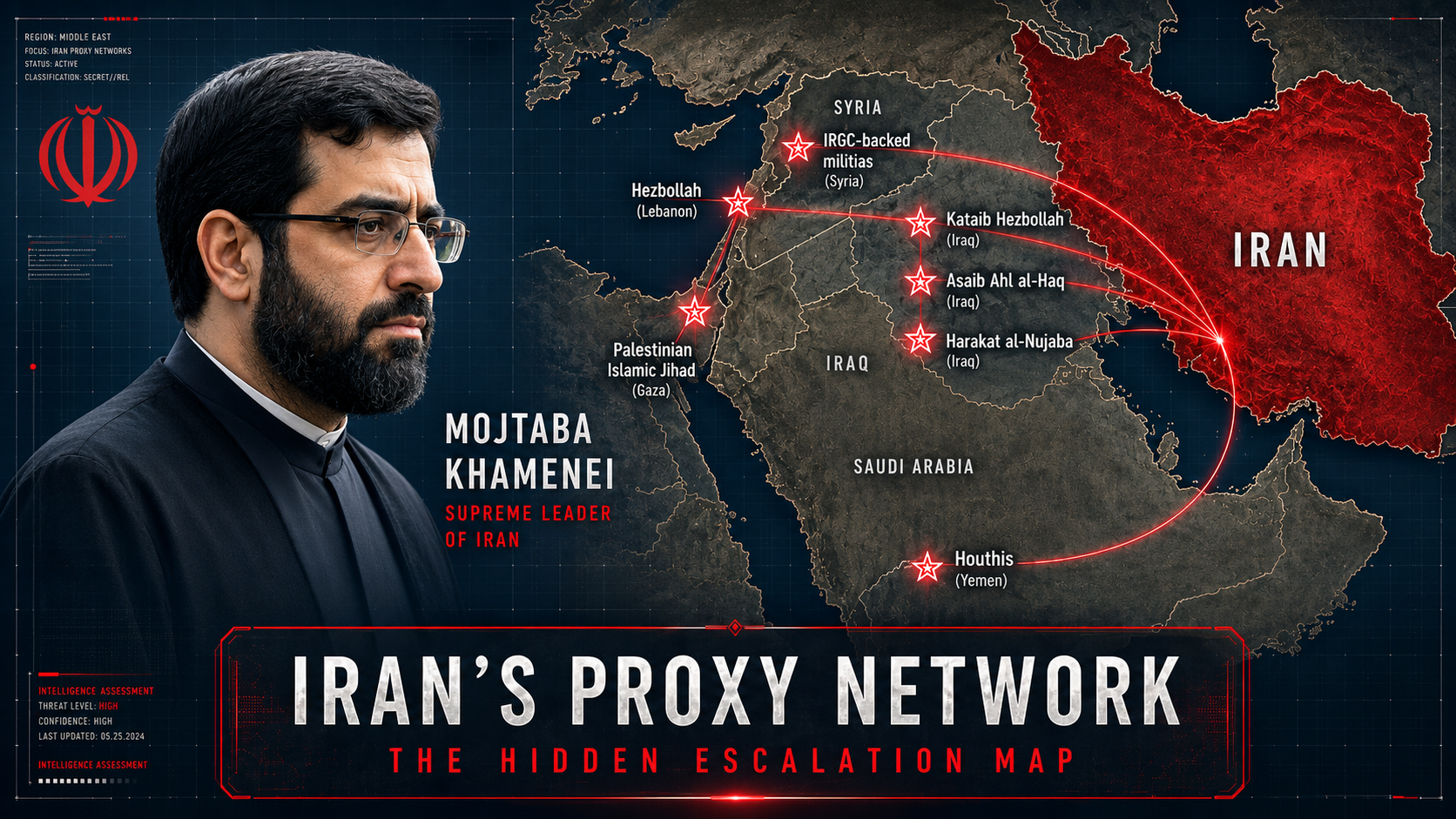
What decision-makers should watch now — before proxy escalation becomes a cost, compliance or supply-chain shock.
This 17-page executive briefing translates Iran’s proxy network into concrete business risks: energy price exposure, maritime chokepoints, war-risk premiums, sanctions, shadow fleets, supply-chain disruption and early-warning indicators for board-level decisions.
You are currently viewing a placeholder content from X. To access the actual content, click the button below. Please note that doing so will share data with third-party providers.
More Information