Executive Intelligence. Industrial Risk. Geopolitics.
Strategic Sparring
for Decision-Makers
Risk intelligence across technology, law, markets and power dynamics.

Verdeckte Geschäftsrisiken, strategische Widersprüche und kritische Abhängigkeiten frühzeitig erkennen.
Kostenlose Analyse starten →
Verdeckte Machtstrukturen, Führungsrisiken und organisatorische Blockaden frühzeitig erkennen.
Kostenlose Analyse starten →
Geopolitische Risiken, globale Abhängigkeiten und kritische Lieferkettenrisiken frühzeitig erkennen.
Kostenlose Analyse starten →
Identify hidden business risks, strategic contradictions and critical dependencies at an early stage.
Start Free Analysis →
Identify hidden power structures, leadership risks and organizational blockers at an early stage.
Start Free Analysis →
Identify geopolitical risks, global dependencies and critical supply-chain vulnerabilities at an early stage.
Start Free Analysis →
Verdeckte Geschäftsrisiken, strategische Widersprüche und kritische Abhängigkeiten frühzeitig erkennen.
Kostenlose Analyse starten →
Verdeckte Machtstrukturen, Führungsrisiken und organisatorische Blockaden frühzeitig erkennen.
Kostenlose Analyse starten →
Geopolitische Risiken, globale Abhängigkeiten und kritische Lieferkettenrisiken frühzeitig erkennen.
Kostenlose Analyse starten →
Identify hidden business risks, strategic contradictions and critical dependencies at an early stage.
Start Free Analysis →
Identify hidden power structures, leadership risks and organizational blockers at an early stage.
Start Free Analysis →
Identify geopolitical risks, global dependencies and critical supply-chain vulnerabilities at an early stage.
Start Free Analysis →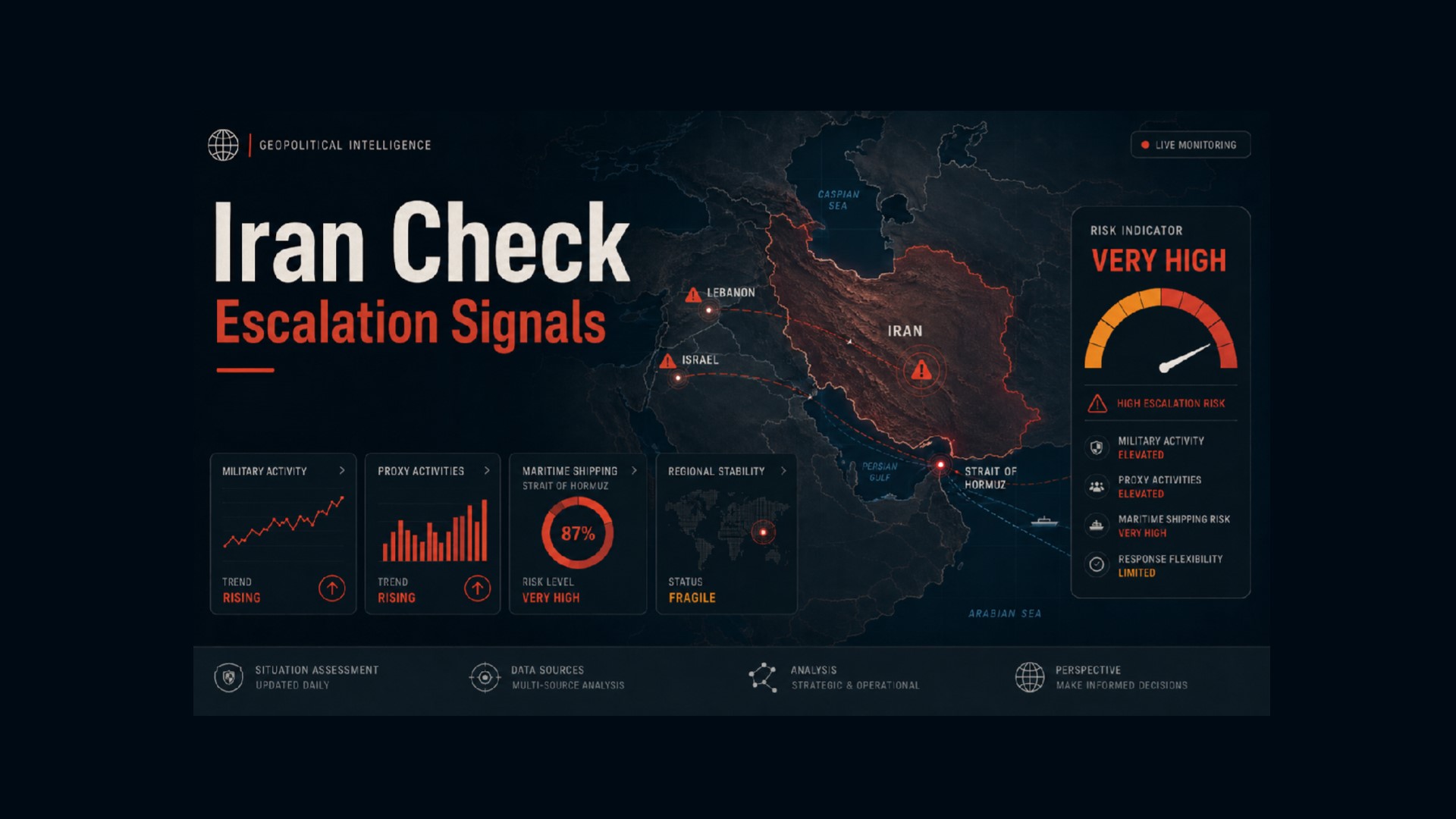
This escalation radar summarises five relevant signals as of August 15, 2026. It focuses on substantiated statements by official bodies, verified events and monitoring sources with potential implications for energy prices, supply chains, markets, maritime security, aviation and regional stability.
ADNOC confirmed on August 15 a new attack on one of its vessels while transiting Hormuz. No injuries were reported, but the repeated incidents demonstrate that even commercial vessels actually using the corridor remain operationally exposed.
Iranian Deputy Foreign Minister Kazem Gharibabadi stated on August 15 that Iran alone decides whether the strait is opened or closed. Tehran is therefore hardening its control claim directly against Trump’s competing US position.
An Israeli airstrike on Ansar killed seven people, including women and children. It is one of the deadliest attacks since the latest ceasefire. A direct sub-theatre of the Iran conflict is therefore escalating again.
| Actor | Type | Severity | Status | Source / Verification Status | Business Impact |
|---|---|---|---|---|---|
| UAE / ADNOC / Iran / Strait of Hormuz | Another ADNOC vessel attacked while transiting Hormuz | Critical · Level 5/5 | ADNOC confirmed on August 15 that one of its vessels was attacked on Friday evening while transiting the Strait of Hormuz. No injuries were reported and the situation on board was brought under control. The key issue is less the damage from this individual incident than the recurring threat to commercial vessels that are actually using the corridor. Power dynamics: Even limited or politically secured transit therefore still does not amount to reliably safe passage. The operational security mechanism remains significantly behind the political negotiations. | Confirmed by Emirates News Agency WAM, August 15, 2026 . Verification status: officially confirmed regarding the attack, its timing and the absence of injuries. WAM does not identify a confirmed attacker in this report. Background: Schaaf Media · Middle East Escalation Check from August 14, 2026 . | Critical business impact on ADNOC, tanker and LNG traffic, crew safety, war-risk insurance, charter costs, delivery times and energy procurement. For companies, the key point remains: geographically possible passage is not the same as operationally safe passage. |
| Iran / United States / Gharibabadi / Strait of Hormuz | Iran claims sole authority to open or close Hormuz | Critical · Level 5/5 | Iranian Deputy Foreign Minister Kazem Gharibabadi hardened Tehran’s control claim on August 15. He stated that aircraft carriers, US orders or political speeches could not open Hormuz. The strait could only be closed or reopened on Iran’s command. Tehran is thereby responding directly to Trump’s claims of US control and possible US territorial rights. Power dynamics: Hormuz is increasingly shifting from a transit issue into an open sovereignty and deterrence conflict. Both sides are asserting political control over the same strategic chokepoint. | Confirmed by IRNA, August 15, 2026 . Verification status: confirmed regarding Gharibabadi’s statement today. Iran’s claim of control is a political and strategic position and should not be equated with complete control over every individual transit. Further analysis: Schaaf Media · Iran War: How the West Is Fighting While Losing Its Dominance . | Critical business impact on crude oil, LNG, insurance, charter agreements, sanctions and compliance risks, energy prices and strategic procurement planning. The more politically controlled Hormuz becomes, the less predictable long-term Gulf supply chains become. |
| Iran / United States / Oman / Qatar / Pakistan / Araghchi | Iran still undecided on resuming direct talks with the United States | High to critical · Level 4/5 | Foreign Minister Abbas Araghchi stated on August 15 that Iran had not yet decided whether to resume direct talks with the United States. Contacts involving Qatar and Pakistan, he said, did not constitute negotiations. Separate talks with Oman continue over a possible shipping route through Hormuz. Tehran is therefore continuing to separate technical transit questions from a political settlement with Washington. Power dynamics: Regional mediation remains active, but the core conflict between the United States and Iran is currently not moving towards substantive peace negotiations. | Confirmed by Al Jazeera, August 15, 2026 . Verification status: confirmed regarding Araghchi’s statements on US talks, Qatar, Pakistan and the separate Oman negotiations. No new negotiating date has been announced. Background: Schaaf Media · Iran Check: 5 Escalation Signals from August 13, 2026 . | High to critical business impact on oil-price expectations, sanctions scenarios, Hormuz routing, trade finance, insurance and investment decisions. Companies should not equate technical progress on transit with political normalisation. |
| Israel / Lebanon / Hezbollah / Iran / southern Lebanon | Israeli airstrike causes one of the deadliest incidents since the ceasefire | Critical · Level 5/5 | An Israeli airstrike hit a residential building near Ansar in southern Lebanon early on August 15. Seven people were killed, including three children and two women; several others were injured. It was one of the deadliest attacks since the latest Israel-Hezbollah ceasefire took effect. Israel also struck the strategically relevant Ali Taher hill near Nabatiyeh. Power dynamics: Lebanon remains a direct sub-theatre of the Iran war. New major Israeli strikes increase the risk of renewed Hezbollah retaliation and therefore of a renewed connection to the direct Iran-Israel confrontation. | Confirmed by Anadolu Agency, August 15, 2026 . Verification status: confirmed regarding the location, casualties and Israeli strike. No immediate large-scale Hezbollah retaliation has yet been confirmed. Background: Schaaf Media · Iran’s Proxies: The Hidden Escalation Map of the Middle East . | Critical business impact on Lebanon and Israel, aviation, ports, land logistics, personnel movements, evacuation planning, insurance and site continuity. A renewed Hezbollah escalation could significantly widen the conflict theatre again. |
| Houthis / Yemen / Mokha / Red Sea / Bab el-Mandeb / Iran | Continued Houthi attacks on Mokha keep second strategic maritime corridor under pressure | Critical · Level 5/5 | On August 15, new casualty figures and further details of the Houthi attacks on Mokha became available. According to the Yemeni government side, one port security employee was killed and eight civilians were injured. The continuing attack wave includes ballistic missiles, drones and explosive-laden boats. Mokha lies directly on the strategically important Red Sea corridor. Power dynamics: Alongside Hormuz, Bab el-Mandeb therefore remains under direct military pressure. The Iran conflict continues to affect two of the most important maritime chokepoints connecting Europe, the Gulf region and Asia at the same time. | Confirmed by Anadolu Agency, August 15, 2026 . Verification status: confirmed regarding the casualties reported on August 15 and the attack methods described by the Yemeni government side. Information on the overall scale of the attack wave comes from a party to the conflict and has not been fully independently verified. Further reading: Schaaf Media · Middle East Chokepoint Check: Hormuz, Bab el-Mandeb and Gulf Infrastructure . | Critical business impact on Bab el-Mandeb, the Red Sea, Suez, container and tanker traffic, war-risk premiums, freight rates, delivery times and Europe-Asia supply chains. Companies increasingly need to plan for simultaneous disruption across multiple maritime corridors. |
The central escalation point on August 15, 2026 is the combination of real attacks on commercial vessels and an increasingly hardened political struggle over Hormuz. While another ADNOC vessel is attacked, Iran explicitly states that Tehran alone can decide whether the strait is opened or closed. Reliable operational normalisation therefore remains out of sight.
At the same time, the diplomatic deadlock continues. Iran has not yet decided whether to resume direct talks with Washington. Contacts involving Qatar and Pakistan are explicitly not being described as negotiations, while Oman continues separate discussions over a technical shipping route. Transit diplomacy and peace diplomacy therefore remain two distinct processes.
Regional spillover is particularly critical again today. The Israeli attack in southern Lebanon is among the deadliest since the ceasefire and increases the risk of a new Hezbollah response. At the same time, the continuing Houthi attack wave on Mokha keeps Bab el-Mandeb and the Red Sea under military pressure.
For businesses, this means: Hormuz and Bab el-Mandeb remain operational risk zones at the same time. Safe passage, insurability, charter availability, alternative routes and site continuity remain more important than political announcements of reopening. EASA CZIBs for Iran, Iraq, Jordan, Lebanon, the Persian Gulf and the Gulf of Oman remain active until August 31, 2026; no new tightening was issued on August 15.
The five most important signals for a European and German risk assessment are: the new attack on an ADNOC vessel while transiting Hormuz, Iran’s statement today that Tehran alone can decide whether Hormuz is opened or closed, the continued absence of a decision on renewed direct US-Iran negotiations, the deadly Israeli strike in southern Lebanon as a renewed escalation in a direct sub-theatre of the Iran war, and the continuing Houthi attack wave on Mokha, maintaining parallel pressure on Bab el-Mandeb.
Note: This assessment was prepared with the support of our Geo AI. AI can make mistakes. The analysis is intended as a radar for potential escalation signals and does not replace a fully verified intelligence assessment.
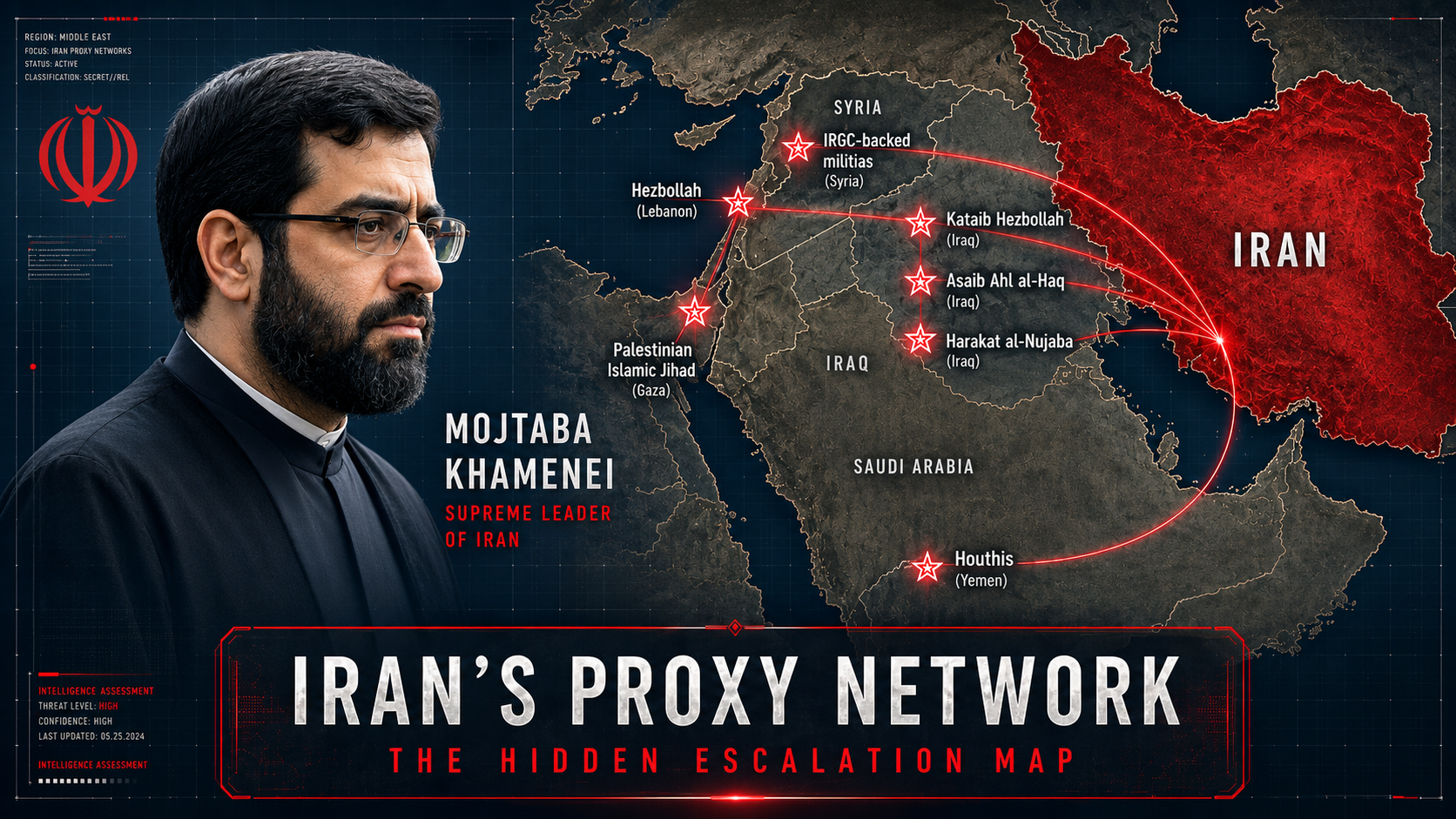
What decision-makers should watch now — before proxy escalation becomes a cost, compliance or supply-chain shock.
This 17-page executive briefing translates Iran’s proxy network into concrete business risks: energy price exposure, maritime chokepoints, war-risk premiums, sanctions, shadow fleets, supply-chain disruption and early-warning indicators for board-level decisions.
You are currently viewing a placeholder content from X. To access the actual content, click the button below. Please note that doing so will share data with third-party providers.
More Information