Executive Intelligence. Industrial Risk. Geopolitics.
Strategic Sparring
for Decision-Makers
Risk intelligence across technology, law, markets and power dynamics.


Verdeckte Geschäftsrisiken, strategische Widersprüche und kritische Abhängigkeiten frühzeitig erkennen.
Kostenlose Analyse starten →
Verdeckte Machtstrukturen, Führungsrisiken und organisatorische Blockaden frühzeitig erkennen.
Kostenlose Analyse starten →
Geopolitische Risiken, globale Abhängigkeiten und kritische Lieferkettenrisiken frühzeitig erkennen.
Kostenlose Analyse starten →
Identify hidden business risks, strategic contradictions and critical dependencies at an early stage.
Start Free Analysis →
Identify hidden power structures, leadership risks and organizational blockers at an early stage.
Start Free Analysis →
Identify geopolitical risks, global dependencies and critical supply-chain vulnerabilities at an early stage.
Start Free Analysis →
Verdeckte Geschäftsrisiken, strategische Widersprüche und kritische Abhängigkeiten frühzeitig erkennen.
Kostenlose Analyse starten →
Verdeckte Machtstrukturen, Führungsrisiken und organisatorische Blockaden frühzeitig erkennen.
Kostenlose Analyse starten →
Geopolitische Risiken, globale Abhängigkeiten und kritische Lieferkettenrisiken frühzeitig erkennen.
Kostenlose Analyse starten →
Identify hidden business risks, strategic contradictions and critical dependencies at an early stage.
Start Free Analysis →
Identify hidden power structures, leadership risks and organizational blockers at an early stage.
Start Free Analysis →
Identify geopolitical risks, global dependencies and critical supply-chain vulnerabilities at an early stage.
Start Free Analysis →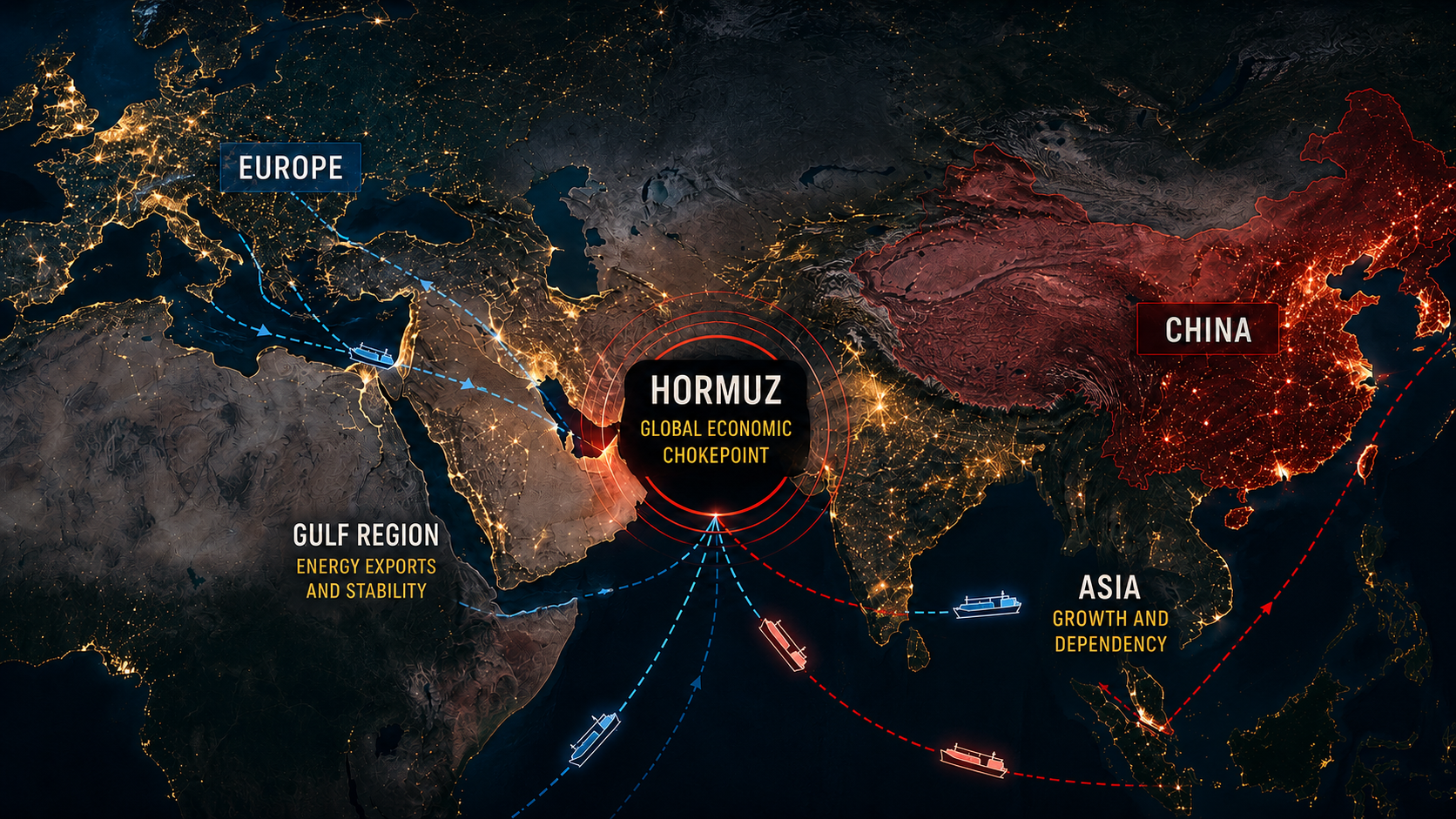
This Chokepoint Check assesses current pressure on the Strait of Hormuz, Bab al-Mandab and critical water, power, port and energy infrastructure across the Gulf region. The key question is not simply whether a route remains geographically open, but whether shipping, insurance, energy supply and site operations remain operationally viable.
One crew member was killed in an attack on the tanker Velos Sapphire north of Qatar. The maritime threat therefore extends beyond the Strait of Hormuz.
At the same time, Washington is considering further large-scale strikes against Iran. A general reopening of Hormuz under safe operating conditions has not been confirmed. Operational risk remains high.
A deadly attack on a market has been reported in southwestern Yemen. Responsibility is disputed between the Houthis and local authorities.
No sufficiently confirmed new attack on commercial vessels directly in Bab al-Mandab has been identified for November 5–6. However, the conflict in Yemen increases the wider security risk.
Saudi Arabia reports further interceptions of Houthi missiles and a drone on November 6. Iraq has simultaneously confirmed preparations for potential nuclear or radiological emergencies.
No current radioactive contamination has been detected in Iraq. No new large-scale disruption of critical Gulf infrastructure has been confirmed either.
The tanker Velos Sapphire was struck late on November 4, approximately 50 nautical miles north of Qatar. On November 5–6, maritime sources confirmed that one crew member had been killed in the explosion. The tanker was sailing in ballast towards Bahrain.
The crew extinguished the resulting fire, and the vessel reached Khalifa Bin Salman Port in Bahrain. The cause remains under investigation, with a missile or projectile strike considered likely. Responsibility for the attack has not been established.
The fatality confirms the immediate threat to maritime crew safety. The distance from Hormuz is particularly significant: vessels operating deep inside the Gulf also remain exposed. This complicates route planning and insurability.
Verification status: confirmed for the attack, fatality and arrival in Bahrain. The cause and attribution remain under investigation. Reuters, November 6, 2026 · IMO – Maritime Security Incidents · SchaafMedia: Iran Check from November 5, 2026
The Saudi-led coalition reported intercepting two ballistic missiles heading towards Najran on November 6. A drone was also shot down over the Mecca region. Another missile heading towards Medina had been intercepted the previous day.
The interceptions demonstrate that Houthi attacks continue to threaten multiple geographic areas. Debris fell following the missile interceptions, and possible damage remains under investigation. No new large-scale infrastructure failure has been confirmed.
Recurring missile and drone alerts make business operations and transport planning less predictable. Companies must account for short-notice security measures and potential travel restrictions. Even successful interceptions tie up protective capabilities.
Verification status: confirmed for the Saudi interception reports. The consequences of falling debris remain under investigation. Anadolu Agency, November 6, 2026 · SchaafMedia: Middle East Escalation Check from November 4, 2026
Türkiye’s parliament voted 279 to 119 on November 5 to approve the joint defence agreement with Saudi Arabia and Pakistan. The decision was confirmed on November 6. The agreement provides for mutual defence commitments.
A pending parliamentary process has now resulted in a concrete institutional decision. The agreement covers intelligence sharing, military cooperation and collective deterrence. Turkish troop deployments still require separate authorisation.
The Gulf’s security architecture now gains an additional connection to two militarily significant states. This could strengthen Saudi Arabia’s defence capabilities while creating new strategic dependencies. No new troop deployment has been confirmed.
Verification status: confirmed for parliamentary approval and the provisions of the agreement. No additional operational military measures have been established. Dawn / Anadolu, November 6, 2026 · Associated Press, November 6, 2026 · SchaafMedia: Middle East Escalation Check from November 4, 2026
A busy market in al-Waziyah, in Yemen’s Taiz province, was hit on November 6. A Houthi health spokesperson reported at least 20 people killed and 15 injured. Local authorities also confirmed casualties but did not provide a precise figure.
The Houthis accuse the Saudi-led coalition of carrying out airstrikes. Local authorities reject that allegation and instead hold the Houthis responsible. Attribution has not been independently established.
The deadly incident raises the risk of retaliation and renewed escalation in Yemen. This could put additional pressure on regional transport and supply corridors. However, no new restrictions on passage through Bab al-Mandab have been established.
Verification status: partially confirmed. A deadly attack has been documented. Casualty figures, the nature of the attack and responsibility remain disputed. Associated Press, November 6, 2026 · SchaafMedia: Middle East Escalation Check from November 4, 2026
Following consultations with his national security advisers, Trump stated on November 5 that he would soon decide whether to launch larger military strikes against Iran. The US military is preparing corresponding options, but no new strike order has been issued. Iraq’s nuclear regulator simultaneously confirmed emergency plans and radiation monitoring for potential radiological incidents.
Washington is considering military, economic and diplomatic options. Conventional strikes against Iranian nuclear facilities could also release radioactive materials; the use of US nuclear weapons has not been confirmed. Iraq’s authorities currently report no immediate radiation threat and expect any potential impact to be limited.
Renewed US strikes could trigger military retaliation targeting Gulf states, shipping or regional infrastructure. In the event of a radioactive release, water supplies, agriculture, aviation and business-site continuity would require additional risk assessment. No such cross-border damage has occurred so far.
Verification status: confirmed for Trump’s consultations, US military preparations and Iraq’s precautionary measures. No new strike order, radioactive release or use of nuclear weapons has been confirmed. Axios, November 5, 2026 · Shafaq News, November 5, 2026 · Iran International, November 6, 2026 · SchaafMedia: Iran Check from November 5, 2026
A fatal tanker attack and further missile strikes coincide with the possibility of renewed US strikes against Iran.
Maritime security measures and air defences remain active. Iraq has also activated radiological emergency preparedness plans.
Route planning, crew safety and protective capabilities remain under pressure. No radiological disruption has been established.
Insurance, energy and supply-chain risks remain elevated. Renewed US-Iran hostilities could expose additional regional supply systems to disruption.
The tanker attack in the central Gulf results in one fatality. Hormuz and surrounding waters remain exposed to attack.
Physical attacks threaten crews and commercial shipping · safe commercial operations remain constrainedSaudi Arabia intercepts missiles and drones. Iraq prepares for radiological emergencies. No new large-scale infrastructure failures have been confirmed.
Concrete military threats persist · no radioactive release or critical supply failure has been establishedMaritime attacks, Houthi missiles, new defence commitments and US military planning are jointly increasing regional pressure.
Multiple security and supply systems are interconnected · radiological or comprehensive regional systemic disruption remains unconfirmedOverall risk remains high to critical (4/5). One maritime signal at 4/5 dominates following the fatal tanker attack. Four signals at 3/5 concern Saudi Arabia’s missile interceptions, Türkiye’s approval of the defence agreement, the market attack in Yemen and potential US-Iran hostilities accompanied by radiological preparedness. Military escalation pressures outweigh the current diplomatic signals; neither nuclear weapons use nor radioactive damage has been confirmed.
Note: This assessment was prepared with support from our Geo AI. AI can make mistakes. This overview serves as a source-based radar for potential escalation signals and does not constitute fully verified intelligence, security, insurance or investment advice. In rapidly evolving situations, operational status, source availability and risk assessments may change at short notice.
Independent of the subject covered in this article, this separate Executive Briefing provides an in-depth analysis of another critical risk domain affecting European companies.
The 27-page Executive Briefing “Black Swan Risk Mapping for Europe’s Next Mobility and Infrastructure Shock” examines how geopolitical, infrastructural and administrative developments that are currently viewed in isolation could reinforce one another.
Based on the GFDD Framework™, the report shows how these dynamics could affect operational continuity, access to critical resources and the strategic resilience of companies.
The briefing includes a structured systemic-shock analysis and a directly applicable Business Exposure Checklist for CEOs, CFOs, COOs, investors and strategy teams.
You are currently viewing a placeholder content from X. To access the actual content, click the button below. Please note that doing so will share data with third-party providers.
More Information