Executive Intelligence. Industrial Risk. Geopolitics.
Strategic Sparring
for Decision-Makers
Risk intelligence across technology, law, markets and power dynamics.

Verdeckte Geschäftsrisiken, strategische Widersprüche und kritische Abhängigkeiten frühzeitig erkennen.
Kostenlose Analyse starten →
Verdeckte Machtstrukturen, Führungsrisiken und organisatorische Blockaden frühzeitig erkennen.
Kostenlose Analyse starten →
Geopolitische Risiken, globale Abhängigkeiten und kritische Lieferkettenrisiken frühzeitig erkennen.
Kostenlose Analyse starten →
Identify hidden business risks, strategic contradictions and critical dependencies at an early stage.
Start Free Analysis →
Identify hidden power structures, leadership risks and organizational blockers at an early stage.
Start Free Analysis →
Identify geopolitical risks, global dependencies and critical supply-chain vulnerabilities at an early stage.
Start Free Analysis →
Verdeckte Geschäftsrisiken, strategische Widersprüche und kritische Abhängigkeiten frühzeitig erkennen.
Kostenlose Analyse starten →
Verdeckte Machtstrukturen, Führungsrisiken und organisatorische Blockaden frühzeitig erkennen.
Kostenlose Analyse starten →
Geopolitische Risiken, globale Abhängigkeiten und kritische Lieferkettenrisiken frühzeitig erkennen.
Kostenlose Analyse starten →
Identify hidden business risks, strategic contradictions and critical dependencies at an early stage.
Start Free Analysis →
Identify hidden power structures, leadership risks and organizational blockers at an early stage.
Start Free Analysis →
Identify geopolitical risks, global dependencies and critical supply-chain vulnerabilities at an early stage.
Start Free Analysis →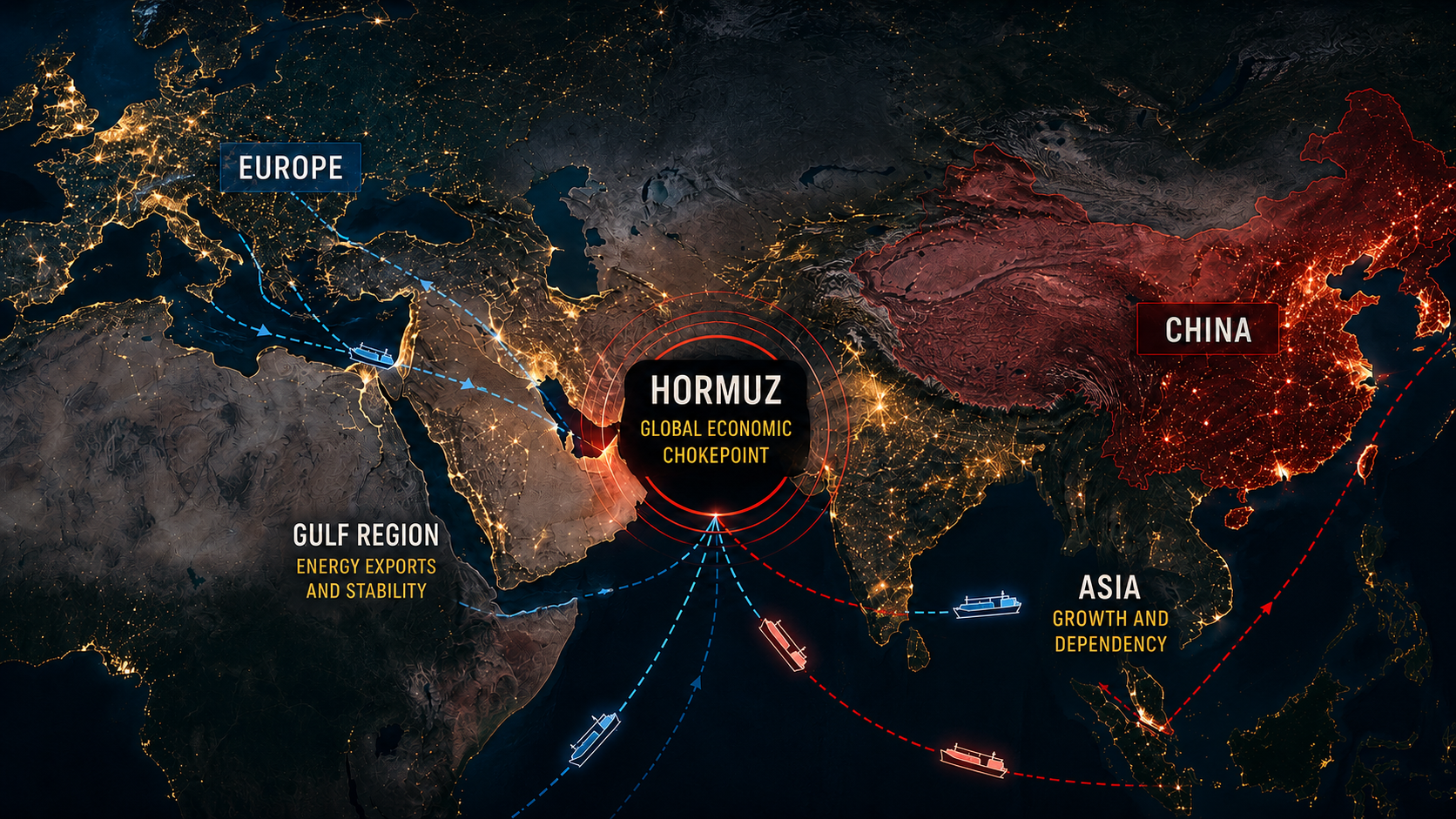
This Chokepoint Check assesses current pressure on the Strait of Hormuz, Bab al-Mandab and critical water, power, port and energy infrastructure across the Gulf region. The key question is not simply whether a route remains geographically open, but whether shipping, insurance, energy supply and business operations remain operationally viable.
A commercial vessel was struck by an unidentified projectile off Ras Al-Khaimah on November 11. Maritime security agencies confirmed the incident on November 12.
A fire broke out in the engine room and the crew was evacuated. No injuries or pollution were reported. The US blockade of Iranian ports remains in place.
Renewed missile and drone attacks involving the Houthis and Saudi Arabia are increasing security pressure around the Red Sea.
No sufficiently verified new attack on commercial vessels directly in Bab al-Mandab has been identified for November 11–12. The existing threat to the shipping corridor remains.
Saudi Arabia reports intercepting nine missiles and drones between November 11 and 12. Debris from two missiles fell in the Makkah region.
Air defence operations also affected Riyadh and the Eastern Province. No new damage to oil, water or power facilities has been confirmed.
A commercial vessel was struck by an unidentified projectile approximately 14 nautical miles northwest of Ras Al-Khaimah on November 11. UKMTO and Ambrey reported the incident on November 12. A fire broke out in the engine room.
According to Ambrey, the vessel was exiting the Strait of Hormuz. The crew was evacuated and firefighting operations were underway. No injuries or oil pollution were initially reported. The attacker and projectile type remain unknown.
The attack confirms the immediate threat to vessels and crews operating in the Hormuz corridor. Shipping companies must account for additional security, evacuation and insurance risks. A general closure of the route has not been confirmed.
Verification status: confirmed for the vessel strike, fire and crew evacuation. Responsibility remains unknown. Reuters, November 12, 2026 · SchaafMedia: Iran Check from November 11, 2026 – Maritime Escalation Risks
On November 12, Saudi Arabia reported nine interceptions since the previous day: two ballistic missiles, three cruise missiles and four drones. Missile debris fell near Sabuhah in the Makkah region.
The Saudi-led coalition attributes the attacks to the Houthis. Air defence operations covered Riyadh, Makkah, southern regions and the Eastern Province. No new production shutdowns or major infrastructure damage have been confirmed.
Repeated missile and drone attacks place pressure on airports, business facilities and energy infrastructure. Even intercepted projectiles can cause damage. Air defence operations have so far prevented larger confirmed disruptions.
Verification status: confirmed for official Saudi interception reports and falling missile debris. Responsibility has not been independently verified. Saudi Gazette, November 12, 2026 · SchaafMedia: Middle East Escalation Check from November 10, 2026
An Israeli airstrike hit Nasser Hospital in Khan Younis overnight on November 12. According to medical sources, six people were killed, including a surgeon and a 13-year-old boy. At least 28 others were injured.
Israel says it targeted a Hamas commander. The claimed military target has not been independently verified. The surgical department was damaged, forcing the suspension of operations and other hospital services.
The strike deepens the humanitarian and operational crisis in the Gaza Strip. Healthcare delivery, reconstruction and international humanitarian logistics face additional disruption. No direct impact on Gulf chokepoints has been established.
Verification status: confirmed for the strike, reported fatalities and hospital service disruptions. Israel’s stated military target remains disputed. Reuters, November 12, 2026 – updated report · SchaafMedia: Middle East Escalation Check from November 10, 2026 – Gaza and Regional Stability
On November 12, Iran’s Assembly of Experts stated that a possible withdrawal from the Nuclear Non-Proliferation Treaty and a review of the country’s defence doctrine should be considered in light of new threats.
The statement represents a hardening of Iran’s nuclear policy position. However, the Assembly of Experts cannot independently authorise withdrawal from the treaty. No such decision has been made, nor has any change in nuclear doctrine been confirmed.
An actual withdrawal could complicate international oversight of Iran’s nuclear programme and increase sanctions and conflict risks. For energy, shipping and aviation, this currently represents a political signal rather than a new operational disruption.
Verification status: confirmed for the statement by the Assembly of Experts. No decision to withdraw from the NPT or confirmed change in nuclear doctrine. Trend News Agency, November 12, 2026 · SchaafMedia: Iran Check from November 11, 2026 – Iran’s Nuclear Red Lines
On November 12, Trump stated that the United States did not need an agreement with Iran. He urged Vice President JD Vance to focus more on domestic issues. Vance had previously been working towards a diplomatic solution.
Trump’s remarks contrast with recent mediation efforts. Vance had criticised the costs of the Iran war. No formal termination of negotiations or new military decision was announced.
Conflicting signals from Washington make it harder to assess the prospects for an agreement. For businesses, actual blockade policy and maritime security conditions remain decisive. No operational policy change has been confirmed.
Verification status: confirmed for Trump’s new statement. No formal termination of negotiations or new military operation resulting from the remarks. Reuters, November 12, 2026 · SchaafMedia: Iran Check from November 11, 2026 – US-Iran Negotiations
A vessel is struck near Hormuz, Saudi air defences intercept incoming threats, and new political escalation signals emerge from Tehran and Washington.
The crew is evacuated and firefighting operations begin. Saudi air defences remain active, while shipping companies must manage additional security risks.
The affected vessel is temporarily taken out of service. No new major disruption to oil production, exports or desalination facilities has been confirmed.
Security costs and uncertainty surrounding energy shipments remain high. Political tensions complicate a reliable return to normal trade operations.
Another commercial vessel was struck while exiting Hormuz. The fire and crew evacuation confirm a direct threat to maritime operations.
Physical vessel strike confirmed · no reliable normalisation of Hormuz trafficSaudi Arabia reports renewed missile and drone interceptions. Debris falls in populated areas. No new shutdowns of critical Gulf infrastructure have been established.
Physical threat remains · no new major disruption to energy or water supply confirmedMaritime attacks, Saudi missile interceptions and the potential hardening of the nuclear dispute affect multiple regional security systems.
Military and political risks reinforce one another · no comprehensive regional supply disruption confirmedOverall risk remains high to critical (4/5). One signal at 4/5 concerns the latest vessel strike near Hormuz. Three signals at 3/5 concern Saudi missile interceptions, the attack on Nasser Hospital and Iran’s potential nuclear policy realignment. One signal at 2/5 reflects Trump’s new negotiating position. Operational maritime risks remain high, while political escalation adds further uncertainty.
Disclaimer: This assessment was prepared with support from our Geo AI. AI can make mistakes. This overview serves as a source-based radar for potential escalation signals and does not constitute fully verified intelligence, security, insurance or investment advice. In rapidly evolving situations, operational status, source availability and risk assessments may change at short notice.
You are currently viewing a placeholder content from X. To access the actual content, click the button below. Please note that doing so will share data with third-party providers.
More Information