Executive Intelligence. Industrial Risk. Geopolitics.
Strategic Sparring
for Decision-Makers
Risk intelligence across technology, law, markets and power dynamics.


Verdeckte Geschäftsrisiken, strategische Widersprüche und kritische Abhängigkeiten frühzeitig erkennen.
Kostenlose Analyse starten →
Verdeckte Machtstrukturen, Führungsrisiken und organisatorische Blockaden frühzeitig erkennen.
Kostenlose Analyse starten →
Geopolitische Risiken, globale Abhängigkeiten und kritische Lieferkettenrisiken frühzeitig erkennen.
Kostenlose Analyse starten →
Identify hidden business risks, strategic contradictions and critical dependencies at an early stage.
Start Free Analysis →
Identify hidden power structures, leadership risks and organizational blockers at an early stage.
Start Free Analysis →
Identify geopolitical risks, global dependencies and critical supply-chain vulnerabilities at an early stage.
Start Free Analysis →
Verdeckte Geschäftsrisiken, strategische Widersprüche und kritische Abhängigkeiten frühzeitig erkennen.
Kostenlose Analyse starten →
Verdeckte Machtstrukturen, Führungsrisiken und organisatorische Blockaden frühzeitig erkennen.
Kostenlose Analyse starten →
Geopolitische Risiken, globale Abhängigkeiten und kritische Lieferkettenrisiken frühzeitig erkennen.
Kostenlose Analyse starten →
Identify hidden business risks, strategic contradictions and critical dependencies at an early stage.
Start Free Analysis →
Identify hidden power structures, leadership risks and organizational blockers at an early stage.
Start Free Analysis →
Identify geopolitical risks, global dependencies and critical supply-chain vulnerabilities at an early stage.
Start Free Analysis →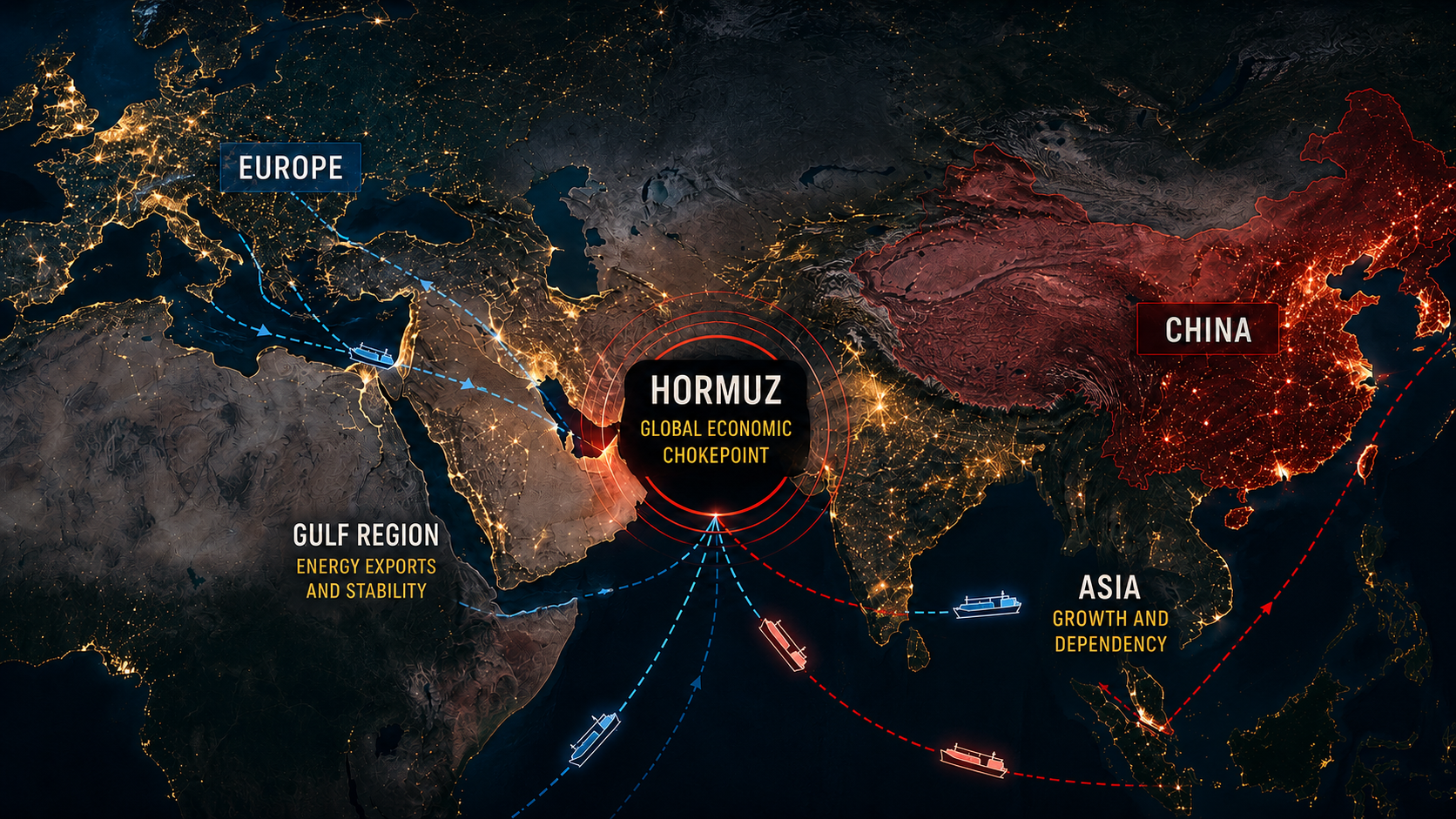
This Chokepoint Check assesses the current pressure on the Strait of Hormuz, Bab al-Mandab and critical water, power, port and energy infrastructure across the Gulf region. The key question is not merely whether a route remains geographically open, but whether transport, insurance, energy supply and site operations remain operationally viable.
The series of physical attacks continues, confirming that despite remaining geographically open, the passage has not operationally normalised.
A tanker was struck eleven nautical miles west of Bukha in Oman. The fire was extinguished, and the crew remained unharmed.
Fighting around Taiz is increasing pressure on the strategic corridor linking southern Yemen, Aden and the Red Sea coast.
A Houthi attack on a residential area killed two girls. The UN also warns that the encirclement of Taiz is cutting the city off from key supply routes.
The threat to Saudi cities and infrastructure is now prompting direct British defensive fighter-jet missions for the first time.
RAF Typhoons are intended to engage drones and missiles in the air. A400M aircraft, military advisers and air-to-air refuelling support are also being provided.
UKMTO reported on October 21 that a tanker eleven nautical miles west of Bukha in Oman was struck by an unidentified projectile.
A fire broke out on board and was subsequently extinguished. The vessel is at anchor, while the crew and environment remain unharmed based on current information.
The renewed physical strike confirms persistent transit risks. Insurability, crew safety and schedule reliability remain heavily constrained.
Verification status: confirmed for the projectile strike, fire and location. The perpetrator and weapon system used were initially unknown. Al Arabiya / UKMTO, October 21, 2026 · SchaafMedia: Chokepoint Check – Hormuz, Trade Routes & Supply Chain Risks
The UK Ministry of Defence announced additional Typhoon missions to intercept missiles and drones over Saudi Arabia.
The mission remains explicitly defensive. The aircraft are not intended to conduct offensive strikes against Houthi targets in Yemen.
Additional air defence strengthens protection for critical infrastructure, but also indicates that national systems increasingly require external reinforcement.
Verification status: confirmed by the UK Ministry of Defence. Typhoons, A400M aircraft, military advisers and expanded air-to-air refuelling support are planned. UK Ministry of Defence, October 20, 2026 · SchaafMedia: Middle East Escalation Check from October 19, 2026
An AKP lawmaker told Reuters that following ratification, a separate mandate for military personnel to Saudi Arabia is expected to be submitted.
Initial deployments would involve technical experts in air defence, electronic warfare and other defensive capabilities. No deployment has yet been approved.
The trilateral defence framework is moving from political coordination closer to concrete military integration. This changes regional deterrence and response obligations.
Verification status: partially confirmed. The mandate planning was confirmed to Reuters by a lawmaker from the governing party; parliamentary approval is still pending. Reuters, October 21, 2026 · SchaafMedia: Middle East Escalation Check from October 19, 2026
The Saudi-led coalition reported five intercepted drones over Madinah and the Eastern Region.
The Houthis subsequently denied launching drones toward Madinah or conducting other deep operations against Saudi Arabia on October 21.
Regardless of attribution, air defence remains active over strategically important regions. No major damage was reported.
Verification status: partially confirmed. The interceptions were reported by the coalition; attribution to the Houthis remains unclear because of their explicit denial. Reuters, October 21, 2026 · SchaafMedia: Iran Check – 5 Escalation Signals from October 20, 2026
An attack on a residential area in Taiz killed two girls and injured six other people. Fighting around the city continues.
The Houthis have largely encircled Taiz and cut key supply routes. The UN warns of severe risks to civilians.
Disruption of southern transport corridors increases fuel, food and inland logistics risks while adding pressure on Aden and Red Sea logistics.
Verification status: confirmed for the attack, casualties and the broad encirclement of Taiz. The military situation remains dynamic. Associated Press / Arab News, October 21, 2026 · SchaafMedia: Middle East Escalation Check from October 19, 2026
A tanker is struck near Hormuz, Saudi airspace remains under drone pressure and transport corridors in Yemen are under military strain.
Maritime security measures increase, RAF aircraft reinforce Saudi air defence and regional partners deepen military coordination.
More resources are tied up in route protection, air defence and alternative transport and supply systems.
War-risk, transport, security and sourcing costs remain high and increasingly react to individual new attacks.
Another tanker is physically struck directly near Hormuz, while attack intensity remains elevated.
Passage remains geographically possible · repeated physical attacks prevent reliably safe commercial useMultiple drones are intercepted over Saudi Arabia, while the United Kingdom provides additional air-defence support.
Critical Saudi cities, aviation and energy infrastructure increasingly require international protection supportHormuz attacks, Yemen fighting, British air missions and Turkish integration steps are unfolding simultaneously.
Maritime, military, infrastructure and alliance risks are now directly systemically interconnectedOverall risk remains critical. The new 5/5 Hormuz signal is reinforced by two high-to-critical developments: international air defence support for Saudi Arabia and the deteriorating operational situation around Taiz. These are compounded by two confirmed or partially confirmed 3/5 signals involving Turkish military integration and continued Saudi drone pressure.
Disclaimer: This assessment was prepared with support from our Geo AI. AI can make mistakes. This analysis is intended as a source-based radar for potential escalation signals and does not constitute fully verified intelligence, security, insurance or investment advice. In fast-moving situations, status, source availability and risk assessments may change at short notice.
Independent of the subject covered in this article, this separate Executive Briefing provides an in-depth analysis of another critical risk domain affecting European companies.
The 27-page Executive Briefing “Black Swan Risk Mapping for Europe’s Next Mobility and Infrastructure Shock” examines how geopolitical, infrastructural and administrative developments that are currently viewed in isolation could reinforce one another.
Based on the GFDD Framework™, the report shows how these dynamics could affect operational continuity, access to critical resources and the strategic resilience of companies.
The briefing includes a structured systemic-shock analysis and a directly applicable Business Exposure Checklist for CEOs, CFOs, COOs, investors and strategy teams.
You are currently viewing a placeholder content from X. To access the actual content, click the button below. Please note that doing so will share data with third-party providers.
More Information