Executive Intelligence. Industrial Risk. Geopolitics.
Strategic Sparring
for Decision-Makers
Risk intelligence across technology, law, markets and power dynamics.


Verdeckte Geschäftsrisiken, strategische Widersprüche und kritische Abhängigkeiten frühzeitig erkennen.
Kostenlose Analyse starten →
Verdeckte Machtstrukturen, Führungsrisiken und organisatorische Blockaden frühzeitig erkennen.
Kostenlose Analyse starten →
Geopolitische Risiken, globale Abhängigkeiten und kritische Lieferkettenrisiken frühzeitig erkennen.
Kostenlose Analyse starten →
Identify hidden business risks, strategic contradictions and critical dependencies at an early stage.
Start Free Analysis →
Identify hidden power structures, leadership risks and organizational blockers at an early stage.
Start Free Analysis →
Identify geopolitical risks, global dependencies and critical supply-chain vulnerabilities at an early stage.
Start Free Analysis →
Verdeckte Geschäftsrisiken, strategische Widersprüche und kritische Abhängigkeiten frühzeitig erkennen.
Kostenlose Analyse starten →
Verdeckte Machtstrukturen, Führungsrisiken und organisatorische Blockaden frühzeitig erkennen.
Kostenlose Analyse starten →
Geopolitische Risiken, globale Abhängigkeiten und kritische Lieferkettenrisiken frühzeitig erkennen.
Kostenlose Analyse starten →
Identify hidden business risks, strategic contradictions and critical dependencies at an early stage.
Start Free Analysis →
Identify hidden power structures, leadership risks and organizational blockers at an early stage.
Start Free Analysis →
Identify geopolitical risks, global dependencies and critical supply-chain vulnerabilities at an early stage.
Start Free Analysis →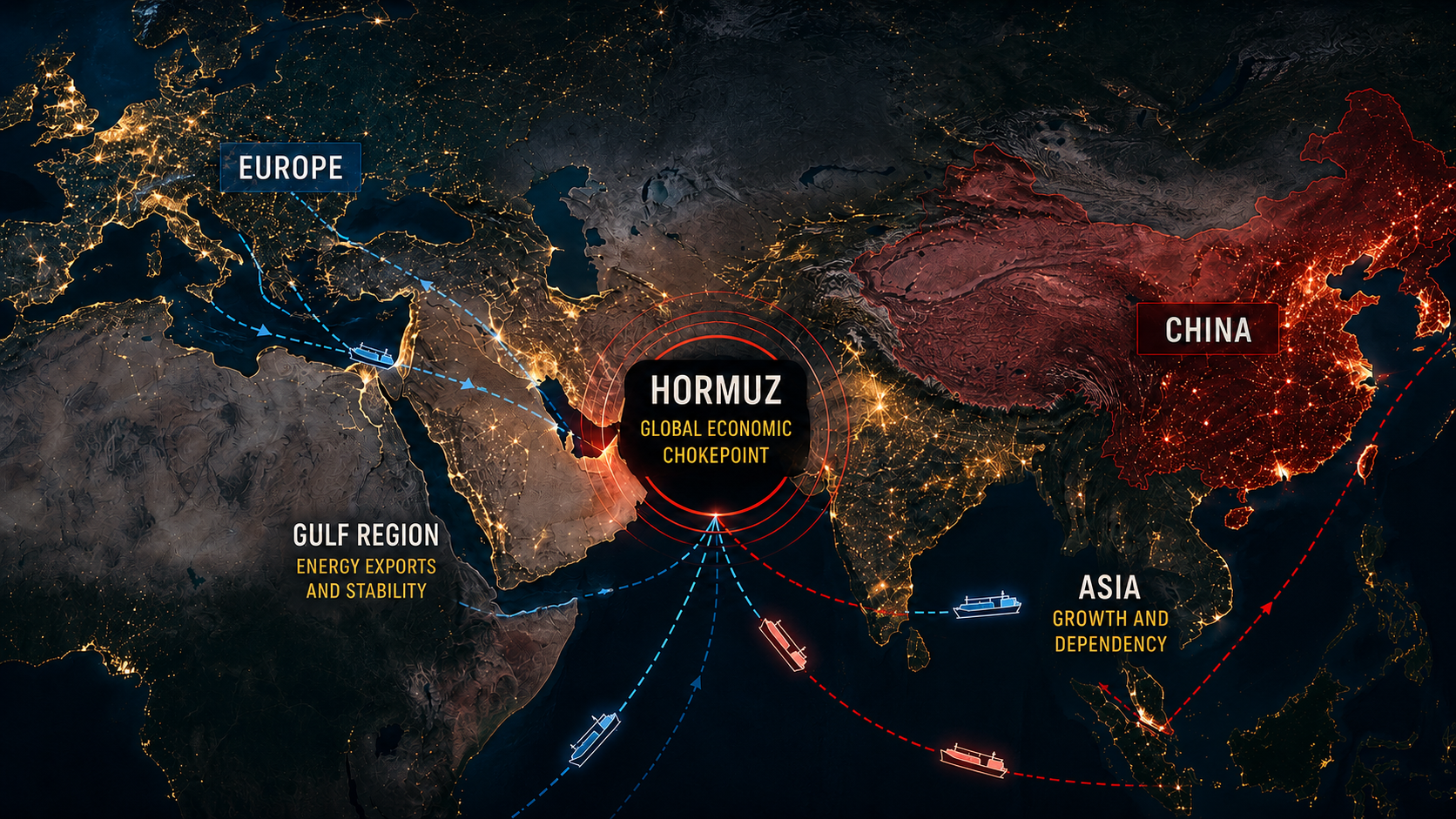
This Chokepoint Check assesses the current pressure on the Strait of Hormuz, Bab al-Mandab and critical water, power, port and energy infrastructure across the Gulf region. The key question is not merely whether a route remains geographically open, but whether transport, insurance, energy supply and site operations remain operationally viable.
No sufficiently confirmed new physical attack on a commercial vessel was identified for October 24/25.
The new development is an Iranian warning that US warships in the Persian Gulf would not be accepted under any circumstances. The operational maritime environment remains tense.
The escalation has again reached infrastructure directly relevant to maritime security in the Gulf of Aden and Bab al-Mandab.
Two missiles struck the Coast Guard headquarters in Aden, while a third hit a Coast Guard building in the Al-Tawahi district.
The attack wave simultaneously affects the capital, aviation, energy corridors and several regions of Saudi Arabia.
Saudi Arabia reported on October 25 drones and missiles targeting Riyadh, Khamis Mushait and the southern region. Additional strategic targets had already come under pressure the previous day.
Saudi air defences reported on October 25 two drones and one ballistic missile heading toward Riyadh, one cruise missile targeting Khamis Mushait and ten additional ballistic missiles heading toward the southern region.
The attack wave is distributed across the capital and southern region and requires Saudi Arabia to maintain continuous large-scale air defence.
Airports, road transport, sites and personnel planning remain affected by alerts, interceptions and the risk of falling debris.
Verification status: confirmed for the Saudi interception reports. No major damage from the intercepted attacks was initially reported. Arab News, October 25, 2026 · SchaafMedia: Iran Check – 5 Escalation Signals from October 24, 2026
Yemen’s Interior Ministry confirmed that two ballistic missiles struck the Coast Guard headquarters. A third hit a Coast Guard building in the Al-Tawahi district.
This directly affects infrastructure relevant to coastal protection, anti-smuggling operations and maritime security around Aden.
Attacks on maritime security infrastructure increase risks for port operations, coastal shipping and security control across the Gulf of Aden and Bab al-Mandab.
Verification status: confirmed by the Yemeni Interior Ministry. Authorities are still assessing the full extent of the damage. SABA / Yemeni Interior Ministry, October 24, 2026 · SchaafMedia: Middle East Escalation Check from October 23, 2026
The Houthis stated on October 24 that they had attacked Riyadh and Dammam airports, an Aramco facility in Yanbu, the Rabigh refinery and pumping stations.
Saudi Arabia confirmed several interceptions and debris incidents, but did not confirm that all named targets had actually been hit.
The broad target spectrum links aviation, refineries, oil transport and export logistics into a common business-continuity risk.
Verification status: partially confirmed. The Houthi targeting claims are confirmed; strikes on all named energy facilities were not confirmed by Saudi Arabia. Reuters, October 24, 2026 · SchaafMedia: Iran Check – 5 Escalation Signals from October 24, 2026
Iran stated on October 24 that US military vessels would not be accepted in the Persian Gulf under any circumstances.
The statement intensifies maritime deterrence rhetoric, but does not yet represent a confirmed new attack on US forces.
A direct confrontation between the US Navy and Iran would significantly affect escorts, insurability and commercial navigation across the Gulf.
Verification status: confirmed for the Iranian warning. No new armed incident between Iran and US warships was confirmed. CBS News, October 24, 2026 · SchaafMedia: Iran Check – 5 Escalation Signals from October 24, 2026
According to US intelligence, Iran has intensified its efforts against American personnel. Lethal attack planning has reportedly reached an advanced stage.
Specific targets or countries were not publicly identified. Washington is nevertheless adjusting security and personnel measures at diplomatic missions.
The security environment for international staff, business travel and Western institutions is deteriorating beyond Saudi Arabia across the wider region.
Verification status: confirmed for the existence and authenticity of the US intelligence warning. Specific operational targets remain classified. Reuters, October 24, 2026 · SchaafMedia: Iran Check – 5 Escalation Signals from October 24, 2026
Missiles and drones threaten Saudi cities, airports and energy corridors, while maritime security facilities in Aden are struck.
Air defence remains active across a wide area, airports operate under restrictions and security measures for personnel and maritime infrastructure increase.
Transport, security and operational capacity are tied up by alerts, interceptions, diversions and protection measures.
Travel, energy, freight and war-risk costs remain high, while the predictability of Gulf and Red Sea connections declines.
No new confirmed commercial vessel strike on October 24/25, but attack risks remain elevated alongside new Iranian threats against US warships.
Hormuz remains geographically open · the maritime security environment nevertheless remains clearly above normal risk levelsAirports, oil facilities, pipelines and Saudi cities remain targets of a broad missile and drone campaign.
Critical aviation and energy infrastructure remains under concrete military pressureSaudi attacks, strikes in Aden, Iran-US maritime tensions and regional personnel-security risks are unfolding in parallel.
Aviation, energy, maritime security and personnel protection are now regionally interconnectedOverall risk remains high to critical. Two operational 4/5 signals dominate: the broad attack wave against Saudi Arabia and the strikes on maritime security facilities in Aden. These are compounded by a 3/5 targeting pattern against Saudi energy and aviation infrastructure, a 3/5 US security warning and a new Iranian 2/5 threat in the Persian Gulf.
Disclaimer: This assessment was prepared with support from our Geo AI. AI can make mistakes. This analysis is intended as a source-based radar for potential escalation signals and does not constitute fully verified intelligence, security, insurance or investment advice. In fast-moving situations, status, source availability and risk assessments may change at short notice.
Independent of the subject covered in this article, this separate Executive Briefing provides an in-depth analysis of another critical risk domain affecting European companies.
The 27-page Executive Briefing “Black Swan Risk Mapping for Europe’s Next Mobility and Infrastructure Shock” examines how geopolitical, infrastructural and administrative developments that are currently viewed in isolation could reinforce one another.
Based on the GFDD Framework™, the report shows how these dynamics could affect operational continuity, access to critical resources and the strategic resilience of companies.
The briefing includes a structured systemic-shock analysis and a directly applicable Business Exposure Checklist for CEOs, CFOs, COOs, investors and strategy teams.
You are currently viewing a placeholder content from X. To access the actual content, click the button below. Please note that doing so will share data with third-party providers.
More Information