Executive Intelligence. Industrial Risk. Geopolitics.
Strategic Sparring
for Decision-Makers
Risk intelligence across technology, law, markets and power dynamics.

Verdeckte Geschäftsrisiken, strategische Widersprüche und kritische Abhängigkeiten frühzeitig erkennen.
Kostenlose Analyse starten →
Verdeckte Machtstrukturen, Führungsrisiken und organisatorische Blockaden frühzeitig erkennen.
Kostenlose Analyse starten →
Geopolitische Risiken, globale Abhängigkeiten und kritische Lieferkettenrisiken frühzeitig erkennen.
Kostenlose Analyse starten →
Identify hidden business risks, strategic contradictions and critical dependencies at an early stage.
Start Free Analysis →
Identify hidden power structures, leadership risks and organizational blockers at an early stage.
Start Free Analysis →
Identify geopolitical risks, global dependencies and critical supply-chain vulnerabilities at an early stage.
Start Free Analysis →
Verdeckte Geschäftsrisiken, strategische Widersprüche und kritische Abhängigkeiten frühzeitig erkennen.
Kostenlose Analyse starten →
Verdeckte Machtstrukturen, Führungsrisiken und organisatorische Blockaden frühzeitig erkennen.
Kostenlose Analyse starten →
Geopolitische Risiken, globale Abhängigkeiten und kritische Lieferkettenrisiken frühzeitig erkennen.
Kostenlose Analyse starten →
Identify hidden business risks, strategic contradictions and critical dependencies at an early stage.
Start Free Analysis →
Identify hidden power structures, leadership risks and organizational blockers at an early stage.
Start Free Analysis →
Identify geopolitical risks, global dependencies and critical supply-chain vulnerabilities at an early stage.
Start Free Analysis →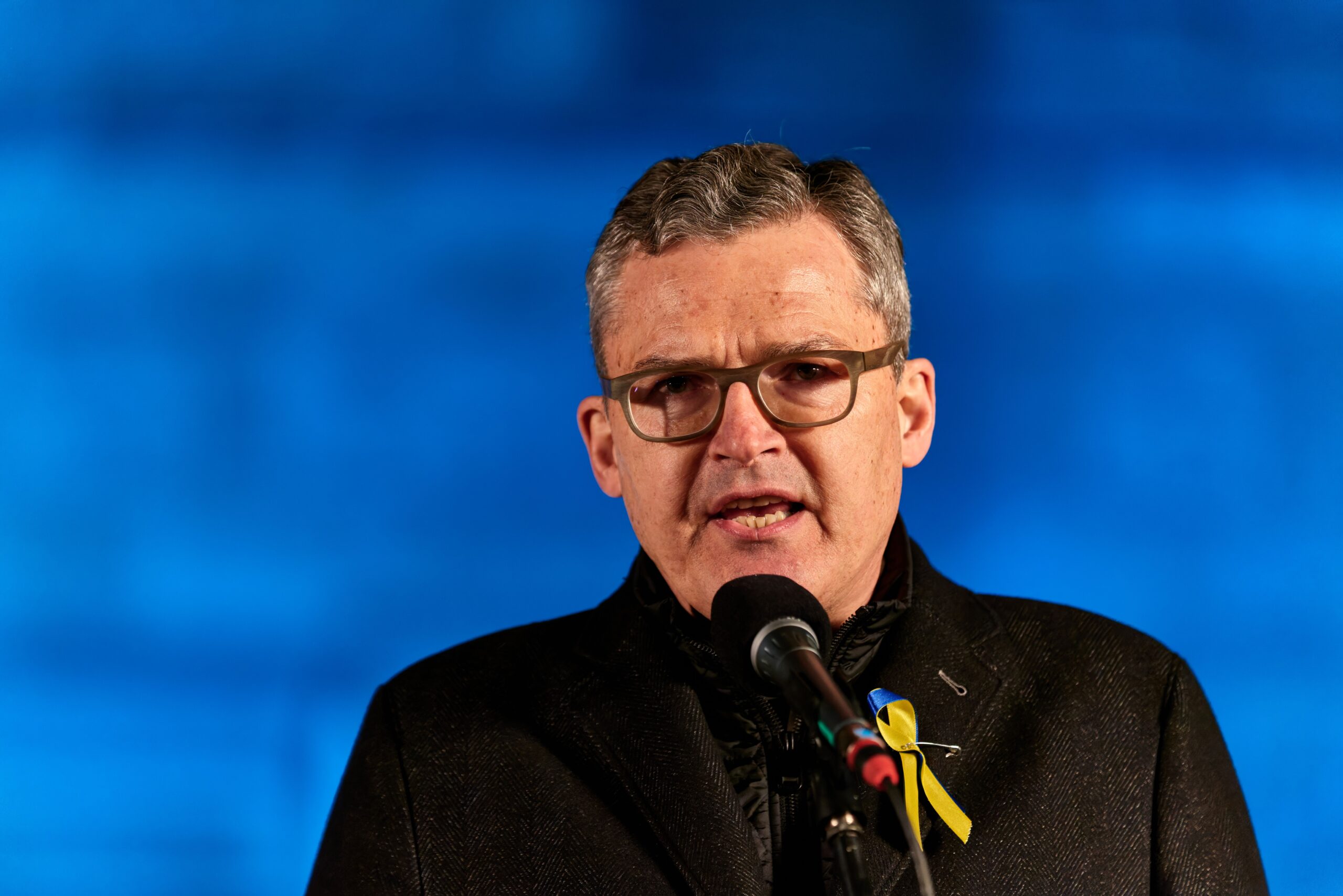
The debate over the return of compulsory military service has reignited in Germany. It is closely linked to geopolitical power struggles in which Donald Trump plays a central role.
CDU politician Roderich Kiesewetter recently called publicly for Germany to declare a so-called state of tension. Such a declaration would automatically reactivate compulsory military service.
But what would this mean at a time when the Bundeswehr is widely regarded as understaffed, inadequately equipped and only partially operational?
And what role does Trump play in this scenario?
You are currently viewing a placeholder content from Default. To access the actual content, click the button below. Please note that doing so will share data with third-party providers.
More Information🎬 No Tracking? You can watch the video directly on YouTube: Insider Analysis: State of Tension, Conscription and Trump. What Is Happening Right Now?! 😱🔥
Germany’s constitutional state of tension, known in German as the Spannungsfall, is a legal preliminary stage preceding a formal state of defence.
It must be approved by a two-thirds majority in the Bundestag and enables far-reaching government measures, ranging from emergency legislation to military mobilisation.
One immediate consequence would be the reactivation of compulsory military service. Conscription has been suspended since 2011, but it has never been formally abolished (Wikipedia).
Kiesewetter justified his proposal by pointing to the alleged threat posed by suspected Russian drone flights over Germany (Handelsblatt).
In his view, Germany must urgently prepare for a possible escalation.
For years, the Bundeswehr has been criticised for lacking sufficient operational readiness.
German parliamentary defence commissioners have repeatedly reported ammunition shortages, missing armoured vehicles, equipment gaps and thousands of unfilled positions (ZDFheute).
Against this background, calls for a state of tension and renewed conscription appear paradoxical.
Germany would have more recruits, but still lack the equipment, infrastructure and operational capability required to deploy them effectively.
Would this genuinely improve Germany’s security?
Or is the conscription debate primarily an act of political symbolism?
While Germany debates conscription and emergency powers domestically, external pressure is increasing.
Since taking office, Donald Trump has repeatedly signalled that the United States intends to reduce its direct role in the Ukraine war.
Reports indicate that Europe may increasingly be expected to finance billions of euros in weapons, defence capacity and support for Ukraine itself (t-online).
Trump presents himself internationally as a figure of peace, using messages such as “No world war under my leadership.”
The strategic reality, however, points in another direction.
The United States is reducing its direct responsibility while simultaneously increasing pressure on Europe to assume more of the financial and military burden.
Germany and the European Union are being forced to act within precisely this emerging power vacuum.
Read more:
While Berlin debates conscription and the declaration of a state of tension, the USS Gerald R. Ford, the world’s largest aircraft carrier, is heading towards Mallorca (Mallorca Magazin).
Officially, the deployment is described as a routine manoeuvre.
Strategically, however, it also represents a clear demonstration of military power.
The message is difficult to ignore:
The United States remains present in Europe and continues to shape the strategic rules under which European governments operate.
Taken together, these developments reveal a concerning pattern:
Germany increasingly appears to be a geopolitical pawn caught between Russia, Trump and its own strategic uncertainty.
On the one hand, the country is expected to mobilise.
On the other, it lacks many of the fundamental capabilities required to make its armed forces fully operational.
Political leaders use increasingly forceful language, while much of the population remains uncertain about what these developments could mean in practical terms.
The defining terms of this crisis are Trump, conscription and Germany’s state of tension.
Trump is forcing Europe to finance a greater share of its own defence and continued support for Ukraine.
Compulsory military service could suddenly be reactivated, even though the Bundeswehr remains only partially prepared for a major conflict.
At the same time, the state of tension risks becoming a political pressure mechanism that generates more fear than actual security.
The decisive question is therefore:
Does this process genuinely serve the defence of Germany, or does it primarily facilitate a geopolitical redistribution of military burdens, financial responsibility and political power?
One point is clear.
Caught between Trump’s pressure, the perceived Russian threat and domestic political symbolism, Germany is approaching a dangerous strategic crossroads.
Author of Global Insight Group Intelligence:
Michaela Schaaf-Hoffelner has more than 35 years of experience in strategic and technical project and product management, particularly in IT, control systems and intralogistics. Through her long-standing work with complex systems, she identifies structural risks and dynamic misalignments at an early stage – risks that are often overlooked in conventional analysis.
Her focus is on making causal relationships and systemic dependencies visible and translating them into concrete strategic advantages for investors and decision-makers. Her analyses combine deep technical systems understanding with geopolitical and economic developments.
GFDD Framework™ and GFDD Diagnostics™ are proprietary analytical concepts developed by Michaela Schaaf-Hoffelner. © 2026 Global Insight Group LLC. All rights reserved.
Credits
“Roderich Kiesewetter on stage at the Wählt die Ukraine demonstration on the third anniversary of the Russian invasion of Ukraine.”
Original image on Wikimedia Commons, by Leonhard Lenz, licensed under CC0 1.0. No modifications.
“Official photograph of Donald Trump for his inauguration, taken by Daniel Torok. Notably, Trump adopts an expression similar to the one seen in his Georgia mugshot.
The direction of the lighting adds further dramatic intensity to the portrait.”
Original image on Wikimedia Commons, by Daniel Torok.
This work is in the public domain in the United States because it was prepared by an officer or employee of the United States Government as part of that person’s official duties under the terms of Title 17, Chapter 1, Section 105 of the US Code.
Further information: Copyright Status of Works by the Federal Government of the United States.
No modifications.
You are currently viewing a placeholder content from X. To access the actual content, click the button below. Please note that doing so will share data with third-party providers.
More Information