Executive Intelligence. Industrial Risk. Geopolitics.
Strategic Sparring
for Decision-Makers
Risk intelligence across technology, law, markets and power dynamics.


Verdeckte Geschäftsrisiken, strategische Widersprüche und kritische Abhängigkeiten frühzeitig erkennen.
Kostenlose Analyse starten →
Verdeckte Machtstrukturen, Führungsrisiken und organisatorische Blockaden frühzeitig erkennen.
Kostenlose Analyse starten →
Geopolitische Risiken, globale Abhängigkeiten und kritische Lieferkettenrisiken frühzeitig erkennen.
Kostenlose Analyse starten →
Identify hidden business risks, strategic contradictions and critical dependencies at an early stage.
Start Free Analysis →
Identify hidden power structures, leadership risks and organizational blockers at an early stage.
Start Free Analysis →
Identify geopolitical risks, global dependencies and critical supply-chain vulnerabilities at an early stage.
Start Free Analysis →
Verdeckte Geschäftsrisiken, strategische Widersprüche und kritische Abhängigkeiten frühzeitig erkennen.
Kostenlose Analyse starten →
Verdeckte Machtstrukturen, Führungsrisiken und organisatorische Blockaden frühzeitig erkennen.
Kostenlose Analyse starten →
Geopolitische Risiken, globale Abhängigkeiten und kritische Lieferkettenrisiken frühzeitig erkennen.
Kostenlose Analyse starten →
Identify hidden business risks, strategic contradictions and critical dependencies at an early stage.
Start Free Analysis →
Identify hidden power structures, leadership risks and organizational blockers at an early stage.
Start Free Analysis →
Identify geopolitical risks, global dependencies and critical supply-chain vulnerabilities at an early stage.
Start Free Analysis →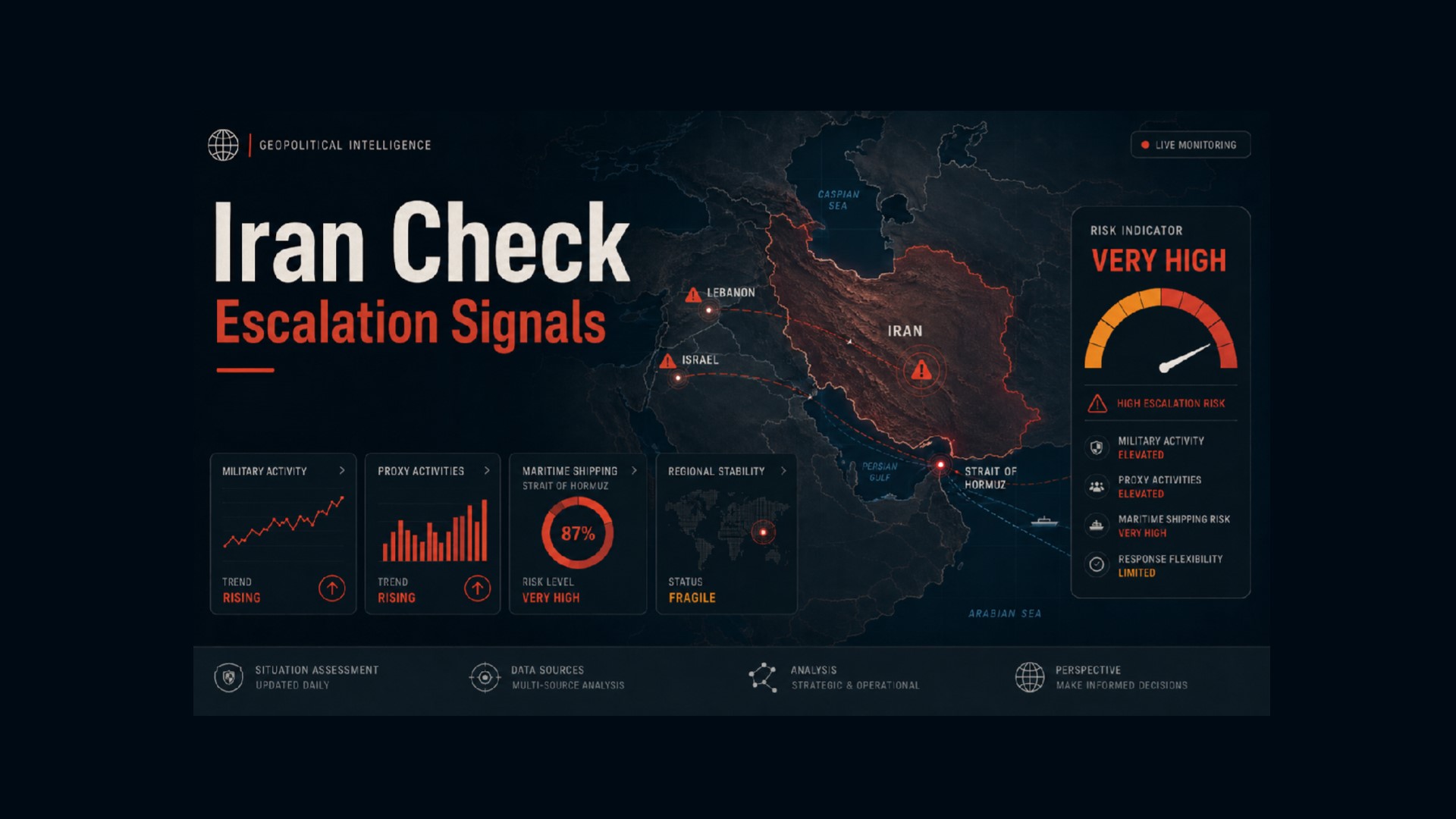
This escalation radar summarizes five relevant signals as of October 8, 2026. The focus is on verifiable statements by official sources, confirmed events and monitoring data with potential implications for energy prices, supply chains, markets, maritime security, aviation and regional stability.
The Pentagon broadly confirms that military options are being developed. U.S. Central Command is to be prepared for a possible resumption of major combat operations. President Trump has not yet made a final decision.
Damascus is considering support in the war against the Iran-aligned Houthis. According to Reuters, the options range from defensive support to a possible troop deployment.
Following the most severe wave of tanker attacks since the war began, only seven commodity vessels per day temporarily pass through the strait. Crude oil flows through Hormuz fall to around 74 percent of pre-war levels.
| Actor | Type | Severity | Status | Source / Verification | Business Impact |
|---|---|---|---|---|---|
| United States / Iran / Israel | Pentagon develops new military options against Iran | Critical · Level 5/5 | Military pressure on Iran is rising again. According to reports published on October 8, the White House has asked the Pentagon to prepare new strike options against Iranian targets. U.S. Central Command is reportedly working on corresponding scenarios. A Pentagon official confirms that it is the department’s role to provide the president with military options. The scale, targets and timing of any possible strikes have not yet been decided. No final authorization from President Trump has been issued. Power dynamics: Washington is increasing its short-term military response capability, while the diplomatic negotiating environment remains fragile. | Current reporting: Anadolu Agency, October 8, 2026 . Verification status: partially confirmed. It is confirmed that the Pentagon is developing military options. A specific attack order or operational timeline has not been confirmed. Background: Schaaf Media · Iran Check: 5 Escalation Signals – October 6, 2026 . | Critical business impact on Iran, Gulf states, energy, shipping, aviation and insurance. A resumption of major U.S. strikes could trigger Iranian retaliation against regional targets and transport corridors. |
| Syria / Saudi Arabia / Houthis / Iran / Yemen | Syria considers military support for Saudi Arabia against Houthis | Critical · Level 5/5 | The Yemen conflict risks becoming further internationalized. According to Reuters, Syria is considering military support for Saudi Arabia in its fight against the Iran-aligned Houthis. Possible contributions range from defensive support to a direct troop deployment. Saudi Arabia is simultaneously seeking additional military and logistical support from regional partners. Türkiye is already supporting Riyadh with defensive capabilities, logistics, intelligence and technical systems. Pakistan has also provided military support. Power dynamics: The Saudi-Houthi conflict is increasingly developing into a broader regional military coalition. | Confirmed by Reuters, October 8, 2026 . Verification status: partially confirmed. Talks on Syrian support are confirmed. A specific troop deployment or force size has not yet been decided. Further analysis: Schaaf Media · Middle East Escalation Check – October 7, 2026 . | Critical business impact on regional security architecture, Saudi Arabia, Yemen, military logistics, Bab el-Mandeb and investment risk. A Syrian troop deployment would expand the conflict to include another state. |
| Houthis / Saudi Arabia / Riyadh / civil aviation | Houthis claim new ballistic missile attack on Riyadh Airport | Critical · Level 5/5 | The Houthi campaign against Saudi aviation targets continues. The Houthis state on October 8 that they attacked King Khalid International Airport in Riyadh with a ballistic missile. Saudi Arabia has not initially confirmed this latest attack. Earlier attacks on the airports in Riyadh and Abha had already killed three people and injured 36. Flight operations in Riyadh remain disrupted on October 8. Dozens of departures are delayed or cancelled. Power dynamics: The Houthis are shifting military pressure deliberately toward civilian transport and economic infrastructure. | Current regional reporting: The National, October 8, 2026 . Verification status: confirmed for ongoing flight delays and cancellations and the impact of the previous attacks. The latest Houthi missile claim has not yet been confirmed by Saudi Arabia. Background: Schaaf Media · Middle East Escalation Check – October 7, 2026 . | Critical business impact on civil aviation, business travel, Saudi Arabia, air freight, insurance and regional hubs. Repeated attacks on airports increase the risk of short-notice airspace closures and flight diversions. |
| Iran / Hormuz / Qatar / Oman / tanker shipping | Hormuz transits fall to lowest level in more than two months | Critical · Level 5/5 | The maritime situation is deteriorating despite recently higher Gulf exports. On October 6, according to vessel-tracking data, only seven commodity vessels pass through Hormuz. This is the lowest daily level since July 23. Crude oil flows through the strait fall by around 27 percent to 10.1 million barrels per day. This is equivalent to only around 74 percent of pre-war levels. At the same time, the number of tanker attacks reaches its highest weekly level since the war began. Another vessel is hit north of Qatar by several projectiles. Power dynamics: Iran is increasing physical pressure on the passage, while Gulf states expand alternative export routes. | Confirmed by Reuters, October 8, 2026 . Verification status: confirmed for the sharp decline in transits, the drop in crude oil flows and the latest wave of attacks. Responsibility for individual attacks remains partly unclear. Further analysis: Schaaf Media · Strait of Hormuz Blockade 2026: Protecting Margins and Supply Chains in the Chokepoint Shock . | Critical business impact on crude oil, LNG, tankers, freight rates, war-risk insurance and delivery times. Alternative export routes stabilize parts of the supply system, but can only partially replace Hormuz capacity. |
| Oil market / Europe / Gulf states / Iran | Brent jumps back above $100 – markets react to renewed escalation | High to Critical · Level 4/5 | Geopolitical escalation is once again feeding directly into energy and financial markets. Brent rises by almost four percent at one point on October 8 to above $104 per barrel. U.S. crude also rises sharply. The drivers include increasing attacks on tankers, falling Hormuz transits and concerns over possible new U.S. strikes against Iran. At the same time, international equity markets come under pressure. European gas prices and bond yields also move higher. Power dynamics: The security crisis is once again turning into a direct inflation and financing shock. | Confirmed by AP News, October 8, 2026 . Verification status: confirmed for the oil price increase and negative market reaction. The price increase has several drivers; alongside the Middle East conflict, U.S. supply risks are also contributing. Background: Schaaf Media · Oil as a Power Instrument: Why Energy Dominates Geopolitics and Markets in 2026 . | High to critical business impact on energy prices, inflation, logistics costs, financing, production and consumer demand. European companies once again face the risk of higher input costs and prolonged interest-rate pressure. |
The most important strategic development on October 8, 2026 is the renewed escalation in U.S.-Iran risk. Washington is having military strike options prepared. No attack order has yet been issued. The combination of concrete operational planning, a strong U.S. military presence and Iranian pressure on Hormuz nevertheless increases the risk of a new direct escalation cycle.
At the same time, the Yemen conflict is becoming further internationalized. Syria is considering military support for Saudi Arabia against the Houthis. Türkiye and Pakistan are already providing capabilities. This expands the regional security architecture beyond the Makkah pact.
Operationally, both aviation and shipping risks are worsening. Riyadh’s airport remains affected by delays and flight cancellations following Houthi attacks. At the same time, Hormuz transits have fallen to their lowest level in more than two months. Crude oil flows through the strait are now at only around three-quarters of pre-war levels.
The economic consequences are becoming more visible again. Brent rises temporarily above $104 per barrel. Equity markets, gas prices and financing costs also react. For companies, this once again means rising cost and planning pressure. The mandatory alliance review shows no new Iranian membership, partner or observer status as of October 8. EASA continues to list active CZIBs for Iran, Iraq, Jordan, Lebanon, the Persian Gulf/Gulf of Oman, Saudi Arabia and Yemen; no new revision was published on October 8.
The five most important signals for a European risk assessment are: the preparation of new U.S. strike options against Iran with no operational decision yet taken, the potential military involvement of Syria on Saudi Arabia’s side against the Houthis, the continued attacks on Saudi airports with direct consequences for civil aviation, the collapse in shipping and crude oil transits through Hormuz following the most severe wave of attacks since the war began, and Brent’s renewed move above $100 with direct implications for inflation, markets and corporate logistics.
Note: This assessment was prepared with support from our Geo-AI. AI can make mistakes. The analysis is intended as a radar for potential escalation signals and does not replace a fully verified intelligence assessment.
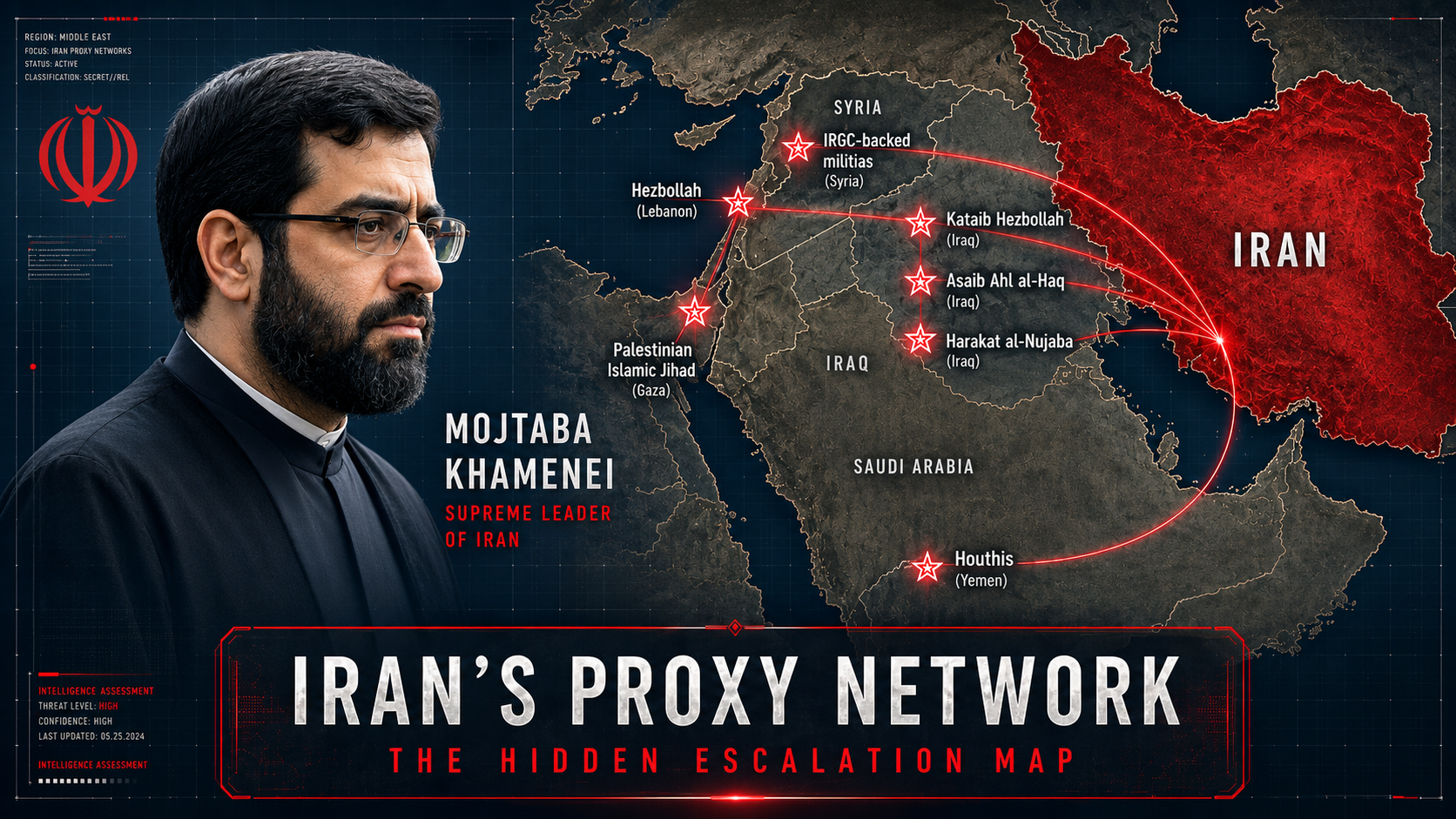
What decision-makers should watch now — before proxy escalation becomes a cost, compliance or supply-chain shock.
This 17-page executive briefing translates Iran’s proxy network into concrete business risks: energy price exposure, maritime chokepoints, war-risk premiums, sanctions, shadow fleets, supply-chain disruption and early-warning indicators for board-level decisions.
You are currently viewing a placeholder content from X. To access the actual content, click the button below. Please note that doing so will share data with third-party providers.
More Information