Executive Intelligence. Industrial Risk. Geopolitics.
Strategic Sparring
for Decision-Makers
Risk intelligence across technology, law, markets and power dynamics.


Verdeckte Geschäftsrisiken, strategische Widersprüche und kritische Abhängigkeiten frühzeitig erkennen.
Kostenlose Analyse starten →
Verdeckte Machtstrukturen, Führungsrisiken und organisatorische Blockaden frühzeitig erkennen.
Kostenlose Analyse starten →
Geopolitische Risiken, globale Abhängigkeiten und kritische Lieferkettenrisiken frühzeitig erkennen.
Kostenlose Analyse starten →
Identify hidden business risks, strategic contradictions and critical dependencies at an early stage.
Start Free Analysis →
Identify hidden power structures, leadership risks and organizational blockers at an early stage.
Start Free Analysis →
Identify geopolitical risks, global dependencies and critical supply-chain vulnerabilities at an early stage.
Start Free Analysis →
Verdeckte Geschäftsrisiken, strategische Widersprüche und kritische Abhängigkeiten frühzeitig erkennen.
Kostenlose Analyse starten →
Verdeckte Machtstrukturen, Führungsrisiken und organisatorische Blockaden frühzeitig erkennen.
Kostenlose Analyse starten →
Geopolitische Risiken, globale Abhängigkeiten und kritische Lieferkettenrisiken frühzeitig erkennen.
Kostenlose Analyse starten →
Identify hidden business risks, strategic contradictions and critical dependencies at an early stage.
Start Free Analysis →
Identify hidden power structures, leadership risks and organizational blockers at an early stage.
Start Free Analysis →
Identify geopolitical risks, global dependencies and critical supply-chain vulnerabilities at an early stage.
Start Free Analysis →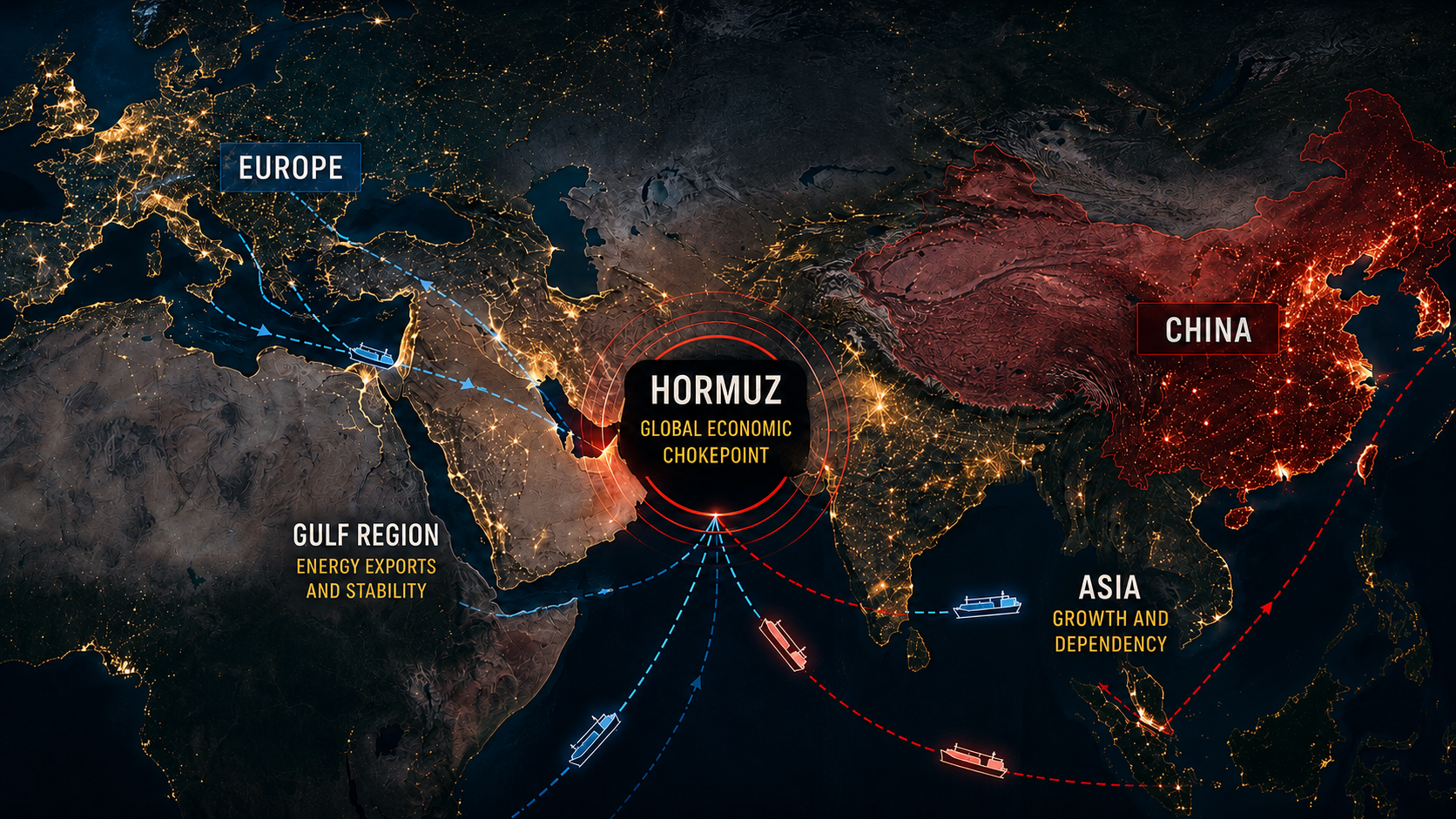
This Chokepoint Check assesses the current pressure on the Strait of Hormuz, the Bab al-Mandab, and critical water, power, port, and energy infrastructure across the Gulf region. The assessment focuses not only on whether a shipping route remains geographically open, but also on whether transport, supply, insurance coverage, and site operations remain operationally viable.
The strait remains geographically passable but is barely operationally viable.
Only three commodity-vessel transits were recorded for Tuesday. No visible VLCC or LNG tanker passages were recorded. On July 23, Iran’s Islamic Revolutionary Guard Corps additionally reported an explosion along a route it described as mined: one tanker was reportedly set on fire, while two others allegedly turned back. This Iranian account has not yet been fully and independently verified.
The blockade threat has produced its first physical operational impact.
The Houthis stated that they had attacked two Saudi oil tankers using missiles and drones. The Encelia reportedly issued a distress call following a missile strike near Jizan, and Saudi Arabia confirmed a fire at the vessel’s bow. The claimed attack on the Layla could not initially be independently verified. Several tankers have already changed course to avoid the Bab al-Mandab.
The threat environment now explicitly targets civilian energy and utility infrastructure.
The United States announced that further Iranian attacks on ships could trigger strikes against bridges or power plants. Iran’s joint military command, in turn, threatened attacks on regional oil, gas, electricity, and economic infrastructure. However, no sufficiently confirmed new daily signal was available on July 23 regarding an additional successful attack on a water, power, port, or energy facility.
On July 23, the Houthis stated that they had attacked the Saudi oil tankers Encelia and Layla using missiles and drones. The Encelia issued a distress call following a reported missile strike near Jizan. Saudi Arabia confirmed a fire at the bow.
The announced blockade has now been backed by its first physical operational impact. The Bab al-Mandab is not fully closed, but the risk has crossed the threshold from political threat to operational disruption.
War-risk premiums, crew risks, and charter costs are increasing for Saudi- and Red Sea-related transport. Shipowners and cargo owners must prepare for short-notice course changes, security reviews, and delays.
Verification status: confirmed for the Encelia’s distress call and the fire reported by Saudi Arabia. The claimed attack on the Layla had not been independently confirmed at the time of reporting. Reuters, July 23, 2026
According to shipping data, at least five tankers in the Red Sea changed course to avoid the Bab al-Mandab. Some headed back north. At the same time, two Chinese supertankers carrying a combined total of approximately four million barrels of Saudi oil continued attempting to transit the strait southbound on Thursday.
The route is not fully blocked. However, the simultaneous passage of some vessels and reversal of others demonstrates a fragmented operational environment in which routing, ownership, cargo affiliation, and risk tolerance determine actual usability.
Rerouting through Suez and subsequently around Africa increases transit times, ties up tanker capacity, and raises bunker-fuel, personnel, and insurance costs. Delivery schedules become less reliable even while the strait remains geographically open.
Verification status: confirmed through vessel-tracking data for the observed course changes and the attempted passage of the two Chinese supertankers. Future transits remain dependent on the evolving security environment. AP News, July 23, 2026
Only three commodity-vessel transits through the Strait of Hormuz were recorded for Tuesday. No visible VLCC or LNG tanker passages were among them. On July 23, Iran’s Islamic Revolutionary Guard Corps additionally reported that one tanker had caught fire on a route it described as mined, while two others had turned back.
The route is not completely physically closed. However, its operational capacity remains exceptionally low for the large-scale shipments that are essential to global markets. The Iranian mine-related account further increases the risk but has not yet been fully and independently verified.
Crude oil, LNG, refined products, petrochemicals, and fertilisers remain particularly exposed. The absence of major tanker passages increases the risk of physical supply shortages regardless of whether individual smaller vessels continue to transit the strait.
Verification status: confirmed for the Kpler transit data covering the immediately preceding day. The claims regarding the explosion, fire, and mined route originated from Iran’s Islamic Revolutionary Guard Corps and have only been partially independently confirmed. Reuters, July 22, 2026 · Previous-day exception
The US military reported a twelfth consecutive night of strikes against Iran. According to US statements, the five-hour operation targeted maritime capabilities, missile and drone storage facilities, coastal surveillance systems, and air defences.
The campaign is increasingly targeting military systems that Iran can use to control or threaten vessel movements. At the same time, each additional strike increases the probability of Iranian retaliation against US bases, commercial vessels, or infrastructure in Gulf states.
The duration of the conflict is extending aviation and shipping risks, complicating personnel rotations, and increasing the probability of short-notice airspace closures, port disruptions, and regional site outages.
Verification status: confirmed for the operation, its duration, and the target categories identified by CENTCOM. The specific damage inflicted on individual targets was not fully and independently verified. Reuters, July 23, 2026
Brent briefly exceeded USD 100 per barrel on July 23, while WTI rose above USD 90. The move was driven by the attacks on Saudi tankers and the growing risk that the Bab al-Mandab corridor could face sustained disruption in addition to Hormuz.
The price movement represents more than a general geopolitical risk premium. It reflects the tangible danger that both the primary route and the principal alternative route for Gulf oil could lose transport capacity simultaneously.
Rising energy, diesel, freight, and financing costs could rapidly affect industry, logistics, chemicals, agriculture, and consumer prices. Companies must also prepare for renewed inflationary pressure and interest-rate risk.
Verification status: confirmed for the price movement. The subsequent price trajectory will depend on the duration, practical enforcement, and geographical expansion of the disruptions. Reuters, July 23, 2026
A Saudi oil tanker is struck, while other vessels begin avoiding the route.
Routing, insurance, crew protection, and transit decisions are reassessed.
Tankers turn back, take longer routes, or remain unavailable for extended periods.
Oil, freight, diesel, insurance, and delivery costs increase.
A Saudi tanker was struck near Jizan and caught fire. Additional tankers changed course. Visible VLCC and LNG tanker passages through Hormuz remain absent.
Two Maritime Corridors Operationally ImpairedThe threshold remains crossed due to the previous attacks on Kuwaiti electricity and water facilities. However, no sufficiently confirmed new successful attack on an additional civilian utility facility was reported on July 23.
Remains Crossed · No New Damage Confirmed TodayHormuz remains severely constrained for large tankers. At the same time, a tanker was attacked along the Saudi alternative route, additional vessels diverted, and the oil price briefly exceeded USD 100.
Systemic Transmission Now ConfirmedEscalation signals clearly outweigh de-escalation indicators. The most important change today is that the Houthi threat against the Saudi Red Sea corridor has, for the first time, produced a confirmed physical impact and concrete vessel course changes. The systemic threshold has therefore been crossed: the region is simultaneously losing transport capacity through Hormuz and operational reliability along its principal alternative route through the Red Sea.
Notice: This assessment was prepared with the support of our Geo AI. AI systems can make mistakes. This analysis serves as a source-based radar for potential escalation signals and does not replace comprehensively verified intelligence, security, insurance, or investment advice. In a dynamic environment, the status, source situation, and risk assessment may change at short notice.
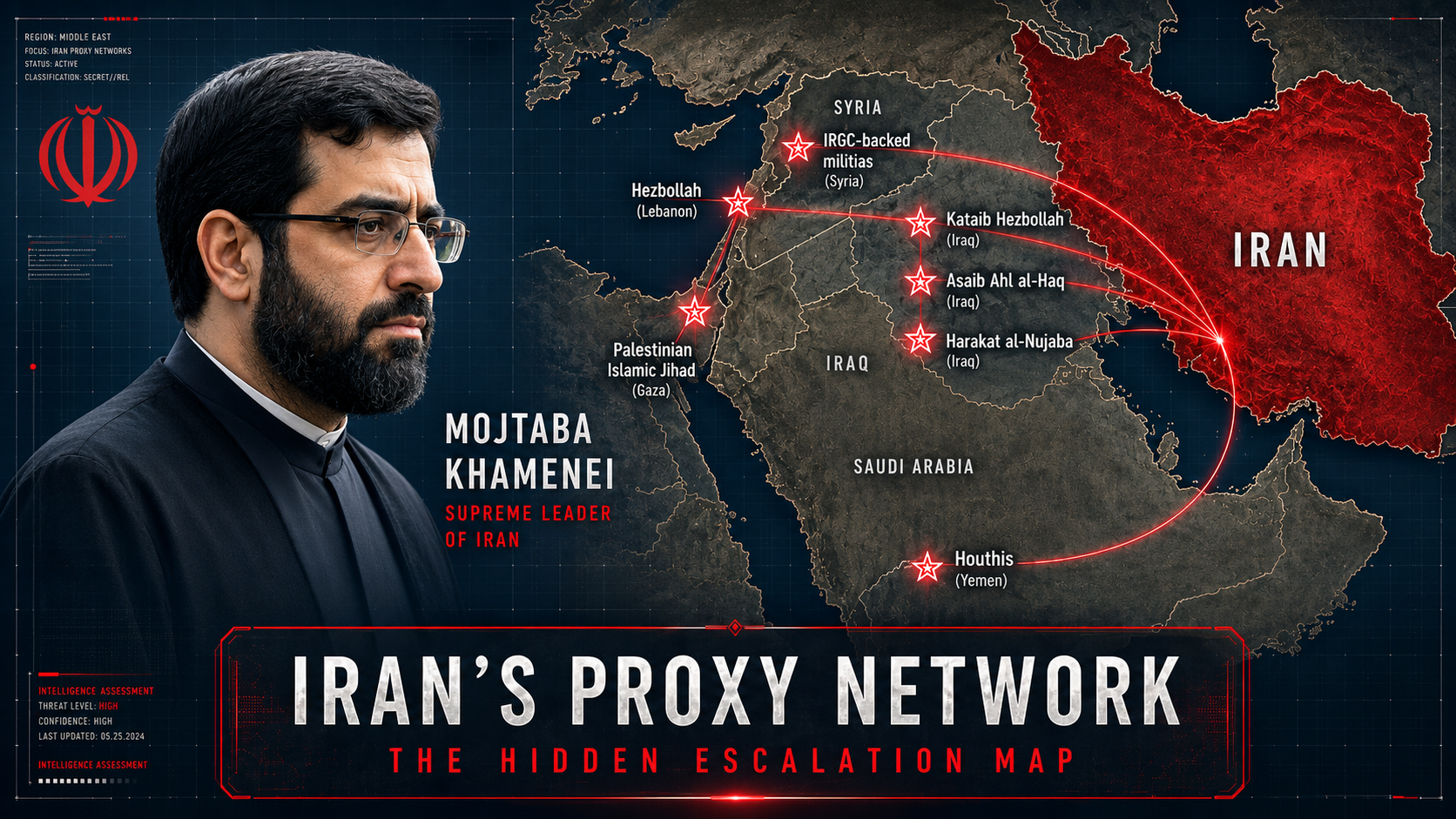
What decision-makers should watch now — before proxy escalation becomes a cost, compliance or supply-chain shock.
This 17-page executive briefing translates Iran’s proxy network into concrete business risks: energy price exposure, maritime chokepoints, war-risk premiums, sanctions, shadow fleets, supply-chain disruption and early-warning indicators for board-level decisions.