Executive Intelligence. Industrial Risk. Geopolitics.
Strategic Sparring
for Decision-Makers
Risk intelligence across technology, law, markets and power dynamics.


Verdeckte Geschäftsrisiken, strategische Widersprüche und kritische Abhängigkeiten frühzeitig erkennen.
Kostenlose Analyse starten →
Verdeckte Machtstrukturen, Führungsrisiken und organisatorische Blockaden frühzeitig erkennen.
Kostenlose Analyse starten →
Geopolitische Risiken, globale Abhängigkeiten und kritische Lieferkettenrisiken frühzeitig erkennen.
Kostenlose Analyse starten →
Identify hidden business risks, strategic contradictions and critical dependencies at an early stage.
Start Free Analysis →
Identify hidden power structures, leadership risks and organizational blockers at an early stage.
Start Free Analysis →
Identify geopolitical risks, global dependencies and critical supply-chain vulnerabilities at an early stage.
Start Free Analysis →
Verdeckte Geschäftsrisiken, strategische Widersprüche und kritische Abhängigkeiten frühzeitig erkennen.
Kostenlose Analyse starten →
Verdeckte Machtstrukturen, Führungsrisiken und organisatorische Blockaden frühzeitig erkennen.
Kostenlose Analyse starten →
Geopolitische Risiken, globale Abhängigkeiten und kritische Lieferkettenrisiken frühzeitig erkennen.
Kostenlose Analyse starten →
Identify hidden business risks, strategic contradictions and critical dependencies at an early stage.
Start Free Analysis →
Identify hidden power structures, leadership risks and organizational blockers at an early stage.
Start Free Analysis →
Identify geopolitical risks, global dependencies and critical supply-chain vulnerabilities at an early stage.
Start Free Analysis →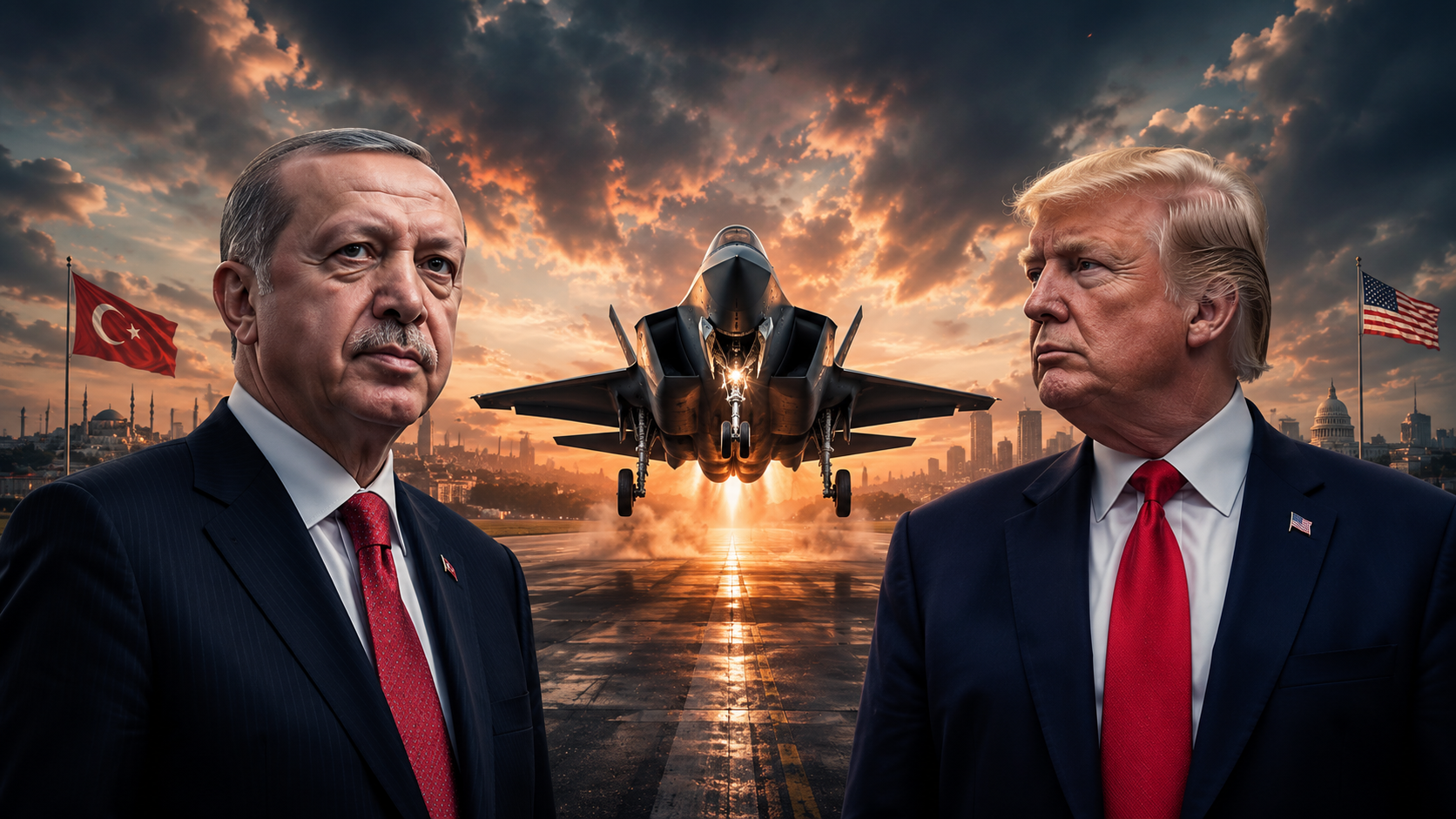
Strategic Risk Intelligence Brief by Global Insight Group.
This analysis is based on the GFDD Framework™ developed by Michaela Schaaf-Hoffelner and is designed for executives, investors and strategic decision-makers.
Updated on: July 23, 2026
Turkey is not at the centre of the daily headlines surrounding the Iran war. Yet that may be precisely what makes its role so easy to underestimate.
Few countries connect as many strategic layers at once. Turkey is a NATO member, a direct neighbour of Iran, a regional rival of Israel, a security partner of the United States, an opponent of Kurdish militias and the host of important military infrastructure on NATO’s south-eastern flank.
This could make Ankara the decisive swing state in the conflict.
Not necessarily because Turkish troops would enter Iran themselves, but because President Recep Tayyip Erdoğan may help determine whether the current air, missile and drone war expands into a wider ground campaign—or whether key military options available to the United States and Israel remain blocked.
The decisive question is therefore not whether Turkey supports Iran. It is what price Ankara will demand for not standing in Washington’s way.
Turkey’s strategic importance becomes immediately apparent on the map.
The country shares a direct border with north-western Iran. It hosts NATO infrastructure, capable air bases, radar and early-warning systems, and important transport corridors into Iraq and Syria.
For the United States, Turkish capabilities could be valuable for:
However, open Turkish participation in an Israeli or US-led ground offensive would carry major political and security risks for Ankara.
Turkey wants Iran weakened—but not destroyed.
Turkey and Iran have competed for regional influence for years. Their rivalry extends across Syria, Iraq, the South Caucasus and Central Asia.
A limited weakening of Tehran could therefore benefit Ankara by expanding Turkey’s political and economic room for manoeuvre.
A complete collapse of the Iranian state, by contrast, would represent a severe strategic risk.
Potential consequences include:
Turkey is therefore not defending the Iranian regime as such. It does, however, have a strong interest in preserving Iran as a functioning state.
The most important point of conflict between Turkey and potential US-Israeli ground strategies concerns Kurdish militias.
Iranian Kurdish groups reportedly held discussions with the United States about possible operations against Iranian security forces. Ankara is particularly concerned about the PJAK because of its links to the PKK. Turkey has warned that separatist activity could destabilise not only Iran, but the broader region. (reuters.com)
According to reports, Ankara has already prevented a planned advance by Kurdish fighters from Iraq into Iran. The Iran war also brought Turkey’s peace process with the PKK close to collapse. (reuters.com)
From Washington’s perspective, Kurdish forces could offer tactical advantages. They know the terrain and could tie down Iranian units in the west of the country.
From Erdoğan’s perspective, however, their military empowerment would create a direct strategic threat.
Turkey could therefore block any ground strategy that seeks to destabilise or fragment Iran through Kurdish militias.
The United States nevertheless possesses substantial leverage over Ankara.
The most important instrument is Turkey’s ambition to regain access to the US F-35 fighter programme.
Turkey was removed from the programme in 2019 after purchasing Russia’s S-400 air-defence system. The United States also imposed sanctions under the Countering America’s Adversaries Through Sanctions Act, or CAATSA.
In early July 2026, Donald Trump said during a meeting with Erdoğan that he intended to lift sanctions against Turkey and make a decision on a possible F-35 sale. Significant legal and political obstacles remain. (investing.com)
At the same time, Ankara is reportedly discussing transferring the S-400 system to the United Arab Emirates. Such a move could remove one of the main obstacles to renewed strategic cooperation with Washington. (wsj.com)
This creates the possibility of a broader geopolitical transaction:
The United States offers access to the F-35 programme, sanctions relief and expanded defence cooperation. Turkey, in return, provides access, intelligence or limited operational support.
It is unlikely that Turkish ground forces would join Israel in an invasion of Iran.
More discreet concessions are far more plausible:
Turkey has already become part of the wider conflict environment. In March 2026, NATO systems intercepted an Iranian ballistic missile heading towards Turkish territory. NATO subsequently expressed solidarity with Ankara and heightened its focus on Iranian missile threats. (nato.int)
A further Iranian strike could materially change Erdoğan’s current restraint.
Turkey and Israel both view Iran as a major regional power. That does not make them strategic allies.
On the contrary, Ankara and Jerusalem are increasingly competing for influence in Syria. Turkey wants to build a stable regional order shaped by Turkish influence. Israel, at the same time, seeks to prevent Turkish military power from becoming permanently established close to its borders.
Israel may therefore require a degree of Turkish cooperation against Iran while simultaneously opposing a major military upgrade for Turkey, particularly through the acquisition of F-35 aircraft.
This makes Erdoğan highly valuable to Washington—but also difficult to manage.
Turkey cannot determine the outcome of the war on its own.
It can, however, help determine how costly, prolonged and risky the conflict becomes for the United States.
Without Turkish support, important land, air and intelligence options remain constrained. A major ground operation in western or north-western Iran would become more difficult. The use of Kurdish forces could also fail because of Turkish resistance.
If Erdoğan opens parts of Turkey’s infrastructure or tolerates selected operations, US military flexibility would improve significantly.
Turkey may therefore not decide the military outcome in the narrow sense. But it may help determine the depth, duration and geographic reach of the war.
Turkey is neither an ally of Iran nor a reliable partner of Israel. It follows its own security and power logic.
Erdoğan wants Iran constrained, but not broken apart. He wants a stronger position vis-à-vis Washington, but no empowered Kurdish military force along Turkey’s borders. He also wants Turkey to benefit from a reordering of the Middle East without bearing the costs of openly entering the war.
That is the source of Ankara’s leverage.
Turkey may not shape the Iran war through a direct attack, but through what it permits, blocks or allows only in exchange for major political concessions.
Whether the conflict develops into a broader ground campaign, remains a limited war of attrition or moves towards negotiations may therefore also be decided in Ankara.
Independent of the subject covered in this article, this separate Executive Briefing provides an in-depth analysis of another critical risk domain affecting European companies.
The 27-page Executive Briefing “Black Swan Risk Mapping for Europe’s Next Mobility and Infrastructure Shock” examines how geopolitical, infrastructural and administrative developments that are currently viewed in isolation could reinforce one another.
Based on the GFDD Framework™, the report shows how these dynamics could affect operational continuity, access to critical resources and the strategic resilience of companies.
The briefing includes a structured systemic-shock analysis and a directly applicable Business Exposure Checklist for CEOs, CFOs, COOs, investors and strategy teams.
Turkey is a NATO member and maintains close military ties with the United States. However, Ankara is pursuing its own interests in the Iran war. It does not automatically support every US or Israeli operation and strongly opposes any strategy that could destabilise Iran through Kurdish militias.
Direct participation by Turkish troops is highly unlikely. Limited forms of support, however, could include intelligence sharing, radar surveillance, border protection or tolerance of selected US operations.
A collapse of the Iranian state could trigger refugee movements, armed conflict, economic disruption and new Kurdish autonomy movements. For Ankara, these risks outweigh the potential advantages of removing a regional rival.
The main instruments are potential sanctions relief, Turkey’s return to the F-35 programme, broader defence exports, financial relations and the US position towards Kurdish groups in Syria and Iraq.
The F-35 would modernise Turkey’s air force and strengthen Ankara’s military position relative to Israel, Greece and other regional powers. Re-entry into the programme could also generate new contracts for Turkish defence companies.
Turkey cannot end the conflict on its own. It can, however, block certain escalation pathways, act as a mediator and prevent its territory or Kurdish forces from being used for a large-scale ground offensive.
Author of Global Insight Group Intelligence:
Michaela Schaaf-Hoffelner has more than 35 years of experience in strategic and technical project and product management, particularly in IT, control systems and intralogistics. Through her long-standing work with complex systems, she identifies structural risks and dynamic misalignments at an early stage – risks that are often overlooked in conventional analysis.
Her focus is on making causal relationships and systemic dependencies visible and translating them into concrete strategic advantages for investors and decision-makers. Her analyses combine deep technical systems understanding with geopolitical and economic developments.
GFDD Framework™ and GFDD Diagnostics™ are proprietary analytical concepts developed by Michaela Schaaf-Hoffelner. © 2026 Global Insight Group LLC. All rights reserved.
You are currently viewing a placeholder content from X. To access the actual content, click the button below. Please note that doing so will share data with third-party providers.
More Information