Executive Intelligence. Industrial Risk. Geopolitics.
Strategic Sparring
for Decision-Makers
Risk intelligence across technology, law, markets and power dynamics.


Verdeckte Geschäftsrisiken, strategische Widersprüche und kritische Abhängigkeiten frühzeitig erkennen.
Kostenlose Analyse starten →
Verdeckte Machtstrukturen, Führungsrisiken und organisatorische Blockaden frühzeitig erkennen.
Kostenlose Analyse starten →
Geopolitische Risiken, globale Abhängigkeiten und kritische Lieferkettenrisiken frühzeitig erkennen.
Kostenlose Analyse starten →
Identify hidden business risks, strategic contradictions and critical dependencies at an early stage.
Start Free Analysis →
Identify hidden power structures, leadership risks and organizational blockers at an early stage.
Start Free Analysis →
Identify geopolitical risks, global dependencies and critical supply-chain vulnerabilities at an early stage.
Start Free Analysis →
Verdeckte Geschäftsrisiken, strategische Widersprüche und kritische Abhängigkeiten frühzeitig erkennen.
Kostenlose Analyse starten →
Verdeckte Machtstrukturen, Führungsrisiken und organisatorische Blockaden frühzeitig erkennen.
Kostenlose Analyse starten →
Geopolitische Risiken, globale Abhängigkeiten und kritische Lieferkettenrisiken frühzeitig erkennen.
Kostenlose Analyse starten →
Identify hidden business risks, strategic contradictions and critical dependencies at an early stage.
Start Free Analysis →
Identify hidden power structures, leadership risks and organizational blockers at an early stage.
Start Free Analysis →
Identify geopolitical risks, global dependencies and critical supply-chain vulnerabilities at an early stage.
Start Free Analysis →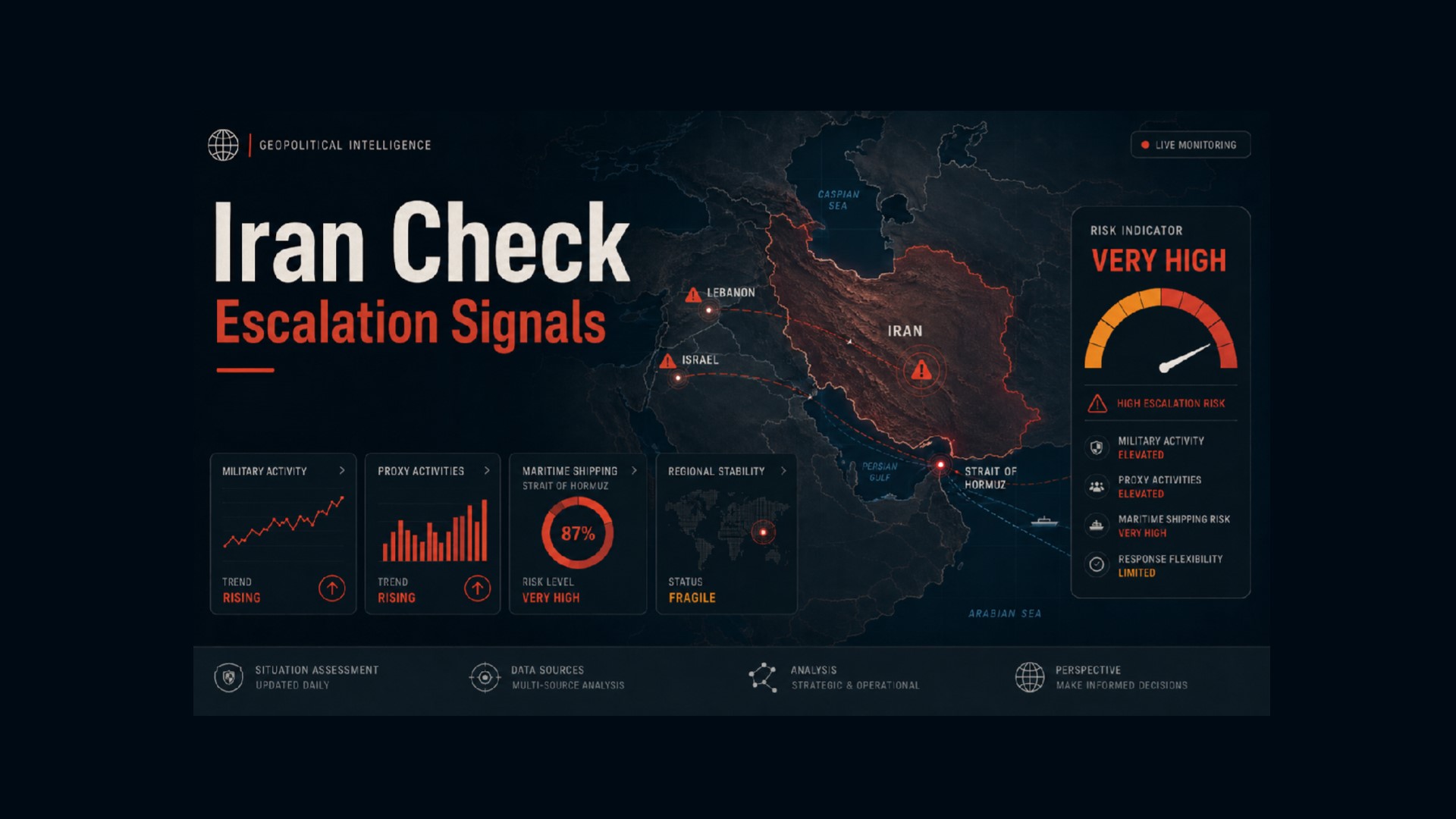
This escalation radar summarizes five relevant signals as of July 26, 2026. The focus is on verifiable statements by official actors, confirmed events and monitoring sources with potential impact on energy prices, supply chains, markets, maritime security, aviation and regional stability.
The key change: the United States is pausing its airstrikes against Iran for the first time after almost two weeks, while diplomatic talks are being pushed forward around a return to the interim deal and a Hormuz compromise. This is not a reliable de-escalation signal, but a tactical negotiation window: the core dispute remains who controls passage through Hormuz and under which conditions vessels may pass.
While a military pause is visible in the Gulf, the situation in the Red Sea continues to escalate. AP reports that the Houthis fired missiles and drones at Saudi Arabia. This shifts the operational burden from Hormuz alone to a linked chokepoint crisis involving Hormuz, Bab el-Mandeb and the Red Sea.
Reuters reports that Iran condemned a Ukrainian attack on an Iranian merchant vessel in the Caspian Sea. At the same time, Reuters refers to Ukrainian statements that Russia is supporting Iran with satellite observations in the Middle East. This creates a new connection between the Ukraine war, the Iran war, Russian intelligence support and Iran’s ability to strike Gulf states and regional US locations.
| Actor | Type | Severity | Status | Source / verification status | Business impact |
|---|---|---|---|---|---|
| United States / Iran / Oman / Hormuz / negotiators | Paused US airstrikes, ongoing negotiations and dispute over Hormuz control | High to critical · Level 4/5 | The political US-Iran situation changes significantly on July 26, 2026, but not in a stable way. AP reports that the United States paused its airstrikes against Iran after almost two weeks of intensive bombing, while diplomatic efforts are being advanced to prevent a return to open war. According to AP, both the United States and Iran want to return to the interim agreement. The compromise under discussion revolves around Iran administering vessel passage through the Strait of Hormuz, but with fewer restrictions on ships. The power dynamic: Washington wants to use a military pause without fully handing control over the most important energy corridor to Tehran. Iran is trying to anchor its de facto control role in Hormuz diplomatically. This shifts the escalation in the short term from direct bombing to passage rights, control, fee logic, insurability and recognition of power positions. | Confirmed by AP News, 26.07.2026 and Iran International / AP, 26.07.2026. Verification status: confirmed for the pause in US airstrikes, ongoing diplomatic efforts and the discussed Hormuz compromise; it remains open whether Iran will actually accept less restrictive transit conditions and whether the United States will sustain the military pause. | High to critical business impact on oil and LNG transport, tanker routing, insurability, war-risk premiums, charter costs, port planning, energy procurement, hedging, delivery times, payment risks, air-freight substitution costs, flight routes, business travel and companies with Gulf, energy, chemicals, fertilizer, air freight or heavy industry exposure. |
| Houthi / Saudi Arabia / United States / Iran / Bab el-Mandeb / Red Sea | Houthi missiles and drones against Saudi Arabia and expansion of the chokepoint crisis | Critical · Level 5/5 | The operational energy and shipping situation tightens further in the Red Sea on July 25/26. AP reports that the Iran-backed Houthis fired missiles and drones at Saudi Arabia, after Saudi airstrikes on Hodeida, a strategic port city on the Red Sea. This means Bab el-Mandeb is not only an alternative corridor for oil flows pressured by Hormuz, but is itself becoming an active military pressure zone. The power dynamic: Iran-aligned actors can maintain cost pressure on Saudi Arabia, Red Sea routes and global energy prices, even while the United States temporarily pauses its direct Iran strikes. For Washington and Riyadh, this creates a dilemma: retaliation could escalate the Red Sea situation further, while inaction could normalize the Houthi attack logic. | Confirmed by AP News, 25./26.07.2026. Verification status: confirmed for Houthi missile and drone attacks against Saudi Arabia after Saudi airstrikes on Hodeida; it remains open whether Saudi Arabia, the United States or both will derive a new direct Houthi campaign from this and whether Bab el-Mandeb will again become a major rerouting factor in the short term. | Critical business impact on oil and LNG transport, Saudi exposure, tanker routing, Red Sea routes, Bab el-Mandeb transits, Suez routes, diversions around Africa, war-risk premiums, insurability, charter costs, spot rates, delivery times, port planning, energy procurement, hedging, air-freight substitution costs, flight-route planning and companies with Asia-Europe, Gulf, energy, chemicals, fertilizer or heavy industry exposure. |
| Iran / Ukraine / Russia / Caspian Sea / regional US locations | Ukrainian attack on Iranian vessel and Russian satellite support for Iran | High to critical · Level 4/5 | The escalation gains a new northern dimension on July 25/26. Reuters reports that Iran’s Foreign Ministry condemned a Ukrainian attack on an Iranian merchant vessel in the Caspian Sea. According to Reuters, Iran said one sailor was killed and another injured in the explosion. Reuters also refers to statements by Ukrainian President Volodymyr Zelenskyy that Russia is providing Iran with satellite observations in the Middle East to enable Iranian strikes in the region. The power dynamic: the Iran conflict becomes more closely linked to the Ukraine-Russia complex. Russia can support Iran through intelligence without openly entering the Gulf war itself. Ukraine, in turn, signals that Iranian-Russian military logistics are vulnerable beyond the Black Sea. This expands the conflict space from Hormuz and the Red Sea to the Caspian region and to intelligence support against Gulf states and US locations. | Confirmed by Reuters, 25./26.07.2026. Verification status: confirmed for Iran’s condemnation of the Ukrainian attack, the reported fatality on an Iranian vessel and Zelenskyy’s reference to Russian satellite observations in support of Iran; it remains open how directly this intelligence feeds into Iranian target selection and whether the Caspian region will remain part of the escalation space. | High to critical business impact on Caspian Sea exposure, energy and military logistics, Russia-Iran routes, sanctions, insurability, trade finance, security checks, dual-use supply chains, satellite and intelligence risks, Gulf locations, flight routes, air freight and companies with Russia, Iran, Caucasus, Central Asia or Gulf exposure. |
| Hormuz / Iran / United States / shipping / energy trade | Control question over Hormuz temporarily replaces the pure military logic | High to critical · Level 4/5 | The operational Hormuz situation remains critical on July 26, even though US airstrikes are paused. AP reports that the compromise in the ongoing talks aims to allow Iran to administer vessel passage through Hormuz, but with fewer restrictions on ships. This shows that the real question is no longer simply whether Hormuz is open or closed. What matters is who controls passage, which vessels are delayed or inspected, which political conditions apply and whether insurers, shipowners and energy traders consider this control predictable. The power dynamic: Iran is trying to normalize operational control over the chokepoint as a political lever. The United States is trying to make shipping possible again without fully handing the Gulf security architecture over to Iranian terms. For companies, Hormuz therefore remains a decision risk, not a normalized corridor. | Confirmed by AP News, 26.07.2026. Verification status: confirmed for ongoing talks over less restrictive Iranian administration of Hormuz passage; it remains open whether this arrangement can be operationalized, how shipowners and insurers will respond and whether military incidents will derail the talks again. | High to critical business impact on oil and LNG transport, tanker clearances, shipowner decisions, insurability, war-risk premiums, charter costs, delivery times, port planning, energy procurement, raw material prices, refinery supply, air-freight costs, diversions, just-in-time supply chains, personnel movement and companies with Gulf, Asia or Europe transit risk. |
| Lebanon / Israel / Hezbollah / United States | Pilot zones as a practical test for state control, Israeli withdrawal and Hezbollah disarmament | High to critical · Level 4/5 | The Lebanon situation remains a political stabilization test with high relapse risk on July 25/26. Arab News reports that attention is shifting to the first phase of pilot zones in southern Lebanon, the first practical step in a mechanism being developed alongside US-backed negotiations between Lebanon and Israel. According to Arab News, analysts warn that the pilot zones must not be understood as a substitute for Israeli withdrawal, but as a mechanism intended to facilitate it. At the same time, tying the weapons issue too tightly to this process could give Israel a pretext to prolong the occupation, while Hezbollah could use it to justify keeping its weapons. The power dynamic: Lebanon is trying to make state control visible and practically secure Israeli withdrawal. Israel is testing whether security guarantees can hold without permanent direct presence. Hezbollah remains the structural conflict core because disarmament, withdrawal, sovereignty and local security reality do not move at the same speed. | Confirmed by Arab News, 25./26.07.2026. Verification status: confirmed for the pilot zones as a first practical implementation test, the warning against treating them as a substitute for Israeli withdrawal and the risk that the weapons issue may be used both by Israel as a pretext and by Hezbollah as a justification; it remains open whether the pilot zones can scale and whether Lebanon can actually enforce state control against Hezbollah structures. | High relevance for Lebanon and northern Israel exposure, security planning, evacuation, insurance, humanitarian logistics, regional supply chains, border risks, political risk premiums, flight routes over the Levant, business travel and companies with personnel, partners or projects in the Levant. |
The central escalation node on July 26, 2026 is not another US strike night, but the shift from direct military logic to a fragile negotiation window while the conflict space expands at the same time. Compared with July 24, the situation has changed: the United States is pausing its airstrikes against Iran, talks over a return to the interim agreement and a less restrictive Iranian administration of Hormuz are underway, while Houthi attacks continue to pressure Saudi Arabia and the Red Sea.
Operationally, the situation remains highly critical for companies. Hormuz is not normalized, but subject to control and transit negotiations. Bab el-Mandeb and the Red Sea remain under pressure from Houthi missiles, drones and attacks against Saudi Arabia. The Caspian region also emerges as a new conflict space after Iran reports a Ukrainian attack on an Iranian vessel and Russia, according to Ukrainian statements, is supporting Iran with satellite observations in the Middle East. At the same time, the EASA warning situation for Iran, Iraq, Lebanon, the Persian Gulf and the Gulf of Oman remains active.
Politically, the situation is dangerous because de-escalation, power consolidation and expansion are happening simultaneously. Washington and Tehran are testing a negotiation window. Iran is trying to anchor its control role in Hormuz as a reality. Iran-aligned Houthis are keeping pressure on Saudi Arabia and the Red Sea. In Lebanon, pilot zones are becoming a practical test of whether Israeli withdrawal, state control and Hezbollah disarmament can be brought together at all.
The five most important signals for a European business risk picture are: the pause in US airstrikes amid ongoing US-Iran negotiations, the discussed Hormuz compromise with Iranian transit administration, Houthi missile and drone attacks against Saudi Arabia in the Red Sea context, the expansion of the conflict into the Caspian Sea and Russian satellite support in favor of Iran, and the Lebanon pilot zones as a fragile test for Israeli withdrawal, state control and Hezbollah disarmament while EASA warnings remain active for Iran, Iraq, Lebanon, the Persian Gulf, the Gulf of Oman and adjacent air corridors.
Note: This assessment was created with support from our Geo AI. AI can make mistakes. This document serves as a radar for potential escalation signals and does not replace a fully verified final intelligence assessment.
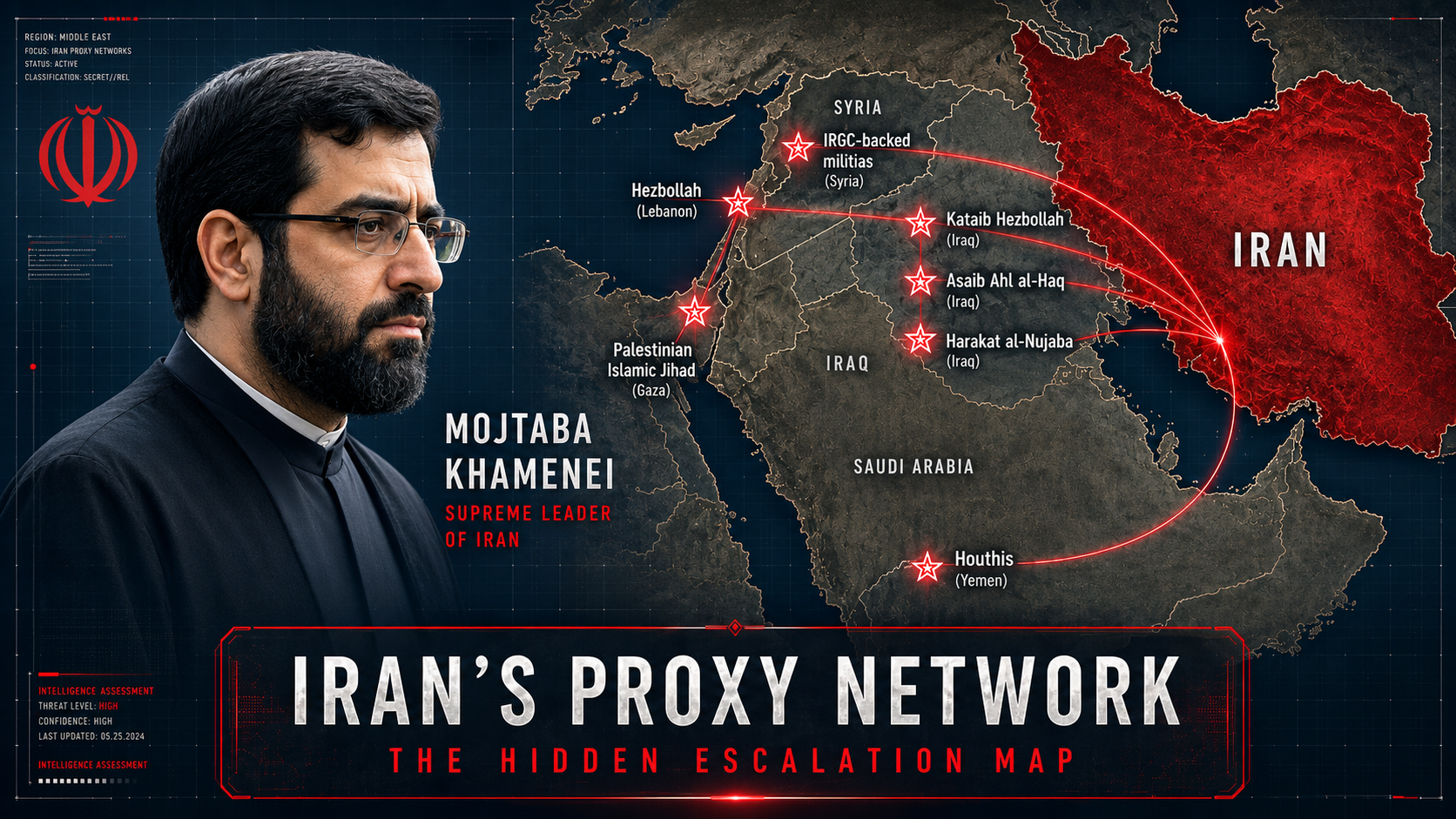
What decision-makers should watch now — before proxy escalation becomes a cost, compliance or supply-chain shock.
This 17-page executive briefing translates Iran’s proxy network into concrete business risks: energy price exposure, maritime chokepoints, war-risk premiums, sanctions, shadow fleets, supply-chain disruption and early-warning indicators for board-level decisions.
You are currently viewing a placeholder content from X. To access the actual content, click the button below. Please note that doing so will share data with third-party providers.
More Information