Executive Intelligence. Industrial Risk. Geopolitics.
Strategic Sparring
for Decision-Makers
Risk intelligence across technology, law, markets and power dynamics.


Verdeckte Geschäftsrisiken, strategische Widersprüche und kritische Abhängigkeiten frühzeitig erkennen.
Kostenlose Analyse starten →
Verdeckte Machtstrukturen, Führungsrisiken und organisatorische Blockaden frühzeitig erkennen.
Kostenlose Analyse starten →
Geopolitische Risiken, globale Abhängigkeiten und kritische Lieferkettenrisiken frühzeitig erkennen.
Kostenlose Analyse starten →
Identify hidden business risks, strategic contradictions and critical dependencies at an early stage.
Start Free Analysis →
Identify hidden power structures, leadership risks and organizational blockers at an early stage.
Start Free Analysis →
Identify geopolitical risks, global dependencies and critical supply-chain vulnerabilities at an early stage.
Start Free Analysis →
Verdeckte Geschäftsrisiken, strategische Widersprüche und kritische Abhängigkeiten frühzeitig erkennen.
Kostenlose Analyse starten →
Verdeckte Machtstrukturen, Führungsrisiken und organisatorische Blockaden frühzeitig erkennen.
Kostenlose Analyse starten →
Geopolitische Risiken, globale Abhängigkeiten und kritische Lieferkettenrisiken frühzeitig erkennen.
Kostenlose Analyse starten →
Identify hidden business risks, strategic contradictions and critical dependencies at an early stage.
Start Free Analysis →
Identify hidden power structures, leadership risks and organizational blockers at an early stage.
Start Free Analysis →
Identify geopolitical risks, global dependencies and critical supply-chain vulnerabilities at an early stage.
Start Free Analysis →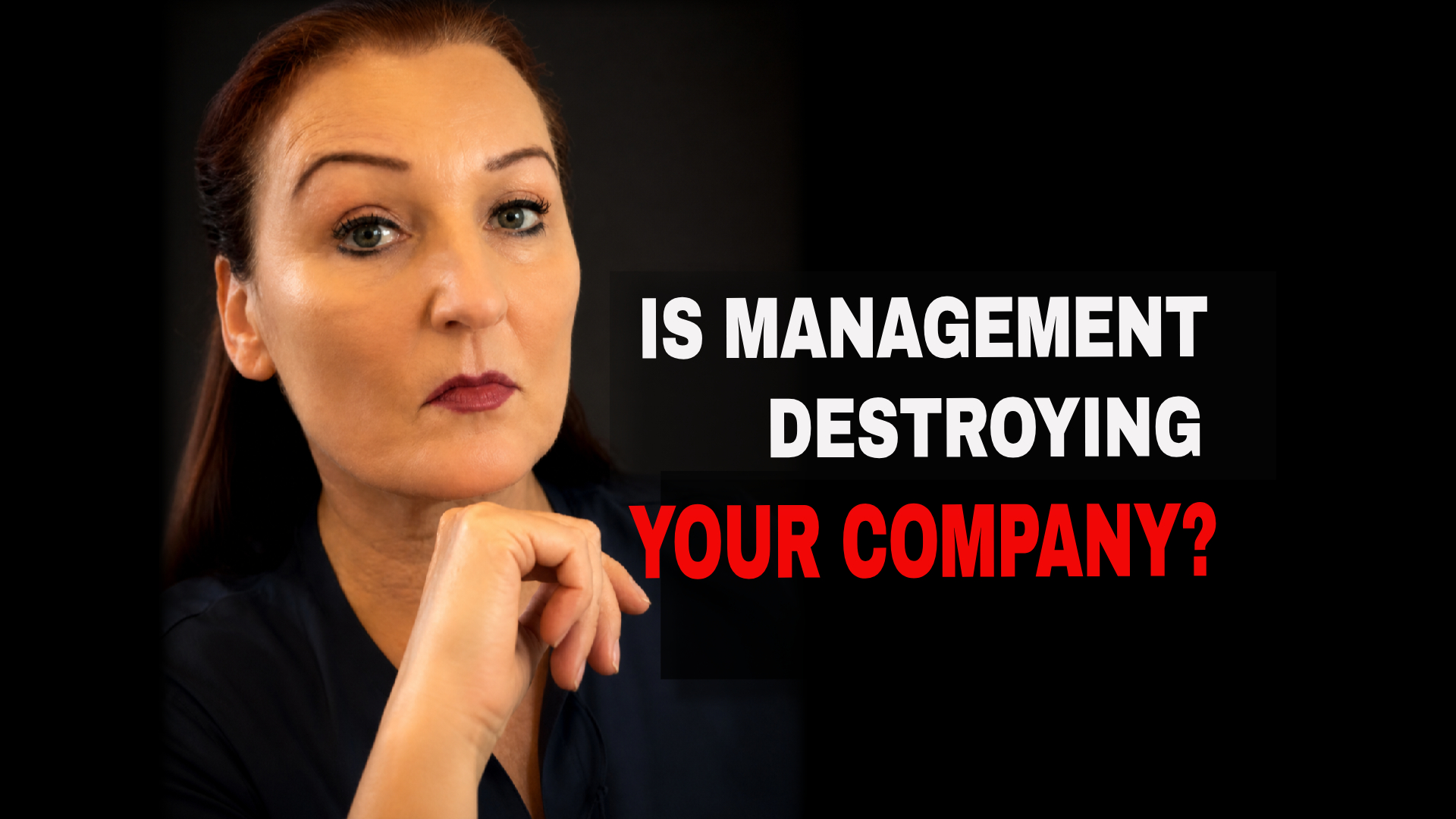
Strategic Risk Intelligence Brief by Global Insight Group.
This analysis is based on the GFDD Framework™ developed by Michaela Schaaf-Hoffelner and is designed for executives, investors and strategic decision-makers.
Updated: August 05, 2026
| Quick answer for business owners: Toxic leadership is not a soft culture issue. It is a hidden management risk that drives out key talent, filters critical information, blocks innovation and destroys long-term company value. It becomes particularly dangerous when strong short-term figures conceal capability loss and rising employee turnover. |
When German investors or business owners assess an industrial company, they use the conventional tools of due diligence. They review patents, analyse the EBITDA margin and evaluate market position. This creates a sense of security. Yet it can obscure one of the largest invisible risks to company value: toxic leadership and the organisational transformation risk it creates. Many ambitious projects fail not because of inadequate technology, but because of hidden internal power structures, poor leadership and systematic information control.
In many traditional industrial businesses, middle management acts like a toxic layer of clay. Upwards, towards the CEO and the owners, it presents polished progress charts, stable figures and apparently successful transformation programmes. Downwards, it suffocates innovation, personal responsibility and critical thinking before they can take root. CEOs often live inside an information bubble and approve the dismissal of top performers almost automatically because they trust the filtered accounts provided by their department heads.
The reality behind such departures is often not a harmless cultural mismatch, but cold calculation. When power-hungry managers feel themselves losing control because they are personally or professionally overwhelmed, they use coerced resignations, workplace bullying, gaslighting and targeted character attacks as instruments of control. They remove the experts who expose the real weaknesses in order to divert attention from their own refusal to perform, overload or incompetence.
For you as an investor or business owner, this means buying a technological shell whose intellectual capital is being systematically destroyed behind the scenes. One particularly extreme, yet disturbingly real, case shows how personal overload, weak corporate governance and the abuse of organisational power can ruin a company from within.
The following case study is not a theoretical construction. It is based on real professional experience. Names, the company and individual identifying details have been withheld to protect the people involved. The power mechanisms, decisions and consequences described here reflect what actually occurred.
Picture a mid-sized industrial company. An ambitious employee puts a finger on the real problem. He openly addresses weak execution, rigid silos and blocked transformation processes. Instead of engaging with the substance of the criticism, the responsible manager immediately switches into destruction mode.
The underlying reason is hidden in the manager’s private life. He is building a house, is mentally overwhelmed, spends working hours on calls with contractors and has even received a private loan from the company. His own performance falls close to zero. To conceal this fundamental failure from the CEO, he needs a diversion. The critical employee is turned into the scapegoat.
The manager puts the employee under pressure with a brutal ultimatum: “Either you sign your resignation the day after tomorrow, or I will dismiss you automatically at the end of next month.”
The CEO signs off on the dismissal blindly, relying on the manager’s account.
But the forced departure is not enough. The manager’s wounded pride demands complete control. What follows creates even deeper structural damage: informal character assassination beyond the company itself. The manager spreads a narrative among market contacts, business partners and headhunters that the employee was “difficult”, “not a team player” or “a failure”.
Speak to former employees of this company today and the response is often a flat, resigned: “It has always been like that.” It is a chilling statement when one considers that this toxic corporate culture has reproduced itself reliably for decades.
Even more strikingly, the same company places great emphasis on its values and on respectful collaboration. In practice, this remains empty employer branding that never reaches ordinary employees. Polished on the outside, fear, control and silence on the inside.
Business owners, investors and shareholders focus primarily on hard figures in quarterly reporting: revenue, EBIT, EBITDA, project deadlines and labour costs. This is exactly where the deception begins. When a manager builds a silo and pushes critical thinkers out, departmental performance does not collapse the next day. On the contrary, pressure and fear often create short-term military discipline. The numbers still look acceptable, meetings seem calm and visible conflict disappears.
The CEO can therefore shine in front of the owner. When a critical employee leaves, management describes the departure as restructuring, a performance issue or personnel cost optimisation. The owner sees only reduced costs and apparent calm. What remains invisible is the early loss of know-how, innovation capacity and risk transparency.
The principal-agent problem describes the conflict of interest between the owner as principal and the employed CEO as agent. The owner wants to protect long-term company value. That requires innovation, a resilient corporate culture, capable key people and honest information.
The CEO, however, may be working under a three-year or five-year contract, with bonuses linked to short-term targets. The fatal logic is simple: the damage caused by toxic leadership, rising employee turnover, innovation gridlock and capability loss often becomes fully visible only years later. By then, the CEO may already have moved to another company with a substantial bonus. Management shifts the risk into the future. The owner pays the bill.
When assessing a company, do not look only at the financial statements. Ask: “Which unusual private loans or management benefits are currently in place? How high is the turnover of key talent in the affected departments? Which leaders repeatedly lose their strongest people? And who controls the information that reaches the CEO and the owners?”
When these patterns appear, investigate them. Otherwise, you may be buying a sinking ship on which the rats are throwing the captains overboard.
If you discover that your company owns valuable technological assets but is paralysed internally by obstructive power structures, this is not a reason to give up. It may be a strategic investment opportunity. Toxic managers and organisational blockages can be removed or restructured, while the technological core of the business may remain valuable.
To uncover these hidden barriers and release the company’s real value, investors and owners must rethink conventional due diligence. Informal power structures need to be exposed before the intellectual capital has disappeared completely.
The Investor Playbook in the latest Global Insight Group Executive Report provides a practical methodology. It guides owners and investors through three strategic stages for identifying the invisible gaps inside a company:
1. Identify informal decision-making power: Who actually makes business-critical decisions inside the company, and who merely holds the formal title?
2. Break toxic organisational narratives: How are conflicts described internally, and where are critical thinkers systematically delegitimised as “difficult”?
3. Audit governance complexity and talent turnover: Where does execution slow down despite constant meetings, and why are key performers leaving the business?
Intelligence on Demand
Experience the analytical power of GFDD Diagnostics™ through a concrete business case.
Our proprietary AI was developed around the methodology, knowledge structures and analytical patterns of GFDD Diagnostics™.
Test whether this approach can reveal hidden dependencies, leadership risks and strategic blind spots within your organization.
Test GFDD Diagnostics™
CEOs who ignore managerial power games are stripping value from the owner’s intellectual capital. They exchange the company’s long-term viability for short-term calm, attractive figures and personal peace of mind.
Toxic leadership does not always destroy company value with one dramatic collapse. It often works gradually. One top performer leaves. One risk is no longer reported. One project fails. One customer loses confidence. A mediocre replacement stabilises the system. Eventually, the owner is left with the shell of a company whose most important capabilities were driven away long ago.
Owners should not wait for formal complaints or weak financial results. Typical warning signs include repeated departures of key talent under the same manager, flawless reports despite operational problems, an unusual number of supposedly difficult employees and an information flow controlled almost entirely by a small group of managers.
Yes. That is precisely what makes toxic leadership so dangerous. In the short term, pressure, fear and the exploitation of existing knowledge can produce stable figures. The costs of high turnover, lost know-how, poor decisions and innovation paralysis may not become visible for years.
Toxic or power-hungry managers often present one face upwards and another downwards. To the CEO, they appear loyal, composed and results-driven. To employees, they control information, punish dissent and force out high-performing critics. The CEO therefore sees only the stability they have staged.
The costs include the loss of key employees, longer vacancies, higher recruitment costs, weaker replacements, project delays, customer losses, legal exposure and declining innovation capacity. The greatest damage is often the loss of intellectual capital, which remains invisible in the accounts at first.
The owner carries the long-term damage, while the employed CEO is often rewarded for short-term targets and bonuses. When the consequences of a toxic culture emerge only after several years, the CEO can push the risk into the future and leave before the full bill becomes due.
Investors should analyse turnover by manager and department, review unusual management benefits or private loans, examine exit patterns, compare failed strategic projects with talent departures and determine whether critical information reaches the CEO without being filtered.
No. Turnover can have many causes. It becomes critical when experienced, independent or high-performing employees repeatedly leave the same manager and describe similar patterns of information control, devaluation or blocked responsibility.
Owners need independent information channels. These include skip-level conversations, anonymised turnover analysis by manager, independent exit reviews, recurring governance audits and leadership assessment based on talent development, knowledge retention and the quality of risk reporting.
Author of Global Insight Group Intelligence:
Michaela Schaaf-Hoffelner has more than 35 years of experience in strategic and technical project and product management, particularly in IT, control systems and intralogistics. Through her long-standing work with complex systems, she identifies structural risks and dynamic misalignments at an early stage – risks that are often overlooked in conventional analysis.
Her focus is on making causal relationships and systemic dependencies visible and translating them into concrete strategic advantages for investors and decision-makers. Her analyses combine deep technical systems understanding with geopolitical and economic developments.
GFDD Framework™ and GFDD Diagnostics™ are proprietary analytical concepts developed by Michaela Schaaf-Hoffelner. © 2026 Global Insight Group LLC. All rights reserved.
You are currently viewing a placeholder content from X. To access the actual content, click the button below. Please note that doing so will share data with third-party providers.
More Information