Executive Intelligence. Industrial Risk. Geopolitics.
Strategic Sparring
for Decision-Makers
Risk intelligence across technology, law, markets and power dynamics.


Verdeckte Geschäftsrisiken, strategische Widersprüche und kritische Abhängigkeiten frühzeitig erkennen.
Kostenlose Analyse starten →
Verdeckte Machtstrukturen, Führungsrisiken und organisatorische Blockaden frühzeitig erkennen.
Kostenlose Analyse starten →
Geopolitische Risiken, globale Abhängigkeiten und kritische Lieferkettenrisiken frühzeitig erkennen.
Kostenlose Analyse starten →
Identify hidden business risks, strategic contradictions and critical dependencies at an early stage.
Start Free Analysis →
Identify hidden power structures, leadership risks and organizational blockers at an early stage.
Start Free Analysis →
Identify geopolitical risks, global dependencies and critical supply-chain vulnerabilities at an early stage.
Start Free Analysis →
Verdeckte Geschäftsrisiken, strategische Widersprüche und kritische Abhängigkeiten frühzeitig erkennen.
Kostenlose Analyse starten →
Verdeckte Machtstrukturen, Führungsrisiken und organisatorische Blockaden frühzeitig erkennen.
Kostenlose Analyse starten →
Geopolitische Risiken, globale Abhängigkeiten und kritische Lieferkettenrisiken frühzeitig erkennen.
Kostenlose Analyse starten →
Identify hidden business risks, strategic contradictions and critical dependencies at an early stage.
Start Free Analysis →
Identify hidden power structures, leadership risks and organizational blockers at an early stage.
Start Free Analysis →
Identify geopolitical risks, global dependencies and critical supply-chain vulnerabilities at an early stage.
Start Free Analysis →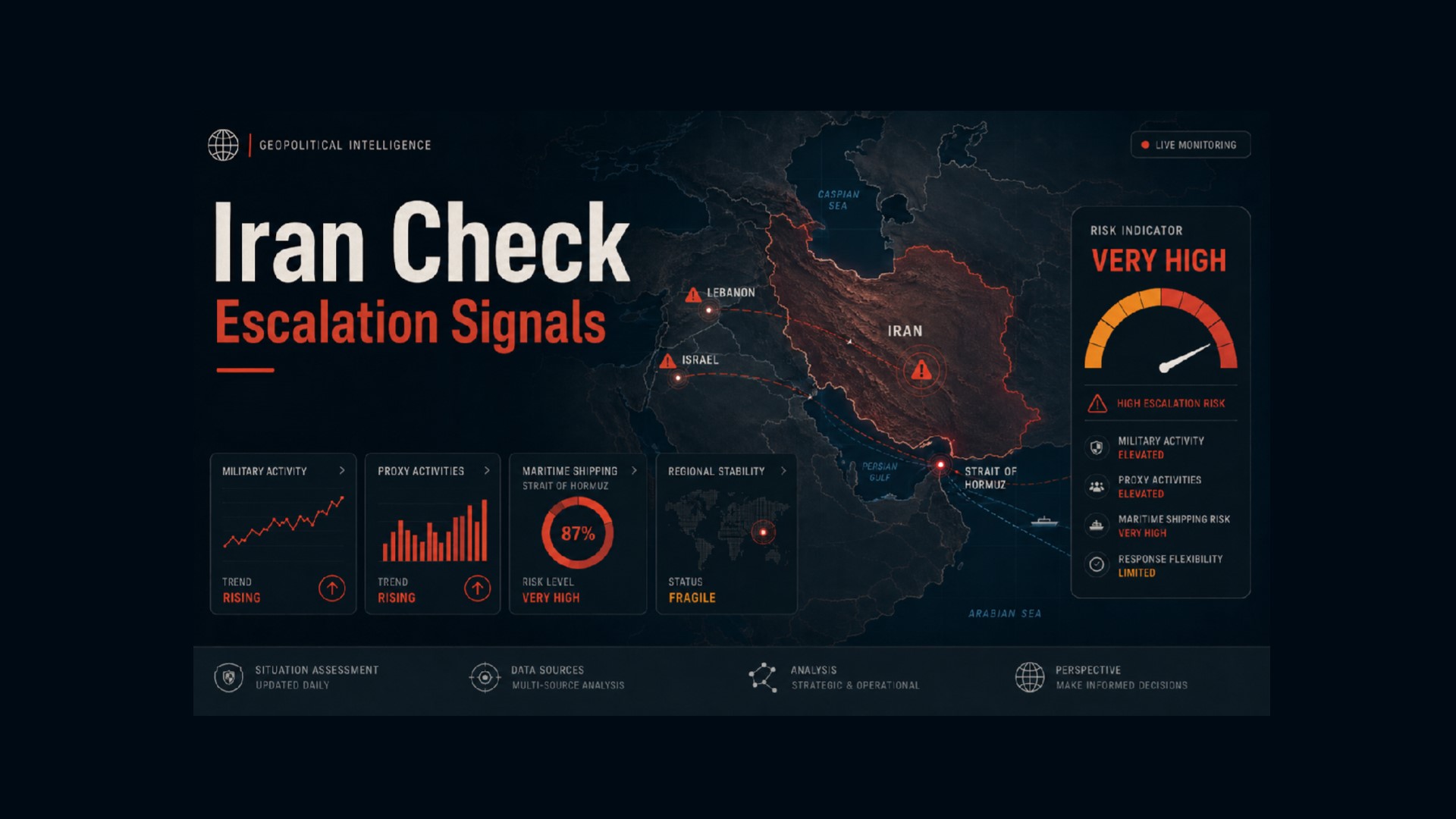
This escalation radar summarises five relevant signals as of August 11, 2026. It focuses on substantiated statements by official bodies, verified events and monitoring sources with potential implications for energy prices, supply chains, markets, maritime security, aviation and regional stability.
Only six visible vessels transited the Strait of Hormuz on Monday, compared with a ten-day average of around eleven and roughly 130 to 140 daily passages before the war. Crude oil exports through the strait have also fallen sharply.
Iran-aligned Houthi forces have again attacked the strategically important Red Sea port of Mokha and targets in Marib. At least seven people were killed in Mokha. This means that, alongside Hormuz, risks around the Red Sea and Bab el-Mandeb are escalating again.
Iran is demanding compensation, sanctions relief and other concessions as part of a broader agreement. Trump is now demanding payments from Tehran in return. The political cost of compromise is therefore rising, while a rapid reopening of Hormuz is becoming less likely again.
| Actor | Type | Severity | Status | Source / Verification Status | Business Impact |
|---|---|---|---|---|---|
| Iran / Oman / international shipowners / energy exports | Hormuz traffic falls again and physical crude oil exports decline sharply | Critical · Level 5/5 | The operational situation in Hormuz deteriorated again on August 11. Only six visible vessel transits were recorded on Monday, compared with a ten-day average of around eleven and roughly 130 to 140 daily passages before the war. Four vessels entered the Gulf, while two exited carrying LPG and residual fuel. At the same time, crude oil exports through Hormuz fell to around 3 million barrels per day, from approximately 4.4 million barrels per day the previous week. Power dynamics: Diplomatic talks have so far failed to produce operational normalisation. Safe passage, insurability and shipowner willingness remain more decisive than political announcements. | Confirmed by Reuters, August 11, 2026 . Verification status: confirmed regarding six visible transits, the significant gap compared with pre-war levels and continued constraints on energy exports. Vessels with deactivated AIS may not be reflected in visible traffic figures. | Critical business impact on crude oil, LNG and LPG, tanker charters, war-risk insurance, freight rates, refineries, energy procurement, delivery times and production planning. |
| Houthis / Yemen / Mokha / Marib / Red Sea / Iran | New missile and drone attacks threaten the Red Sea corridor and fragile ceasefire | Critical · Level 5/5 | Houthi escalation expanded again on August 11. Iran-aligned Houthi forces attacked the Yemeni government-controlled port of Mokha as well as targets in Marib with missiles and drones. At least seven people were killed in Mokha, including three members of the security forces. Mokha is an important Red Sea port and has been developed as an alternative to Houthi-controlled Hodeidah. Power dynamics: Alongside Hormuz, another pressure point is re-emerging in the Red Sea. A renewed escalation of the Yemen conflict directly increases risks for Bab el-Mandeb and Europe-Asia transport chains. | Confirmed by AP News, August 11, 2026 . Verification status: confirmed regarding the attacks on Mokha and Marib, the use of missiles and drones and reported casualties in Mokha. Some operational details remain dependent on statements by the conflict parties. | Critical business impact on the Red Sea, Bab el-Mandeb, Suez routes, port logistics, tanker and container traffic, war-risk insurance, delivery times and maritime security. |
| United States / Iran / Trump / Araghchi / Hormuz | Mutual compensation demands raise the political cost of a Hormuz compromise | High to critical · Level 4/5 | The political deadlock between Washington and Tehran intensified on August 11. Iran is linking a broader agreement to sanctions relief, economic concessions and compensation for war damage. Trump is now demanding in return that Iran compensate Americans and other victims of Iranian policies and conflicts. The dispute is therefore shifting from technical Hormuz issues towards historical responsibility and financial claims. Power dynamics: Both sides are raising the domestic political and financial cost of compromise. This makes a rapid agreement on Hormuz more difficult, even if technical transit issues remain solvable. | Confirmed by Al Jazeera, August 11, 2026 . Verification status: confirmed regarding Trump’s compensation demand and the Iranian conditions for a broader agreement. The scale, legal basis and potential offsetting of mutual claims remain unresolved. | High to critical business impact on oil prices, Iran sanctions, trade finance, contract planning, insurance, investment and companies expecting a near-term normalisation. |
| Iran / United States / Trump / Türkiye / NATO / US security authorities | New confirmation of a credible Iranian threat against the US president | High to critical · Level 4/5 | On August 11, it became public and was confirmed by the White House that a credible Iranian threat against President Trump had already triggered extraordinary security measures during his NATO trip in July. Trump left Türkiye covertly and switched to another US military aircraft as part of a deception operation. The underlying event dates back to July; what is new on August 11 is the public reporting and official confirmation of the security operation. Power dynamics: The Iran-US confrontation demonstrably extends beyond missiles, sanctions and Hormuz into the realm of direct personal threats against senior US leadership. This significantly increases the political sensitivity of any new Iranian threat. | Confirmed by AP News, August 11, 2026 and Reuters, August 11, 2026 . Verification status: confirmed regarding the security operation and the credible Iranian threat as its trigger. There was no new Iranian attack operation on August 11; what is new is the official confirmation of the incident. | High to critical business impact on political risk scenarios, US-Iran diplomacy, NATO travel, business travel, executive protection, aviation, events and international crisis planning. |
| Iran / Pakistan / Oman / Hormuz / Araghchi / Ishaq Dar | Pakistan remains directly involved in Hormuz diplomacy and safe-transit planning | High · Level 3/5 | Iranian Foreign Minister Abbas Araghchi and Pakistani Foreign Minister Ishaq Dar held new talks on August 11 about the regional situation. Araghchi explicitly briefed Pakistan on the current status of Iran-Oman negotiations to identify a suitable route for the safe passage of vessels through Hormuz. Pakistan therefore remains directly involved in the regional mediation architecture despite the stalled US-Iran relationship. Power dynamics: Iran is keeping technical transit talks with Oman open while simultaneously involving Pakistan as an important regional partner. This shows that Tehran is increasingly organising its Hormuz strategy through regional actors rather than direct negotiations with Washington. | Confirmed by Ministry of Foreign Affairs of the Islamic Republic of Iran, August 11, 2026 . Verification status: officially confirmed regarding the phone call and Araghchi’s briefing on the status of the Iran-Oman talks. No finalised transit mechanism or concrete new route has been announced. | High business impact on Hormuz routing, energy and maritime transport, Pakistan and Asia supply chains, insurance, charter planning and companies relying on a regionally negotiated transit mechanism. |
The central escalation point on August 11, 2026 is the combination of further declining Hormuz traffic and a hardening political negotiation conflict. Only six visible vessels recently transited the strait, while crude oil exports also fell significantly. This once again shows that political negotiations and technical Oman talks have not yet created operational normalisation.
At the same time, Washington and Tehran are moving further apart politically. Mutual compensation demands are increasing the cost of an agreement. The new confirmation that a credible Iranian threat had already triggered extraordinary security measures for Trump also shows how far the confrontation now extends beyond the traditional military theatre.
The Red Sea is also becoming more dangerous again. The Houthis are attacking Mokha and Marib with missiles and drones. Alongside the Hormuz crisis, this is creating renewed pressure on a second key maritime corridor between Europe and Asia. Pakistan remains involved in the Iran-Oman talks on safe passage through Hormuz, but no operational breakthrough has yet been confirmed.
The EASA warning environment remains an additional risk amplifier. Active CZIBs remain in place for Iran, Iraq, Jordan, Lebanon, the Persian Gulf and the Gulf of Oman. The Gulf warning remains valid until August 31, 2026; no new tightening took place on August 11.
The five most important signals for a European and German risk assessment are: the decline in visible Hormuz traffic to just six vessels, the new Houthi attacks on Mokha and Marib, mutual US-Iran compensation demands as a new obstacle to an agreement, the new official confirmation of a credible Iranian threat against Trump, and Pakistan’s continued involvement in the Iran-Oman negotiations over a safe Hormuz corridor.
Note: This assessment was prepared with the support of our Geo AI. AI can make mistakes. The analysis is intended as a radar for potential escalation signals and does not replace a fully verified intelligence assessment.
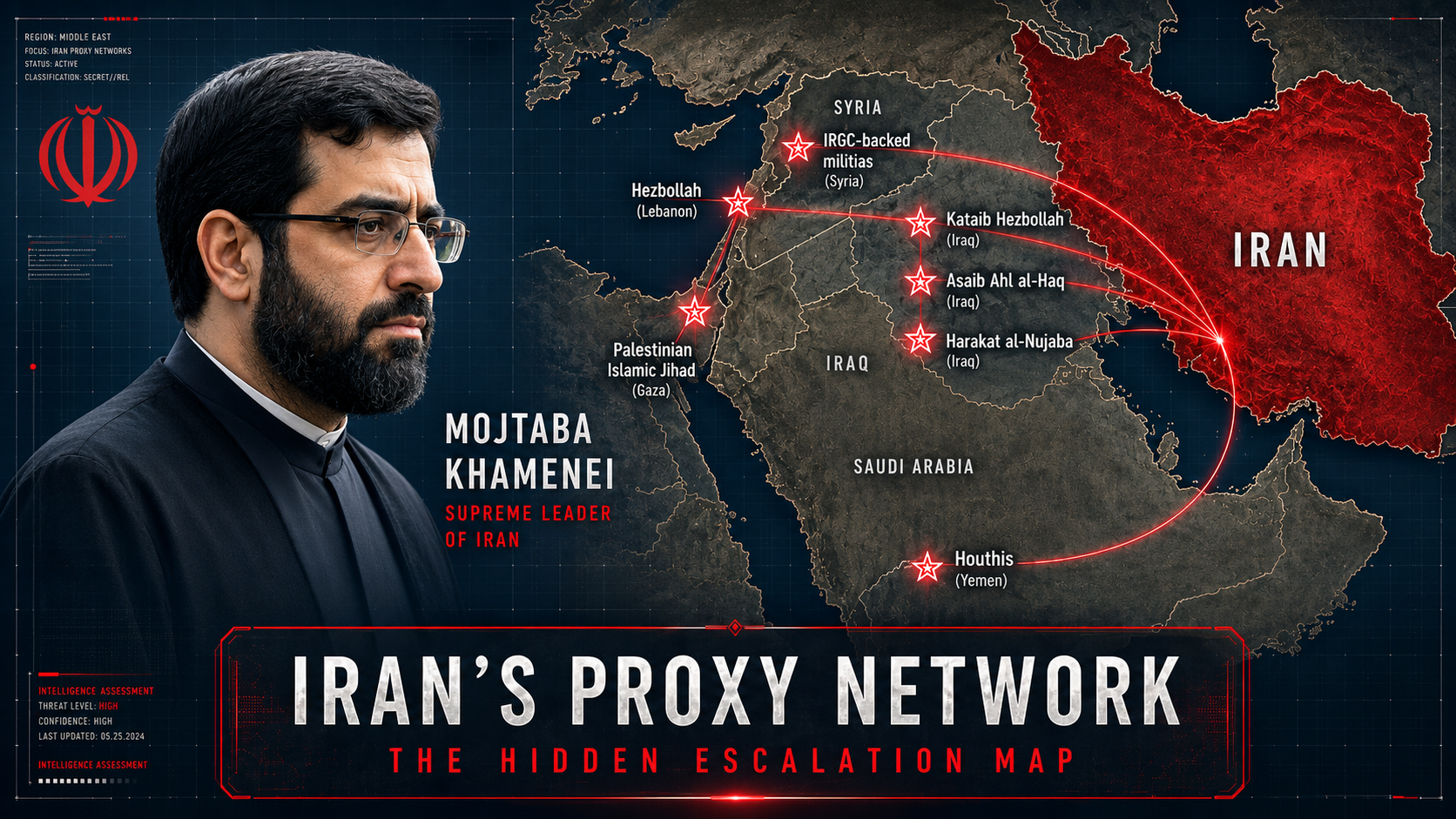
What decision-makers should watch now — before proxy escalation becomes a cost, compliance or supply-chain shock.
This 17-page executive briefing translates Iran’s proxy network into concrete business risks: energy price exposure, maritime chokepoints, war-risk premiums, sanctions, shadow fleets, supply-chain disruption and early-warning indicators for board-level decisions.
You are currently viewing a placeholder content from X. To access the actual content, click the button below. Please note that doing so will share data with third-party providers.
More Information