Executive Intelligence. Industrial Risk. Geopolitics.
Strategic Sparring
for Decision-Makers
Risk intelligence across technology, law, markets and power dynamics.


Verdeckte Geschäftsrisiken, strategische Widersprüche und kritische Abhängigkeiten frühzeitig erkennen.
Kostenlose Analyse starten →
Verdeckte Machtstrukturen, Führungsrisiken und organisatorische Blockaden frühzeitig erkennen.
Kostenlose Analyse starten →
Geopolitische Risiken, globale Abhängigkeiten und kritische Lieferkettenrisiken frühzeitig erkennen.
Kostenlose Analyse starten →
Identify hidden business risks, strategic contradictions and critical dependencies at an early stage.
Start Free Analysis →
Identify hidden power structures, leadership risks and organizational blockers at an early stage.
Start Free Analysis →
Identify geopolitical risks, global dependencies and critical supply-chain vulnerabilities at an early stage.
Start Free Analysis →
Verdeckte Geschäftsrisiken, strategische Widersprüche und kritische Abhängigkeiten frühzeitig erkennen.
Kostenlose Analyse starten →
Verdeckte Machtstrukturen, Führungsrisiken und organisatorische Blockaden frühzeitig erkennen.
Kostenlose Analyse starten →
Geopolitische Risiken, globale Abhängigkeiten und kritische Lieferkettenrisiken frühzeitig erkennen.
Kostenlose Analyse starten →
Identify hidden business risks, strategic contradictions and critical dependencies at an early stage.
Start Free Analysis →
Identify hidden power structures, leadership risks and organizational blockers at an early stage.
Start Free Analysis →
Identify geopolitical risks, global dependencies and critical supply-chain vulnerabilities at an early stage.
Start Free Analysis →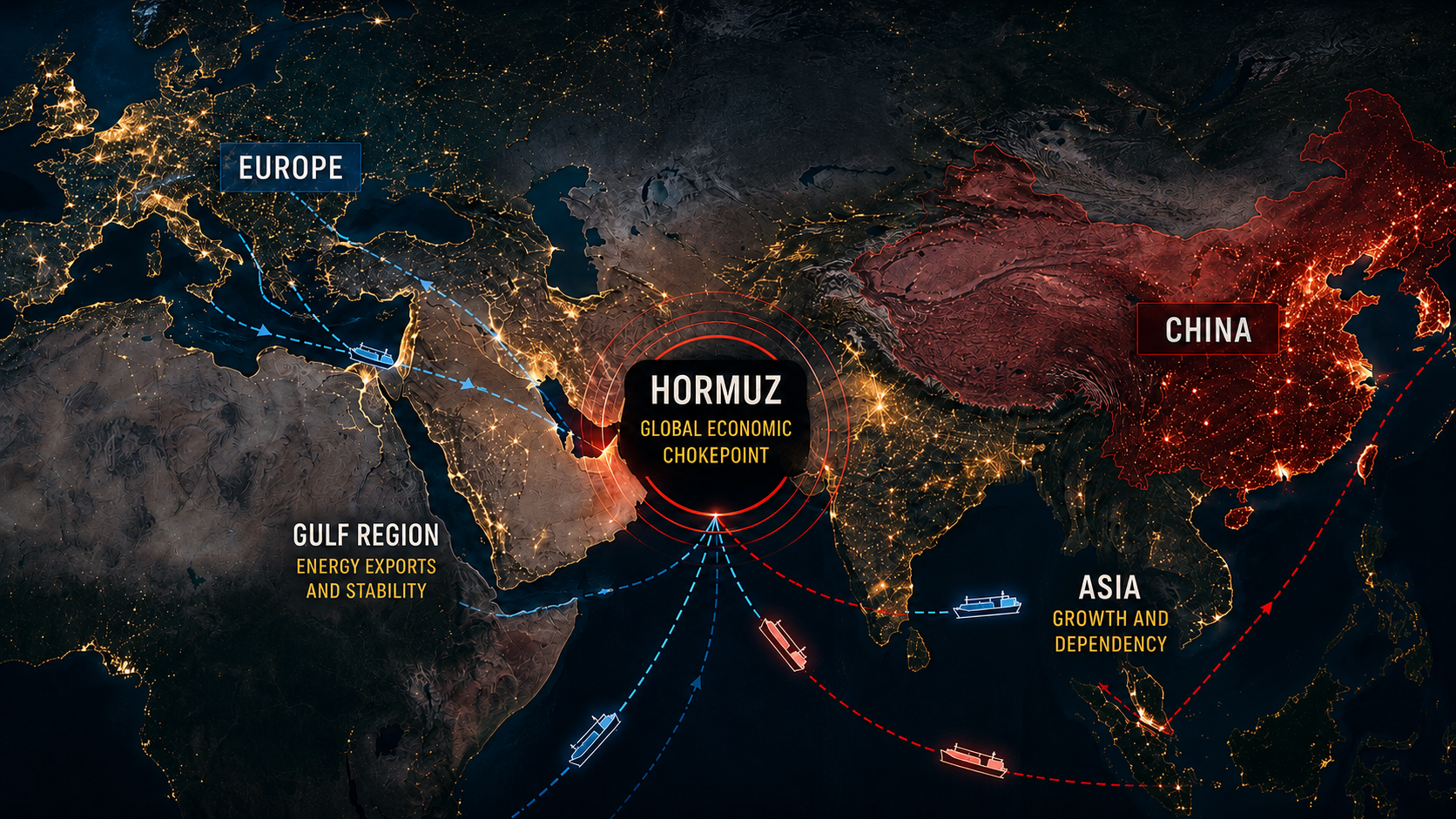
This Chokepoint Check assesses current pressure on the Strait of Hormuz, Bab al-Mandab and the Gulf region’s critical water, power, port and energy infrastructure. The key question is not only whether a route remains geographically open, but whether transport, insurance coverage, energy supply and site operations remain operationally viable.
Iran and Oman are moving closer technically, but full reopening remains tied to far-reaching US concessions.
Iran describes the agreement with Oman on new shipping routes as nearly complete. For the actual reopening, however, Tehran is demanding sanctions relief, the release of frozen assets, an end to the US port blockade and compensation for war damage. Political uncertainty therefore continues to prevent a return to normal oil and LNG traffic as of August 10.
The attack on Mocha directly links renewed escalation in Yemen with the international Red Sea corridor.
Mocha near Bab al-Mandab was attacked with missiles and drones. An AP reconstruction published on August 10 also reveals a broader escalation cycle between Saudi Arabia and the Houthis that intensified after an Iranian flight to Sanaa was blocked and now includes airports, shipping, oil targets and land fronts.
The Jazan refinery again places major Saudi energy infrastructure directly at the centre of the Houthi escalation.
The Houthis claim a drone attack on Saudi Aramco’s Jazan refinery. The Saudi Energy Ministry confirmed a fire at the site, which was extinguished. The cause has not been independently confirmed. Combined with attacks on shipping and Mocha, this increases risk along Saudi Arabia’s western coast and the Red Sea export corridor.
The Houthis said they attacked Saudi Aramco’s Jazan refinery with drones. Saudi Arabia confirmed a fire at the site, which was extinguished. No injuries were reported.
The cause of the fire has not been independently confirmed. Nevertheless, the combination of the Houthi attack claim and the confirmed fire makes the incident a major infrastructure signal on Saudi Arabia’s west coast.
Risk to refineries, export terminals, pipelines and port operations is rising. Saudi Arabia’s alternative to Hormuz via the Red Sea is once again becoming less strategically secure.
Verification Status: partially confirmed. The fire and its extinguishing are confirmed. Saudi authorities initially provided no cause; the Houthis claimed responsibility for a drone attack. Reuters, August 9, 2026 · immediately operationally relevant on August 10
Yemen’s military reported a large-scale missile and drone attack on Mocha. Seven people were killed and 30 injured; eleven drones were reportedly intercepted.
Mocha lies directly at the entrance to Bab al-Mandab. The attack connects the escalating land front with one of the world’s most important international shipping corridors.
Port operations, maritime services and vessel movements along Yemen’s western coast remain exposed. Insurance and diversion risks could rise again even if the passage itself remains open.
Verification Status: confirmed regarding the attack and casualty figures reported by Yemen’s military. The broader escalation dynamic is supported by current AP reporting. Reuters, August 9, 2026 · immediately relevant on August 10 · Associated Press, August 10, 2026 · current assessment
Iran’s Foreign Ministry stated on August 10 that it saw no reason for concern over the new defence pact between Saudi Arabia, Türkiye and Pakistan. Greater regional responsibility for security could in principle be viewed positively.
Tehran is avoiding a direct threat against the alliance for now. At the same time, a new deterrence structure is emerging that places Turkish and Pakistani military capabilities alongside Saudi Arabia.
In the short term, Iran’s reaction reduces the risk of direct bloc confrontation. Further attacks on Saudi Arabia could nevertheless raise concrete questions about mutual assistance and military deployments.
Verification Status: confirmed regarding Iran’s official response. No concrete Turkish or Pakistani military activation has been confirmed. Reuters, August 10, 2026 · SchaafMedia: Iran War – How the West Is Losing Its Dominance
An AP reconstruction published on August 10 shows that Saudi Arabia damaged the runway at Sanaa in July to prevent an unauthorised Iranian flight carrying senior Houthi representatives from landing.
An escalation cycle followed, involving attacks on airports, shipping and oil facilities as well as Saudi counter-strikes and troop reinforcements. Yemen is therefore becoming a direct connecting point between Iran and Saudi Arabia.
The risk is no longer confined to individual tankers. Airports, ports, energy facilities and land corridors across southern Saudi Arabia and Yemen can now be affected simultaneously.
Verification Status: supported by current AP reporting regarding the trigger and subsequent escalation cycle. The underlying development began earlier, but the current wave of attacks gives it renewed operational relevance. Associated Press, August 10, 2026
China’s crude oil imports in June and July averaged around 4.21 million barrels per day below pre-war levels. At the same time, China can draw on very large oil reserves accumulated beforehand.
China is not replacing the missing Gulf oil. As Asia’s largest importer, however, it is buying significantly less crude on the global market and drawing on domestic inventories. This leaves more of the limited available cargoes for other Asian buyers.
China’s reserves are currently acting as a buffer against an even larger Asian supply shock. If those inventories later need to be rebuilt or Chinese imports rise again, competition for available crude cargoes could increase substantially.
Verification Status: confirmed regarding the sharp decline in Chinese crude imports and the use of substantial inventories. The impact on Asia results from lower Chinese demand, not from additional Chinese oil supply. Reuters, August 10, 2026 · SchaafMedia: Oil Price Outlook 2025 – China Builds Oil Reserves
Jazan and Mocha are attacked while Hormuz remains politically constrained.
Refineries, ports and shipping processes require higher security and risk precautions.
Gulf transport remains uncertain while China simultaneously reduces demand and draws on reserves.
Asia receives temporary relief, but tanker capacity, insurability and energy supply remain vulnerable.
Hormuz remains without a reliable full reopening. At the same time, renewed Houthi escalation has hit Mocha directly at the entrance to Bab al-Mandab.
Both major corridors remain operationally exposedA fire at the Jazan refinery site coincided with a Houthi attack claim. Mocha was also physically hit.
Energy and port infrastructure directly affected againIran, Yemen, Saudi Arabia and new regional defence structures are becoming increasingly interconnected. At the same time, Chinese reserves are already influencing how strongly the supply shock is transmitted across Asia.
Military escalation and global energy buffers are operating simultaneouslyEscalation continues to dominate. Jazan and Mocha demonstrate that fixed energy and port infrastructure is once again being directly affected. The latest reconstruction of the Saudi-Houthi crisis also highlights the growing interconnection between Iran, Yemen and Saudi Arabia. Hormuz remains politically constrained. China is currently preventing an even more severe Asian oil-supply shock by drawing on its reserves, but it cannot replace the missing maritime security.
Note: This assessment was produced with support from our Geo-AI. AI can make mistakes. The analysis is intended as a source-based radar for potential escalation signals and does not replace fully verified intelligence, security, insurance or investment advice. In rapidly evolving situations, status, source availability and risk assessments may change at short notice.
Independent of the subject covered in this article, this separate Executive Briefing provides an in-depth analysis of another critical risk domain affecting European companies.
The 27-page Executive Briefing “Black Swan Risk Mapping for Europe’s Next Mobility and Infrastructure Shock” examines how geopolitical, infrastructural and administrative developments that are currently viewed in isolation could reinforce one another.
Based on the GFDD Framework™, the report shows how these dynamics could affect operational continuity, access to critical resources and the strategic resilience of companies.
The briefing includes a structured systemic-shock analysis and a directly applicable Business Exposure Checklist for CEOs, CFOs, COOs, investors and strategy teams.
You are currently viewing a placeholder content from X. To access the actual content, click the button below. Please note that doing so will share data with third-party providers.
More Information