Executive Intelligence. Industrial Risk. Geopolitics.
Strategic Sparring
for Decision-Makers
Risk intelligence across technology, law, markets and power dynamics.

Verdeckte Geschäftsrisiken, strategische Widersprüche und kritische Abhängigkeiten frühzeitig erkennen.
Kostenlose Analyse starten →
Verdeckte Machtstrukturen, Führungsrisiken und organisatorische Blockaden frühzeitig erkennen.
Kostenlose Analyse starten →
Geopolitische Risiken, globale Abhängigkeiten und kritische Lieferkettenrisiken frühzeitig erkennen.
Kostenlose Analyse starten →
Identify hidden business risks, strategic contradictions and critical dependencies at an early stage.
Start Free Analysis →
Identify hidden power structures, leadership risks and organizational blockers at an early stage.
Start Free Analysis →
Identify geopolitical risks, global dependencies and critical supply-chain vulnerabilities at an early stage.
Start Free Analysis →
Verdeckte Geschäftsrisiken, strategische Widersprüche und kritische Abhängigkeiten frühzeitig erkennen.
Kostenlose Analyse starten →
Verdeckte Machtstrukturen, Führungsrisiken und organisatorische Blockaden frühzeitig erkennen.
Kostenlose Analyse starten →
Geopolitische Risiken, globale Abhängigkeiten und kritische Lieferkettenrisiken frühzeitig erkennen.
Kostenlose Analyse starten →
Identify hidden business risks, strategic contradictions and critical dependencies at an early stage.
Start Free Analysis →
Identify hidden power structures, leadership risks and organizational blockers at an early stage.
Start Free Analysis →
Identify geopolitical risks, global dependencies and critical supply-chain vulnerabilities at an early stage.
Start Free Analysis →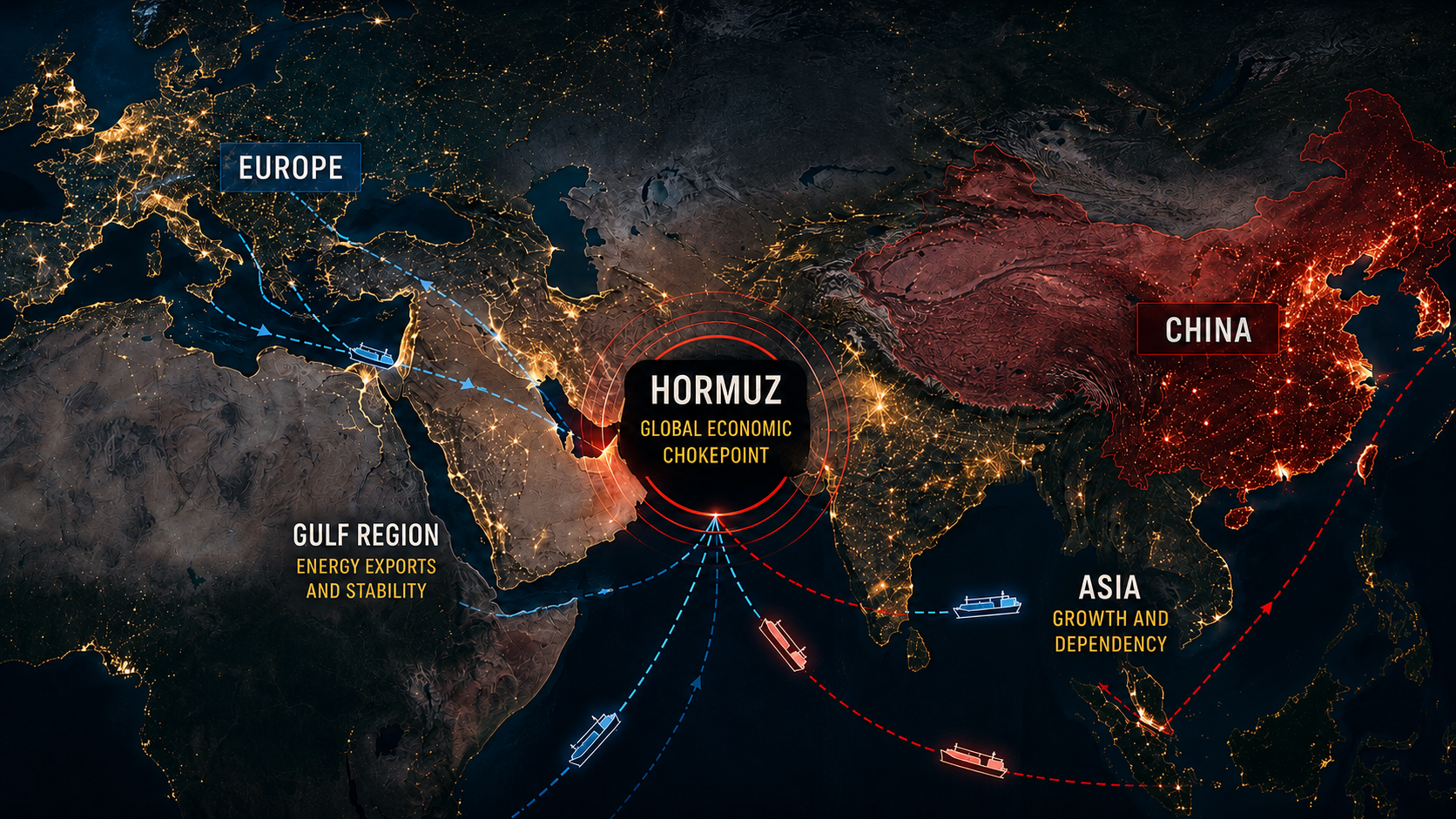
This Chokepoint Check assesses current pressure on the Strait of Hormuz, Bab al-Mandab and the Gulf region’s critical water, power, port and energy infrastructure. The key question is not only whether a route remains geographically open, but whether transport, insurance coverage, energy supply and site operations remain operationally viable.
Traffic has fallen again: Hormuz remains geographically open, but operationally far from normal conditions.
Kpler recorded only eight vessels transiting Hormuz on Tuesday, compared with a ten-day average of around twelve. Only one vessel exited the strait; seven entered and used the Iranian route. LSEG counted eleven transits after fourteen the previous day. Before the war, daily traffic stood at around 130 to 140 vessels.
The current Houthi campaign has crossed a new threshold: crew members have now been killed in an attack on a merchant vessel.
The Egyptian-controlled cargo vessel Tihamah was hit near Al Mokha on August 11. Four crew members and two rescue workers were killed, while ten people were injured. Three of the dead seafarers were Pakistani nationals. UKMTO confirmed the projectile strike and assesses further attacks in the Bab al-Mandab area as a strong possibility.
No sufficiently confirmed new attack on fixed Gulf infrastructure has emerged, but the impact of earlier strikes is becoming structurally longer lasting.
The US Energy Information Administration estimates that around 5.5 million barrels per day of Middle East production was offline in July. Even with gradual normalisation, around 600,000 barrels per day could still remain offline by the end of 2027. The agency also expects Hormuz transport to remain heavily constrained throughout August.
Kpler recorded only eight vessels transiting Hormuz, the lowest daily level since August 5. Only one vessel exited the strait. LSEG counted eleven transits after fourteen the day before.
The route remains geographically passable, but commercially extremely constrained. The fact that almost all traffic is inbound and using the Iranian route highlights the continuing operational distortion.
Tanker availability, loading schedules and war-risk costs remain highly unpredictable. A reliable return of regular Gulf exports is still not in sight.
Verification Status: confirmed by current Kpler and LSEG tracking data. The figures refer to August 11 and were published on August 12. Reuters, 12.08.2026
The Tihamah was hit near Al Mokha on August 11. Four crew members and two rescue workers were killed, while ten people were injured. Pakistan confirmed three of its nationals among the dead.
The attack crosses a new maritime threshold: merchant vessels are no longer only being damaged, but crews are being killed. UKMTO assesses further attacks in the corridor as a strong possibility.
Crew safety is becoming a central constraint alongside insurance coverage. Shipowners may further withdraw even non-Saudi vessels from the southern Red Sea or demand additional protection measures.
Verification Status: confirmed for the vessel, strike, fatalities and injuries. UKMTO confirmed a projectile hit; Pakistan confirmed three of its nationals among the casualties. Associated Press, 12.08.2026 · UKMTO / JMIC, Update 083 · 12.08.2026
The Panama-flagged Vela Nova was hit in the Gulf of Oman by two US Hellfire missiles targeting its steering system. The vessel lost manoeuvrability. No injuries were reported.
CENTCOM said the vessel had ignored repeated orders not to violate the US blockade of Iranian ports. The blockade is therefore now being enforced kinetically against merchant vessels.
Compliance with port blockades is becoming a physical shipping risk. Route selection, port history and military communications can now directly determine vessel safety.
Verification Status: confirmed for the strike, fire and loss of steering capability. The justification regarding blockade violation comes from US CENTCOM. UKMTO / JMIC, Update 083 · 12.08.2026 · Reuters, updated on 12.08.2026
The IEA now expects global oil supply to decline by 4.3 million barrels per day in 2026, equivalent to around four percent. In July, it had forecast a decline of 3.7 million.
The agency explicitly attributes the further downgrade to the continued absence of a reliable reopening of Hormuz and unrestricted traffic through Bab al-Mandab.
The chokepoint shock is becoming a longer-term supply problem. Energy buyers must prepare for higher prices, lower inventories and longer procurement risks.
Verification Status: confirmed by the IEA’s monthly oil-market outlook published on August 12. Reuters / IEA, 12.08.2026 · SchaafMedia: Ölpreis-Ausblick 2025 – China baut Ölreserven auf
Pakistan’s Foreign Minister Ishaq Dar confirmed on August 12 that three Pakistani nationals were killed in the attack on the Tihamah and another was injured.
Pakistan is now directly affected by the Houthi escalation only days after signing the defence pact with Saudi Arabia and Türkiye. This increases political pressure on the new alliance.
Greater Pakistani involvement in maritime security or Saudi protection would further internationalise the Red Sea conflict. No concrete military response has yet been confirmed.
Verification Status: confirmed regarding the Pakistani casualties and official condemnation. No Pakistani military response has been confirmed. Associated Press, 12.08.2026 · SchaafMedia: Iran-Krieg – Machtverschiebung im Westen
Merchant vessels are directly hit at Bab al-Mandab and in the Gulf of Oman.
Crew risk, blockade enforcement and war-risk requirements make route planning more difficult.
Hormuz remains extremely thinly trafficked, while oil production and available transport capacity stay reduced.
The IEA cuts its global oil-supply forecast while prices, freight rates and procurement risks remain elevated.
Hormuz has fallen back to a weekly low. Seafarers have been killed in an attack at Bab al-Mandab, while another merchant vessel was militarily disabled in the Gulf of Oman.
Three maritime risk zones simultaneously escalatingNo sufficiently confirmed new attack on a fixed Gulf facility was identified for August 11–12. Existing damage continues, however, and according to the EIA is reducing regional production capacity over the longer term.
No new daily signal · existing capacity loss remains highHormuz, Bab al-Mandab and the Gulf of Oman are simultaneously affected by heavily constrained traffic or kinetic incidents. The IEA has subsequently cut its global supply forecast again.
Multi-front maritime crisis is transmitting into global energy supplyEscalation clearly dominates on August 12. Compared with August 10, the focus has shifted from attacks on fixed infrastructure back to merchant shipping itself. Hormuz has deteriorated again, seafarers are being killed at Bab al-Mandab and the US blockade on Iranian ports is being enforced kinetically in the Gulf of Oman. Three interconnected maritime risk zones are now under significant pressure at the same time.
Note: This assessment was produced with support from our Geo-AI. AI can make mistakes. The analysis is intended as a source-based radar for potential escalation signals and does not replace fully verified intelligence, security, insurance or investment advice. In rapidly evolving situations, status, source availability and risk assessments may change at short notice.
Independent of the subject covered in this article, this separate Executive Briefing provides an in-depth analysis of another critical risk domain affecting European companies.
The 27-page Executive Briefing “Black Swan Risk Mapping for Europe’s Next Mobility and Infrastructure Shock” examines how geopolitical, infrastructural and administrative developments that are currently viewed in isolation could reinforce one another.
Based on the GFDD Framework™, the report shows how these dynamics could affect operational continuity, access to critical resources and the strategic resilience of companies.
The briefing includes a structured systemic-shock analysis and a directly applicable Business Exposure Checklist for CEOs, CFOs, COOs, investors and strategy teams.
You are currently viewing a placeholder content from X. To access the actual content, click the button below. Please note that doing so will share data with third-party providers.
More Information