Executive Intelligence. Industrial Risk. Geopolitics.
Strategic Sparring
for Decision-Makers
Risk intelligence across technology, law, markets and power dynamics.

Verdeckte Geschäftsrisiken, strategische Widersprüche und kritische Abhängigkeiten frühzeitig erkennen.
Kostenlose Analyse starten →
Verdeckte Machtstrukturen, Führungsrisiken und organisatorische Blockaden frühzeitig erkennen.
Kostenlose Analyse starten →
Geopolitische Risiken, globale Abhängigkeiten und kritische Lieferkettenrisiken frühzeitig erkennen.
Kostenlose Analyse starten →
Identify hidden business risks, strategic contradictions and critical dependencies at an early stage.
Start Free Analysis →
Identify hidden power structures, leadership risks and organizational blockers at an early stage.
Start Free Analysis →
Identify geopolitical risks, global dependencies and critical supply-chain vulnerabilities at an early stage.
Start Free Analysis →
Verdeckte Geschäftsrisiken, strategische Widersprüche und kritische Abhängigkeiten frühzeitig erkennen.
Kostenlose Analyse starten →
Verdeckte Machtstrukturen, Führungsrisiken und organisatorische Blockaden frühzeitig erkennen.
Kostenlose Analyse starten →
Geopolitische Risiken, globale Abhängigkeiten und kritische Lieferkettenrisiken frühzeitig erkennen.
Kostenlose Analyse starten →
Identify hidden business risks, strategic contradictions and critical dependencies at an early stage.
Start Free Analysis →
Identify hidden power structures, leadership risks and organizational blockers at an early stage.
Start Free Analysis →
Identify geopolitical risks, global dependencies and critical supply-chain vulnerabilities at an early stage.
Start Free Analysis →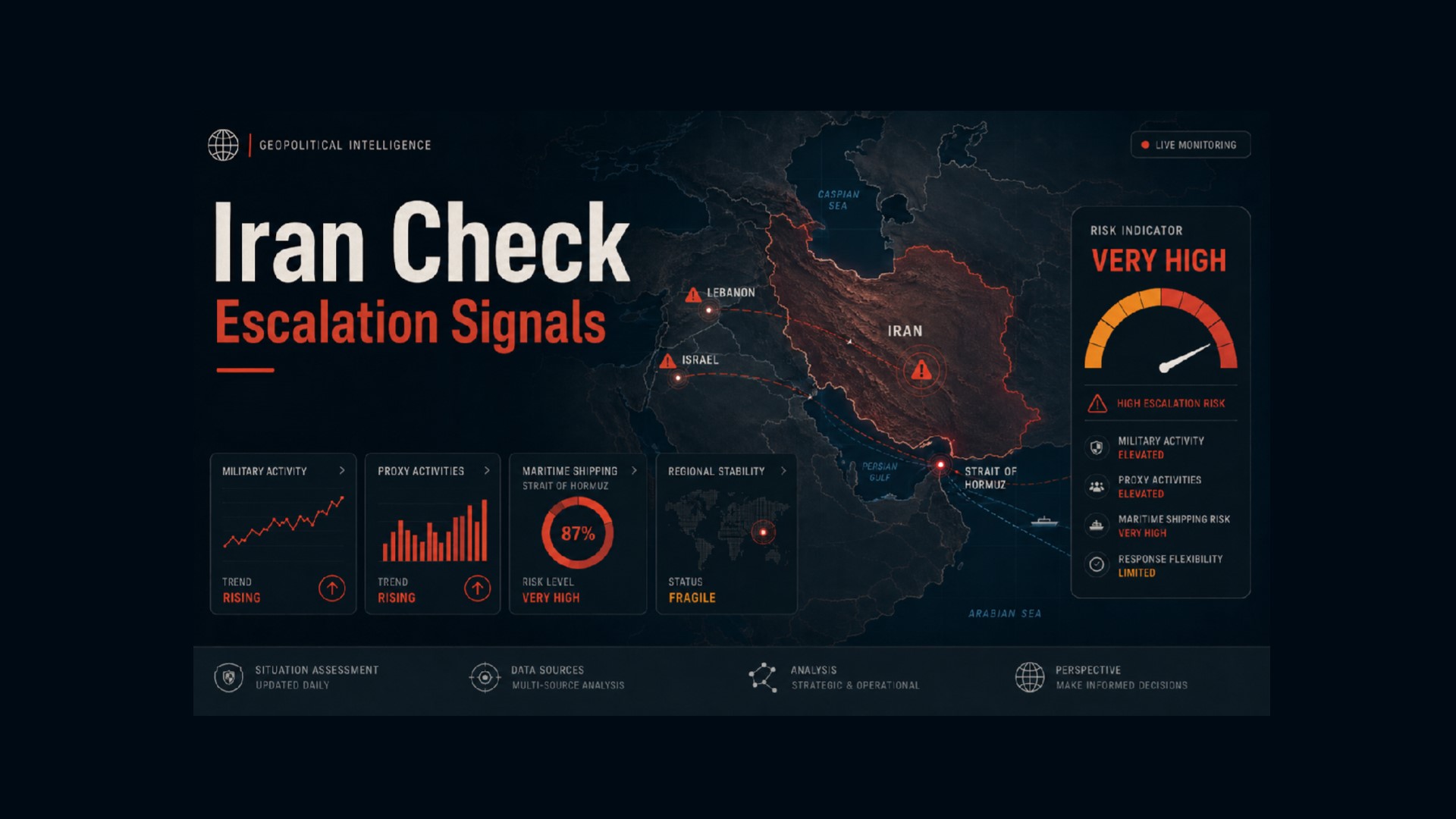
This escalation radar summarizes five relevant signals as of September 20, 2026. The focus is on verifiable statements by official sources, confirmed events and monitoring data with potential implications for energy prices, supply chains, markets, maritime security, aviation and regional stability.
Parliament Speaker Ghalibaf says Hormuz will not fully reopen until Iran’s conditions are met and U.S. commitments are implemented. The global chokepoint is therefore becoming an explicit negotiating instrument.
Saudi Arabia confirms the interception of a ballistic missile targeting Riyadh. At the same time, fire and smoke are visible near the international airport; the Houthis also claim attacks on Yanbu.
Foreign Minister Fidan says Ankara could help meet Saudi military and technical requirements. The trilateral pact with Pakistan defines an attack on one member as an attack on all.
| Actor | Type | Severity | Status | Source / Verification | Business Impact |
|---|---|---|---|---|---|
| Iran / United States / Qatar / Pakistan / Hormuz | Iran makes reopening of Hormuz conditional on U.S. concessions | Critical · Level 5/5 | Politically and operationally, Iran is hardening its negotiating position. Parliament Speaker Mohammad Bagher Ghalibaf says on September 20 that the Strait of Hormuz will not be fully reopened until Iranian conditions are met and U.S. commitments are implemented. Security chief Mohsen Rezaei simultaneously sets out conditions for renewed talks with Washington: an end to the war on all fronts, the release of frozen Iranian funds and an end to the U.S. naval blockade. Qatar and Pakistan continue their mediation efforts. Power dynamics: Iran is linking military control over a global chokepoint directly to political and economic demands. | Current reporting: AnewZ / Reuters, September 20, 2026 . Conditions for talks: GMA News / Reuters, September 20, 2026 . Verification status: confirmed for the public Iranian statements and the ongoing mediation efforts. The United States has not agreed to the conditions. Further analysis: Schaaf Media · Strait of Hormuz Blockade 2026: Protecting Margins and Supply Chains in the Chokepoint Shock . | Critical business impact on oil, LNG, tanker logistics, marine insurance, freight rates and inflation. Hormuz therefore remains not only a security risk, but an active geopolitical negotiating instrument. |
| Saudi Arabia / Houthis / Iran / Riyadh / Yanbu | Riyadh comes under major direct Houthi attack pressure for the first time | Critical · Level 5/5 | The Saudi-Houthi confrontation has reached the capital. Saudi Arabia confirms that it intercepted a ballistic missile targeting Riyadh. Reuters images simultaneously show fire and a large plume of smoke near King Khalid International Airport. The Houthis claim missile and drone attacks on sensitive targets in Riyadh as well as an Aramco facility in Yanbu. Saudi Arabia also says it intercepted attacks targeting Taif, Farasan and other locations. Power dynamics: The conflict is shifting from peripheral areas and energy facilities directly into Saudi Arabia’s political and civilian centre. | Confirmed by Business Recorder / Reuters, September 20, 2026 . Official Saudi confirmation: Saudi Gazette, September 20, 2026 . Verification status: confirmed for the missile attack on Riyadh and the interception. Individual targets claimed as hit by the Houthis are only partially confirmed. Background: Schaaf Media · Middle East Escalation Check – September 19, 2026 . | Critical business impact on Riyadh, civil aviation, Aramco infrastructure, Yanbu, insurance and investment risk. Attacks on the capital and export infrastructure significantly increase location and business-continuity risk. |
| Türkiye / Saudi Arabia / Pakistan / Houthis / Iran | Türkiye signals concrete military assistance under Mecca defence pact | High to Critical · Level 4/5 | The regional alliance architecture is gaining operational relevance. Foreign Minister Hakan Fidan says on September 19 that Saudi Arabia could have military requirements as a result of the Houthi attacks. Türkiye is prepared to meet military needs, particularly technical requirements. The Mecca Joint Defence Agreement between Türkiye, Saudi Arabia and Pakistan provides that an armed attack on one member is to be regarded as an attack on all. Power dynamics: A political collective-defence clause could now translate into concrete military support for the first time. | Confirmed by Reuters, September 19, 2026 . Verification status: confirmed for Fidan’s statement, the existing defence pact and its collective-defence clause. Specific weapons deliveries, troop deployments or operational orders have not been confirmed. Background: Schaaf Media · Middle East Escalation Check – September 19, 2026 . | High to critical business impact on regional security architecture, the defence industry, military logistics, Saudi risk exposure and energy. Operational activation of the pact would significantly internationalize the Yemen conflict. |
| Türkiye / Iran / Bank Mellat / United States / sanctions | Türkiye revokes operating licence of Iran’s Bank Mellat | High · Level 4/5 | Alongside military pressure, Iran’s financial isolation is increasing. Türkiye’s banking regulator BDDK published on September 19 the revocation of the operating licence of Iranian Bank Mellat’s Istanbul branch. Ankara officially cites risks to depositors as well as the security and stability of the financial system. The decision follows increased U.S. pressure on financial channels linked to Iran and the IRGC. Power dynamics: Türkiye is supporting Saudi Arabia on security matters while simultaneously restricting an Iranian financial channel. Pressure on Tehran is therefore rising on both the military and economic fronts. | Confirmed by Al Jazeera, September 19, 2026 . Regional assessment: The National, September 19, 2026 . Verification status: confirmed for the licence revocation. The Turkish regulator did not officially cite a direct connection to specific U.S. measures. Further analysis: Schaaf Media · Iran War: How the West Is Fighting While Losing Its Dominance . | High business impact on Iran-related business, banking relationships, payments, compliance and sanctions exposure. Companies with Iran exposure should expect further erosion in the availability of reliable financial channels. |
| Israel / Hezbollah / Lebanon / Iran | Hezbollah explosive device wounds IDF soldiers – Israel responds immediately | High to Critical · Level 4/5 | A renewed active attack-and-response cycle is emerging in southern Lebanon. According to Israel, a military vehicle struck a Hezbollah explosive device on September 19. Two Israeli soldiers were lightly wounded. Israel responded with strikes on several Hezbollah positions and observation posts in southern Lebanon. Hezbollah itself has not publicly claimed the explosive-device attack. Power dynamics: After weeks dominated largely by indirect tensions, immediate tactical contact is re-emerging between Hezbollah and Israeli forces. | Israeli account: Times of Israel, September 19, 2026 . Regional confirmation: Naharnet, September 19, 2026 . Verification status: partially confirmed. The wounded Israeli soldiers and subsequent airstrikes are confirmed. No independent Hezbollah confirmation of the explosive device has been issued. Background: Schaaf Media · Iran’s Proxies: The Hidden Escalation Map of the Middle East . | High to critical business impact on Lebanon, Israel, regional aviation, overland transport and insurability. A renewed active Hezbollah-Israel escalation cycle could reactivate another front of the Iran conflict. |
The most important strategic development on September 20, 2026 is Iran’s new linkage between Hormuz and diplomacy. Tehran says it will only fully reopen the strait once its conditions are met and U.S. commitments are implemented. The region’s most important energy chokepoint is therefore being explicitly used as a negotiating lever.
At the same time, the Saudi-Houthi front is escalating operationally. Riyadh is being targeted directly with missiles and drones, while Yanbu, a critical oil-export hub, is also under attack pressure. The crisis therefore affects political centres, aviation and energy infrastructure simultaneously.
The emerging alliance dynamic is particularly significant. Türkiye is offering Saudi Arabia concrete military and technical assistance under the Mecca pact. At the same time, Iran is losing another financial channel in Türkiye following the Bank Mellat decision. Regional bloc formation is therefore becoming increasingly visible in both military and economic terms.
Direct military friction between Hezbollah and Israel is also re-emerging in southern Lebanon. No new Iranian alliance, partner or observer status has been confirmed as of September 20. EASA CZIBs for Iran, Iraq, Jordan, Lebanon, the Persian Gulf and Gulf of Oman remain active until September 30, 2026; no new revision was published on September 20.
The five most important signals for a European risk assessment are: Iran’s explicit linkage of the reopening of Hormuz to U.S. concessions, the direct Houthi attacks on Riyadh and Saudi energy infrastructure, Türkiye’s willingness to provide military support to Saudi Arabia under the Mecca defence pact, the revocation of Iran’s Bank Mellat operating licence in Türkiye, and the renewed Hezbollah-IDF attack-and-response cycle in southern Lebanon.
Note: This assessment was prepared with support from our Geo-AI. AI can make mistakes. The analysis is intended as a radar for potential escalation signals and does not replace a fully verified intelligence assessment.
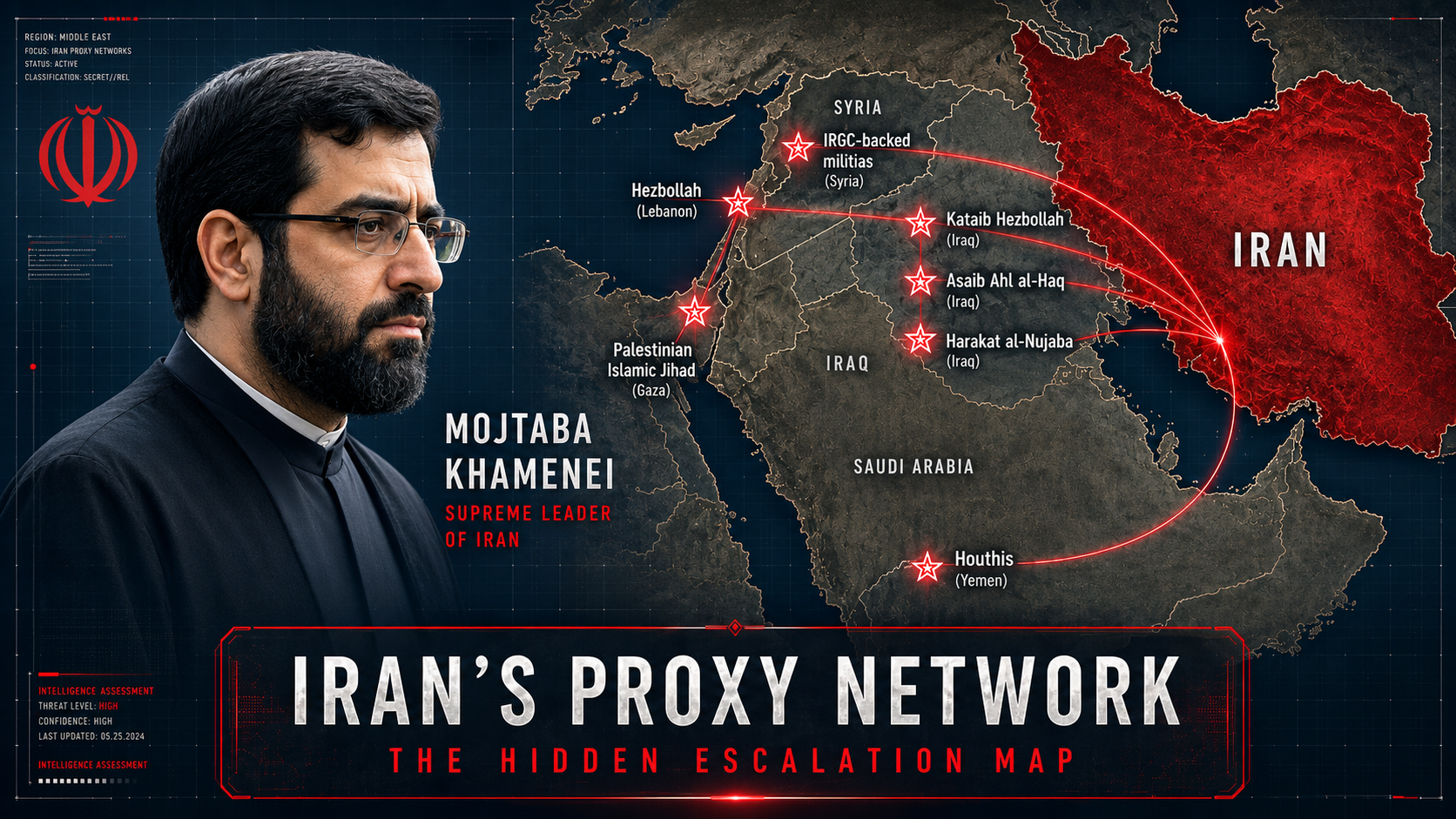
What decision-makers should watch now — before proxy escalation becomes a cost, compliance or supply-chain shock.
This 17-page executive briefing translates Iran’s proxy network into concrete business risks: energy price exposure, maritime chokepoints, war-risk premiums, sanctions, shadow fleets, supply-chain disruption and early-warning indicators for board-level decisions.
You are currently viewing a placeholder content from X. To access the actual content, click the button below. Please note that doing so will share data with third-party providers.
More Information