Executive Intelligence. Industrial Risk. Geopolitics.
Strategic Sparring
for Decision-Makers
Risk intelligence across technology, law, markets and power dynamics.

Verdeckte Geschäftsrisiken, strategische Widersprüche und kritische Abhängigkeiten frühzeitig erkennen.
Kostenlose Analyse starten →
Verdeckte Machtstrukturen, Führungsrisiken und organisatorische Blockaden frühzeitig erkennen.
Kostenlose Analyse starten →
Geopolitische Risiken, globale Abhängigkeiten und kritische Lieferkettenrisiken frühzeitig erkennen.
Kostenlose Analyse starten →
Identify hidden business risks, strategic contradictions and critical dependencies at an early stage.
Start Free Analysis →
Identify hidden power structures, leadership risks and organizational blockers at an early stage.
Start Free Analysis →
Identify geopolitical risks, global dependencies and critical supply-chain vulnerabilities at an early stage.
Start Free Analysis →
Verdeckte Geschäftsrisiken, strategische Widersprüche und kritische Abhängigkeiten frühzeitig erkennen.
Kostenlose Analyse starten →
Verdeckte Machtstrukturen, Führungsrisiken und organisatorische Blockaden frühzeitig erkennen.
Kostenlose Analyse starten →
Geopolitische Risiken, globale Abhängigkeiten und kritische Lieferkettenrisiken frühzeitig erkennen.
Kostenlose Analyse starten →
Identify hidden business risks, strategic contradictions and critical dependencies at an early stage.
Start Free Analysis →
Identify hidden power structures, leadership risks and organizational blockers at an early stage.
Start Free Analysis →
Identify geopolitical risks, global dependencies and critical supply-chain vulnerabilities at an early stage.
Start Free Analysis →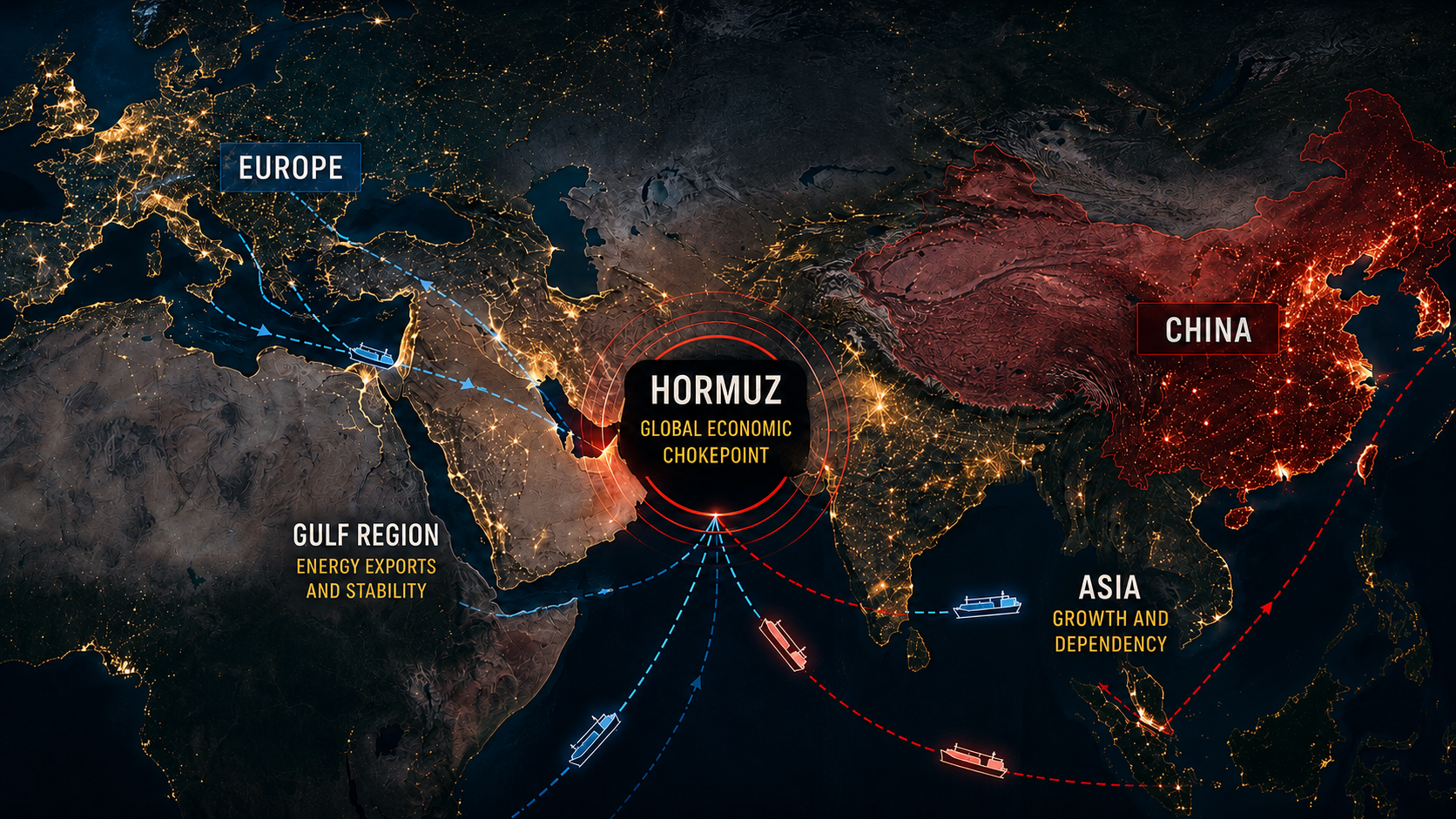
This Chokepoint Check assesses the current pressure on the Strait of Hormuz, Bab al-Mandab and critical water, power, port and energy infrastructure across the Gulf region. The key question is not merely whether a route remains geographically open, but whether transport, insurance, energy supply and site operations remain operationally viable.
The strait remains operationally usable, but direct attacks on commercial vessels have sharply increased the security risk again.
Marisks reported on October 1 that three tankers were struck by unidentified projectiles during their transit on September 29.
No sufficiently confirmed new operational transit signal has emerged for September 30/October 1.
Security risk nevertheless remains high as Houthi attacks and control over strategic coastal areas continue to affect the corridor.
The Houthi threat is now directly affecting aviation and operational continuity across Saudi Arabia.
Since September 30, EASA recommends avoiding defined parts of Saudi airspace at all flight levels and exercising increased caution across the wider Jeddah FIR.
Marisks reported on October 1 that three Liberian-flagged oil tankers were hit while transiting Hormuz on September 29. According to the report, the vessels were operating with AIS switched off.
The origin and type of the projectiles remain unknown. The new confirmation nevertheless shows that dark transit does not reliably protect vessels from attack.
War-risk, crew and charter risks are rising again. Higher throughput therefore does not yet represent a secure normalisation.
Verification status: partially confirmed. The strikes were disclosed by Marisks on October 1; the perpetrator and projectile type remain unclear. Reuters, October 1, 2026 · SchaafMedia: Chokepoint Check – Hormuz, Trade Routes & Supply Chain Risks
EASA published a new CZIB for Saudi Arabia on September 30. For a defined part of the Jeddah FIR, flights at all altitudes are explicitly not recommended.
EASA cites the wider geographic reach of missile and drone attacks. Additional risks arise from air-defence activity, misidentification and debris.
Airlines must adjust routing, risk assessments and contingency planning. This increases costs and reduces operational predictability in Saudi Arabia.
Verification status: confirmed. CZIB-2026-09 was newly issued on September 30 and remains valid until November 16, 2026, unless reviewed earlier. EASA, September 30, 2026 · SchaafMedia: Iran Check – 5 Escalation Signals from September 30, 2026
Chinese refiners have suspended product exports outside Hong Kong and Macau until further notice, according to Reuters. The measure was confirmed on October 1 by four sources familiar with the decision.
The decision affects an already tight diesel market. Refinery outages linked to the Middle East and Ukraine conflicts are therefore increasingly interacting in global markets.
Diesel, freight and production costs could rise further. Transport, industry and international supply chains are particularly exposed.
Verification status: partially confirmed. Reuters cites four sources familiar with the measure; no formal Chinese government directive was reported. Reuters, October 1, 2026 · SchaafMedia: Oil as a Power Instrument – Why Energy Dominates Geopolitics and Markets in 2026
Indian refiners are beginning to charter tankers themselves to collect crude oil directly inside the Persian Gulf. Buyers are therefore taking greater control of transport logistics.
The strategy follows the recovery in Hormuz flows and the East-West Pipeline. At the same time, it shows that conventional delivery models have not yet fully stabilised.
Buyers gain greater control over transport and costs. However, charter and transit risks shift more directly onto importers.
Verification status: confirmed by Bloomberg reporting. According to Kpler, Hormuz flows to India reached around 1.3 million bpd in September. Economic Times / Bloomberg, October 1, 2026 · SchaafMedia: Chokepoint Check – Hormuz, Trade Routes & Supply Chain Risks
Mohammed bin Salman said late on September 30 that Gulf security was indivisible and Saudi Arabia would respond decisively to threats.
He highlighted both the existing Makkah Joint Defence Agreement with Türkiye and Pakistan and the maritime defence coalition. No new mutual-defence measures were announced.
Riyadh is linking chokepoint protection more closely with collective deterrence. This strengthens strategic protection but also increases alliance and escalation dependencies.
Verification status: confirmed. The speech took place on September 30; existing alliances were politically reaffirmed, but no new alliance was created or expanded. The National, October 1, 2026 · SchaafMedia: Middle East Escalation Check from September 29, 2026
Direct tanker strikes in Hormuz and new aviation risks are increasing operational security pressure.
Vessels use dark transit, India takes greater control of tanker chartering, and airlines adjust routes and risk assessments.
Gulf crude exports are rising significantly, while refined products and diesel supply remain constrained.
China restricts fuel exports while freight, insurance and energy costs remain elevated worldwide.
Three tankers were hit during a Hormuz transit, while dark transit continues to be used.
Transit remains possible · safe and normally insurable commercial use has not been restoredEASA is responding to the increasing geographic reach of missile and drone attacks across Saudi Arabia.
Aviation and critical sites remain directly affected by regional hostilitiesVessel strikes, aviation warnings and global fuel measures are occurring simultaneously.
Maritime, energy, aviation and supply-chain risks are once again systemically interconnectedOverall risk has risen back to critical. Compared with September 29, physical crude availability is improving, but direct strikes on three Hormuz tankers have now been newly confirmed. The new EASA warning and China’s response to tight fuel supplies show that risk is simultaneously transmitting into shipping, aviation and global energy markets.
Disclaimer: This assessment was prepared with support from our Geo AI. AI can make mistakes. This analysis is intended as a source-based radar for potential escalation signals and does not constitute fully verified intelligence, security, insurance or investment advice. In fast-moving situations, status, source availability and risk assessments may change at short notice.
Independent of the subject covered in this article, this separate Executive Briefing provides an in-depth analysis of another critical risk domain affecting European companies.
The 27-page Executive Briefing “Black Swan Risk Mapping for Europe’s Next Mobility and Infrastructure Shock” examines how geopolitical, infrastructural and administrative developments that are currently viewed in isolation could reinforce one another.
Based on the GFDD Framework™, the report shows how these dynamics could affect operational continuity, access to critical resources and the strategic resilience of companies.
The briefing includes a structured systemic-shock analysis and a directly applicable Business Exposure Checklist for CEOs, CFOs, COOs, investors and strategy teams.
You are currently viewing a placeholder content from X. To access the actual content, click the button below. Please note that doing so will share data with third-party providers.
More Information