Executive Intelligence. Industrial Risk. Geopolitics.
Strategic Sparring
for Decision-Makers
Risk intelligence across technology, law, markets and power dynamics.

Verdeckte Geschäftsrisiken, strategische Widersprüche und kritische Abhängigkeiten frühzeitig erkennen.
Kostenlose Analyse starten →
Verdeckte Machtstrukturen, Führungsrisiken und organisatorische Blockaden frühzeitig erkennen.
Kostenlose Analyse starten →
Geopolitische Risiken, globale Abhängigkeiten und kritische Lieferkettenrisiken frühzeitig erkennen.
Kostenlose Analyse starten →
Identify hidden business risks, strategic contradictions and critical dependencies at an early stage.
Start Free Analysis →
Identify hidden power structures, leadership risks and organizational blockers at an early stage.
Start Free Analysis →
Identify geopolitical risks, global dependencies and critical supply-chain vulnerabilities at an early stage.
Start Free Analysis →
Verdeckte Geschäftsrisiken, strategische Widersprüche und kritische Abhängigkeiten frühzeitig erkennen.
Kostenlose Analyse starten →
Verdeckte Machtstrukturen, Führungsrisiken und organisatorische Blockaden frühzeitig erkennen.
Kostenlose Analyse starten →
Geopolitische Risiken, globale Abhängigkeiten und kritische Lieferkettenrisiken frühzeitig erkennen.
Kostenlose Analyse starten →
Identify hidden business risks, strategic contradictions and critical dependencies at an early stage.
Start Free Analysis →
Identify hidden power structures, leadership risks and organizational blockers at an early stage.
Start Free Analysis →
Identify geopolitical risks, global dependencies and critical supply-chain vulnerabilities at an early stage.
Start Free Analysis →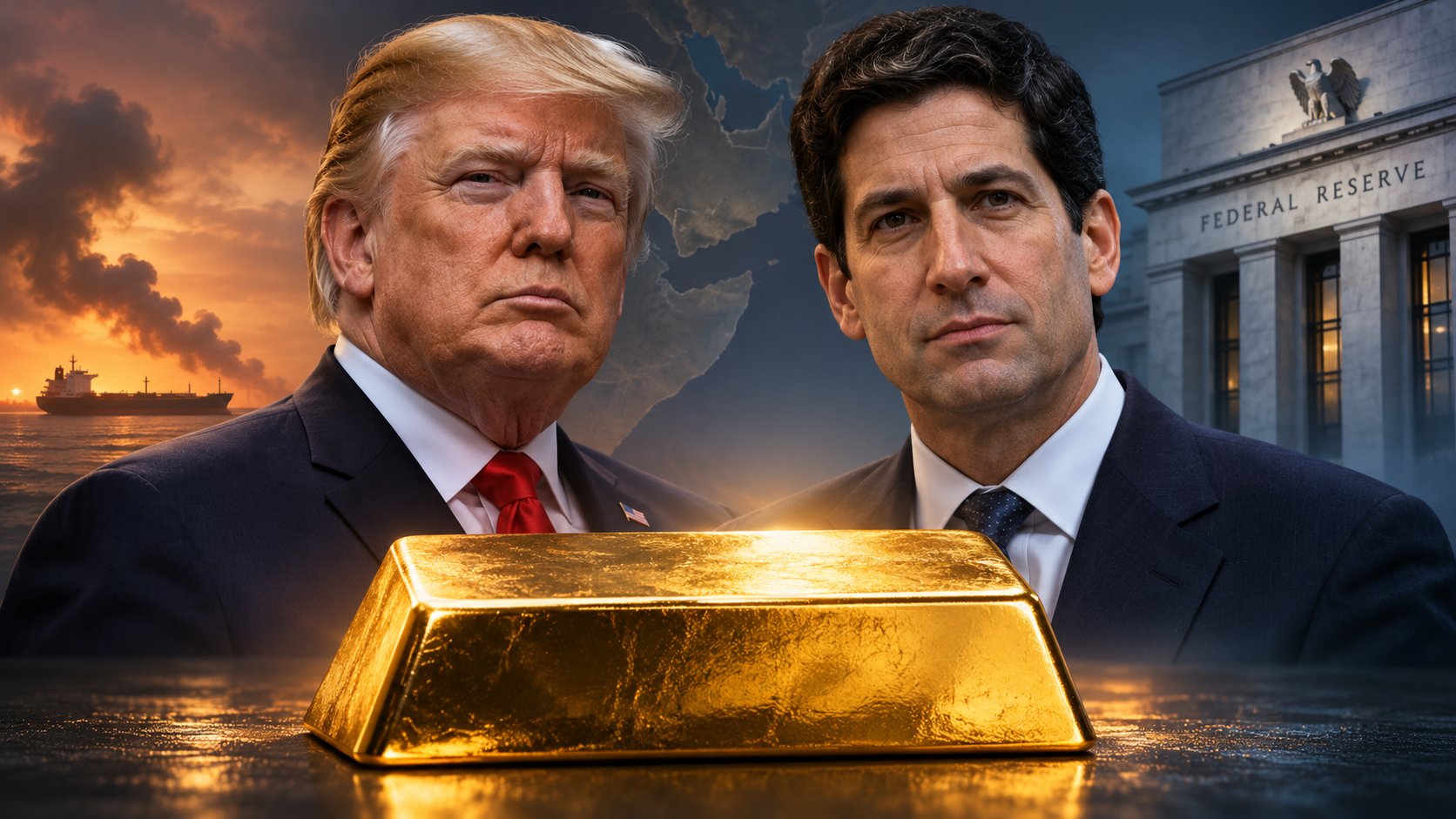
Strategic Risk Intelligence Brief by Global Insight Group.
This analysis is based on the GFDD Framework™ developed by Michaela Schaaf-Hoffelner and is designed for executives, investors and strategic decision-makers.
Updaded: November 02, 2026
War in the Middle East, attacks on ships, continued uncertainty around the Strait of Hormuz and elevated oil prices. Under normal circumstances, this should be an ideal environment for gold. When uncertainty rises, investors traditionally seek protection in safe-haven assets.
Yet the opposite is happening.
The gold price is falling despite the Middle East crisis. On October 30, 2026, spot gold dropped by around 3.5% to just under $3,881 per ounce, its lowest level since October 2025. From its record high of $5,595 in January, the precious metal has now lost around 30%. (Reuters)
At the same time, geopolitical uncertainty has by no means disappeared. The Strait of Hormuz remains a major risk factor for global energy supplies and trade. Oil prices continue to react sharply to developments in the region. Brent crude was still trading at around $118 per barrel at the beginning of November. (Reuters)
So how can gold fall when the very uncertainty that normally supports it remains firmly in place?
There is no single explanation. Several market mechanisms are operating at the same time, and some of them are pulling in opposite directions.
Disclaimer: This article is intended solely as a geopolitical and economic analysis. It does not constitute investment advice or a recommendation to buy or sell gold, securities or any other financial product.
In principle, yes. At least that is how the traditional market logic works.
Gold has served as a store of value for centuries. When fears of war, political crises, currency instability or economic disruption increase, capital often moves into gold.
The basic assumption therefore seems straightforward:
Geopolitical uncertainty rises → demand for safety rises → gold rises.
But financial markets rarely follow just one rule.
While geopolitical uncertainty supports gold, other forces can simultaneously push in the opposite direction.
A stronger US dollar can weigh on gold. Higher interest rates can weigh on gold. Rising bond yields can weigh on gold. And when investors suddenly need cash, even gold can be sold despite increasing uncertainty.
That combination is exactly what we are seeing now.
No. That would be the easiest explanation for a falling gold price, but it does not fit the current situation.
The Schaaf Media Geo-Radar currently monitors developments involving Iran, Israel, the Strait of Hormuz, oil price risks, maritime security and potential consequences for global supply chains. The situation continues to show significant uncertainty for both energy supplies and international trade routes.
Developments in global shipping also point to anything but a return to normal. At the end of October, dockworkers and seafarers took part in strikes across 113 ports in 22 countries. Alongside arms shipments and working conditions, the protests highlighted deaths and injuries among seafarers operating in conflict zones. Greek unions pointed to 28 attacks on vessels in the Gulf during the first 21 days of October alone. (Reuters)
Energy markets are not signalling a full return to normal either. At the end of October, Brent crude remained well above its September level. Reuters described a continuing risk premium driven by uncertainty in the Middle East and the possibility of further escalation. (Reuters)
Gold is therefore not falling because the world has suddenly become safer.
That is precisely what makes the current move so interesting.
Because the same crisis that should support gold is also triggering a second mechanism.
It starts with oil.
The Strait of Hormuz is one of the world’s most important energy corridors. Whenever investors fear that oil and gas shipments from the Gulf could be disrupted, energy prices react.
When oil prices rise, businesses and consumers face higher costs for transportation, production, heating, logistics and a wide range of intermediate goods.
A geopolitical risk therefore becomes an inflation risk.
The chain can be simplified as follows:
Middle East crisis → oil prices rise → inflation pressure rises → interest-rate cuts become harder.
And this is where the problem for gold begins.
Gold does not pay interest.
An ounce of gold remains an ounce of gold. By contrast, an investor holding an interest-bearing US Treasury receives a regular return.
The higher the yields available on relatively safe bonds, the greater the opportunity cost of holding gold. Investors increasingly have to ask why they should hold a non-yielding asset when other comparatively safe investments offer attractive returns.
Gold had already fallen sharply on October 29 after fresh US inflation data strengthened expectations that the Federal Reserve could tighten monetary policy again. At that point, markets were pricing in a high probability of a December rate increase. (Reuters)
This creates an unusual cycle:
Middle East risk rises
→ energy prices rise
→ inflation risk rises
→ the Fed has less room to ease
→ interest rates stay high or rise
→ gold comes under pressure
Paradoxically, the geopolitical crisis that would normally support gold can indirectly weaken it through inflation and monetary policy.
It matters a great deal.
Gold is traded globally primarily in US dollars. When the dollar strengthens, gold becomes more expensive for buyers using other currencies.
At the same time, both the dollar and US Treasuries can benefit when investors expect the Federal Reserve to maintain a more restrictive monetary policy.
That means two forces can work against gold simultaneously: higher bond yields and a stronger dollar.
This mechanism has already been visible several times in 2026. In early October, a strong dollar and elevated US Treasury yields weighed heavily on gold. Reuters noted that gold had lost significant ground since the start of the Iran war in February as investors expected conflict-driven inflation to keep interest rates higher for longer. (Reuters)
This helps explain the apparent contradiction:
More geopolitical risk does not automatically mean a higher gold price.
What matters is the channel through which that risk is affecting financial markets.
At first glance, very little.
The problems in the stock market have their own causes. In particular, investors are increasingly questioning whether the enormous sums being invested in artificial intelligence will generate profits quickly enough.
Companies are spending billions on data centres, semiconductors, energy infrastructure and digital capacity. At the same time, their capital requirements are rising.
Those concerns intensified sharply at the end of October. Reuters reported that the Nasdaq was at one point facing around $2 trillion in losses during October, with doubts over the profitability of massive AI spending at the centre of the sell-off. (Reuters)
Hedge funds also came under pressure. During the previous week, the Nasdaq 100 had already fallen around 5.5% as investors increasingly questioned how sustainably the enormous AI investment cycle could be financed. (Reuters)
The Middle East crisis did not cause these concerns.
But it can make them worse.
Because AI infrastructure is extremely capital intensive.
Data centres, semiconductors, electricity supply and grid expansion require enormous investment. The higher interest rates are, the more expensive that financing becomes.
At the same time, elevated energy prices do not only increase inflation. They can also directly raise operating costs for energy-intensive infrastructure.
Two developments therefore collide:
AI companies and technology groups
→ invest enormous sums
→ require capital
→ must prove that those investments will generate sufficient returns
while at the same time:
Middle East crisis
→ energy prices remain high
→ inflation remains persistent
→ interest rates stay higher
→ capital becomes more expensive
The geopolitical crisis is not causing the AI correction. But through energy prices, inflation and financing costs, it is intensifying precisely the vulnerabilities that investors are already questioning.
The market is therefore dealing with several sources of stress at once.
This is perhaps the most surprising part of the story.
Surely a falling stock market should provide additional support for gold. After all, when equities suffer, investors often look for safer assets.
And frequently they do.
But not always.
When stocks fall very quickly, professional investors and leveraged market participants face a different problem. They need liquidity.
Investors trading with borrowed capital are required to maintain a certain level of collateral. If the value of their positions falls sharply, their broker may demand additional collateral.
That is a margin call.
The investor suddenly needs cash.
And in that situation, investors do not necessarily sell the asset they believe is weakest. They often sell the asset that can be converted into cash quickly and reliably.
Gold is one of those highly liquid assets.
Yes. That is exactly what can happen.
On October 30, gold fell by around 3.5% while technology stocks were also under severe pressure. Commerzbank analysts cited by Reuters explicitly pointed to the possibility that the sharp equity sell-off had triggered forced selling of safe-haven assets such as gold as investors faced margin calls. (Reuters)
At first, that sounds contradictory.
Imagine an investor who suddenly has to provide another $100,000 in collateral.
They cannot afford to wait until an illiquid investment can eventually be sold. They need the money now.
Gold, by contrast, can be sold almost immediately.
At that moment, the safe haven effectively becomes the ATM of the portfolio.
Not because gold has suddenly lost its value, but precisely because it is liquid.
Yes, under certain market conditions.
That is one reason why individual price movements should never be interpreted in isolation.
On one side, the traditional safe-haven mechanism remains in place:
Geopolitical uncertainty → gold ↑
On the other side, several opposing forces can operate simultaneously:
Oil price ↑ → inflation ↑ → interest-rate expectations ↑ → gold ↓
Interest rates ↑ → bond yields ↑ → gold ↓
US dollar ↑ → gold ↓
Stocks ↓ → margin calls ↑ → liquidity needs ↑ → gold selling ↑
The key question is therefore no longer simply: How dangerous is the geopolitical situation?
A better question is:
Which transmission mechanism is currently stronger?
No.
That conclusion should not automatically be drawn from the current market movement.
A falling gold price can indicate that investors perceive geopolitical risks to be declining. But it can just as easily mean that other forces are currently stronger than demand for a safe haven.
In today’s environment, there are several reasons to view the gold price as part of a much broader financial system.
The Middle East affects oil and inflation. Inflation affects the Federal Reserve. The Fed affects interest rates, bond yields and the dollar. At the same time, highly valued technology companies are under pressure because of the enormous sums being invested in AI. If stocks fall far enough, margin calls can create additional demand for liquidity. That liquidity demand can then trigger further gold sales.
Several separate developments suddenly become one interconnected system.
Above all, it shows that markets are not linear.
The simple formula that “war means higher gold prices” is not enough.
Geopolitical crises can support gold directly while simultaneously putting downward pressure on it through completely different channels.
The current Middle East crisis illustrates this interaction particularly clearly.
Geopolitical uncertainty remains high.
At the same time, energy prices are keeping inflation risks elevated. Higher inflation makes looser monetary policy more difficult. Higher interest rates support bonds and can strengthen the US dollar. Meanwhile, AI stocks are coming under pressure. That creates liquidity needs which can, in turn, trigger selling even in assets normally considered safe.
This explains how gold can fall even though geopolitical risks have not disappeared.
Because the gold price is telling us more than just what is happening in the gold market.
It shows how closely geopolitical risk, energy prices, monetary policy, technology investment and financial-market mechanics have become interconnected.
A crisis no longer remains confined to the area where it began.
An attack on a trade route can change energy prices. Energy prices change inflation expectations. Inflation changes monetary policy. Monetary policy changes financing costs. Financing costs change equity valuations. Falling stocks create liquidity needs. And those liquidity needs can ultimately hit gold itself.
Anyone looking only at the final link in that chain sees a falling gold price.
Anyone looking at the entire chain sees something very different.
Gold is not falling because the world has become safer. Gold is falling despite persistently high risks because several stronger market mechanisms are operating at the same time.
That is the real signal.
U.S. Treasuries: Can War Offer a Way Out of the Debt Trap?
Rising Treasury yields, mounting government debt and the Iran war are reshaping global financial markets. This analysis explores how interest rates, inflation and geopolitical instability interact.
Iran War and Oil Price Shock: Who Wins and Who Really Loses?
How do rising oil prices redistribute economic pressure and strategic advantages? An examination of the winners, losers and systemic risks emerging from an energy shock driven by geopolitical conflict.
Is Europe’s Intralogistics Industry Heading for the Brink? Hormuz, Steel and the Supply Chain Crisis
The Strait of Hormuz affects far more than global oil markets. Discover how geopolitical chokepoints, rising costs and fragile supply chains are putting European industry under pressure.
Author of Global Insight Group Intelligence:
Michaela Schaaf-Hoffelner has more than 35 years of experience in strategic and technical project and product management, particularly in IT, control systems and intralogistics. Through her long-standing work with complex systems, she identifies structural risks and dynamic misalignments at an early stage – risks that are often overlooked in conventional analysis.
Her focus is on making causal relationships and systemic dependencies visible and translating them into concrete strategic advantages for investors and decision-makers. Her analyses combine deep technical systems understanding with geopolitical and economic developments.
GFDD Framework™ and GFDD Diagnostics™ are proprietary analytical concepts developed by Michaela Schaaf-Hoffelner. © 2026 Global Insight Group LLC. All rights reserved.
You are currently viewing a placeholder content from X. To access the actual content, click the button below. Please note that doing so will share data with third-party providers.
More Information