Executive Intelligence. Industrial Risk. Geopolitics.
Strategic Sparring
for Decision-Makers
Risk intelligence across technology, law, markets and power dynamics.

Verdeckte Geschäftsrisiken, strategische Widersprüche und kritische Abhängigkeiten frühzeitig erkennen.
Kostenlose Analyse starten →
Verdeckte Machtstrukturen, Führungsrisiken und organisatorische Blockaden frühzeitig erkennen.
Kostenlose Analyse starten →
Geopolitische Risiken, globale Abhängigkeiten und kritische Lieferkettenrisiken frühzeitig erkennen.
Kostenlose Analyse starten →
Identify hidden business risks, strategic contradictions and critical dependencies at an early stage.
Start Free Analysis →
Identify hidden power structures, leadership risks and organizational blockers at an early stage.
Start Free Analysis →
Identify geopolitical risks, global dependencies and critical supply-chain vulnerabilities at an early stage.
Start Free Analysis →
Verdeckte Geschäftsrisiken, strategische Widersprüche und kritische Abhängigkeiten frühzeitig erkennen.
Kostenlose Analyse starten →
Verdeckte Machtstrukturen, Führungsrisiken und organisatorische Blockaden frühzeitig erkennen.
Kostenlose Analyse starten →
Geopolitische Risiken, globale Abhängigkeiten und kritische Lieferkettenrisiken frühzeitig erkennen.
Kostenlose Analyse starten →
Identify hidden business risks, strategic contradictions and critical dependencies at an early stage.
Start Free Analysis →
Identify hidden power structures, leadership risks and organizational blockers at an early stage.
Start Free Analysis →
Identify geopolitical risks, global dependencies and critical supply-chain vulnerabilities at an early stage.
Start Free Analysis →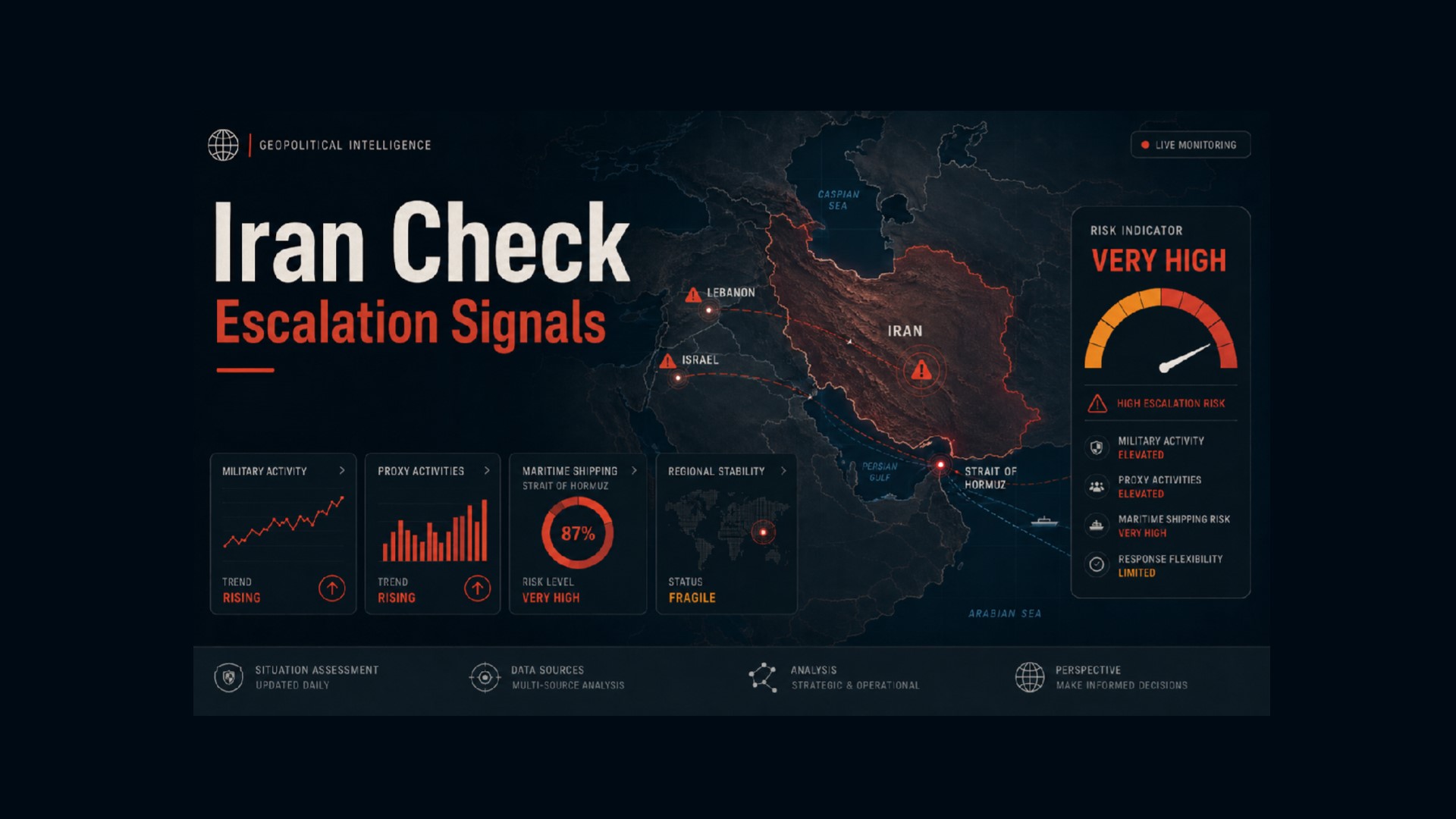
This escalation radar summarizes five relevant signals as of November 1, 2026. The focus is on verifiable statements by official sources, confirmed events and monitoring sources with potential implications for energy prices, supply chains, markets, maritime security, aviation and regional stability.
Trump and Netanyahu hold talks while US preparations for possible new strikes continue. Trump also says there are another one or two Iranian targets Washington still needs to “take care of.”
Iran’s Supreme Leader orders an updated target list covering US and Israeli interests. Any new attacks are to be answered immediately and without geographic limits.
Nakilat confirms an incident involving the LNG tanker Al Mayeda on November 1. The vessel remains operational, but the threat has now directly reached Qatar’s LNG shipping sector.
| Actor | Type | Severity | Status | Source / Verification | Business Impact |
|---|---|---|---|---|---|
| USA / Israel / Iran | Trump-Netanyahu coordination ahead of potential new Iran strikes | Critical · Level 5/5 | Trump and Netanyahu hold a phone call on October 31 against the backdrop of US preparations for possible new strikes on Iran. Trump subsequently says Washington still needs to eliminate “one or two” Iranian targets. He specifically mentions Pickaxe Mountain, a previously unstruck underground site. At the same time, Trump describes the talks with Iran as broadly positive, while calling Tehran not particularly reliable. Power dynamics: The USA and Israel are coordinating military options while diplomacy remains active. | Current Israeli source: Times of Israel, November 1, 2026 . Additional source: Ynet, November 1, 2026 . Verification status: partially confirmed. The phone call and Trump’s new public targeting threat are confirmed. No concrete decision on renewed strikes has been confirmed. Background: Schaaf Media · Iran Check: 5 Escalation Signals from October 30, 2026 . | Critical business impact on Iran, Israel, Gulf states, oil, aviation, shipping and insurance. Particularly relevant: The risk of new strikes after the US midterm elections is becoming more concrete. |
| Iran / USA / Israel | Iran expands retaliation doctrine and target list | Critical · Level 5/5 | Iran’s Supreme Leader Mojtaba Khamenei orders the armed forces to raise readiness. Any new threat must be met with an immediate, effective and geographically unrestricted response. The armed forces are instructed to expand their target list to include US and Israeli tangible and intangible assets. Tehran simultaneously warns that a new war could spread far beyond the Middle East. Power dynamics: Iran is seeking to maximize the geographic and strategic cost of any new US-Israeli strike. | Current regional source: Dawn / Agencies, November 1, 2026 . Additional source: Japan Times / AFP, November 1, 2026 . Verification status: confirmed for the public retaliation doctrine. Specific target locations have not been disclosed. Further reading: Schaaf Media · Iran War: How the West Is Losing Its Dominance . | Critical business impact on US facilities, Israel, Gulf states, energy, data centers, infrastructure, business travel and insurance. New element: Tehran explicitly removes geographic limits from its retaliation doctrine. |
| Qatar / LNG / Gulf / Iran Conflict | Qatari LNG tanker hit in the Gulf | Critical · Level 5/5 | Qatar Gas Transport Company Nakilat confirms on November 1 that the LNG tanker Al Mayeda was struck by unidentified objects. The incident occurred on the evening of October 30 in the Arabian Gulf. The crew remains unharmed, and no environmental impact has been reported. The vessel remains safe and operational. Those responsible and the exact attack method remain unknown. Power dynamics: The maritime escalation has now directly reached a major LNG carrier belonging to a key Gulf exporter. | Official Qatari source: Qatar News Agency, November 1, 2026 . Regional source: The Peninsula Qatar, November 1, 2026 . Verification status: confirmed for the incident. The perpetrator and attack method remain unconfirmed. Background: Schaaf Media · Hormuz Blockade 2026: Protecting Margins and Supply Chains in the Chokepoint Shock . | Critical business impact on LNG, tanker shipping, Qatar, energy prices, insurance, charter rates and supply chains. Particularly relevant: The threat now affects not only crude oil tankers, but LNG transport capacity as well. |
| Iran / Qatar / USA / Hormuz | Doha talks enter third day and link agreement to reopening Hormuz | High to Critical · Level 4/5 | Iranian negotiators and Qatari mediators are holding talks for a third consecutive day on November 1. The discussions are being continuously coordinated with Washington. Foreign Minister Araghchi says consultations are making progress, but no final decision has yet been reached. Part of the mechanism under discussion involves a potential reopening of the Strait of Hormuz within two days, if Washington meets Iranian conditions. Tehran simultaneously says it is prepared for both diplomacy and defense. Power dynamics: Hormuz is becoming a direct bargaining instrument between Washington and Tehran. | Confirmed by Reuters, November 1, 2026 . Additional source: Al Jazeera, November 1, 2026 . Verification status: confirmed for the talks. No final agreement has been reached. Background: Schaaf Media · Middle East Escalation Check from October 31, 2026 . | High to critical business impact on Hormuz, oil, LNG, shipping, sanctions and Iranian exports. An agreement could change the chokepoint situation within days; failure would instead increase the risk of new US strikes. |
| Syria / Saudi Arabia / Türkiye / Pakistan | Syria confirms talks on joining Mecca defense pact | High to Critical · Level 4/5 | Syrian Foreign Minister Asaad al-Shaibani confirms that Damascus is holding talks on potentially joining the Mecca defense pact. The alliance of Saudi Arabia, Türkiye and Pakistan generally treats an attack on one member as an attack on all. Syria explicitly describes Gulf security as part of its own security. Damascus simultaneously supports Saudi Arabia’s position towards the Houthis. Power dynamics: Syrian accession would expand the pact geographically into the Levant and strengthen regional alignment against Iran-linked actors. | Current regional source: Dawn, November 1, 2026 . Primary regional context: The National, October 31, 2026 . Verification status: confirmed as ongoing talks. There is not yet a formal application, decision or accession. Further reading: Schaaf Media · Middle East Escalation Check from October 31, 2026 . | High to critical business impact on Syria, Saudi Arabia, Türkiye, defense, logistics, regional investment and security planning. Strategically relevant is the potential expansion of a new regional mutual-defense architecture. |
The most important military development on November 1, 2026 is the direct coordination between Trump and Netanyahu ahead of potential new strikes on Iran. Trump simultaneously says Washington still needs to eliminate one or two Iranian targets and explicitly mentions Pickaxe Mountain. No strike order has been confirmed, but the operational threat environment is becoming more concrete.
Iran is simultaneously tightening its deterrence doctrine. Mojtaba Khamenei orders an updated target list covering US and Israeli interests. New attacks are to be answered immediately and explicitly without geographic limits. This particularly increases the risk to US facilities and infrastructure in third countries.
The maritime situation also remains critical. Qatar confirms that the LNG tanker Al Mayeda was struck in the Gulf by unidentified objects. The incident expands the maritime risk profile from crude oil to LNG shipping. At the same time, Iran and Qatar are negotiating a mechanism that could reopen Hormuz within two days.
In parallel, the regional security architecture is changing. Syria confirms talks on potentially joining the Mecca defense pact comprising Saudi Arabia, Türkiye and Pakistan. Accession has not yet been decided, but it could extend the new defense bloc into the Levant for the first time. EASA continues to maintain active warnings for Iran, Saudi Arabia, the Persian Gulf/Gulf of Oman, Iraq and Lebanon; no new revision was identified on November 1.
The five most important signals for a German and European risk assessment are: direct Trump-Netanyahu coordination on potential new strikes against Iran and Trump’s public identification of additional targets, Iran’s new geographically unrestricted retaliation doctrine with an expanded target list covering US and Israeli interests, the incident involving a Qatari LNG tanker in the Gulf, officially confirmed for the first time on November 1, the third day of Qatar-Iran negotiations with a potential reopening of Hormuz within two days, and Syria’s confirmed talks on potentially joining the Mecca defense pact and the resulting expansion of the regional security architecture.
Note: This assessment was prepared with the support of our Geo-AI. AI can make mistakes. The analysis is intended as a radar for potential escalation signals and does not replace a fully verified intelligence assessment.
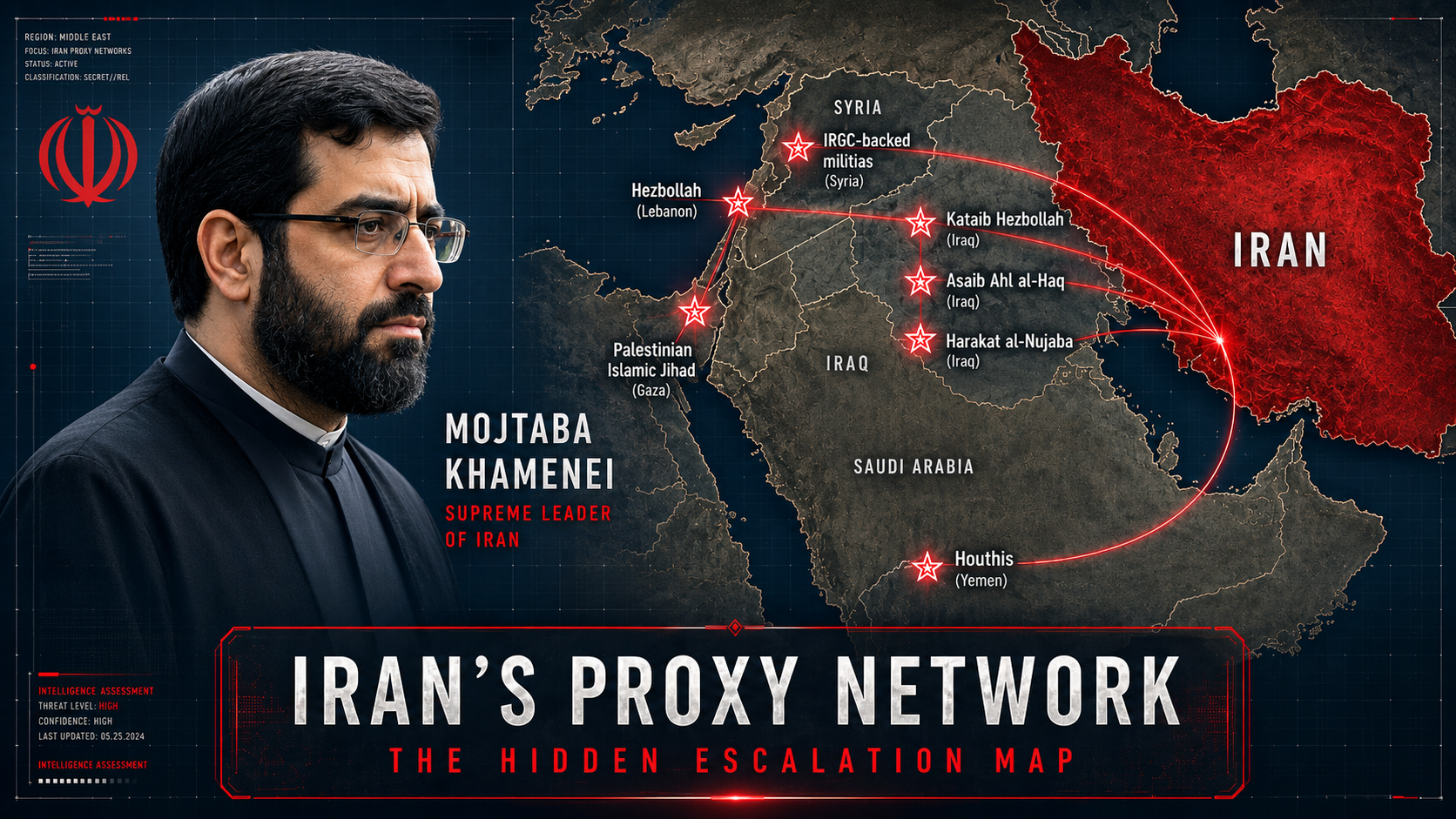
What decision-makers should watch now — before proxy escalation becomes a cost, compliance or supply-chain shock.
This 17-page executive briefing translates Iran’s proxy network into concrete business risks: energy price exposure, maritime chokepoints, war-risk premiums, sanctions, shadow fleets, supply-chain disruption and early-warning indicators for board-level decisions.
You are currently viewing a placeholder content from X. To access the actual content, click the button below. Please note that doing so will share data with third-party providers.
More Information