Executive Intelligence. Industrial Risk. Geopolitics.
Strategic Sparring
for Decision-Makers
Risk intelligence across technology, law, markets and power dynamics.

Verdeckte Geschäftsrisiken, strategische Widersprüche und kritische Abhängigkeiten frühzeitig erkennen.
Kostenlose Analyse starten →
Verdeckte Machtstrukturen, Führungsrisiken und organisatorische Blockaden frühzeitig erkennen.
Kostenlose Analyse starten →
Geopolitische Risiken, globale Abhängigkeiten und kritische Lieferkettenrisiken frühzeitig erkennen.
Kostenlose Analyse starten →
Identify hidden business risks, strategic contradictions and critical dependencies at an early stage.
Start Free Analysis →
Identify hidden power structures, leadership risks and organizational blockers at an early stage.
Start Free Analysis →
Identify geopolitical risks, global dependencies and critical supply-chain vulnerabilities at an early stage.
Start Free Analysis →
Verdeckte Geschäftsrisiken, strategische Widersprüche und kritische Abhängigkeiten frühzeitig erkennen.
Kostenlose Analyse starten →
Verdeckte Machtstrukturen, Führungsrisiken und organisatorische Blockaden frühzeitig erkennen.
Kostenlose Analyse starten →
Geopolitische Risiken, globale Abhängigkeiten und kritische Lieferkettenrisiken frühzeitig erkennen.
Kostenlose Analyse starten →
Identify hidden business risks, strategic contradictions and critical dependencies at an early stage.
Start Free Analysis →
Identify hidden power structures, leadership risks and organizational blockers at an early stage.
Start Free Analysis →
Identify geopolitical risks, global dependencies and critical supply-chain vulnerabilities at an early stage.
Start Free Analysis →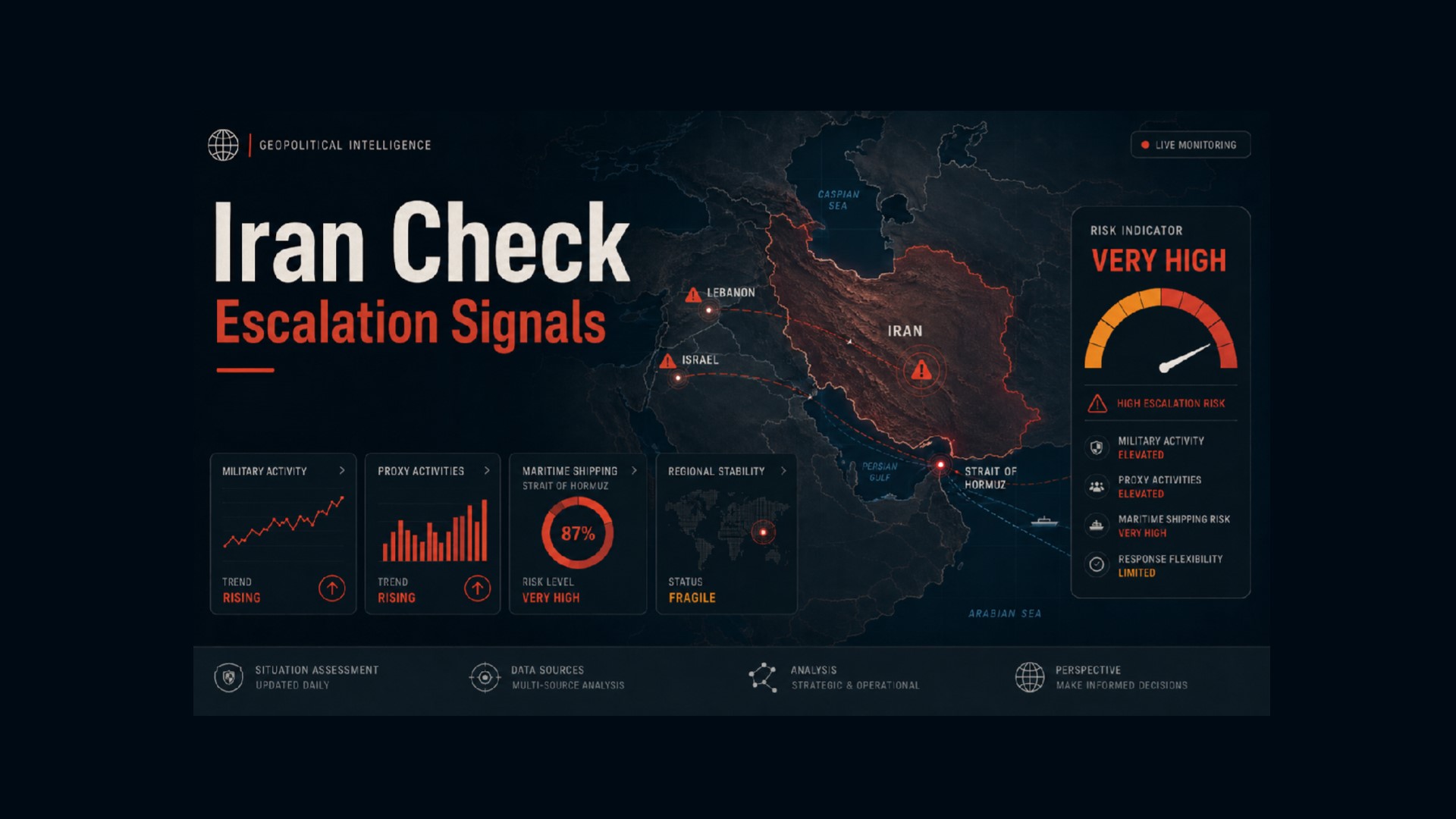
This escalation radar summarizes five relevant signals as of October 4, 2026. The focus is on verifiable statements by official sources, confirmed events and monitoring data with potential implications for energy prices, supply chains, markets, maritime security, aviation and regional stability.
Parliament Speaker Qalibaf says Hormuz will reopen only once Washington meets Iran’s seven conditions. Foreign Minister Araghchi simultaneously warns of a military response to renewed U.S. strikes.
A crude oil tanker is hit east of Oman. The crew remains unharmed, but the incident shows that maritime security remains fragile despite higher energy flows.
The Houthis say they attacked an Aramco facility in Riyadh with ballistic missiles and drones. Fire was observed near a facility; Saudi Arabia and Aramco have not yet confirmed the cause.
| Actor | Type | Severity | Status | Source / Verification | Business Impact |
|---|---|---|---|---|---|
| Iran / United States / Hormuz | Iran keeps Hormuz closed and reiterates seven conditions | Critical · Level 5/5 | Tehran is hardening its negotiating position. Parliament Speaker Mohammad Baqer Qalibaf says the Strait of Hormuz will not reopen until the United States meets all seven Iranian conditions. According to Iran, the conditions are based on the Islamabad Memorandum. Foreign Minister Abbas Araghchi says in parallel that reopening within seven days remains possible once Washington agrees. He warns, however, that if the United States takes renewed military action, Iran is better prepared and will respond. Power dynamics: Hormuz remains Iran’s central negotiating lever, while diplomacy and military deterrence continue in parallel. | Confirmed by Reuters, October 4, 2026 . Verification status: confirmed for the seven conditions, the continued closure and Araghchi’s warning. No agreement with Washington has been confirmed. Further analysis: Schaaf Media · Strait of Hormuz Blockade 2026: Protecting Margins and Supply Chains in the Chokepoint Shock . | Critical business impact on oil, LNG, tankers, freight rates, marine insurance and inflation. As long as the seven conditions remain unmet, full normalization of the chokepoint remains politically blocked. |
| Hormuz / Oman / tanker shipping | Crude oil tanker near Oman hit by unidentified projectile | Critical · Level 5/5 | The maritime situation remains immediately dangerous. A crude oil tanker is hit around four nautical miles east of Oman by an unidentified projectile. The vessel suffers damage on its port side. The crew remains unharmed. No environmental damage is reported. Responsibility remains unclear. At the same time, commercial shipping traffic through Hormuz remains well below pre-war levels. Power dynamics: Even as energy exports increase, passage remains highly exposed to military and insurance risk. | Current regional reporting: Gulf News, October 4, 2026 . Verification status: confirmed for the impact, damage to the vessel and the unharmed crew. The origin of the projectile has not been confirmed. Background: Schaaf Media · Iran Check: 5 Escalation Signals – October 2, 2026 . | Critical business impact on tanker shipping, crude oil, LNG, insurance and delivery times. Another attack on commercial vessels could immediately increase war-risk premiums and security costs. |
| Houthis / Saudi Arabia / Iran / Riyadh / Aramco | Houthis claim missile and drone attack on Aramco in Riyadh | Critical · Level 5/5 | The Houthi campaign once again reaches Saudi energy infrastructure deep inside the country. Houthi spokesperson Yahya Saree says the group attacked an Aramco facility in Riyadh with ballistic missiles and drones. The attack was described as retaliation for airstrikes on Sanaa and other provinces. Fire and smoke were observed near an Aramco facility. Saudi Arabia and Aramco have not yet confirmed a successful strike. Power dynamics: The Houthis continue to demonstrate their ability to designate the Saudi energy complex as a strategic pressure target. | Current reporting: Al Jazeera, October 4, 2026 . Verification status: partially confirmed. Confirmed are the Houthi statement and observed fire near a facility. The cause and actual extent of damage have not been confirmed by Saudi Arabia or Aramco. Background: Schaaf Media · Middle East Escalation Check – October 3, 2026 . | Critical business impact on Aramco, Saudi energy infrastructure, oil supply, insurance and site continuity. Repeated attacks on energy targets increase risk premiums even without a confirmed production outage. |
| Yemen / Houthis / Saudi Arabia / Sanaa / Saada | Government forces strike Houthi targets in Sanaa and Saada | Critical · Level 5/5 | The Yemen front is expanding further. The armed forces of the internationally recognized government say on October 4 that they are striking Houthi targets in Sanaa and Saada. A military spokesperson says the strikes are targeting strategically important sites. Houthi media also report airstrikes on Sanaa, but attribute them to Saudi Arabia. Saudi confirmation is not available. Power dynamics: After Taiz, attacks are now shifting directly toward the Houthis’ political and military core areas. | Confirmed by Reuters / Internazionale, October 4, 2026 . Verification status: confirmed for strikes by Yemeni government forces on Sanaa and Saada. The scale and damage have not yet been fully confirmed. Further analysis: Schaaf Media · Iran’s Proxies: The Hidden Escalation Map of the Middle East . | Critical business impact on Yemen, Bab el-Mandeb, land logistics, ports, humanitarian supply and Red Sea shipping. Strikes on Sanaa and Saada increase the risk of another Houthi retaliation cycle against Saudi Arabia. |
| Saudi Arabia / Pakistan / Türkiye / Iran / Houthis | Makkah pact to discuss Iranian proposal for political engagement with Houthis | High to Critical · Level 4/5 | The emerging regional security architecture is being linked for the first time to an Iranian de-escalation proposal. Saudi Arabia, Pakistan and Türkiye plan to convene their highest political-military body in Riyadh next week. Pakistan says Foreign Minister Araghchi recommended politically engaging the Houthis rather than relying exclusively on military action. Pakistan describes this as well-intentioned advice, not a formal offer. At the same time, more than six countries are reportedly interested in potentially joining the Makkah pact. New members, however, are to be considered only once the pact is fully operationalized. Power dynamics: The pact is developing simultaneously into a defence structure and a political crisis-management forum. | Confirmed by Reuters, October 2, 2026 . Verification status: confirmed for the planned meeting, Iran’s political proposal and interest from additional states. No Iranian membership application, invitation or accession talks have been confirmed. Background: Schaaf Media · Iran War: How the West Is Fighting and Losing Its Dominance . | High to critical business impact on regional security architecture, Saudi Arabia, Yemen, military logistics and investment risk. The key question is whether the pact responds more militarily or takes up Iran’s proposal for a political channel. |
The most important political development on October 4, 2026 is Iran’s renewed hardening over Hormuz. Tehran explicitly states that it will fully reopen the strait only after all seven conditions have been met. At the same time, Araghchi keeps the seven-day plan diplomatically open, while warning of a military response to renewed U.S. strikes.
Operationally, Hormuz remains highly risky despite recently rising energy flows. A crude oil tanker is hit near Oman by an unidentified projectile. The crew remains unharmed, but responsibility is unclear. Actual security for commercial passage therefore remains far from normalized.
At the same time, the Saudi-Houthi front continues to escalate. The Houthis claim a missile and drone attack on Aramco in Riyadh. In parallel, Yemeni government forces strike Houthi targets in Sanaa and Saada. This further intensifies the cycle of attack and retaliation.
The development of the Makkah pact is also strategically relevant. The three member states will discuss next week how to deal with the Houthis. Iran recommends political engagement rather than relying solely on military measures. Iranian membership or an invitation has not been confirmed. EASA continues to maintain active conflict-zone warnings for, among others, Iran, Iraq, Lebanon, the Persian Gulf/Gulf of Oman, Saudi Arabia and Yemen.
The five most important signals for a European risk assessment are: Iran’s clear refusal to fully reopen Hormuz before all seven of its conditions are met, the strike on a crude oil tanker near Oman with responsibility still unclear, the Houthi-claimed missile and drone attack on an Aramco facility in Riyadh, the new strikes by Yemeni government forces on Houthi targets in Sanaa and Saada, and the upcoming Makkah pact discussions on Iran’s proposal for political engagement with the Houthis.
Note: This assessment was prepared with support from our Geo-AI. AI can make mistakes. The analysis is intended as a radar for potential escalation signals and does not replace a fully verified intelligence assessment.
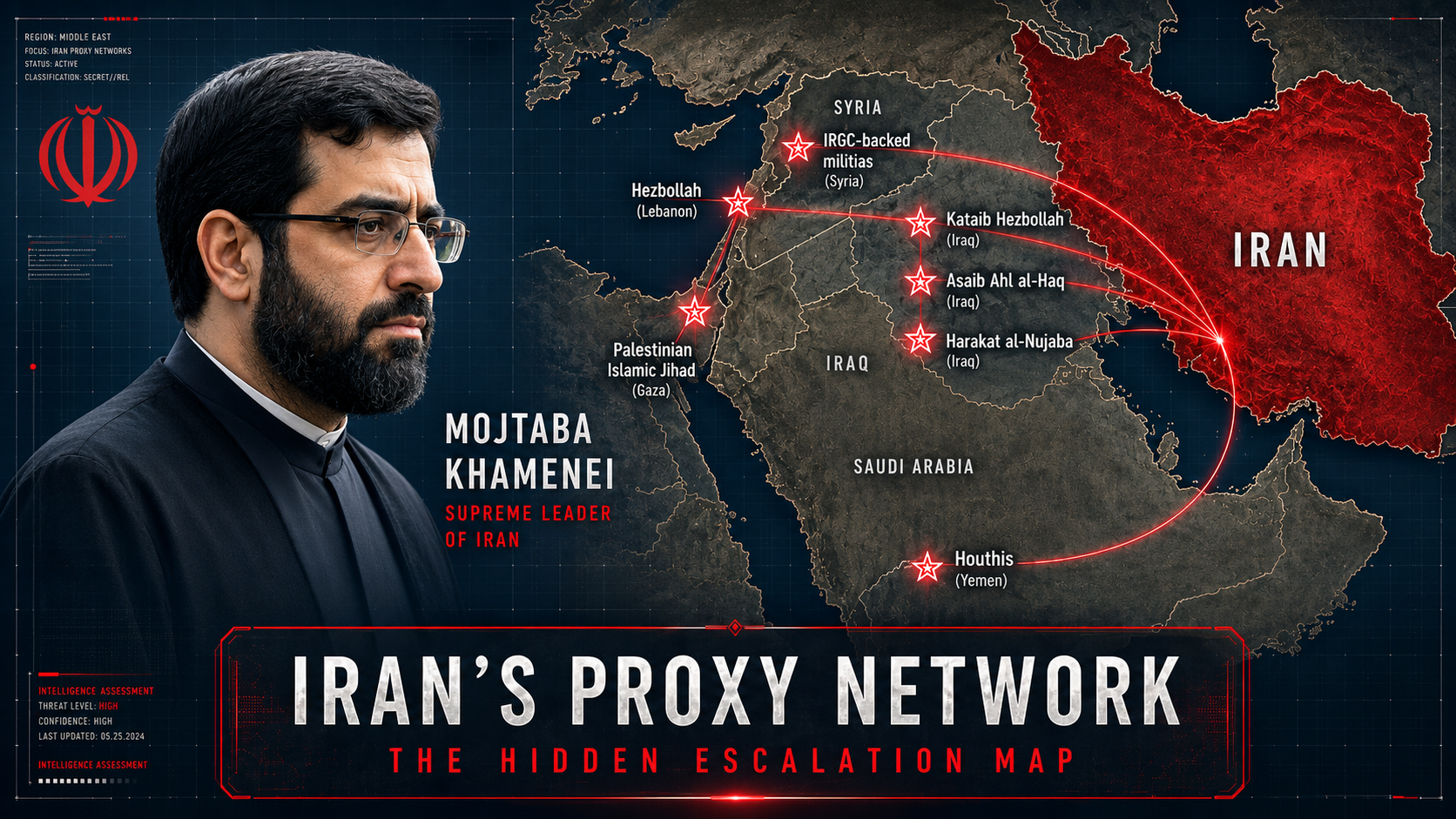
What decision-makers should watch now — before proxy escalation becomes a cost, compliance or supply-chain shock.
This 17-page executive briefing translates Iran’s proxy network into concrete business risks: energy price exposure, maritime chokepoints, war-risk premiums, sanctions, shadow fleets, supply-chain disruption and early-warning indicators for board-level decisions.
You are currently viewing a placeholder content from X. To access the actual content, click the button below. Please note that doing so will share data with third-party providers.
More Information