Executive Intelligence. Industrial Risk. Geopolitics.
Strategic Sparring
for Decision-Makers
Risk intelligence across technology, law, markets and power dynamics.

Verdeckte Geschäftsrisiken, strategische Widersprüche und kritische Abhängigkeiten frühzeitig erkennen.
Kostenlose Analyse starten →
Verdeckte Machtstrukturen, Führungsrisiken und organisatorische Blockaden frühzeitig erkennen.
Kostenlose Analyse starten →
Geopolitische Risiken, globale Abhängigkeiten und kritische Lieferkettenrisiken frühzeitig erkennen.
Kostenlose Analyse starten →
Identify hidden business risks, strategic contradictions and critical dependencies at an early stage.
Start Free Analysis →
Identify hidden power structures, leadership risks and organizational blockers at an early stage.
Start Free Analysis →
Identify geopolitical risks, global dependencies and critical supply-chain vulnerabilities at an early stage.
Start Free Analysis →
Verdeckte Geschäftsrisiken, strategische Widersprüche und kritische Abhängigkeiten frühzeitig erkennen.
Kostenlose Analyse starten →
Verdeckte Machtstrukturen, Führungsrisiken und organisatorische Blockaden frühzeitig erkennen.
Kostenlose Analyse starten →
Geopolitische Risiken, globale Abhängigkeiten und kritische Lieferkettenrisiken frühzeitig erkennen.
Kostenlose Analyse starten →
Identify hidden business risks, strategic contradictions and critical dependencies at an early stage.
Start Free Analysis →
Identify hidden power structures, leadership risks and organizational blockers at an early stage.
Start Free Analysis →
Identify geopolitical risks, global dependencies and critical supply-chain vulnerabilities at an early stage.
Start Free Analysis →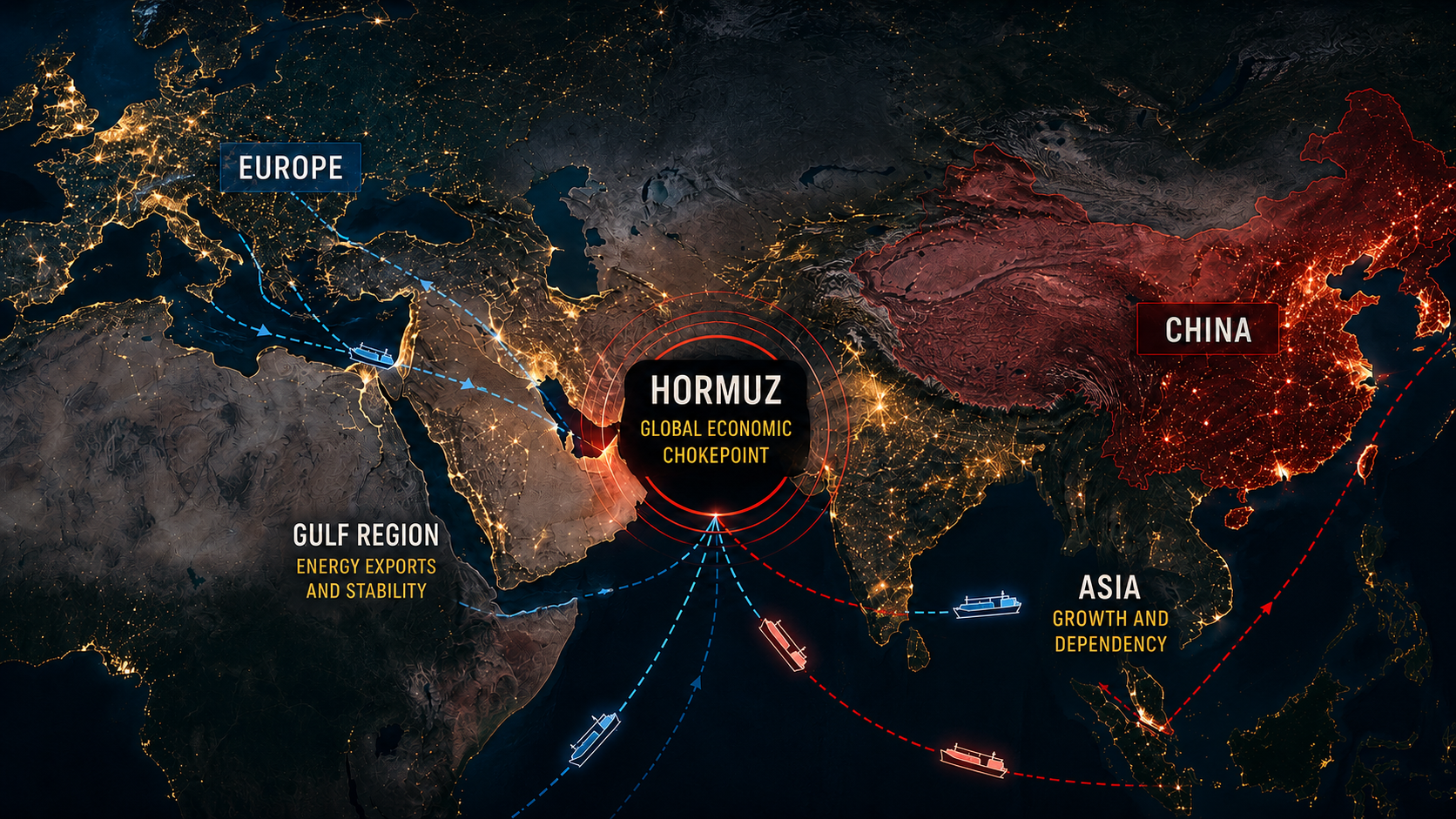
This Chokepoint Check assesses current pressure on the Strait of Hormuz, Bab al-Mandab and critical water, power, port and energy infrastructure across the Gulf region. The key question is not simply whether a route remains geographically open, but whether shipping, insurance, energy supply and business operations remain operationally viable.
On November 7, US aircraft damaged a commercial vessel in the Gulf of Oman that Washington said had attempted to breach the blockade of Iranian ports.
Iran also reports several tanker fires following alleged mine strikes. These claims have not been independently verified. The Gulf corridor remains exposed to significant military and commercial risk.
Houthi authorities reported at least 33 deaths following alleged Saudi airstrikes near Sanaa on November 7. Saudi Arabia is investigating the allegations.
The casualty figures and attribution remain independently unverified. No sufficiently confirmed new attack on commercial vessels directly in Bab al-Mandab has been identified.
Following an attempted attack on Riyadh, falling debris struck a Saudi Aramco administrative building. The Saudi Energy Ministry confirmed limited damage.
Air defences reported intercepting additional missiles. No injuries or fatalities were reported. No disruption to oil production has been confirmed.
CENTCOM confirmed on November 7 that US forces fired on and disabled a commercial vessel in the Gulf of Oman. According to US officials, the crew had repeatedly ignored warnings. UKMTO also reported an incident approximately 18 nautical miles east of Khor Fakkan.
The US military action is confirmed, although it was initially unclear whether both incident reports concerned the same vessel. Iran also claims that two tankers struck naval mines and a third caught fire. Reuters could not independently verify the Iranian claims.
Direct military enforcement of the blockade increases risks for commercial shipping in the Gulf of Oman. Operators must account for vessel interceptions, additional security checks and potential delays. The availability of insurance coverage for individual routes remains a critical operational factor.
Verification status: partially confirmed. The US military action and UKMTO incident are documented; Iranian mine-strike claims and a connection between the two incident reports remain independently unverified. Reuters, November 8, 2026 · SchaafMedia: Iran Check – 5 Escalation Signals from November 7, 2026
On November 8, falling debris damaged a Saudi Aramco administrative building in Riyadh. The Energy Ministry confirmed limited structural damage with no injuries or fatalities. Reuters observed broken windows across several floors.
The Saudi-led coalition reported intercepting cruise missiles and ballistic missiles across multiple regions. Alerts also covered the oil-producing Eastern Province, including Dammam, Dhahran and Abqaiq. No disruption to refinery operations or oil exports was confirmed.
The incident demonstrates that even intercepted projectiles can damage corporate facilities. Energy companies must review site security, employee access routes and emergency procedures. No production shutdown has been confirmed.
Verification status: confirmed. The Saudi Energy Ministry confirmed the building damage, while Reuters documented visible damage at the site. Reuters, November 8, 2026 · SchaafMedia: Middle East Escalation Check from November 6, 2026
On November 7, Iran’s Revolutionary Guards announced that the country’s self-imposed 2,000-kilometre range limit for ballistic missiles had been lifted. An IRGC spokesperson confirmed the policy decision. No new missiles with demonstrated longer-range capabilities were presented.
The announcement expands Iran’s declared deterrence posture towards the United States and Israel. However, it does not establish that Iran already possesses operational missiles with greater range. Despite its strategic significance, the signal therefore remains at 3/5.
The revised doctrine increases uncertainty over potential retaliation targets beyond the Gulf region. Military bases, airports and internationally connected business locations must consider wider threat scenarios. An actual expansion of operational missile range remains unverified.
Verification status: confirmed for the official removal of the self-imposed missile range restriction. New operational long-range capabilities remain unverified. Associated Press / Arab News, November 8, 2026 · SchaafMedia: Iran Check – 5 Escalation Signals from November 7, 2026
The US military announced the establishment of Task Force Iron Gate on November 7. Its mandate is to target weapons shipments, sanctioned goods and dual-use technologies transported overland or via the Caspian Sea.
The new task force extends the existing US maritime blockade to additional transport corridors. It is expected to coordinate with US government agencies and disrupt illicit financial flows. No figures have yet been released on shipments intercepted under the new initiative.
Sanctions enforcement and cargo monitoring are expanding to additional border crossings and trade routes. Companies should apply closer scrutiny to transit arrangements, suppliers and goods with potential military applications. Trade connections involving the Caspian region could also be affected.
Verification status: confirmed for the establishment and stated mandate of the US task force. New operational enforcement results have not yet been demonstrated. Reuters, November 7, 2026 · SchaafMedia: Middle East Escalation Check from November 6, 2026
On November 7, President Isaac Herzog announced that he would task Gadi Eisenkot with forming a government. Parties holding a combined 67 seats in the Knesset had recommended Eisenkot. The formal appointment was scheduled for November 8.
Netanyahu’s principal political rival will therefore receive the first opportunity to form a government. Eisenkot initially has 28 days to establish a coalition. This does not yet amount to a change of government or a shift in Israel’s Iran policy.
A change of government could alter Israeli policy towards Iran, Lebanon and the United States. For businesses, the implications would primarily concern regional security planning and investment certainty. No new military measures have resulted from the government formation process so far.
Verification status: confirmed for the president’s decision and party recommendations. Successful government formation remains uncertain. Office of the President of Israel, November 7, 2026 · SchaafMedia: Iran Check – 5 Escalation Signals from November 7, 2026
US forces strike a cargo vessel. Falling missile debris simultaneously damages an Aramco building.
Commercial shipping and air defences remain under pressure. The US expands its controls to land and Caspian transport routes.
Transit planning, security logistics and border clearance become more complex. No new large-scale production shutdown has been confirmed.
Energy trade, insurability and international supply chains remain exposed. Additional controls could increase transport costs.
US forces use military force to enforce the blockade against a commercial vessel. Iran reports further unverified mine strikes.
Direct military intervention threatens commercial transit · safe passage remains uncertainFalling missile debris damages a Saudi Aramco building. Additional missiles are intercepted.
Physical damage to corporate infrastructure confirmed · no new production or supply disruption establishedThe maritime blockade, new land-route controls, Iran’s missile doctrine and political developments in Israel are unfolding simultaneously.
Security, trade and political power structures are increasingly interconnected · comprehensive regional systemic disruption remains unconfirmedOverall risk remains high to critical (4/5). One maritime signal at 4/5 dominates following direct US intervention in commercial shipping. Three signals at 3/5 concern damage to the Aramco building, Iran’s revised missile doctrine and the expanded US blockade strategy. One signal at 2/5 concerns Israel’s government formation process. Diplomatic engagement continues but does not yet justify an operational all-clear.
Disclaimer: This assessment was prepared with support from our Geo AI. AI can make mistakes. This overview serves as a source-based radar for potential escalation signals and does not constitute fully verified intelligence, security, insurance or investment advice. In rapidly evolving situations, operational status, source availability and risk assessments may change at short notice.
Independent of the subject covered in this article, this separate Executive Briefing provides an in-depth analysis of another critical risk domain affecting European companies.
The 27-page Executive Briefing “Black Swan Risk Mapping for Europe’s Next Mobility and Infrastructure Shock” examines how geopolitical, infrastructural and administrative developments that are currently viewed in isolation could reinforce one another.
Based on the GFDD Framework™, the report shows how these dynamics could affect operational continuity, access to critical resources and the strategic resilience of companies.
The briefing includes a structured systemic-shock analysis and a directly applicable Business Exposure Checklist for CEOs, CFOs, COOs, investors and strategy teams.
You are currently viewing a placeholder content from X. To access the actual content, click the button below. Please note that doing so will share data with third-party providers.
More Information