Executive Intelligence. Industrial Risk. Geopolitics.
Strategic Sparring
for Decision-Makers
Risk intelligence across technology, law, markets and power dynamics.


Verdeckte Geschäftsrisiken, strategische Widersprüche und kritische Abhängigkeiten frühzeitig erkennen.
Kostenlose Analyse starten →
Verdeckte Machtstrukturen, Führungsrisiken und organisatorische Blockaden frühzeitig erkennen.
Kostenlose Analyse starten →
Geopolitische Risiken, globale Abhängigkeiten und kritische Lieferkettenrisiken frühzeitig erkennen.
Kostenlose Analyse starten →
Identify hidden business risks, strategic contradictions and critical dependencies at an early stage.
Start Free Analysis →
Identify hidden power structures, leadership risks and organizational blockers at an early stage.
Start Free Analysis →
Identify geopolitical risks, global dependencies and critical supply-chain vulnerabilities at an early stage.
Start Free Analysis →
Verdeckte Geschäftsrisiken, strategische Widersprüche und kritische Abhängigkeiten frühzeitig erkennen.
Kostenlose Analyse starten →
Verdeckte Machtstrukturen, Führungsrisiken und organisatorische Blockaden frühzeitig erkennen.
Kostenlose Analyse starten →
Geopolitische Risiken, globale Abhängigkeiten und kritische Lieferkettenrisiken frühzeitig erkennen.
Kostenlose Analyse starten →
Identify hidden business risks, strategic contradictions and critical dependencies at an early stage.
Start Free Analysis →
Identify hidden power structures, leadership risks and organizational blockers at an early stage.
Start Free Analysis →
Identify geopolitical risks, global dependencies and critical supply-chain vulnerabilities at an early stage.
Start Free Analysis →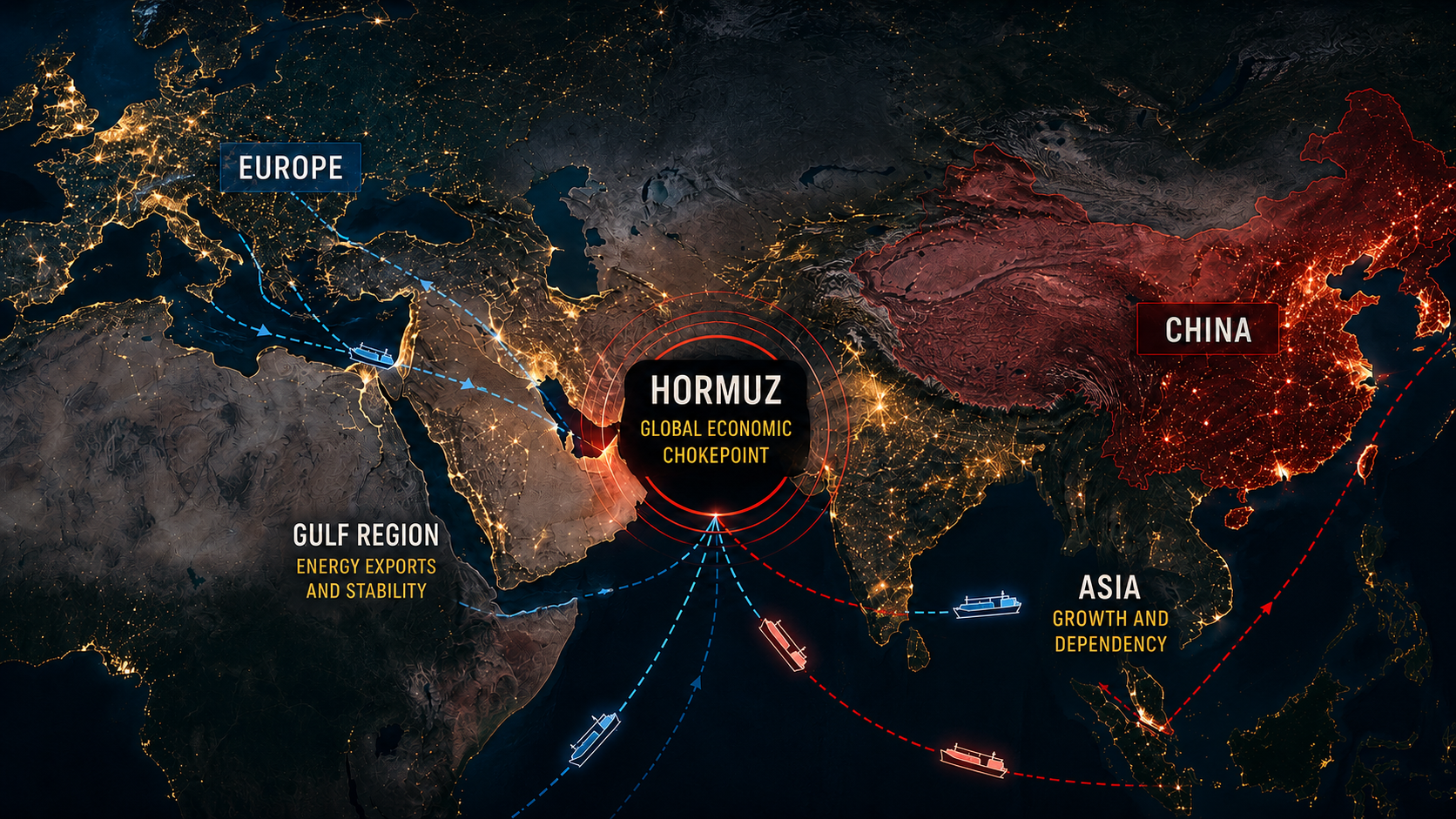
This Chokepoint Check assesses the current pressure on the Strait of Hormuz, Bab al-Mandab and critical water, power, port and energy infrastructure across the Gulf region. The key question is not merely whether a route remains geographically open, but whether transport, insurance, energy supply and site operations remain operationally viable.
Iran is significantly expanding its reported actions against commercial vessels, although the seven new cases have not yet been independently confirmed.
The IRGC Navy reported four vessels struck simultaneously during oil transfers, as well as three additional mine incidents west of Hormuz.
Fighting in Yemen is intensifying across several fronts, although no new confirmed attack directly affecting Bab al-Mandab was reported today.
No sufficiently confirmed new daily signal is available for the chokepoint itself. The surrounding military environment is nevertheless deteriorating significantly.
Saudi Arabia is now responding with direct operational protection measures to continued attacks against cities and energy infrastructure.
Aramco instructed employees to leave its Dhahran headquarters. On October 23, a ballistic missile heading toward Riyadh was also intercepted.
The IRGC Navy stated on October 22 that four vessels conducting ship-to-ship oil transfers had been struck simultaneously. Three additional vessels reportedly hit mines west of Hormuz.
Names, flags, owners and the extent of damage were not disclosed. No independent confirmation of the seven reported incidents is currently available.
The official expansion of Iran’s stated target set alone increases routing, insurance and crew risks for oil transfers in the Gulf.
Verification status: partially confirmed. The IRGC statement is confirmed, but the seven claimed vessel incidents have not yet been independently verified. gCaptain, October 22, 2026 · SchaafMedia: Iran Check – 5 Escalation Signals from October 22, 2026
Saudi Aramco instructed employees to leave its headquarters in Dhahran and temporarily work remotely.
The measure follows repeated attacks against Saudi energy and aviation infrastructure. No production outages were reported.
Evacuating a central corporate location represents a clear business-continuity measure and increases the relevance of remote-work and emergency plans.
Verification status: confirmed by several people familiar with the matter speaking to Reuters. Production operations continue. Reuters / Gulf Times, October 23, 2026 · SchaafMedia: Middle East Escalation Check from October 21, 2026
The Saudi-led coalition intercepted a ballistic missile heading toward Riyadh early on October 23, as well as two drones heading toward the southern region.
The attacks were intercepted and no major damage was reported. The continued launches nevertheless demonstrate sustained operational reach.
Repeated alerts disrupt travel, site and operational planning and increase corporate security costs.
Verification status: confirmed by the Saudi-led coalition. The missile and two UAVs were destroyed according to official statements. Arab News, October 23, 2026 · SchaafMedia: Iran Check – 5 Escalation Signals from October 22, 2026
Yemeni government forces reported 780 strikes within 24 hours on Houthi targets in Al-Jawf, Marib, Al-Bayda and other fronts.
The operation spans several northern, southern and western fronts. Claims that more than 500 fighters were neutralised have not yet been independently confirmed.
The high intensity of fighting increases risks for inland transport, supply corridors and personnel and could increase pressure on Aden and Red Sea logistics.
Verification status: partially confirmed. The operation was reported by Yemeni Armed Forces; its scale and casualty figures are not independently verified. Arab News, October 23, 2026 · SchaafMedia: Middle East Escalation Check from October 21, 2026
US and Israeli forces have reportedly developed plans for possible renewed strikes on Iran after the US midterm elections on November 3.
Military exercises and simulated attack routes over Iraq have intensified. A new strike, however, has neither been authorised nor carried out.
A renewed direct exchange of strikes could affect Iranian energy, nuclear and missile sites and trigger retaliation against Gulf infrastructure, shipping and regional airspace.
Verification status: partially confirmed. Military planning and exercises have been reported by multiple US and Israeli sources; no final decision to strike has been confirmed. Gulf News, October 23, 2026 · SchaafMedia: Iran Check – 5 Escalation Signals from October 22, 2026
Iran reports new vessel attacks, Saudi infrastructure remains under attack pressure and the US and Israel prepare possible new strikes on Iran.
Aramco evacuates its headquarters, air defence remains active and military forces increase preparation and protection measures.
Personnel, security resources and transport capacity are tied up by protection, diversion and military preparation measures.
War-risk, energy, logistics and site-continuity costs remain elevated and are highly sensitive to a possible renewed Israel-Iran exchange of strikes.
Repeated confirmed attacks from previous days are now accompanied by new Iranian reports of multiple vessel incidents.
Hormuz remains geographically passable · safe and predictable commercial use remains significantly constrainedAramco evacuates employees from its Dhahran headquarters, while Riyadh and southern Saudi Arabia remain under attack pressure.
Critical energy and corporate infrastructure now requires concrete operational protection and evacuation measuresMaritime uncertainty, energy infrastructure, Yemen fighting and new US-Israeli strike planning are unfolding in parallel.
Shipping, energy supply, site continuity and direct regional military confrontation remain systemically interconnectedOverall risk stands at high to critical. Two 4/5 signals dominate the operational picture: the evacuation of Aramco’s headquarters and the major intensification of the Yemen war. These are compounded by three 3/5 signals: the new Hormuz situation, renewed missile and drone pressure on Saudi Arabia, and concrete US-Israeli preparations for possible renewed strikes on Iran.
Disclaimer: This assessment was prepared with support from our Geo AI. AI can make mistakes. This analysis is intended as a source-based radar for potential escalation signals and does not constitute fully verified intelligence, security, insurance or investment advice. In fast-moving situations, status, source availability and risk assessments may change at short notice.
Independent of the subject covered in this article, this separate Executive Briefing provides an in-depth analysis of another critical risk domain affecting European companies.
The 27-page Executive Briefing “Black Swan Risk Mapping for Europe’s Next Mobility and Infrastructure Shock” examines how geopolitical, infrastructural and administrative developments that are currently viewed in isolation could reinforce one another.
Based on the GFDD Framework™, the report shows how these dynamics could affect operational continuity, access to critical resources and the strategic resilience of companies.
The briefing includes a structured systemic-shock analysis and a directly applicable Business Exposure Checklist for CEOs, CFOs, COOs, investors and strategy teams.
You are currently viewing a placeholder content from X. To access the actual content, click the button below. Please note that doing so will share data with third-party providers.
More Information