Executive Intelligence. Industrial Risk. Geopolitics.
Strategic Sparring
for Decision-Makers
Risk intelligence across technology, law, markets and power dynamics.

Verdeckte Geschäftsrisiken, strategische Widersprüche und kritische Abhängigkeiten frühzeitig erkennen.
Kostenlose Analyse starten →
Verdeckte Machtstrukturen, Führungsrisiken und organisatorische Blockaden frühzeitig erkennen.
Kostenlose Analyse starten →
Geopolitische Risiken, globale Abhängigkeiten und kritische Lieferkettenrisiken frühzeitig erkennen.
Kostenlose Analyse starten →
Identify hidden business risks, strategic contradictions and critical dependencies at an early stage.
Start Free Analysis →
Identify hidden power structures, leadership risks and organizational blockers at an early stage.
Start Free Analysis →
Identify geopolitical risks, global dependencies and critical supply-chain vulnerabilities at an early stage.
Start Free Analysis →
Verdeckte Geschäftsrisiken, strategische Widersprüche und kritische Abhängigkeiten frühzeitig erkennen.
Kostenlose Analyse starten →
Verdeckte Machtstrukturen, Führungsrisiken und organisatorische Blockaden frühzeitig erkennen.
Kostenlose Analyse starten →
Geopolitische Risiken, globale Abhängigkeiten und kritische Lieferkettenrisiken frühzeitig erkennen.
Kostenlose Analyse starten →
Identify hidden business risks, strategic contradictions and critical dependencies at an early stage.
Start Free Analysis →
Identify hidden power structures, leadership risks and organizational blockers at an early stage.
Start Free Analysis →
Identify geopolitical risks, global dependencies and critical supply-chain vulnerabilities at an early stage.
Start Free Analysis →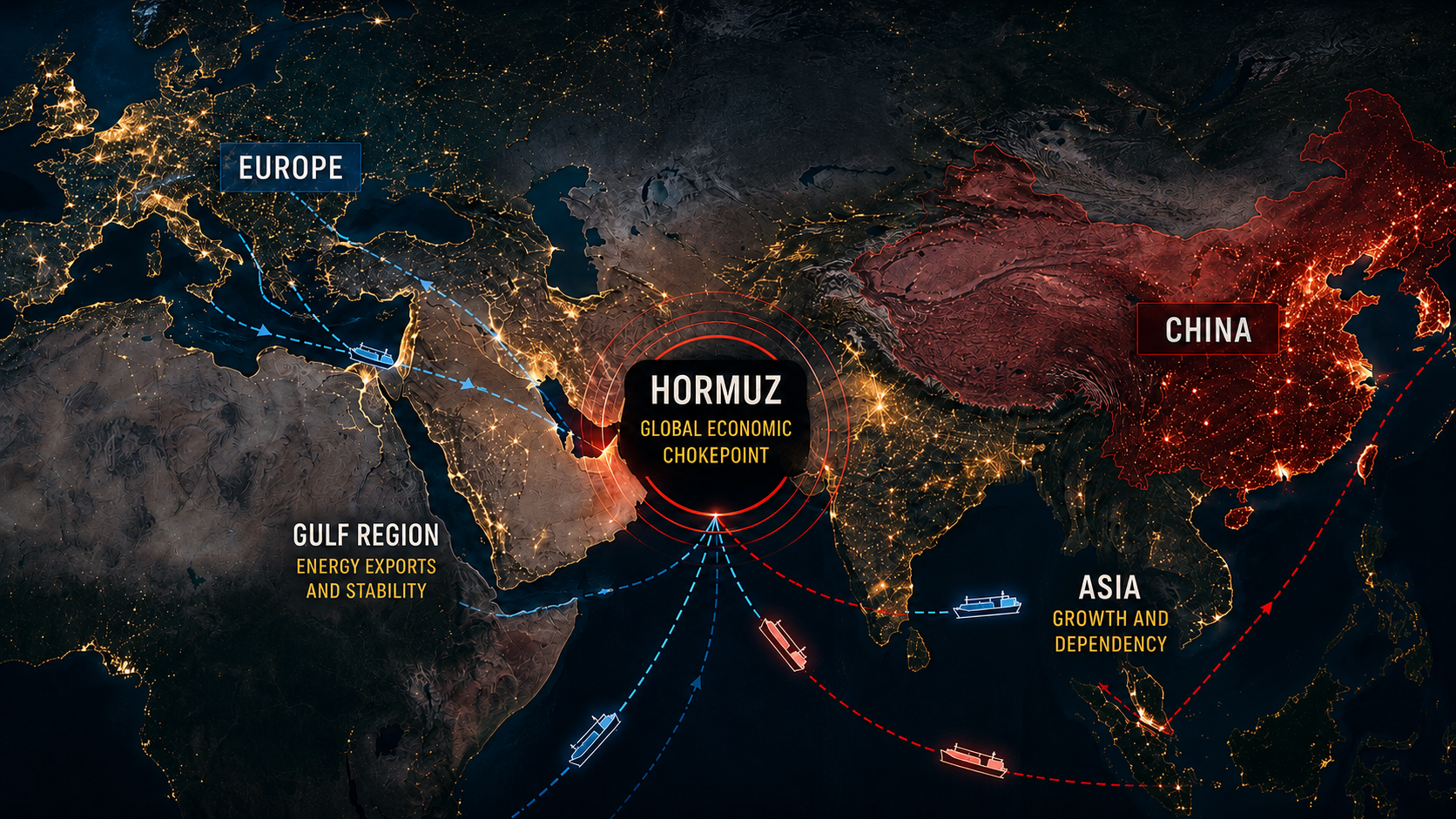
This Chokepoint Check assesses the current pressure on the Strait of Hormuz, Bab al-Mandab and critical water, power, port and energy infrastructure across the Gulf region. The key question is not merely whether a route remains geographically open, but whether transport, insurance, energy supply and site operations remain operationally viable.
The operational situation remains critical while the most significant current diplomatic reopening effort has stalled.
US President Trump said he was rejecting the Iranian proposal to reopen the strait. Tehran nevertheless continues to support negotiations.
No sufficiently confirmed new daily transit signal is available for September 26/27.
Operational risk remains high, however, as Houthi attacks against Saudi Arabia continue and the military confrontation persists.
The threat to Saudi cities, military sites and energy infrastructure remains immediate.
The Saudi-led coalition reported on September 26 the interception of two ballistic missiles and two drones.
Trump said over the weekend that he was rejecting Iran’s proposal to reopen Hormuz and pause the fighting.
This temporarily blocks the most concrete current political reopening path for the strait.
Companies cannot plan for normalised Hormuz transit or lower security costs in the near term.
Verification status: confirmed. Trump publicly stated his rejection; according to Iran, a formal response through mediators was still outstanding. Reuters, September 27, 2026 · SchaafMedia: Iran Check – 5 Escalation Signals from September 26, 2026
The Saudi-led coalition reported on September 26 two ballistic missiles and two Houthi drones.
According to the coalition, the missiles targeted Khamis Mushait, while the drones were directed toward the Saudi capital Riyadh.
Site, aviation and business-continuity risks remain elevated beyond the immediate Red Sea zone.
Verification status: confirmed for the Saudi interception report. No independent information on possible target damage is available. Reuters, September 26, 2026 · SchaafMedia: Middle East Escalation Check from September 25, 2026
The military chiefs of the three states agreed to deepen intelligence-sharing, coordination and capability cooperation.
The partners intend to translate the commitments under the Makkah Joint Defence Agreement directly into cooperation.
Saudi Arabia’s defence gains additional institutional depth. At the same time, the risk of wider regional involvement increases.
Verification status: confirmed. Military coordination, intelligence-sharing and capability integration were agreed; no new troop deployments were confirmed. Dawn, September 27, 2026 · SchaafMedia: Middle East Escalation Check from September 25, 2026
Foreign Minister Araqchi said Iran was still waiting for the official US position through mediators.
Tehran is keeping the door open to a negotiated deal, while maintaining its existing conditions.
A diplomatic exit remains possible, but it does not yet provide a reliable planning basis for shipping operations.
Verification status: confirmed. Qatar remains a mediation channel; no accepted or implemented reopening deal is in place. Reuters / The Business Standard, September 27, 2026 · SchaafMedia: Iran Check – 5 Escalation Signals from September 26, 2026
For Bab al-Mandab, Yanbu and the East-West Pipeline, no new sufficiently verified daily signal was identified in the current research window.
The high background risk remains in place, but is not being artificially upgraded into a new development today.
Existing protection, insurance and alternative-routing measures remain operationally necessary.
Verification status: no sufficiently confirmed new daily signal. The assessment therefore remains limited to ongoing background risk. Reuters / Taipei Times, September 27, 2026 · SchaafMedia: Middle East Escalation Check from September 25, 2026
Hormuz remains politically and operationally constrained, while Houthi attacks on Saudi Arabia continue.
Saudi Arabia strengthens intelligence-sharing, coordination and joint defence with Pakistan and Türkiye.
Without a Hormuz agreement, alternative logistics, military protection and elevated security costs remain necessary.
Energy and supply-chain risks remain elevated even though diplomatic channels remain open.
There is still no agreed political reopening mechanism for Hormuz.
Route formally open · safe and predictable commercial use has not been restoredNew Houthi missiles and drones are again targeting Saudi territory.
Critical sites and transport corridors remain exposed to immediate missile and drone riskChokepoint disruption, Houthi attacks and operational alliance integration are occurring simultaneously.
Maritime, military and alliance-related risks remain systemically interconnectedOverall risk remains critical. Compared with September 25, the focus is shifting from logistical bottlenecks toward political deadlock and alliance activation. The Hormuz deal is temporarily stalled, while Saudi Arabia’s partners are making their defence commitments more operational. At the same time, the diplomatic channel remains open.
Disclaimer: This assessment was prepared with support from our Geo AI. AI can make mistakes. This analysis is intended as a source-based radar for potential escalation signals and does not constitute fully verified intelligence, security, insurance or investment advice. In fast-moving situations, status, source availability and risk assessments may change at short notice.
Independent of the subject covered in this article, this separate Executive Briefing provides an in-depth analysis of another critical risk domain affecting European companies.
The 27-page Executive Briefing “Black Swan Risk Mapping for Europe’s Next Mobility and Infrastructure Shock” examines how geopolitical, infrastructural and administrative developments that are currently viewed in isolation could reinforce one another.
Based on the GFDD Framework™, the report shows how these dynamics could affect operational continuity, access to critical resources and the strategic resilience of companies.
The briefing includes a structured systemic-shock analysis and a directly applicable Business Exposure Checklist for CEOs, CFOs, COOs, investors and strategy teams.
You are currently viewing a placeholder content from X. To access the actual content, click the button below. Please note that doing so will share data with third-party providers.
More Information