Executive Intelligence. Industrial Risk. Geopolitics.
Strategic Sparring
for Decision-Makers
Risk intelligence across technology, law, markets and power dynamics.


Verdeckte Geschäftsrisiken, strategische Widersprüche und kritische Abhängigkeiten frühzeitig erkennen.
Kostenlose Analyse starten →
Verdeckte Machtstrukturen, Führungsrisiken und organisatorische Blockaden frühzeitig erkennen.
Kostenlose Analyse starten →
Geopolitische Risiken, globale Abhängigkeiten und kritische Lieferkettenrisiken frühzeitig erkennen.
Kostenlose Analyse starten →
Identify hidden business risks, strategic contradictions and critical dependencies at an early stage.
Start Free Analysis →
Identify hidden power structures, leadership risks and organizational blockers at an early stage.
Start Free Analysis →
Identify geopolitical risks, global dependencies and critical supply-chain vulnerabilities at an early stage.
Start Free Analysis →
Verdeckte Geschäftsrisiken, strategische Widersprüche und kritische Abhängigkeiten frühzeitig erkennen.
Kostenlose Analyse starten →
Verdeckte Machtstrukturen, Führungsrisiken und organisatorische Blockaden frühzeitig erkennen.
Kostenlose Analyse starten →
Geopolitische Risiken, globale Abhängigkeiten und kritische Lieferkettenrisiken frühzeitig erkennen.
Kostenlose Analyse starten →
Identify hidden business risks, strategic contradictions and critical dependencies at an early stage.
Start Free Analysis →
Identify hidden power structures, leadership risks and organizational blockers at an early stage.
Start Free Analysis →
Identify geopolitical risks, global dependencies and critical supply-chain vulnerabilities at an early stage.
Start Free Analysis →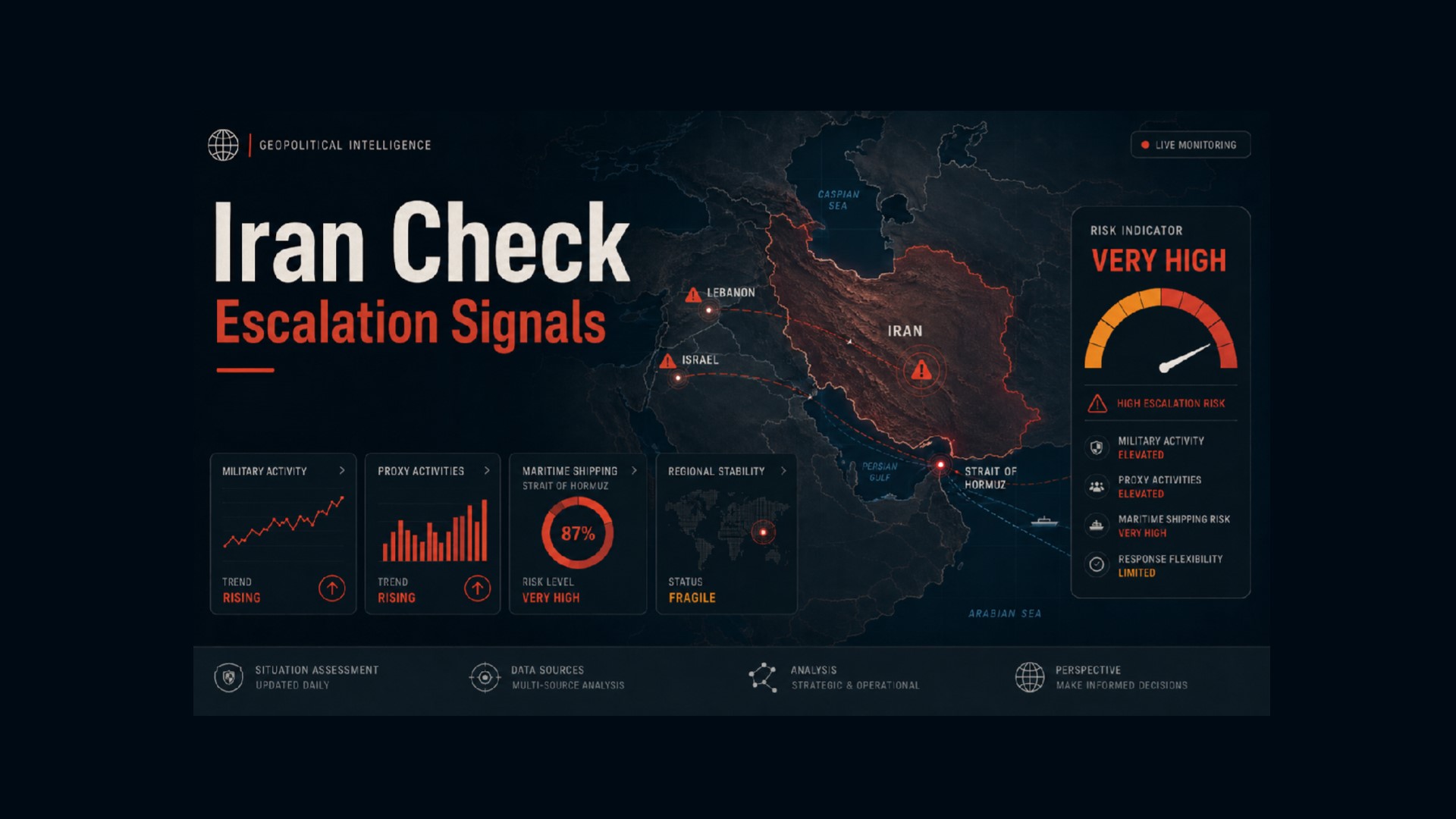
This escalation radar summarizes five relevant signals as of September 28, 2026. The focus is on verifiable statements by official sources, confirmed events and monitoring data with potential implications for energy prices, supply chains, markets, maritime security, aviation and regional stability.
Washington does not accept Iran’s seven-day proposal. Trump nevertheless expects further talks this week. Brent has risen back above $105 per barrel.
Regional crude exports rise to 12.8 million barrels per day in September. Around 7.4 million barrels per day are now reportedly moving through Hormuz. The route remains disrupted but shows a clear operational recovery for the first time.
Foreign Minister Faisal bin Farhan meets Marco Rubio. The United States continues to reject direct strikes on the Houthis, but is providing Riyadh with intelligence and targeting information.
| Actor | Type | Severity | Status | Source / Verification | Business Impact |
|---|---|---|---|---|---|
| Iran / United States / Qatar / Hormuz | U.S. rejects Iranian Hormuz plan – further talks remain possible | Critical · Level 5/5 | The diplomatic situation remains contradictory. President Trump rejects Iran’s proposal to reopen Hormuz and end the fighting. At the same time, he says further talks with Iran are expected this week. Foreign Minister Araghchi maintains Iran’s conditions and continues to describe diplomacy as the only way forward. Qatar continues to mediate. Brent rises again above $105 per barrel on September 28. Power dynamics: Both sides are maintaining their core leverage without fully closing the negotiating channel. | Current negotiation situation: Reuters, September 28, 2026 . Verification status: confirmed for the U.S. rejection, the expected further talks and Iran’s continuing conditions. No new agreement or ceasefire has been confirmed. Further analysis: Schaaf Media · Strait of Hormuz Blockade 2026: Protecting Margins and Supply Chains in the Chokepoint Shock . | Critical business impact on oil, LNG, inflation, tanker logistics, freight rates and marine insurance. The open negotiating window limits escalation risk, but does not eliminate elevated risk premiums. |
| Iran / Saudi Arabia / UAE / Hormuz / oil market | Oil flows through Hormuz recover – exports reach wartime high | High to Critical · Level 4/5 | Operationally, a clear counter-movement to the blockade is emerging for the first time. Crude exports from major Middle Eastern producers rise in September to 12.8 million barrels per day. This is the highest level since the Iran war began in February. Around 7.4 million barrels per day are reportedly being exported through Hormuz on a monthly average basis. In the past week alone, 19 large crude tankers, each carrying around two million barrels of Saudi oil, passed through the strait. Power dynamics: Hormuz remains politically contested, but economically a limited operational adjustment is taking place. | Confirmed by Reuters, September 28, 2026 . Verification status: confirmed for export volumes, Hormuz flows and tanker movements. Volumes remain well below pre-war levels. Background: Schaaf Media · Oil as a Power Instrument: Why Energy Dominates Geopolitics and Markets in 2026 . | High to critical business impact on oil supply, refineries, tankers, freight rates and inflation. Higher actual export volumes ease physical supply risk, while political uncertainty keeps price and insurance risks elevated. |
| Saudi Arabia / United States / Houthis / Iran / Washington | Saudi foreign minister travels to Washington over Houthi escalation | High to Critical · Level 4/5 | Saudi Arabia is increasing diplomatic pressure on Washington. Foreign Minister Faisal bin Farhan meets U.S. Secretary of State Marco Rubio on September 28. The backdrop is the increasing number of Houthi attacks on Saudi Arabia. Crown Prince Mohammed bin Salman had already requested direct U.S. military support. Washington rejected direct U.S. strikes on the Houthis, but agreed to provide Riyadh with intelligence and targeting support. Power dynamics: The United States is attempting to support Saudi Arabia militarily without opening a new Yemen front itself. | Confirmed by Business Recorder / Reuters, September 28, 2026 . Verification status: confirmed for the meeting, the Saudi request for support and U.S. willingness to provide intelligence and targeting assistance. Direct U.S. strikes against the Houthis have not been approved. Background: Schaaf Media · Middle East Escalation Check – September 27, 2026 . | High to critical business impact on Saudi Arabia, energy infrastructure, military logistics, aviation and insurability. Greater U.S. support improves Saudi situational awareness, but also increases the risk of deeper U.S. involvement. |
| Saudi Arabia / Houthis / Yemen / Taiz | Saudi-Houthi war escalates with major airstrikes across several provinces | Critical · Level 5/5 | The Yemen front is intensifying further. The Houthis say Saudi F-15s carried out 26 airstrikes across five provinces within 24 hours. The affected areas reportedly include Taiz, Al-Jawf, Marib, Dhamar and Saada. In Taiz, Houthi sources report dozens of casualties following strikes near a market. The internationally recognized government says instead that military Houthi targets and vehicles were attacked. Power dynamics: The conflict is again developing into an intensive direct air and ground war. | Current regional reporting: Malay Mail / AFP, September 28, 2026 . Verification status: partially confirmed. A significant intensification of the fighting is confirmed. Strike numbers and casualty figures are partly based on statements by the conflict parties and are not fully independently verified. Background: Schaaf Media · Iran’s Proxies: The Hidden Escalation Map of the Middle East . | Critical business impact on Yemen, Bab el-Mandeb, Saudi Arabia, land logistics, shipping and humanitarian supply. Further escalation ties up Saudi military resources and increases risks along the Red Sea route. |
| UAE / Iran / Gulf states / civil aviation | Gulf flight disruptions continue despite diplomatic contacts | High · Level 3/5 | Civil aviation remains operationally disrupted. UAE airlines report on September 28 further delays, rerouting and individual cancellations. Emirates and Etihad continue operating most of their services. Flydubai and Air Arabia, however, cancel selected regional flights. The disruption follows a weekend with additional cancellations in Dubai, Abu Dhabi and Sharjah. Power dynamics: Despite diplomatic contacts, commercial normalization of Gulf airspace remains fragile. | Current operational situation: Gulf News, September 28, 2026 . Verification status: confirmed for delays, rerouting and individual flight cancellations. There is no comprehensive closure of UAE airspace. The EASA warning situation remains unchanged. Further analysis: Schaaf Media · Iran Check: 5 Escalation Signals – September 26, 2026 . | High business impact on business travel, cargo, airports, connecting flights and delivery times. Repeated short-notice schedule changes increase costs and reduce planning certainty. |
The most important political development on September 28, 2026 is the contradictory U.S.-Iran diplomatic situation. Trump rejects Tehran’s Hormuz proposal, but already expects further talks this week. Iran is maintaining its conditions. Brent is simultaneously back above $105. A credible breakthrough is therefore not yet visible.
Operationally, Hormuz is showing clearer relief for the first time. Regional crude exports have risen to their highest level since the start of the war. Around 7.4 million barrels per day are now reportedly moving through Hormuz again. This reduces physical supply risk, but does not end the political blockade logic.
At the same time, military escalation is shifting more strongly toward Saudi Arabia and Yemen. Riyadh is seeking additional support in Washington, while the United States is avoiding direct strikes and instead providing intelligence and targeting information. In parallel, air and ground operations in Yemen are intensifying significantly.
Civil aviation also remains vulnerable to disruption. In the UAE, delays and individual cancellations continue. The mandatory alliance review shows no new Iranian membership, partner or observer status as of September 28. Existing EASA CZIBs remain active until September 30, 2026; no new revision was published on September 28.
The five most important signals for a European risk assessment are: the U.S. rejection of Iran’s Hormuz plan while the negotiating channel remains open, the significant operational recovery of oil flows through the Strait of Hormuz, deeper U.S.-Saudi security coordination against the Houthi threat, the major intensification of Saudi-Houthi fighting in Yemen, and continued disruption to civil aviation across the Gulf region.
Note: This assessment was prepared with support from our Geo-AI. AI can make mistakes. The analysis is intended as a radar for potential escalation signals and does not replace a fully verified intelligence assessment.
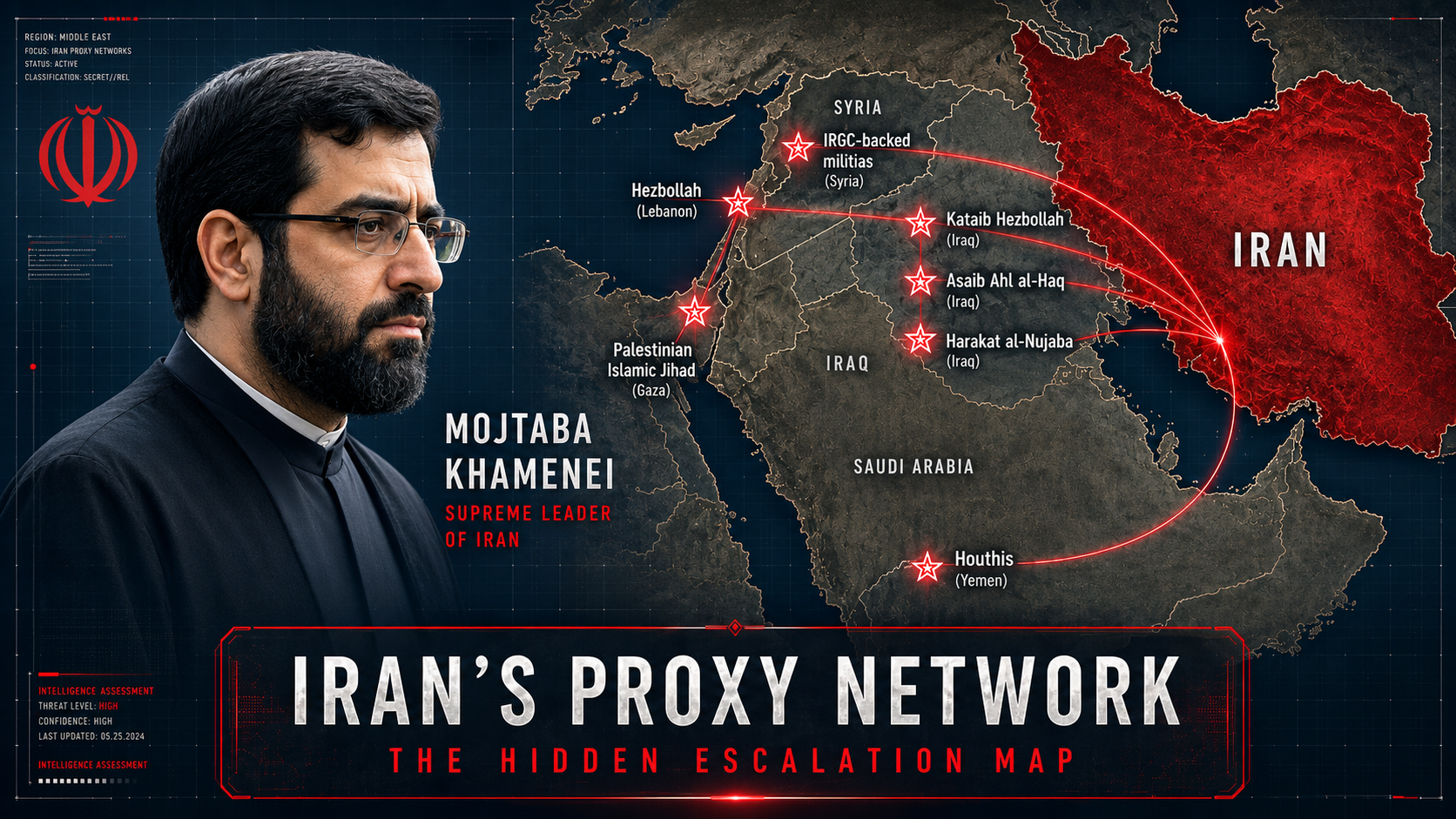
What decision-makers should watch now — before proxy escalation becomes a cost, compliance or supply-chain shock.
This 17-page executive briefing translates Iran’s proxy network into concrete business risks: energy price exposure, maritime chokepoints, war-risk premiums, sanctions, shadow fleets, supply-chain disruption and early-warning indicators for board-level decisions.
You are currently viewing a placeholder content from X. To access the actual content, click the button below. Please note that doing so will share data with third-party providers.
More Information