Executive Intelligence. Industrial Risk. Geopolitics.
Strategic Sparring
for Decision-Makers
Risk intelligence across technology, law, markets and power dynamics.


Verdeckte Geschäftsrisiken, strategische Widersprüche und kritische Abhängigkeiten frühzeitig erkennen.
Kostenlose Analyse starten →
Verdeckte Machtstrukturen, Führungsrisiken und organisatorische Blockaden frühzeitig erkennen.
Kostenlose Analyse starten →
Geopolitische Risiken, globale Abhängigkeiten und kritische Lieferkettenrisiken frühzeitig erkennen.
Kostenlose Analyse starten →
Identify hidden business risks, strategic contradictions and critical dependencies at an early stage.
Start Free Analysis →
Identify hidden power structures, leadership risks and organizational blockers at an early stage.
Start Free Analysis →
Identify geopolitical risks, global dependencies and critical supply-chain vulnerabilities at an early stage.
Start Free Analysis →
Verdeckte Geschäftsrisiken, strategische Widersprüche und kritische Abhängigkeiten frühzeitig erkennen.
Kostenlose Analyse starten →
Verdeckte Machtstrukturen, Führungsrisiken und organisatorische Blockaden frühzeitig erkennen.
Kostenlose Analyse starten →
Geopolitische Risiken, globale Abhängigkeiten und kritische Lieferkettenrisiken frühzeitig erkennen.
Kostenlose Analyse starten →
Identify hidden business risks, strategic contradictions and critical dependencies at an early stage.
Start Free Analysis →
Identify hidden power structures, leadership risks and organizational blockers at an early stage.
Start Free Analysis →
Identify geopolitical risks, global dependencies and critical supply-chain vulnerabilities at an early stage.
Start Free Analysis →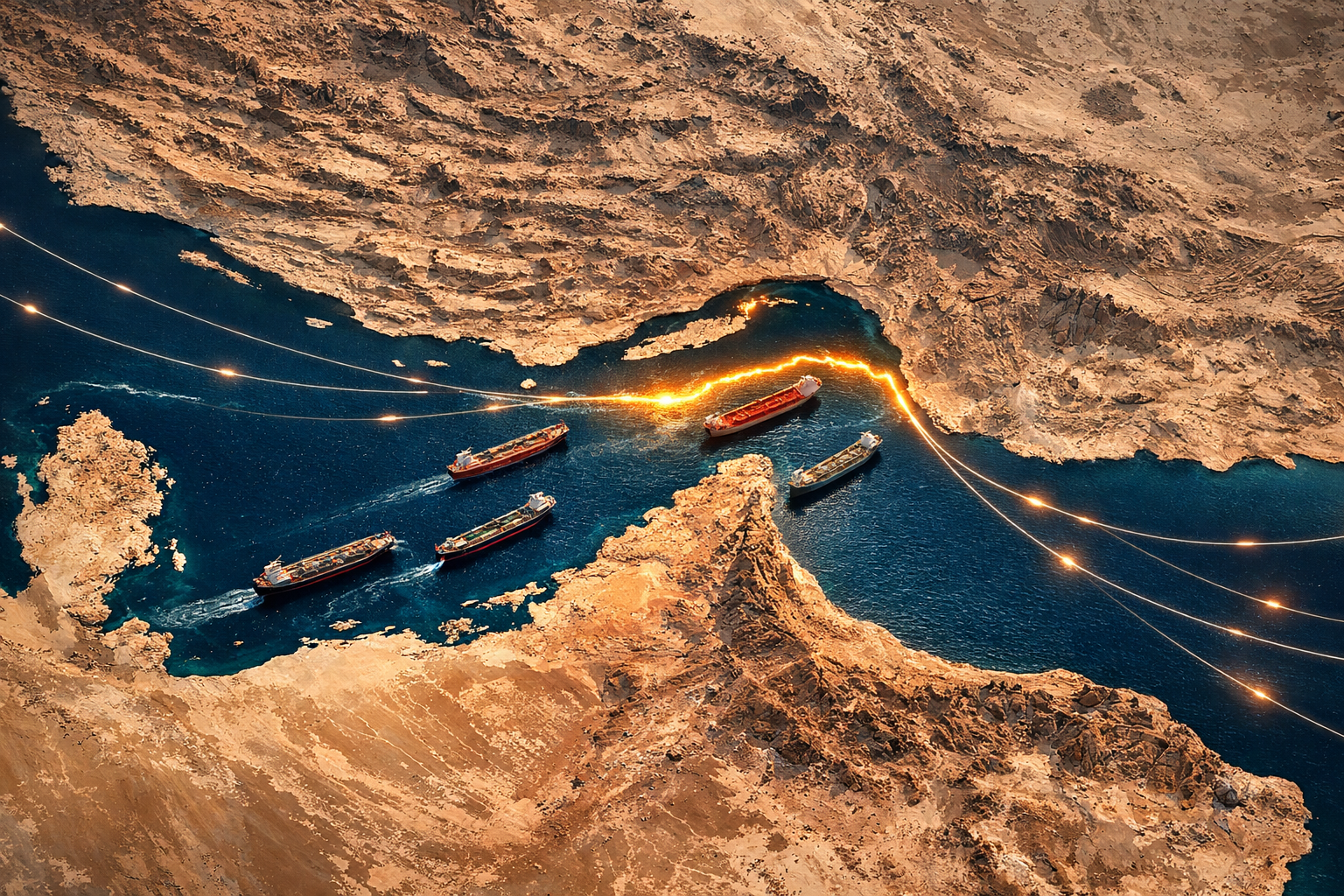
January 11, 2026
Anyone following the current headlines on Ukraine, Venezuela, Greenland, Iran, sanctions and tariffs may perceive an increasingly chaotic geopolitical environment.
Individual events appear to exist alongside one another without any clear connection, driven by escalation, political rhetoric and short-term policy decisions.
This analysis deliberately begins one level deeper.
For broader context on current geopolitical and energy developments, see Reuters: Global Geopolitics and Energy.
The central thesis is:
In 2026, oil is no longer an ordinary commodity. It has become a strategic instrument of power.
For background on the role of energy as a geopolitical lever, see the U.S. Energy Information Administration: Energy and Geopolitics.
The decisive factor is not the oil price itself. What matters is control over production, transportation, insurance, financing and political protection.
Those who can influence these layers can also influence markets, governments and their political room for manoeuvre.
Public discussion usually reduces oil to a single number: the price per barrel.
For geopolitical actors, however, another factor is far more important.
Oil is a system asset consisting of several interconnected layers:
As soon as one of these layers comes under pressure, markets begin to react, often long before any physical supply disruption occurs.
This can be observed, for example, in rising war-risk insurance premiums in the Gulf region, as documented by Reuters: Middle East War-Risk Insurance.
The Middle East is not primarily a religious or cultural epicentre of global politics. It is a critical energy junction.
At the centre of this system is the Strait of Hormuz, described by the U.S. Energy Information Administration as a critical energy chokepoint.
The narrow waterway carries:
The critical point is that the expectation of disruption alone can change prices, insurance premiums and transportation costs.
A formal blockade is not required.
The strategic term for this type of location is chokepoint.
A chokepoint is a narrow passage that cannot easily be bypassed and whose disruption creates disproportionately large consequences.
Hormuz is a classic example, as discussed in the EIA analysis of global oil chokepoints.
At first glance, the events of recent months may appear unrelated:
From a strategic perspective, however, these developments can be interpreted as elements of a common pattern.
For a comparative overview of current crises, see Reuters: Geopolitical Risk Overview.
The underlying pattern is:
Power projection across the global energy architecture.
This does not require the existence of a single master plan.
It is better understood as a portfolio logic:
For background on Venezuela’s oil reserves, see the EIA Country Analysis for Venezuela.
Venezuela possesses the world’s largest proven oil reserves.
Political changes in the country influence markets less through current production volumes than through future expectations regarding supply and investment.
Markets react to the question of who will gain access to these reserves in the future, not simply to today’s export figures.
For context on the Arctic and emerging shipping routes, see Reuters: Arctic Shipping Routes.
Greenland is less about the immediate extraction of oil or natural gas and more about control over routes and infrastructure.
As climate change extends ice-free periods across Arctic waters, new shipping routes become increasingly economically viable.
States with a strong presence in the region may gain influence over future energy and transportation corridors between North America, Europe and Asia.
For current risk analysis concerning Iran and the Strait of Hormuz, see Reuters: Iran and Gulf Tensions.
Iran sits indirectly at the world’s most important energy bottleneck.
Political instability, threats or limited military operations may be sufficient to create a global energy-risk premium with consequences across international markets.
A common analytical mistake is to assume that prices move only after actual supply disruptions occur.
In reality, the opposite is often true:
This entire chain can unfold without a single tanker being destroyed or a port being closed.
Historical and current examples can be found in Reuters reporting on commodity markets and geopolitical risk.
Europe is one of the world’s largest energy importers and is particularly vulnerable to geopolitical energy-risk premiums.
The consequences include:
Europe therefore operates less as an independent strategic actor and more as a buffer zone within global energy and power conflicts.
For analysis of the relationship between energy imports, inflation and European economic policy, see the European Central Bank Research Bulletin.
The central insight is clear:
Energy flows, rather than tank movements alone, determine power, stability and political room for manoeuvre.
Oil acts as an amplifier:
Those who analyse current events in isolation will miss this connection.
Those who understand oil as a strategic power asset can see why the Middle East overshadows almost every other geopolitical issue in 2026, even when no formal war has been declared.
Energy markets are heavily influenced by expectations.
Insurers, logistics providers and financial institutions price in potential risks in advance to reduce possible losses.
This precaution is immediately reflected in prices.
For further market context, see Reuters: Market Pricing of Geopolitical Risk.
Individual oil fields can sometimes be replaced or their output compensated for elsewhere.
A chokepoint such as the Strait of Hormuz is far more difficult to replace.
A disruption would simultaneously affect numerous producing countries and importing markets.
For background information, see the EIA analysis of the Strait of Hormuz.
In the short term, they do.
Over the longer term, however, Western governments attempt to reduce export revenues and profit margins through sanctions as well as transportation, financing and insurance restrictions.
For related reporting, see Reuters: Sanctions and Oil Trade.
Europe imports most of the energy it consumes.
Higher geopolitical risk premiums therefore affect inflation, industrial competitiveness and political stability directly.
For further analysis, see the European Central Bank: Energy Prices and Inflation.
No.
The focus of this article is on geopolitical power structures and the ways in which they may affect individual asset classes.
It does not constitute investment or financial advice.
Readers who would like to explore individual aspects of this analysis in greater depth may find the following related articles useful.
These internal links provide additional context and allow readers to examine each strategic issue independently.
The assessments in this article are based on publicly available analyses and reporting from established institutions and media organisations.
The following sources provide important background information.
https://www.reuters.com/markets/commodities
Energy geopolitics and chokepoints, including the Strait of Hormuz:
https://www.eia.gov/todayinenergy/detail.php?id=65504
https://www.eia.gov/todayinenergy/detail.php?id=45536
Venezuela’s oil reserves and production structure:
https://www.eia.gov/international/analysis/country/VEN
https://www.reuters.com/world/middle-east
Energy prices, inflation and their economic impact on Europe:
https://www.ecb.europa.eu/pub/economic-research/resbull/html/index.en.html
These sources provide context for geopolitical and economic developments. They do not replace an individual risk assessment or investment analysis.
Notice: This article is intended to provide geopolitical and economic analysis. It does not constitute investment or financial advice.
Author of Global Insight Group Intelligence:
Michaela Schaaf-Hoffelner has more than 35 years of experience in strategic and technical project and product management, particularly in IT, control systems and intralogistics. Through her long-standing work with complex systems, she identifies structural risks and dynamic misalignments at an early stage – risks that are often overlooked in conventional analysis.
Her focus is on making causal relationships and systemic dependencies visible and translating them into concrete strategic advantages for investors and decision-makers. Her analyses combine deep technical systems understanding with geopolitical and economic developments.
GFDD Framework™ and GFDD Diagnostics™ are proprietary analytical concepts developed by Michaela Schaaf-Hoffelner. © 2026 Global Insight Group LLC. All rights reserved.
You are currently viewing a placeholder content from X. To access the actual content, click the button below. Please note that doing so will share data with third-party providers.
More Information