Executive Intelligence. Industrial Risk. Geopolitics.
Strategic Sparring
for Decision-Makers
Risk intelligence across technology, law, markets and power dynamics.


Verdeckte Geschäftsrisiken, strategische Widersprüche und kritische Abhängigkeiten frühzeitig erkennen.
Kostenlose Analyse starten →
Verdeckte Machtstrukturen, Führungsrisiken und organisatorische Blockaden frühzeitig erkennen.
Kostenlose Analyse starten →
Geopolitische Risiken, globale Abhängigkeiten und kritische Lieferkettenrisiken frühzeitig erkennen.
Kostenlose Analyse starten →
Identify hidden business risks, strategic contradictions and critical dependencies at an early stage.
Start Free Analysis →
Identify hidden power structures, leadership risks and organizational blockers at an early stage.
Start Free Analysis →
Identify geopolitical risks, global dependencies and critical supply-chain vulnerabilities at an early stage.
Start Free Analysis →
Verdeckte Geschäftsrisiken, strategische Widersprüche und kritische Abhängigkeiten frühzeitig erkennen.
Kostenlose Analyse starten →
Verdeckte Machtstrukturen, Führungsrisiken und organisatorische Blockaden frühzeitig erkennen.
Kostenlose Analyse starten →
Geopolitische Risiken, globale Abhängigkeiten und kritische Lieferkettenrisiken frühzeitig erkennen.
Kostenlose Analyse starten →
Identify hidden business risks, strategic contradictions and critical dependencies at an early stage.
Start Free Analysis →
Identify hidden power structures, leadership risks and organizational blockers at an early stage.
Start Free Analysis →
Identify geopolitical risks, global dependencies and critical supply-chain vulnerabilities at an early stage.
Start Free Analysis →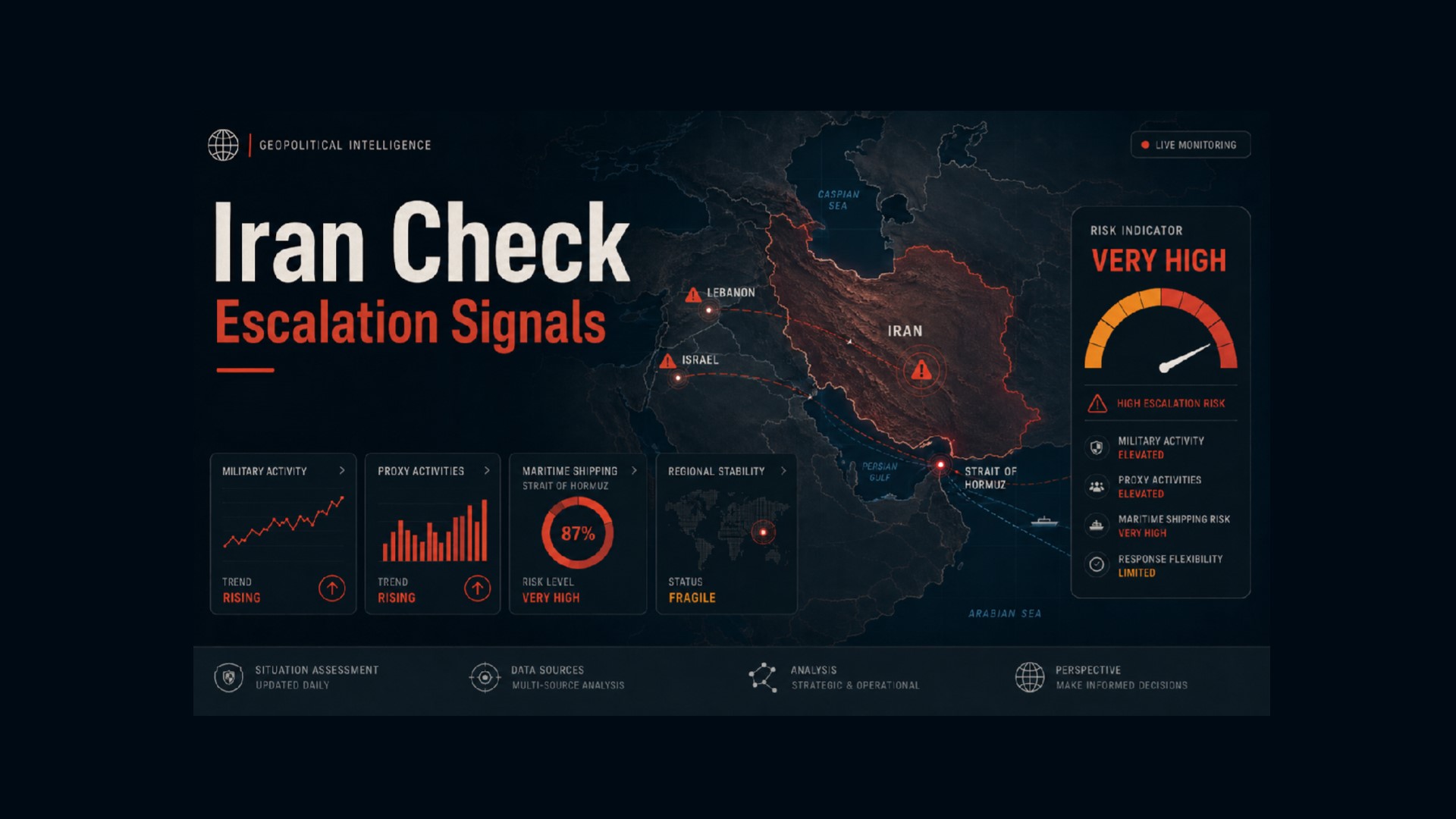
This escalation radar summarizes five relevant signals as of October 20, 2026. The focus is on verifiable statements by official sources, confirmed events and monitoring data with potential implications for energy prices, supply chains, markets, maritime security, aviation and regional stability.
Pete Hegseth makes an unannounced visit to Israel and discusses Iran with Netanyahu. The meeting takes place despite both governments publicly announcing a temporary pause in new strikes.
A military camp in the energy-rich province of Shabwa is hit by ballistic missiles. More than 200 people are injured.
The Future Investment Initiative is postponed to 2027, more than 45 percent of Saudi departures have been cancelled since October 8, and Brent temporarily rises above $111.
| Actor | Type | Severity | Status | Source / Verification | Business Impact |
|---|---|---|---|---|---|
| United States / Israel / Iran | Hegseth meets Netanyahu in unannounced talks on Iran | Critical · Level 5/5 | Military coordination between Washington and Israel remains closer than the public de-escalation rhetoric suggests. U.S. Defense Secretary Pete Hegseth meets Netanyahu in an unannounced visit to Israel. Three Israeli officials confirm that Iran was discussed during the meeting. No further details are released. The meeting takes place at an Israeli air force base in the southern desert. Politically significant: Netanyahu had stated that he was not seeking a new attack on Iran before the October 27 election. Trump had likewise ruled out new U.S. strikes before the midterms. Power dynamics: The pause in strikes clearly does not mean a pause in joint military planning. | Published locally on October 19 at 22:47 UTC, already October 20 in Europe/Vienna: Reuters, October 20, 2026 in Vienna time . Verification status: confirmed for the unannounced meeting and Iran as a topic of discussion. No concrete strike plans or new operational orders have been confirmed. Background: Schaaf Media · Iran War: How the West Is Losing Its Dominance . | Critical business impact on Iran, Israel, Gulf states, energy, aviation, insurance and investment planning. Particularly relevant: Behind the political pause in strikes, military coordination remains fully intact. |
| Qatar / Iran / United States / Hormuz | Qatar confirms continued U.S.-Iran negotiations | High to Critical · Level 4/5 | Despite the military escalation signals, the diplomatic channel remains open. Qatar’s Foreign Ministry says on October 20 that talks between Iran and the United States are continuing. Both sides remain engaged in diplomatic efforts. Qatar simultaneously warns of the risk of a broader regional conflict. Hormuz remains the central issue. Iran is maintaining its proposal to reopen the strait within seven days after a political agreement. Washington and Tehran, however, remain divided over sanctions, nuclear issues and security conditions. Power dynamics: Diplomacy continues, without reducing the military threat environment. | Current regional source: Al Jazeera, October 20, 2026 . Verification status: confirmed for Qatar’s statement that talks are continuing. No breakthrough, ceasefire or agreement on Hormuz has been confirmed. Further analysis: Schaaf Media · Strait of Hormuz Blockade 2026: Protecting Margins and Supply Chains in the Chokepoint Shock . | High to critical business impact on oil, LNG, Hormuz, tanker shipping, freight rates and inflation. Until the talks produce an operational agreement, the region’s most important energy chokepoint remains fragile. |
| Pakistan / Iran / United States / Hormuz | Pakistan sends army chief Munir to Tehran for mediation talks | High to Critical · Level 4/5 | Pakistan is strengthening its role as a mediator between Washington and Tehran. Army chief Field Marshal Asim Munir travels to Tehran on October 20. Talks are planned with Iranian civilian and military decision-makers. According to Pakistani and Iranian accounts, the agenda includes regional escalation, Hormuz and possible ways to end the Iran-U.S. conflict. Pakistan has already participated in previous mediation formats. What is notable: Munir is not primarily a diplomat, but Pakistan’s central military power broker. Power dynamics: Islamabad is combining diplomatic mediation with direct access to Iran’s security establishment. | Current regional reporting: Arab News / Reuters, October 20, 2026 . Verification status: confirmed for the planned visit to Tehran and Pakistan’s mediation role. No new agreement or concrete negotiation outcome has yet been confirmed. Background: Schaaf Media · Iran Check: 5 Escalation Signals – October 18, 2026 . | High to critical business impact on Hormuz, Iran sanctions, Gulf states, energy trading and regional planning. Successful Pakistani mediation could significantly reduce risk. Failure, however, would demonstrate how limited the current diplomatic room for manoeuvre remains. |
| Houthis / Yemen / Shabwa / Bab el-Mandeb | Ballistic missile attack on training camp kills around 60 | Critical · Level 5/5 | The Yemen front has once again reached an especially deadly level of escalation. Houthi forces attack the Al-Alam training camp in Shabwa with ballistic missiles. According to current figures, at least around 60 people are killed. More than 200 are injured. The target was recruits from government security forces. The Houthis claim responsibility and say Saudi forces were also present at the camp. There is no independent confirmation of that claim. Strategically important: Shabwa is an energy-rich province on the Gulf of Aden. It is also home to the Balhaf LNG facility, Yemen’s largest industrial project. Power dynamics: The ground war is moving closer again to economically and maritime critical infrastructure. | Confirmed by AP News, October 20, 2026 . Verification status: confirmed for the missile attack and the high casualty figures. The claimed presence of Saudi soldiers at the camp has not been independently confirmed. Further analysis: Schaaf Media · Iran’s Proxies: The Hidden Escalation Map of the Middle East . | Critical business impact on Yemen, Balhaf LNG, Gulf of Aden, Bab el-Mandeb, ports, energy and humanitarian logistics. Further expansion of fighting in Shabwa could additionally increase regional energy and shipping risks. |
| Houthis / Saudi Arabia / oil / aviation / investment | Saudi security crisis spills into markets and investment environment | Critical · Level 5/5 | The Houthi escalation is now producing measurable economic consequences. The Houthis claim new attacks on an Aramco target in Yanbu, the Shaybah oil field and the airports in Riyadh and Abha. Saudi Arabia has not yet confirmed these specific strikes. The economic consequences, however, are real. Since October 8, more than 45 percent of Saudi departures have been cancelled, according to Cirium. The Future Investment Initiative, Riyadh’s most important international investor forum, has been postponed to 2027. At the same time, the Saudi stock index falls, while Qatar reaches a six-year low. Brent temporarily rises to $111.05 per barrel, its highest level since May. Power dynamics: Military pressure is now directly affecting Vision 2030, investor confidence and regional markets. | Confirmed by Reuters, October 20, 2026 . Verification status: confirmed for flight cancellations, market reactions and the postponement of the FII. The new Houthi claims of attacks on Yanbu, Shaybah and airports are currently based on Houthi statements and have not been independently confirmed. Background: Schaaf Media · Middle East Escalation Check – October 19, 2026 . | Critical business impact on Saudi Arabia, oil, aviation, financial markets, business travel, investment and site continuity. Particularly relevant: The conflict is no longer affecting only physical infrastructure, but is now directly hitting Riyadh’s international investment model. |
The most strategically striking development on October 20, 2026 is the parallel military and diplomatic activity surrounding Iran. U.S. Defense Secretary Hegseth meets Netanyahu in an unannounced visit to discuss Tehran. This is happening even though both governments have publicly ruled out new strikes for now. Military coordination therefore continues in the background.
At the same time, a diplomatic outcome remains fundamentally possible. Qatar confirms that Iran and the United States are continuing negotiations. In addition, Pakistan’s army chief Asim Munir is travelling to Tehran. Islamabad is therefore attempting to advance Hormuz, military de-escalation and a possible end to the conflict in parallel.
Operationally, the Yemen front is escalating sharply. The Houthi attack on a training camp in Shabwa kills around 60 people and injures more than 200. The situation is particularly relevant because Shabwa lies on the Gulf of Aden and hosts important energy infrastructure.
At the same time, the Saudi escalation is now visibly affecting Riyadh’s business model. The Future Investment Initiative has been postponed to 2027, more than 45 percent of Saudi departures have been cancelled since October 8, and Gulf stock markets are under pressure. Brent temporarily rises above $111. The mandatory alliance review shows no new Iranian membership, partner or observer status as of October 20. Iran and Russia, however, are deepening political and economic cooperation and discussing a regionally driven security architecture. No new mutual defence commitment exists. EASA continues to maintain active advisories for Iran, Saudi Arabia, the Persian Gulf/Gulf of Oman, Iraq and Lebanon; no new revision was identified on October 20.
The five most important signals for a European risk assessment are: the unannounced meeting between U.S. Defense Secretary Hegseth and Netanyahu on Iran despite the publicly declared pause in strikes, Qatar’s confirmation that U.S.-Iran negotiations are continuing despite rising military tensions, Pakistan Army Chief Asim Munir’s visit to Tehran as another high-level mediation effort, the Houthi missile attack on a training camp in Shabwa with around 60 fatalities and more than 200 injuries, and the increasingly direct economic consequences of the Saudi escalation, including flight cancellations, the postponement of the Future Investment Initiative, falling Gulf stock markets and Brent prices temporarily above $111.
Note: This assessment was prepared with support from our Geo-AI. AI can make mistakes. The analysis is intended as a radar for potential escalation signals and does not replace a fully verified intelligence assessment.
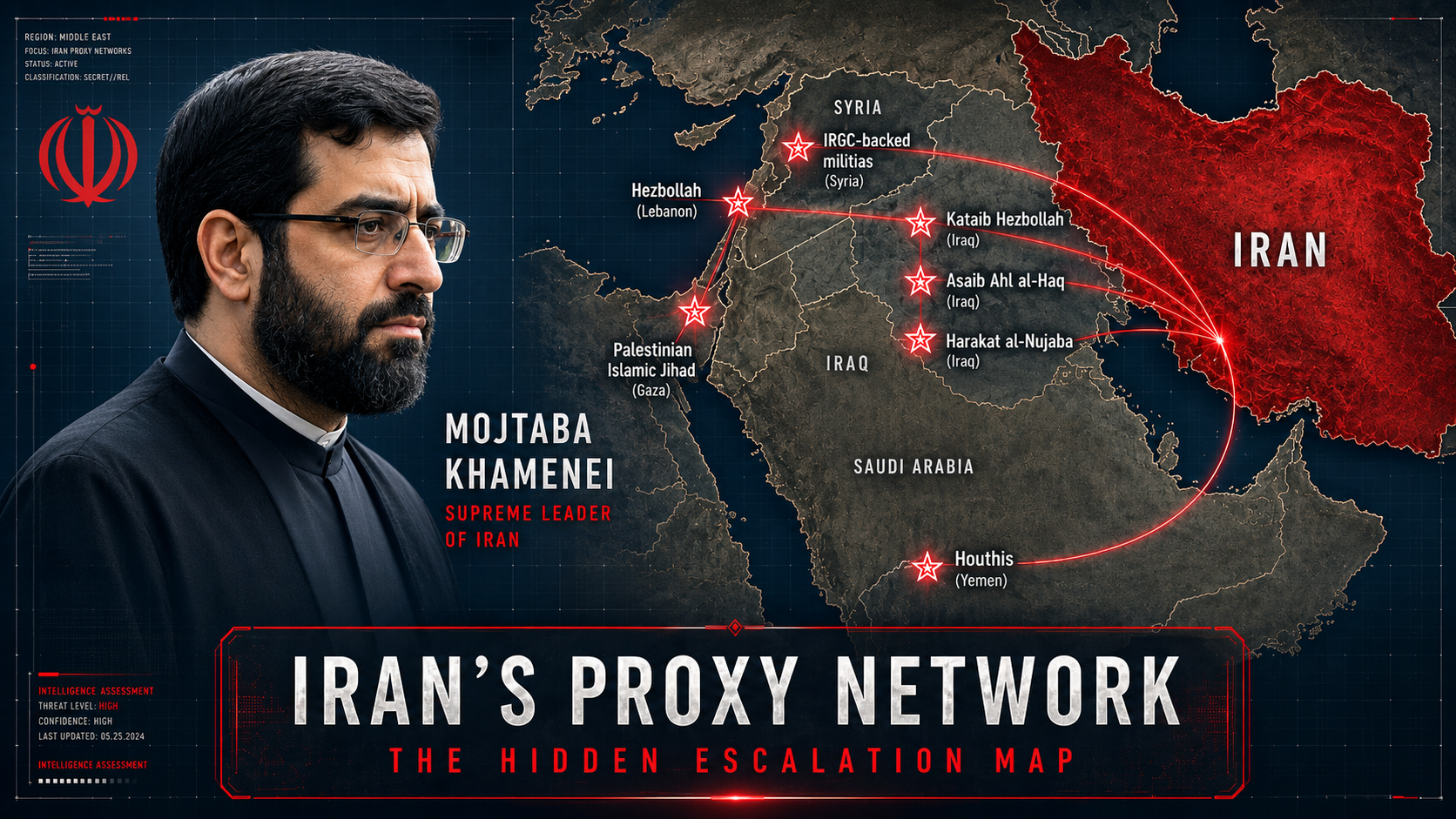
What decision-makers should watch now — before proxy escalation becomes a cost, compliance or supply-chain shock.
This 17-page executive briefing translates Iran’s proxy network into concrete business risks: energy price exposure, maritime chokepoints, war-risk premiums, sanctions, shadow fleets, supply-chain disruption and early-warning indicators for board-level decisions.
You are currently viewing a placeholder content from X. To access the actual content, click the button below. Please note that doing so will share data with third-party providers.
More Information