Executive Intelligence. Industrial Risk. Geopolitics.
Strategic Sparring
for Decision-Makers
Risk intelligence across technology, law, markets and power dynamics.


Verdeckte Geschäftsrisiken, strategische Widersprüche und kritische Abhängigkeiten frühzeitig erkennen.
Kostenlose Analyse starten →
Verdeckte Machtstrukturen, Führungsrisiken und organisatorische Blockaden frühzeitig erkennen.
Kostenlose Analyse starten →
Geopolitische Risiken, globale Abhängigkeiten und kritische Lieferkettenrisiken frühzeitig erkennen.
Kostenlose Analyse starten →
Identify hidden business risks, strategic contradictions and critical dependencies at an early stage.
Start Free Analysis →
Identify hidden power structures, leadership risks and organizational blockers at an early stage.
Start Free Analysis →
Identify geopolitical risks, global dependencies and critical supply-chain vulnerabilities at an early stage.
Start Free Analysis →
Verdeckte Geschäftsrisiken, strategische Widersprüche und kritische Abhängigkeiten frühzeitig erkennen.
Kostenlose Analyse starten →
Verdeckte Machtstrukturen, Führungsrisiken und organisatorische Blockaden frühzeitig erkennen.
Kostenlose Analyse starten →
Geopolitische Risiken, globale Abhängigkeiten und kritische Lieferkettenrisiken frühzeitig erkennen.
Kostenlose Analyse starten →
Identify hidden business risks, strategic contradictions and critical dependencies at an early stage.
Start Free Analysis →
Identify hidden power structures, leadership risks and organizational blockers at an early stage.
Start Free Analysis →
Identify geopolitical risks, global dependencies and critical supply-chain vulnerabilities at an early stage.
Start Free Analysis →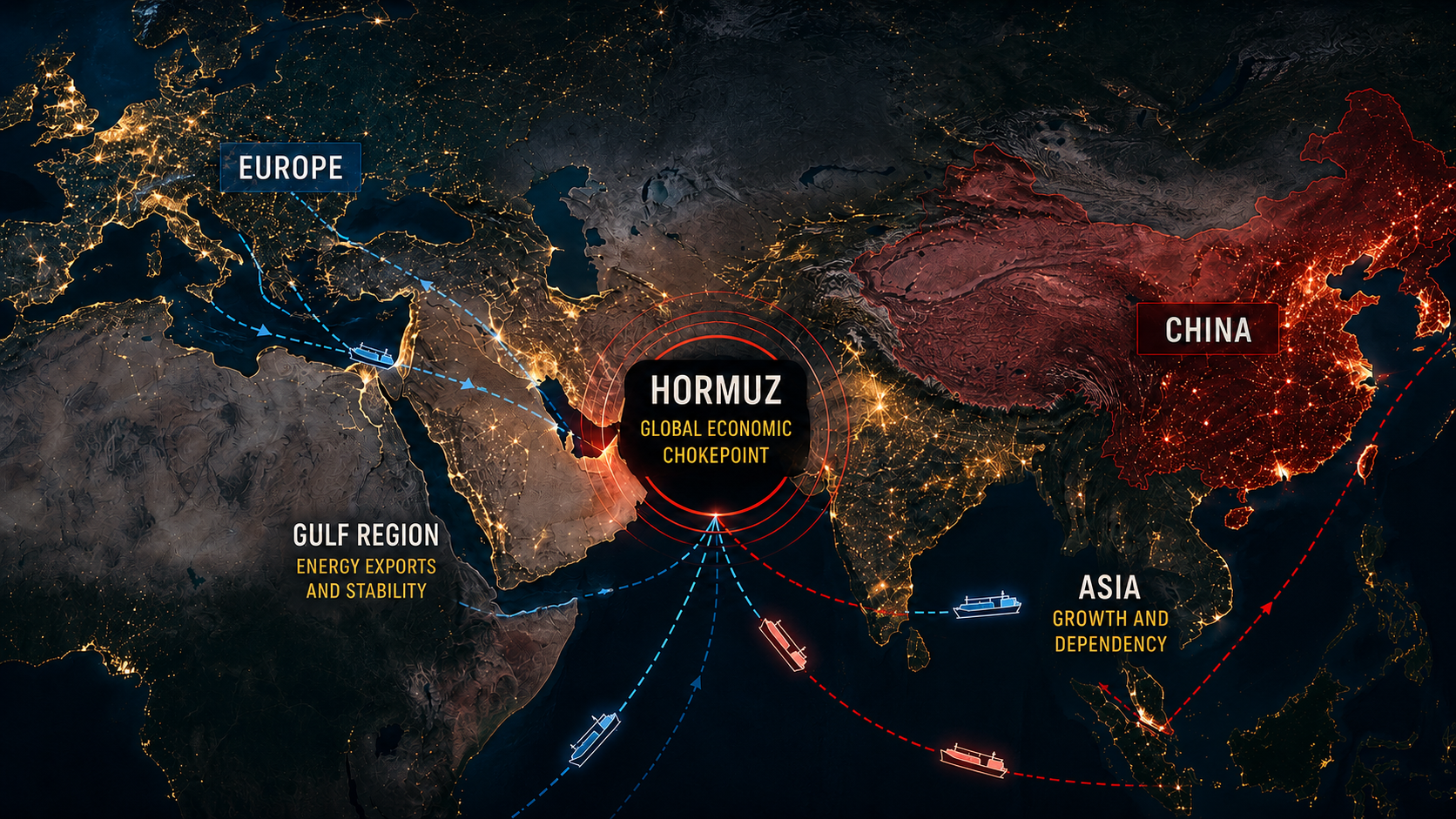
This Chokepoint Check assesses the current pressure on the Strait of Hormuz, Bab al-Mandab and critical water, power, port and energy infrastructure across the Gulf region. The key question is not only whether a route remains geographically open, but whether transport, insurance, energy supply and site operations remain operationally viable.
Physical pressure on the chokepoint is increasing again: UKMTO confirms further tanker strikes, while Iran reports several additional fires.
One tanker was struck by an unidentified projectile, while another caught fire after being hit. The IRGC also reports several tanker fires.
No sufficiently confirmed new daily signal directly at Bab al-Mandab has been identified for October 30/31.
The Yemen conflict remains active, but today’s confirmed new operational developments are more heavily concentrated on Saudi Arabia.
Saudi Arabia’s capital, energy and regional infrastructure remains under pressure from a broad series of missile and drone attacks.
Air defence forces intercepted projectiles targeting Riyadh, the Eastern, Southern and Western Regions, as well as additional drones.
On October 30, UKMTO confirmed a projectile strike on a crude oil tanker as well as another tanker hit south of Lavan Island, resulting in a fire on board.
Iran simultaneously reported several burning tankers and a mine strike. Not all Iranian claims have been independently confirmed.
Repeated physical attacks increase crew, insurance and routing risks and reduce predictability at the Gulf’s most important chokepoint.
Verification status: partially confirmed. Multiple physical tanker attacks have been confirmed by UKMTO; the scale and cause of all incidents reported by Iran remain partly unclear. Reuters, October 30, 2026 · SchaafMedia: Iran Check – 5 Escalation Signals from October 30, 2026
Saudi air defences reported missiles and drones on October 30/31 targeting the Western, Southern, Eastern and Riyadh Regions.
According to the coalition, the projectiles were intercepted. Debris in Riyadh caused no reported injuries.
The geographic breadth of the attacks ties up air-defence capacity and complicates travel, site and business-continuity planning.
Verification status: confirmed for the Saudi interception reports. No major damage from the latest attacks has been reported. Saudi Gazette, October 31, 2026 · SchaafMedia: Middle East Escalation Check from October 29, 2026
Iran’s top leadership called on October 31 for an immediate military response to any potential new threats.
The armed forces are instructed to maintain combat readiness and update target lists for the United States and Israel. No new attack has been carried out.
Heightened readiness shortens potential response times following any new US or Israeli strike against Gulf infrastructure, shipping and regional sites.
Verification status: confirmed for the public directive and heightened readiness. No new Iranian retaliatory strike has taken place. Associated Press, October 31, 2026 · SchaafMedia: Iran Check – 5 Escalation Signals from October 30, 2026
Syria’s foreign minister confirmed on October 31 that discussions are underway on potentially joining the trilateral defence framework.
Membership has not yet been agreed. The existing agreement between Saudi Arabia, Türkiye and Pakistan contains a mutual-defence logic.
Syrian accession would geographically expand the regional security architecture and create new response and logistics dependencies.
Verification status: confirmed for ongoing accession talks. Syria has not yet joined the alliance and no military assistance obligation currently applies. Anadolu / Syrian Foreign Minister, October 31, 2026 · SchaafMedia: Middle East Escalation Check from October 29, 2026
An Iranian provincial official said on October 31 that US forces had attacked two fishing boats near Qeshm.
Iran reports one person injured. The Pentagon and White House had not initially confirmed the reported attack.
Any confirmed direct US-Iran incident near Hormuz would increase escalation risk for commercial shipping and regional US bases.
Verification status: unclear. The Iranian claim is officially documented, but independent or US confirmation is lacking. Reuters, October 31, 2026 · SchaafMedia: Iran Check – 5 Escalation Signals from October 30, 2026
Multiple tankers are hit in Hormuz while Saudi Arabia simultaneously intercepts missiles and drones across several regions.
Shipping increases security measures, Saudi air defences remain active across a wide area and regional states strengthen defence coordination.
Maritime security, air-defence, transport and military protection capacities are increasingly tied up at the same time.
War-risk, energy and transport costs remain high while predictability across the Gulf’s most important export corridor continues to deteriorate.
Multiple new tanker attacks and fires are confirmed within or immediately adjacent to the Hormuz corridor.
Hormuz remains geographically passable · repeated physical attacks, however, significantly reduce safe and predictable commercial useSaudi Arabia reports missiles and drones across several regions, including Riyadh and the Eastern Province.
Critical energy, capital-city and regional infrastructure remains under direct military pressureHormuz attacks, Saudi air defence activity, Iranian combat readiness and new alliance talks are unfolding in parallel.
Chokepoints, critical infrastructure, US-Israel-Iran deterrence and regional alliance-building remain systemically interconnectedOverall risk remains high to critical. A 4/5 signal dominates due to repeated physical attacks on tankers in Hormuz. This is compounded by a 3/5 signal from the broad Saudi missile and drone threat. Three 2/5 signals concern Iran’s US/Israel readiness, Syria’s alliance talks and the unconfirmed Qeshm incident.
Note: This assessment was prepared with support from our Geo AI. AI can make mistakes. This overview serves as a source-based radar for potential escalation signals and does not constitute fully verified intelligence, security, insurance or investment advice. In dynamic situations, status, source availability and risk assessments may change rapidly.
Independent of the subject covered in this article, this separate Executive Briefing provides an in-depth analysis of another critical risk domain affecting European companies.
The 27-page Executive Briefing “Black Swan Risk Mapping for Europe’s Next Mobility and Infrastructure Shock” examines how geopolitical, infrastructural and administrative developments that are currently viewed in isolation could reinforce one another.
Based on the GFDD Framework™, the report shows how these dynamics could affect operational continuity, access to critical resources and the strategic resilience of companies.
The briefing includes a structured systemic-shock analysis and a directly applicable Business Exposure Checklist for CEOs, CFOs, COOs, investors and strategy teams.
You are currently viewing a placeholder content from X. To access the actual content, click the button below. Please note that doing so will share data with third-party providers.
More Information