Executive Intelligence. Industrial Risk. Geopolitics.
Strategic Sparring
for Decision-Makers
Risk intelligence across technology, law, markets and power dynamics.


Verdeckte Geschäftsrisiken, strategische Widersprüche und kritische Abhängigkeiten frühzeitig erkennen.
Kostenlose Analyse starten →
Verdeckte Machtstrukturen, Führungsrisiken und organisatorische Blockaden frühzeitig erkennen.
Kostenlose Analyse starten →
Geopolitische Risiken, globale Abhängigkeiten und kritische Lieferkettenrisiken frühzeitig erkennen.
Kostenlose Analyse starten →
Identify hidden business risks, strategic contradictions and critical dependencies at an early stage.
Start Free Analysis →
Identify hidden power structures, leadership risks and organizational blockers at an early stage.
Start Free Analysis →
Identify geopolitical risks, global dependencies and critical supply-chain vulnerabilities at an early stage.
Start Free Analysis →
Verdeckte Geschäftsrisiken, strategische Widersprüche und kritische Abhängigkeiten frühzeitig erkennen.
Kostenlose Analyse starten →
Verdeckte Machtstrukturen, Führungsrisiken und organisatorische Blockaden frühzeitig erkennen.
Kostenlose Analyse starten →
Geopolitische Risiken, globale Abhängigkeiten und kritische Lieferkettenrisiken frühzeitig erkennen.
Kostenlose Analyse starten →
Identify hidden business risks, strategic contradictions and critical dependencies at an early stage.
Start Free Analysis →
Identify hidden power structures, leadership risks and organizational blockers at an early stage.
Start Free Analysis →
Identify geopolitical risks, global dependencies and critical supply-chain vulnerabilities at an early stage.
Start Free Analysis →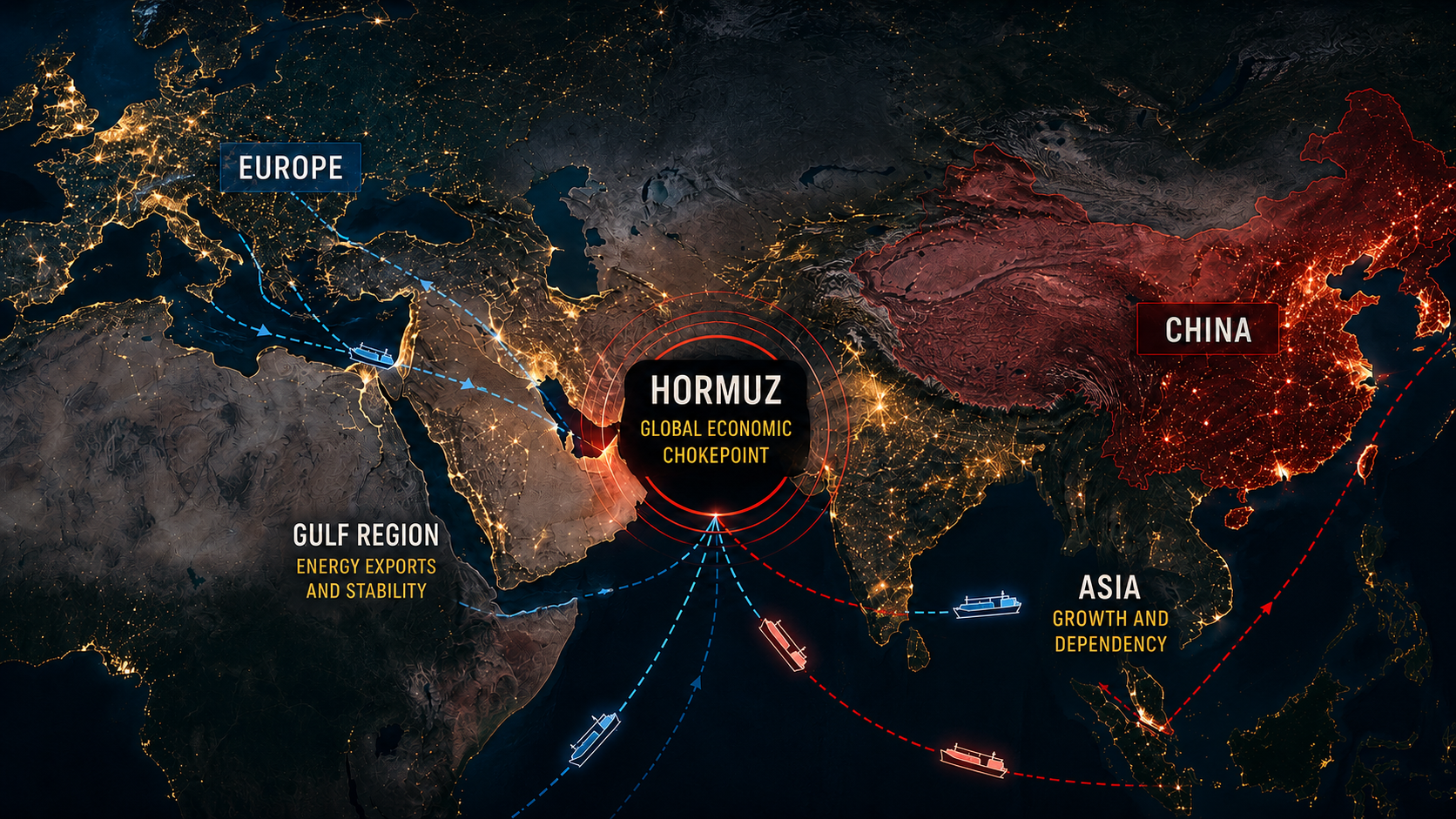
This Chokepoint Check assesses the current pressure on the Strait of Hormuz, Bab al-Mandab and critical water, power, port and energy infrastructure across the Gulf region. The key question is not merely whether a route remains geographically open, but whether transport, insurance, energy supply and site operations remain operationally viable.
A new physical incident has occurred directly inside the strategic shipping corridor; the cause and extent of damage remain unclear.
UKMTO reported on October 29 a vessel on fire nine nautical miles north of Khasab in Oman.
The conflict has again reached major transport infrastructure directly behind the Bab al-Mandab corridor.
Houthi attacks on Aden Airport caused civilian injuries and material damage. Flight operations were suspended.
Saudi Arabia’s most important energy-producing province remains under persistent missile risk following the recent attacks.
Saudi air defences destroyed a ballistic missile heading toward the Eastern Province on October 29.
The master of a third vessel reported to UKMTO a vessel on fire nine nautical miles north of Khasab in Oman.
The cause, vessel type, crew status and possible environmental damage were initially unknown.
An unexplained fire directly inside the Hormuz corridor increases short-term uncertainty around security, routing and insurance.
Verification status: confirmed for the location and observed fire. An attack or mine incident has not been confirmed. Reuters / Arab News, October 29, 2026 · SchaafMedia: Iran Check – 5 Escalation Signals from October 28, 2026
The Houthis attacked Aden Airport on October 28 after previously calling for its evacuation.
Government authorities reported civilian injuries and material damage. Two transport officials confirmed that flight operations were halted.
Aden Airport is critical for southern Yemen, humanitarian supplies and international personnel. Its shutdown immediately increases transport and supply risks.
Verification status: confirmed. The attack, civilian injuries and suspension of flight operations were confirmed by government and transport authorities. Reuters, October 28, 2026 · SchaafMedia: Middle East Escalation Check from October 27, 2026
Saudi air defences destroyed a ballistic missile heading toward the Eastern Province early on October 29.
Civil Defence issued warnings for the Eastern Province and Najran and later gave the all-clear for both regions.
Repeated attacks keep energy facilities, industrial centres and personnel in Saudi Arabia’s most important oil-producing region under persistent security pressure.
Verification status: confirmed for the missile warning and interception. No damage or casualties were reported. Asharq Al-Awsat / Coalition, October 29, 2026 · SchaafMedia: Iran Check – 5 Escalation Signals from October 28, 2026
South Korea’s national security adviser confirmed on October 29 that Seoul is considering several deployment options for the Strait of Hormuz.
These include a maritime patrol aircraft. Seoul is consulting Washington but has ruled out a combat role.
Additional surveillance could improve situational awareness for commercial shipping, but it also demonstrates that Hormuz is increasingly absorbing international security resources.
Verification status: confirmed for the ongoing consultations. An actual deployment has not yet been decided. Reuters, October 29, 2026 · SchaafMedia: Iran Check – 5 Escalation Signals from October 28, 2026
US officials warned several Middle Eastern states and allies to prepare for possible renewed military strikes against Iran after November 3.
According to the reports, Trump has not made a final decision. The warnings explicitly include the possibility of Iranian retaliation against energy and critical infrastructure.
A renewed US-Israel-Iran war phase would simultaneously increase risks to Gulf infrastructure, aviation, energy exports, shipping and Western business locations.
Verification status: partially confirmed. Two diplomats confirmed the US warnings; no final decision to launch new strikes has been made. Associated Press, October 29, 2026 · SchaafMedia: Iran Check – 5 Escalation Signals from October 28, 2026
A vessel is on fire in Hormuz, Aden Airport is offline after an attack and Saudi Arabia’s Eastern Province remains under missile pressure.
Shipping increases caution, flight operations are halted, air defence remains active and additional international surveillance capabilities are being considered.
Transport, aviation, security and military protection capacity are being tied up simultaneously.
War-risk, aviation, energy and logistics costs remain high and are increasingly sensitive to a possible renewed offensive against Iran.
A vessel is on fire directly in Hormuz, while international actors consider additional surveillance capabilities.
Hormuz remains geographically open · the current incident nevertheless confirms persistently elevated operational uncertaintyAden Airport is offline following an attack, while Saudi Arabia’s Eastern Province is again under missile alert.
Critical aviation and energy infrastructure remains exposed to concrete military and operational pressureThe Hormuz incident, Aden disruption, external security support and new preparations for conflict with Iran are unfolding in parallel.
Chokepoints, aviation, energy infrastructure and major-power intervention remain systemically interconnectedOverall risk remains high to critical. The operational picture is dominated by one 4/5 signal: the shutdown of Aden Airport. This is compounded by three 3/5 signals: the new Hormuz incident, renewed missile pressure on Saudi Arabia’s Eastern Province and concrete US warnings preparing for a possible new phase of conflict with Iran. South Korea’s potential Hormuz mission remains a 2/5 external security expansion that has not yet been implemented.
Disclaimer: This assessment was prepared with support from our Geo AI. AI can make mistakes. This analysis is intended as a source-based radar for potential escalation signals and does not constitute fully verified intelligence, security, insurance or investment advice. In fast-moving situations, status, source availability and risk assessments may change at short notice.
Independent of the subject covered in this article, this separate Executive Briefing provides an in-depth analysis of another critical risk domain affecting European companies.
The 27-page Executive Briefing “Black Swan Risk Mapping for Europe’s Next Mobility and Infrastructure Shock” examines how geopolitical, infrastructural and administrative developments that are currently viewed in isolation could reinforce one another.
Based on the GFDD Framework™, the report shows how these dynamics could affect operational continuity, access to critical resources and the strategic resilience of companies.
The briefing includes a structured systemic-shock analysis and a directly applicable Business Exposure Checklist for CEOs, CFOs, COOs, investors and strategy teams.
You are currently viewing a placeholder content from X. To access the actual content, click the button below. Please note that doing so will share data with third-party providers.
More Information