Executive Intelligence. Industrial Risk. Geopolitics.
Strategic Sparring
for Decision-Makers
Risk intelligence across technology, law, markets and power dynamics.


Verdeckte Geschäftsrisiken, strategische Widersprüche und kritische Abhängigkeiten frühzeitig erkennen.
Kostenlose Analyse starten →
Verdeckte Machtstrukturen, Führungsrisiken und organisatorische Blockaden frühzeitig erkennen.
Kostenlose Analyse starten →
Geopolitische Risiken, globale Abhängigkeiten und kritische Lieferkettenrisiken frühzeitig erkennen.
Kostenlose Analyse starten →
Identify hidden business risks, strategic contradictions and critical dependencies at an early stage.
Start Free Analysis →
Identify hidden power structures, leadership risks and organizational blockers at an early stage.
Start Free Analysis →
Identify geopolitical risks, global dependencies and critical supply-chain vulnerabilities at an early stage.
Start Free Analysis →
Verdeckte Geschäftsrisiken, strategische Widersprüche und kritische Abhängigkeiten frühzeitig erkennen.
Kostenlose Analyse starten →
Verdeckte Machtstrukturen, Führungsrisiken und organisatorische Blockaden frühzeitig erkennen.
Kostenlose Analyse starten →
Geopolitische Risiken, globale Abhängigkeiten und kritische Lieferkettenrisiken frühzeitig erkennen.
Kostenlose Analyse starten →
Identify hidden business risks, strategic contradictions and critical dependencies at an early stage.
Start Free Analysis →
Identify hidden power structures, leadership risks and organizational blockers at an early stage.
Start Free Analysis →
Identify geopolitical risks, global dependencies and critical supply-chain vulnerabilities at an early stage.
Start Free Analysis →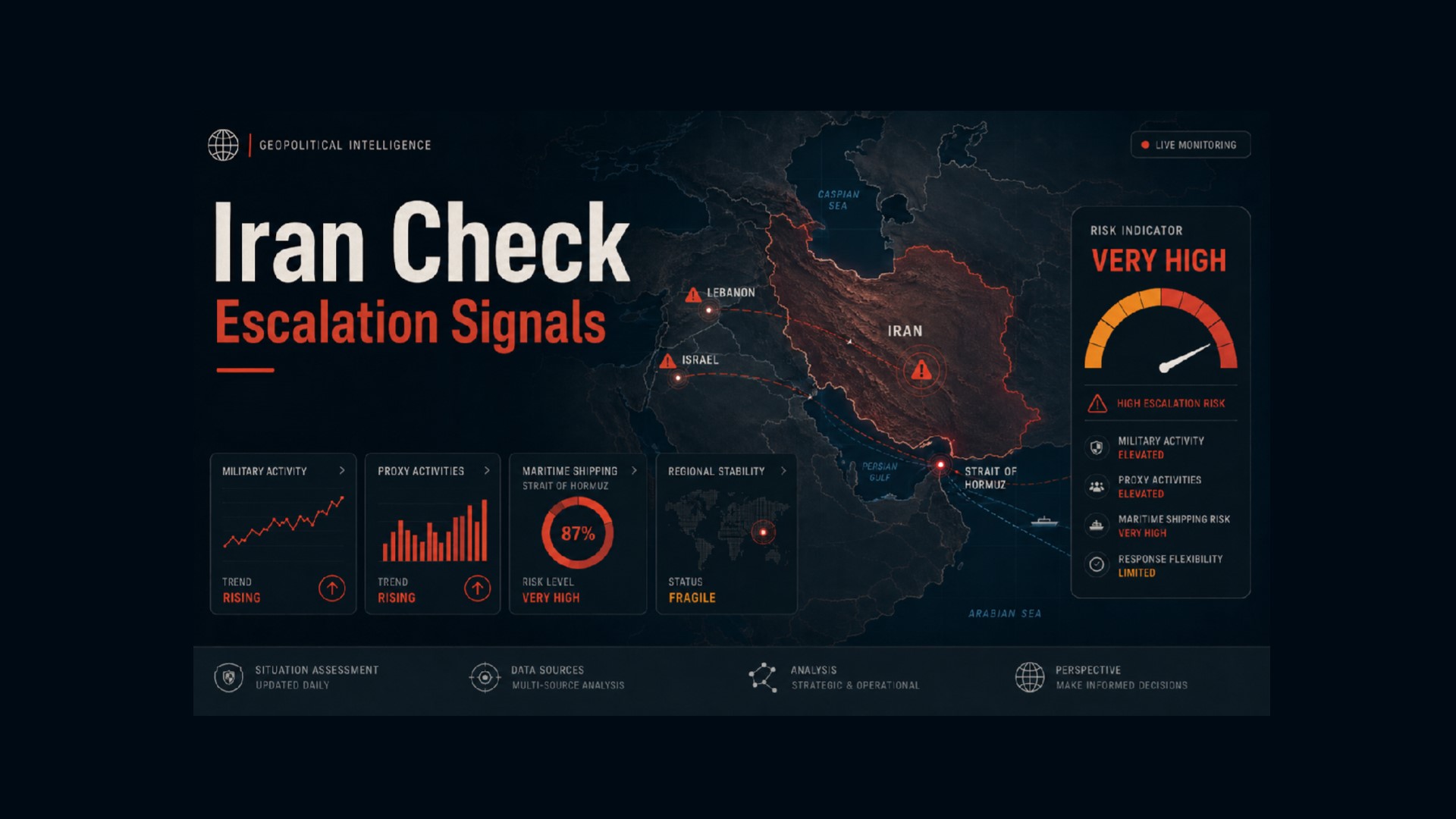
This escalation radar summarizes five relevant signals as of October 30, 2026. The focus is on verifiable statements by official sources, confirmed events and monitoring sources with potential implications for energy prices, supply chains, markets, maritime security, aviation and regional stability.
The tanker Louise 1 is damaged by two limpet mines. It is the first known successful use of this attack method in Hormuz since the start of the US-Iran war.
CENTCOM commander Brad Cooper personally briefed Trump at the White House. Washington is therefore keeping concrete military options open in parallel with negotiations.
Saudi Arabia reports an intercepted drone over the Mecca region and a cruise missile heading towards western Saudi Arabia. The Houthis deny the drone attack but confirm their continued focus on Saudi oil and military targets.
| Actor | Type | Severity | Status | Source / Verification | Business Impact |
|---|---|---|---|---|---|
| Hormuz / Iran / Oman / Tanker Shipping | Tanker successfully attacked with limpet mines for first time since start of war | Critical · Level 5/5 | The Panama-flagged tanker Louise 1 is attacked while exiting the Strait of Hormuz with two limpet mines. A small boat attaches the explosive devices to the ship’s hull. The explosions trigger a fire in the engine room and temporarily disable the vessel. The crew remains unharmed, and the tanker is later able to continue its voyage. Those responsible have not yet been identified. Power dynamics: Limpet mines create an additional hard-to-predict, low-cost attack method against commercial shipping alongside missiles and drones. | Confirmed by Reuters, October 30, 2026 . Verification status: confirmed for the attack, damage and method used. Responsibility has not been confirmed. Further reading: Schaaf Media · Hormuz Blockade 2026: Protecting Margins and Supply Chains in the Chokepoint Shock . | Critical business impact on tankers, energy exports, insurance premiums, charter rates, ship crews and transit planning. Particularly relevant: Limpet mines increase the risk even for vessels that had previously been able to avoid military attacks. |
| USA / Iran / CENTCOM | CENTCOM commander presents Trump with military options for Iran | Critical · Level 5/5 | CENTCOM commander Admiral Brad Cooper meets Trump personally at the White House. Cooper presents updated military options for possible new strikes on Iran. Defense Secretary Pete Hegseth and Chairman of the Joint Chiefs Dan Caine also participate. The president being briefed directly by the CENTCOM commander is considered unusual. At the same time, Trump says he expects the Iran war to end soon. Power dynamics: Washington continues to pursue diplomacy and military preparation simultaneously. | Current source: IranWire, October 30, 2026 . Additional source: Reuters, October 30, 2026 . Verification status: confirmed for the high-level military briefing. No decision on new strikes has been confirmed. Background: Schaaf Media · Iran War: How the West Is Losing Its Dominance . | Critical business impact on Iran, Israel, Gulf states, oil, aviation, shipping and investment planning. The operational preparation significantly increases event risk after the US midterm elections. |
| Houthis / Saudi Arabia / Mecca / Yemen | New drone and missile warning for Saudi Arabia | Critical · Level 5/5 | The Saudi-led coalition reports on October 30 the destruction of a drone over the Mecca region. In addition, a cruise missile heading towards western Saudi Arabia is intercepted. The Houthis deny carrying out an attack on Saudi Arabia on Friday. However, they explicitly state that their operations target Saudi oil infrastructure and military bases. The previous day, the Houthis claimed six attacks on Saudi airports and energy targets. Power dynamics: Even amid conflicting accounts, Saudi Arabia’s critical infrastructure remains under sustained military pressure. | Official Saudi source: Saudi Press Agency, October 30, 2026 . Regional context: Al Jazeera, October 30, 2026 . Verification status: partially confirmed. The Saudi interception report is officially confirmed; the Houthis deny responsibility for the drone. Further reading: Schaaf Media · Iran’s Proxies: The Hidden Escalation Map of the Middle East . | Critical business impact on Saudi Arabia, oil, airports, petrochemicals, aviation, pilgrimage travel and insurance. The active EASA warning for Saudi Arabia therefore remains operationally relevant. |
| Iran / Qatar / USA | Qatar returns to Tehran for renewed US-Iran negotiations | High to Critical · Level 4/5 | Qatari mediators return to Tehran on October 30. The talks are coordinated with Washington. The key dispute remains which side must move first. Washington demands negotiations on Iran’s nuclear program from the outset. Tehran, by contrast, first demands an end to the port blockade and the removal of restrictions on Iranian oil exports. Iran also confirms receiving a message from US Vice President JD Vance. Power dynamics: The negotiation track remains active, but runs in parallel with preparations for potential new US strikes. | Confirmed by Reuters, October 30, 2026 . Verification status: confirmed. No breakthrough or accepted deal has been reported. Background: Schaaf Media · Middle East Escalation Check from October 29, 2026 . | High to critical business impact on oil prices, sanctions, Hormuz, Iranian exports and investment decisions. An agreement could reduce blockade and transport risks; failure, by contrast, would increase the risk of new strikes. |
| Israel / Netanyahu / Iran | Final election result prolongs political uncertainty in Israel | High to Critical · Level 4/5 | Israel’s final election result confirms that no political bloc has secured a governing majority. Netanyahu’s camp wins 53 of 120 seats. The Jewish-led opposition wins 48 seats, while Arab-led parties hold a combined 19. Difficult coalition negotiations therefore begin. Netanyahu remains prime minister for now, while Washington simultaneously reviews new Iran options. Power dynamics: Israel remains militarily central to the Iran conflict, while its domestic decision-making structure remains unresolved. | Current source: AP, October 30, 2026 . Verification status: confirmed. The election result is final. No new Israeli decision to strike Iran was confirmed on October 30. Further reading: Schaaf Media · Iran Check: 5 Escalation Signals from October 28, 2026 . | High to critical business impact on Israel, Iran, defense planning, regional investment, aviation and insurance. Political uncertainty mainly increases decision-making and forecasting risk for the coming weeks. |
The most important operational development on October 30, 2026 is the renewed deterioration of the maritime security situation in Hormuz. The tanker Louise 1 is damaged by two limpet mines. For the first time since the start of the current war, a successful attack method has emerged that allows small boats to inflict serious damage on commercial vessels with comparatively limited resources. For shipping companies and insurers, the risk has therefore increased significantly again.
At the same time, the US military signal is strengthening. CENTCOM commander Brad Cooper personally presents Trump with updated military options for Iran. Trump simultaneously says he expects the war to end soon. Washington is therefore keeping both negotiations and military escalation open at the same time.
Saudi Arabia also remains under severe pressure. The coalition reports an intercepted drone over the Mecca region and a cruise missile heading towards western Saudi Arabia. The Houthis deny today’s drone attack, but explicitly state that they will continue targeting Saudi oil and military infrastructure.
At the same time, Qatari mediators in Tehran are attempting to secure a new US-Iran deal ahead of the US midterm elections. However, positions remain far apart on the nuclear program, the port blockade and Iranian oil exports. In Israel, the final election result confirms a political deadlock, while new US military options concerning Iran are being reviewed. EASA continues to maintain active warnings for Iran, Saudi Arabia, the Persian Gulf/Gulf of Oman, Iraq and Lebanon; no new revision was identified on October 30.
The five most important signals for a German and European risk assessment are: the successful limpet mine attack on a tanker in Hormuz as a new operational threat to commercial shipping, the personal CENTCOM briefing of Trump on new military options against Iran, the continued Houthi escalation against Saudi Arabia involving drones, missiles and threats to critical infrastructure, the renewed Qatari mediation effort in Tehran despite major remaining differences between the USA and Iran, and Israel’s final election result without a governing majority, prolonging political uncertainty during a potential new phase of Iran escalation.
Note: This assessment was prepared with the support of our Geo-AI. AI can make mistakes. The analysis is intended as a radar for potential escalation signals and does not replace a fully verified intelligence assessment.
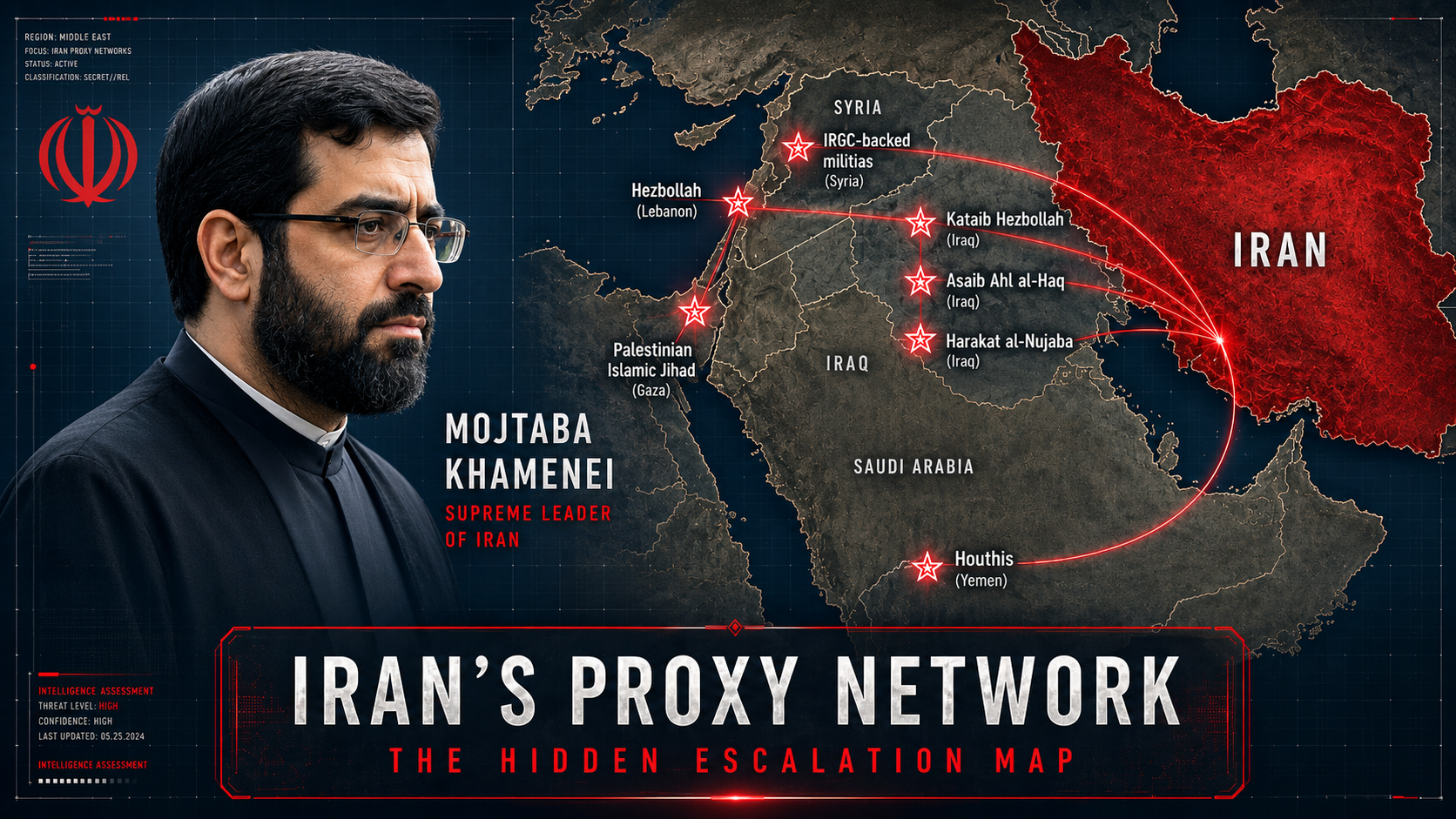
What decision-makers should watch now — before proxy escalation becomes a cost, compliance or supply-chain shock.
This 17-page executive briefing translates Iran’s proxy network into concrete business risks: energy price exposure, maritime chokepoints, war-risk premiums, sanctions, shadow fleets, supply-chain disruption and early-warning indicators for board-level decisions.
You are currently viewing a placeholder content from X. To access the actual content, click the button below. Please note that doing so will share data with third-party providers.
More Information