Executive Intelligence. Industrial Risk. Geopolitics.
Strategic Sparring
for Decision-Makers
Risk intelligence across technology, law, markets and power dynamics.

Verdeckte Geschäftsrisiken, strategische Widersprüche und kritische Abhängigkeiten frühzeitig erkennen.
Kostenlose Analyse starten →
Verdeckte Machtstrukturen, Führungsrisiken und organisatorische Blockaden frühzeitig erkennen.
Kostenlose Analyse starten →
Geopolitische Risiken, globale Abhängigkeiten und kritische Lieferkettenrisiken frühzeitig erkennen.
Kostenlose Analyse starten →
Identify hidden business risks, strategic contradictions and critical dependencies at an early stage.
Start Free Analysis →
Identify hidden power structures, leadership risks and organizational blockers at an early stage.
Start Free Analysis →
Identify geopolitical risks, global dependencies and critical supply-chain vulnerabilities at an early stage.
Start Free Analysis →
Verdeckte Geschäftsrisiken, strategische Widersprüche und kritische Abhängigkeiten frühzeitig erkennen.
Kostenlose Analyse starten →
Verdeckte Machtstrukturen, Führungsrisiken und organisatorische Blockaden frühzeitig erkennen.
Kostenlose Analyse starten →
Geopolitische Risiken, globale Abhängigkeiten und kritische Lieferkettenrisiken frühzeitig erkennen.
Kostenlose Analyse starten →
Identify hidden business risks, strategic contradictions and critical dependencies at an early stage.
Start Free Analysis →
Identify hidden power structures, leadership risks and organizational blockers at an early stage.
Start Free Analysis →
Identify geopolitical risks, global dependencies and critical supply-chain vulnerabilities at an early stage.
Start Free Analysis →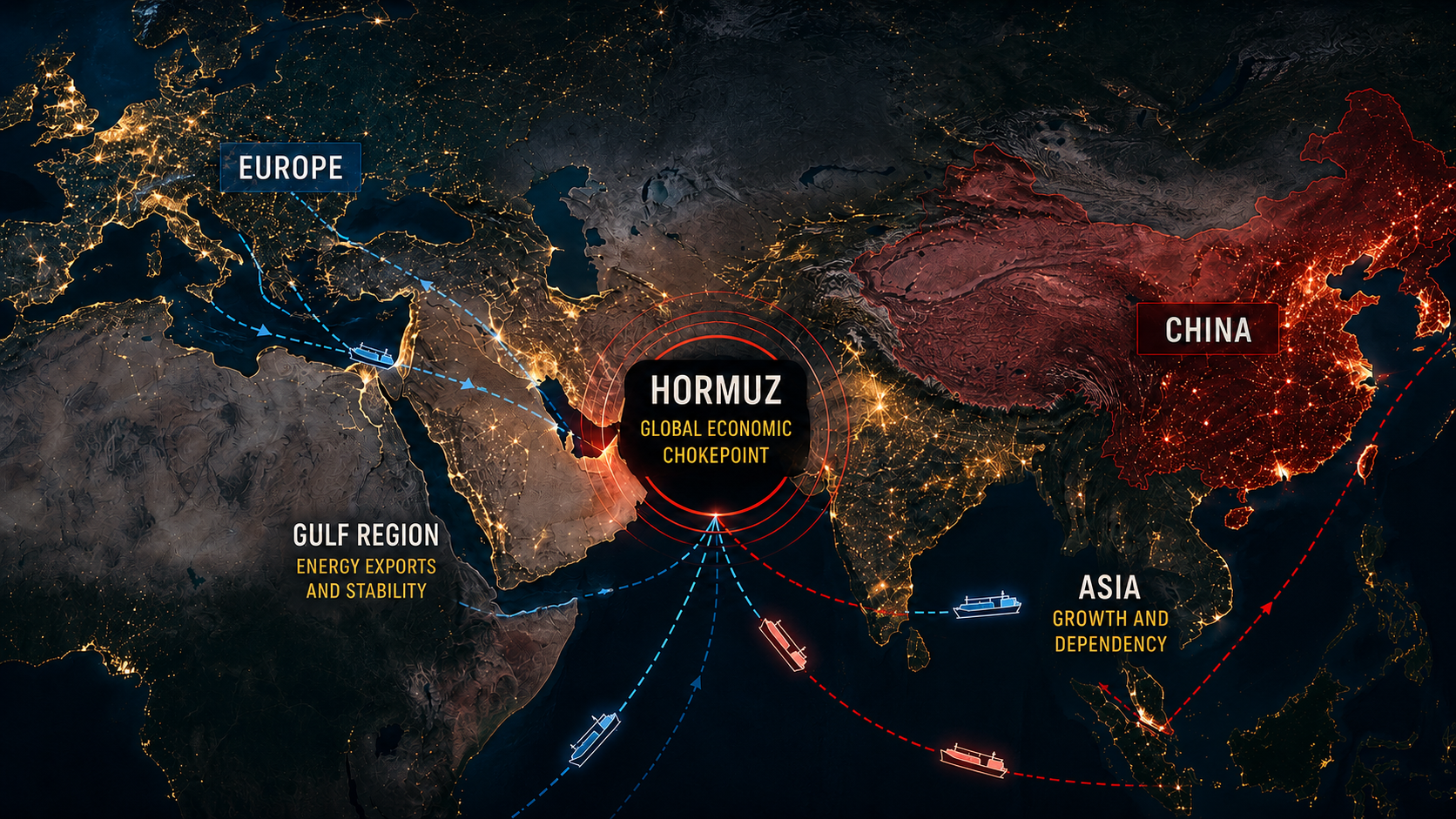
This Chokepoint Check assesses the current pressure on the Strait of Hormuz, Bab al-Mandab and critical water, power, port and energy infrastructure across the Gulf region. The key question is not only whether a route remains geographically open, but whether transport, insurance, energy supply and site operations remain operationally viable.
The chokepoint remains under severe operational pressure: an offshore support vessel, a workboat used for towing and support operations at sea, was hit in Hormuz and reported to be partially sinking.
Two unidentified projectiles also struck a tanker east of Ras Al Khafji. At the same time, negotiations are underway over a conditional reopening of Hormuz.
No sufficiently confirmed new attack directly at Bab al-Mandab has been identified for November 1/2.
The Houthi-Saudi escalation nevertheless remains active and continues to tie up military capabilities across the wider Red Sea region.
Saudi Arabia activated warning systems again on November 2, while the coalition intercepted a Houthi missile heading toward the south of the country.
Alerts were issued for locations including Abha, Khamis Mushait, Taif and Najran. No major damage was reported.
The offshore support vessel Selat Storm was struck by an unidentified projectile in the Strait of Hormuz on November 1. The vessel is a tug or workboat used for support, towing and supply operations at sea. It was reported to be partially sinking following the strike.
UKMTO also reported two projectile strikes on a tanker around 72 nautical miles east of Ras Al Khafji. The incidents therefore affect not only conventional tankers but different types of vessels operating across the wider Gulf corridor. The repeated attacks show that the physical threat to commercial and operational shipping remains active.
Repeated strikes increase risks for crews and may trigger additional security requirements, rerouting and higher insurance premiums. For shipping companies and energy operators, transit and supply planning becomes less predictable. The fact that the threat is no longer limited to a single type of vessel is particularly significant.
Verification status: confirmed. Both incidents were documented through maritime security sources and UKMTO reporting. Seatrade Maritime, November 2, 2026 · SchaafMedia: Iran Check – 5 Escalation Signals from November 1, 2026
Saudi Civil Defence activated alerts in several cities on November 2, including Abha, Khamis Mushait, Taif and Najran. The population was once again placed on alert for a concrete aerial threat. The warnings covered several geographically separate areas.
The Saudi-led coalition subsequently confirmed the destruction of a Houthi ballistic missile heading toward southern Saudi Arabia. The immediate attack was therefore intercepted, but the military threat remains active. Repeated missile and drone attacks continue to force Saudi Arabia to maintain broad air-defence readiness.
Recurring alerts affect travel planning, personnel movements and business-continuity arrangements for international companies. Energy, transport and aviation sites must also remain prepared for short-notice warnings. Even successful interceptions therefore create operational disruption and additional security costs.
Verification status: confirmed. Saudi Civil Defence and the Saudi-led coalition confirmed the situation. No major current damage was reported. Reuters, November 2, 2026 · SchaafMedia: Middle East Escalation Check from October 31, 2026
US President Donald Trump said the United States might have to strike Iran hard again. Washington is therefore publicly keeping another direct military escalation step on the table. Potential Israeli military action also remains part of Iran’s broader threat assessment.
Iran, in turn, warned that a new war could last longer and spread across a wider geographic area. For now, both sides are primarily signalling deterrence and military readiness rather than conducting a new confirmed attack. The rhetoric nevertheless increases the risk of miscalculation and shorter military response times.
As long as further US or Israeli strikes remain openly under consideration, planning certainty across the Gulf remains limited. Companies must account for potential effects on shipping, flight routes, regional sites and energy supply. Even the credible prospect of further strikes can keep insurance and security costs elevated.
Verification status: confirmed for the public threats. No new US or Israeli attack had been carried out as of November 2. AFP / Arab News, November 2, 2026 · SchaafMedia: Iran Check – 5 Escalation Signals from November 1, 2026
Iran said on November 2 that security in the Strait of Hormuz could be restored within two days. The proposal directly links the maritime situation to renewed political negotiations. Qatar and Pakistan are acting as intermediaries between the parties involved.
Tehran has linked implementation to US steps concerning sanctions, military presence and blockade-related measures. This represents a more concrete short-term pathway toward easing pressure on the chokepoint. However, no agreement has yet been reached, meaning an operational reopening cannot yet be assumed.
Actual implementation could reduce shipping risks, war-risk premiums and routing problems relatively quickly. For companies, however, only demonstrably safe and consistently resumed commercial passage would constitute a robust de-escalation signal. Until then, current risk precautions remain necessary.
Verification status: confirmed for the Iranian proposal and ongoing mediation. An operational reopening has not yet taken place. Associated Press, November 2, 2026 · SchaafMedia: Iran Check – 5 Escalation Signals from November 1, 2026
Syria’s defence minister met his Qatari counterpart in Doha for talks on deepening military cooperation. The Syrian delegation also visited military training facilities and the headquarters of Qatar’s special forces. The cooperation is therefore moving beyond purely political contacts.
The talks show that Syria is continuing to broaden its regional security relationships. They do not currently create a new formal alliance membership or a confirmed military mutual-assistance obligation. Strategically, however, the development matters because the region’s security architecture continues to become more interconnected.
The development does not create immediate restrictions on trade or energy supply. Over time, however, deeper military ties could affect logistics, airspace access and regional security cooperation. For businesses, the key issue is whether these ties evolve into permanent military access or support structures.
Verification status: confirmed. The talks and military visits were documented through the Syrian state news agency. No new defence alliance has been concluded. Arab News / SANA, November 2, 2026 · SchaafMedia: Middle East Escalation Check from October 31, 2026
Further vessels are hit in and near Hormuz, while Saudi Arabia again intercepts a Houthi missile.
Maritime security measures and Saudi air defences remain active, while negotiations continue in parallel over a conditional reopening of Hormuz.
Shipping planning, insurability, air-defence capacity and regional transport continuity remain under simultaneous pressure.
Energy, freight and war-risk costs remain elevated; an agreement on Hormuz could reduce this pressure for the first time in the short term.
An offshore support vessel is badly hit in Hormuz, while a tanker further north is damaged by two projectiles.
Hormuz remains operationally high-risk · the announced reopening has not yet been implementedSaudi Arabia again activates warning systems, while a Houthi missile heading south is intercepted.
Critical Saudi regions remain exposed to a concrete missile threat, even though the latest attack was interceptedMaritime attacks, Saudi-Houthi hostilities, US-Iran threats and regional security cooperation are unfolding in parallel.
Chokepoint, infrastructure and military pressures remain interconnected, but are now accompanied by a more concrete diplomatic pathway toward reopeningOverall risk remains high to critical. A 4/5 signal dominates due to new physical attacks on vessels in and near Hormuz. This is compounded by a 3/5 signal from the confirmed Houthi missile attack on Saudi Arabia. Three 2/5 signals concern the US-Iran threat environment, the two-day Hormuz plan and deepening Syrian-Qatari military cooperation.
Note: This assessment was prepared with support from our Geo AI. AI can make mistakes. This overview serves as a source-based radar for potential escalation signals and does not constitute fully verified intelligence, security, insurance or investment advice. In dynamic situations, status, source availability and risk assessments may change rapidly.
Independent of the subject covered in this article, this separate Executive Briefing provides an in-depth analysis of another critical risk domain affecting European companies.
The 27-page Executive Briefing “Black Swan Risk Mapping for Europe’s Next Mobility and Infrastructure Shock” examines how geopolitical, infrastructural and administrative developments that are currently viewed in isolation could reinforce one another.
Based on the GFDD Framework™, the report shows how these dynamics could affect operational continuity, access to critical resources and the strategic resilience of companies.
The briefing includes a structured systemic-shock analysis and a directly applicable Business Exposure Checklist for CEOs, CFOs, COOs, investors and strategy teams.
You are currently viewing a placeholder content from X. To access the actual content, click the button below. Please note that doing so will share data with third-party providers.
More Information