Executive Intelligence. Industrial Risk. Geopolitics.
Strategic Sparring
for Decision-Makers
Risk intelligence across technology, law, markets and power dynamics.

Verdeckte Geschäftsrisiken, strategische Widersprüche und kritische Abhängigkeiten frühzeitig erkennen.
Kostenlose Analyse starten →
Verdeckte Machtstrukturen, Führungsrisiken und organisatorische Blockaden frühzeitig erkennen.
Kostenlose Analyse starten →
Geopolitische Risiken, globale Abhängigkeiten und kritische Lieferkettenrisiken frühzeitig erkennen.
Kostenlose Analyse starten →
Identify hidden business risks, strategic contradictions and critical dependencies at an early stage.
Start Free Analysis →
Identify hidden power structures, leadership risks and organizational blockers at an early stage.
Start Free Analysis →
Identify geopolitical risks, global dependencies and critical supply-chain vulnerabilities at an early stage.
Start Free Analysis →
Verdeckte Geschäftsrisiken, strategische Widersprüche und kritische Abhängigkeiten frühzeitig erkennen.
Kostenlose Analyse starten →
Verdeckte Machtstrukturen, Führungsrisiken und organisatorische Blockaden frühzeitig erkennen.
Kostenlose Analyse starten →
Geopolitische Risiken, globale Abhängigkeiten und kritische Lieferkettenrisiken frühzeitig erkennen.
Kostenlose Analyse starten →
Identify hidden business risks, strategic contradictions and critical dependencies at an early stage.
Start Free Analysis →
Identify hidden power structures, leadership risks and organizational blockers at an early stage.
Start Free Analysis →
Identify geopolitical risks, global dependencies and critical supply-chain vulnerabilities at an early stage.
Start Free Analysis →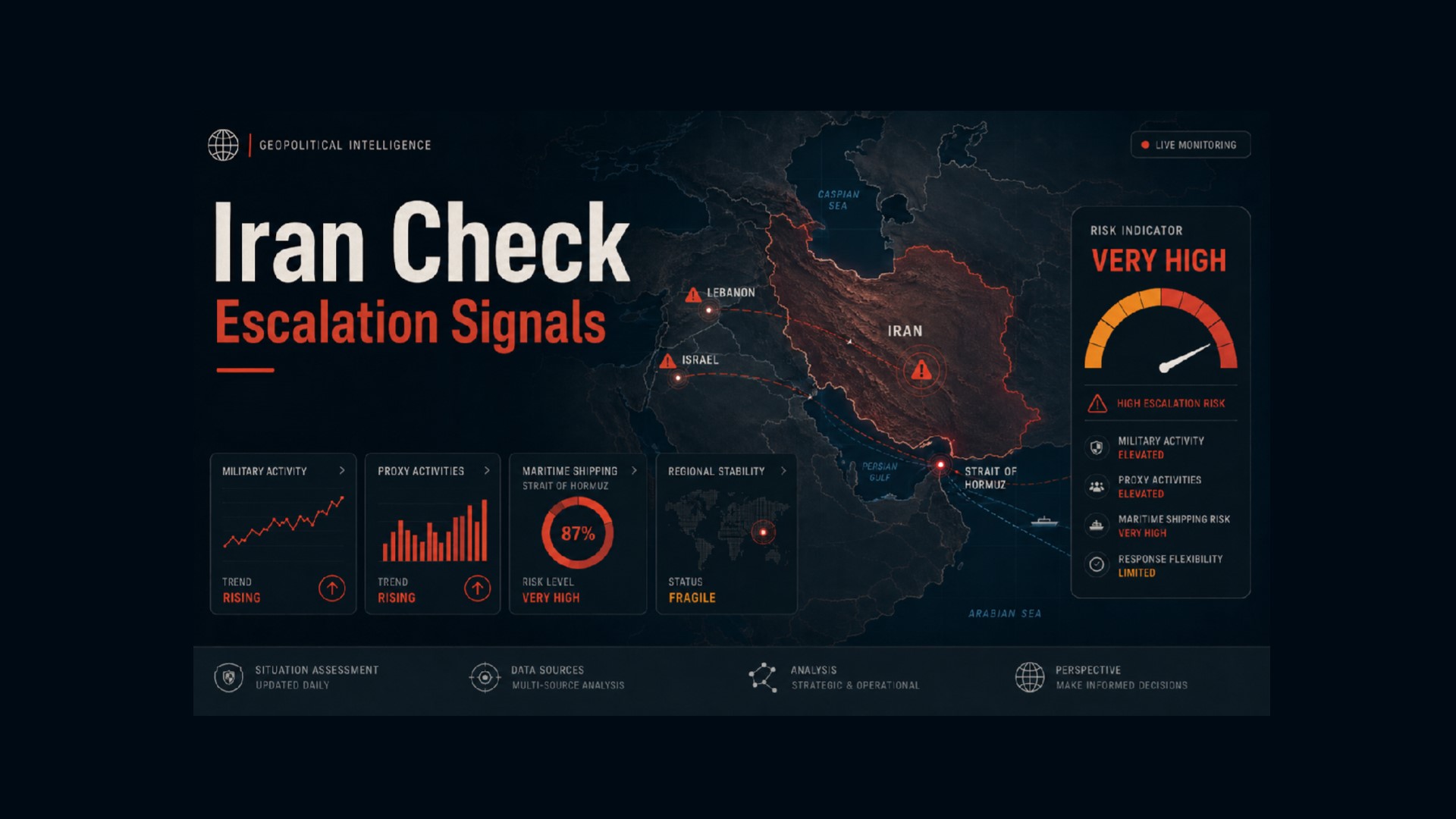
This escalation radar summarizes five relevant signals as of November 3, 2026. The focus is on verifiable statements by official sources, confirmed events and monitoring sources with potential implications for energy prices, supply chains, markets, maritime security, aviation and regional stability.
US forces strike Iranian air-defense positions on Qeshm Island. The previous threat of renewed attacks has therefore turned back into an actual military operation.
The Revolutionary Guards report the downing of one MQ-9 and two additional drones near Hormuz. Tehran simultaneously warns that further US attacks could also be answered outside the region.
Israel supports renewed military escalation while Washington is still weighing a deal against further strikes. Particularly significant are differing US and Israeli views on the objectives and duration of any new operation.
| Actor | Type | Severity | Status | Source / Verification | Business Impact |
|---|---|---|---|---|---|
| USA / Iran / Hormuz | USA launches new airstrikes on Iranian targets near Qeshm | Critical · Level 5/5 | The USA strikes Iranian targets on Qeshm Island in the Strait of Hormuz during the night leading into November 3. A US official says Iranian air-defense systems were targeted after threatening US forces. Iranian media report explosions on Qeshm, Hengam and around Bandar Abbas. Washington describes the operation as limited and defensive. An official return to large-scale combat operations has not yet been confirmed. Power dynamics: Military deterrence and diplomacy are no longer merely running in parallel, but are now unfolding alongside renewed US strikes. | Confirmed by AP, November 3, 2026 . Verification status: confirmed for the US strikes. The scope and exact number of targets hit remain partially unclear. Background: Schaaf Media · Iran Check: 5 Escalation Signals from November 1, 2026 . | Critical business impact on Hormuz, oil, LNG, tankers, aviation, insurance and regional supply chains. Particularly relevant: The risk has shifted from a potential new attack round back into an actual US-Iran military confrontation. |
| Iran / IRGC / USA / Hormuz | Iran reports drone shootdowns and threatens expanded retaliation | Critical · Level 5/5 | The Revolutionary Guards say they have downed one US MQ-9 and two additional drones near Hormuz. At the same time, Iran’s military readiness remains at the highest level. Parliament Speaker Qalibaf says Washington must now decide whether it wants to prevent a new war. A further strategic error by the USA would create a new conflict arena. Iranian officials warn that a response could occur both within the region and beyond it. Power dynamics: Tehran is seeking to deter any further US strike with a geographically unpredictable escalation threat. | Reported by Reuters, November 3, 2026 . Verification status: partially confirmed. Iranian claims regarding the drone shootdowns originate from the IRGC. There is no independent confirmation of all three shootdowns. Further reading: Schaaf Media · Iran War: How the West Is Losing Its Dominance . | Critical business impact on US bases, Gulf states, aviation, Hormuz, energy, data infrastructure and business travel. The combination of an actual US strike and an expanded Iranian retaliation threat significantly increases the risk of miscalculation. |
| Israel / USA / Iran | Netanyahu pushes for further strikes as US and Israeli objectives remain different | High to Critical · Level 4/5 | Netanyahu continues to push Trump for a renewed wave of strikes on Iran. Israeli sources report that the IDF is prepared to participate in a new US operation. Washington is focusing primarily on the nuclear program and Hormuz. Israel, by contrast, is discussing substantially broader targets, including missile production, strategic weapons and, in some scenarios, regime change. On November 2, Trump initially appears more cautious about a broader attack campaign. Power dynamics: Israel is pushing for a broader conflict strategy, while Washington favors more limited escalation. | Current Israeli source: Jerusalem Post, updated November 3, 2026 . Verification status: partially confirmed. Israel’s readiness for further operations is confirmed. No Israeli strike order has been confirmed. Background: Schaaf Media · Iran Check: 5 Escalation Signals from November 1, 2026 . | High to critical business impact on Israel, Iran, Gulf states, defense, energy, aviation and insurance. Particularly relevant: Diverging US and Israeli war aims make the next potential escalation phase harder to predict. |
| Iran / Qatar / USA / Hormuz | Deal remains out of reach despite intensified mediation | High to Critical · Level 4/5 | Qatar intensifies its mediation efforts on November 3. The USA and Iran are reviewing new proposals, with responses from both sides expected within around 36 hours. Nevertheless, a senior Iranian official says the two sides remain far from an agreement. Iran demands that its conditions for reopening Hormuz be met before nuclear negotiations begin. Washington, by contrast, demands verifiable nuclear commitments. Power dynamics: A deal remains possible, but military pressure is increasing faster than diplomatic progress. | Confirmed by Reuters, November 3, 2026 . Verification status: confirmed. No agreement has been reached. Further reading: Schaaf Media · Middle East Escalation Check from November 2, 2026 . | High to critical business impact on Hormuz, oil, LNG, sanctions, Iranian exports and investment decisions. Oil prices are rising again following the US strikes and the disappointing state of negotiations. |
| Houthis / Saudi Arabia / Bab el-Mandeb | Houthi attacks increasingly create tangible travel and location impacts | High to Critical · Level 4/5 | Houthi attacks on Saudi Arabia are increasingly affecting civilian planning on November 3. The group most recently reported drones heading towards Dammam Airport. Earlier, an attack on Riyadh International Airport killed at least twelve people and injured more than 300. The 2027 Asian Cup is therefore postponed by almost a year. At the same time, Houthi forces continue moving towards Bab el-Mandeb. Power dynamics: The conflict is now producing lasting effects on travel, events, aviation and site planning. | Confirmed by Reuters, November 3, 2026 . Verification status: confirmed for the continuing security and travel impacts. The current Dammam claim is based on the Houthi account. Background: Schaaf Media · Iran’s Proxies: The Hidden Escalation Map of the Middle East . | High to critical business impact on Saudi Arabia, aviation, tourism, events, oil, Bab el-Mandeb and insurance. The effects increasingly extend beyond short-term attack warnings and are changing long-term planning. |
The most important development on November 3, 2026 is the renewed transition from threat to actual military action. The USA has struck Iranian air-defense positions on Qeshm Island in the Strait of Hormuz. Washington describes the operation as limited, but for the first time in weeks US forces have again directly struck Iranian territory.
Iran is simultaneously responding with heightened military readiness. The Revolutionary Guards report the downing of one MQ-9 and two additional drones. Tehran warns that further attacks could be answered both in the region and beyond it. This increases the risk of a difficult-to-control retaliation cycle.
Israel is simultaneously increasing political pressure. Netanyahu is pushing for further strikes, while the IDF stands ready for a joint operation. Washington and Jerusalem, however, are not pursuing fully identical objectives. The USA prioritizes the nuclear program and Hormuz, while Israel is considering broader strategic targets.
Diplomatically, a window remains open. Qatar expects new responses from Washington and Tehran within around 36 hours. However, positions remain far apart on Hormuz, sanctions and nuclear issues. At the same time, Houthi attacks on Saudi Arabia are increasingly affecting civilian travel and site planning. EASA continues to maintain active warnings for Iran, Saudi Arabia, the Persian Gulf/Gulf of Oman, Iraq, Lebanon and Yemen; no new revision was identified on November 3.
The five most important signals for a German and European risk assessment are: renewed US airstrikes on Iranian targets near Qeshm, marking a return to direct military operations, Iran’s reported downing of US drones and its continued geographically unrestricted retaliation threat, Israel’s pressure on Washington for a new wave of strikes while US and Israeli war aims remain different, the continued wide gap between the USA and Iran despite intensified Qatari mediation and an expected response within around 36 hours, and the growing economic and logistical consequences of Houthi attacks on Saudi Arabia and the Bab el-Mandeb area.
Note: This assessment was prepared with the support of our Geo-AI. AI can make mistakes. The analysis is intended as a radar for potential escalation signals and does not replace a fully verified intelligence assessment.
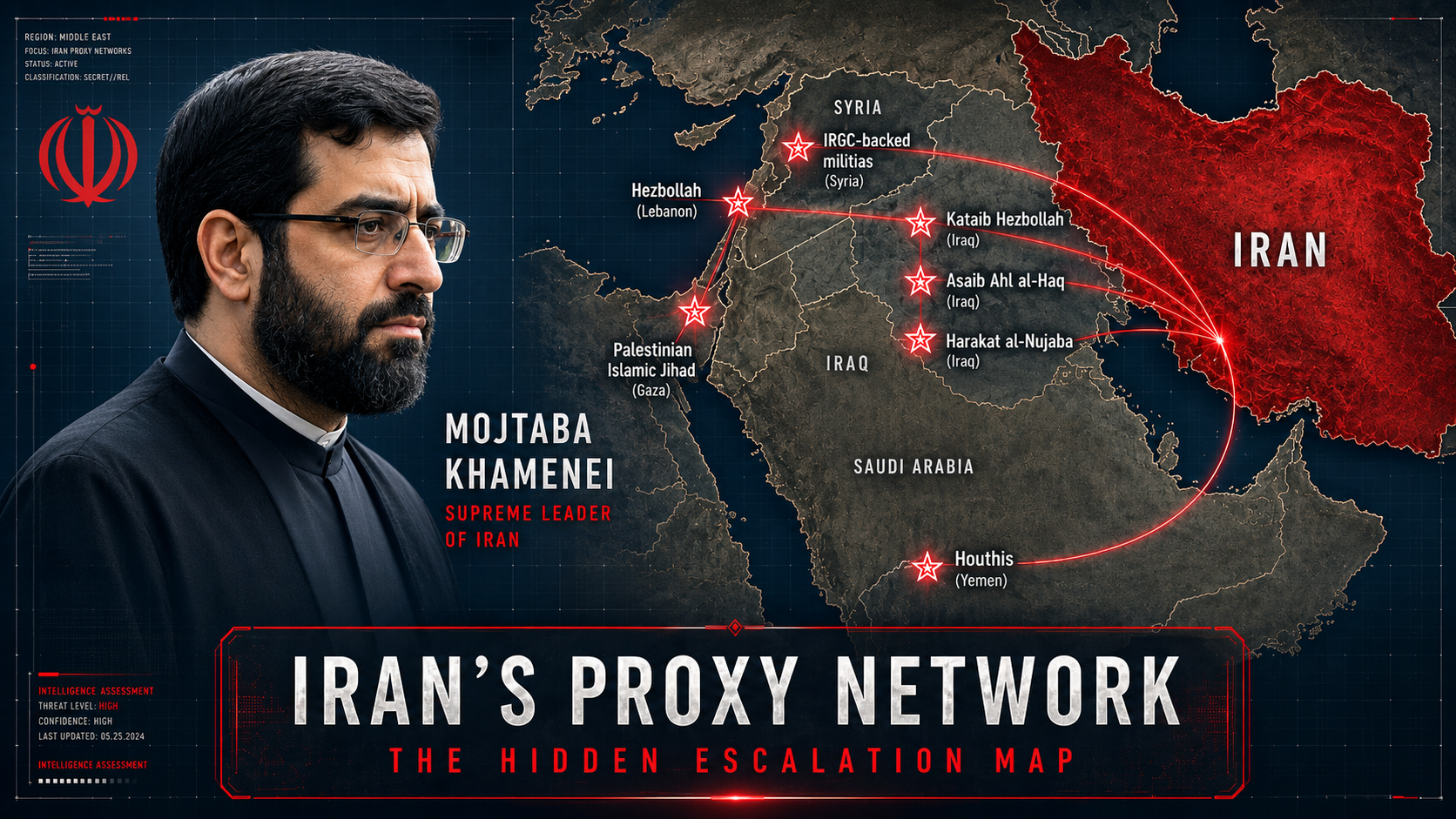
What decision-makers should watch now — before proxy escalation becomes a cost, compliance or supply-chain shock.
This 17-page executive briefing translates Iran’s proxy network into concrete business risks: energy price exposure, maritime chokepoints, war-risk premiums, sanctions, shadow fleets, supply-chain disruption and early-warning indicators for board-level decisions.
You are currently viewing a placeholder content from X. To access the actual content, click the button below. Please note that doing so will share data with third-party providers.
More Information