Executive Intelligence. Industrial Risk. Geopolitics.
Strategic Sparring
for Decision-Makers
Risk intelligence across technology, law, markets and power dynamics.

Verdeckte Geschäftsrisiken, strategische Widersprüche und kritische Abhängigkeiten frühzeitig erkennen.
Kostenlose Analyse starten →
Verdeckte Machtstrukturen, Führungsrisiken und organisatorische Blockaden frühzeitig erkennen.
Kostenlose Analyse starten →
Geopolitische Risiken, globale Abhängigkeiten und kritische Lieferkettenrisiken frühzeitig erkennen.
Kostenlose Analyse starten →
Identify hidden business risks, strategic contradictions and critical dependencies at an early stage.
Start Free Analysis →
Identify hidden power structures, leadership risks and organizational blockers at an early stage.
Start Free Analysis →
Identify geopolitical risks, global dependencies and critical supply-chain vulnerabilities at an early stage.
Start Free Analysis →
Verdeckte Geschäftsrisiken, strategische Widersprüche und kritische Abhängigkeiten frühzeitig erkennen.
Kostenlose Analyse starten →
Verdeckte Machtstrukturen, Führungsrisiken und organisatorische Blockaden frühzeitig erkennen.
Kostenlose Analyse starten →
Geopolitische Risiken, globale Abhängigkeiten und kritische Lieferkettenrisiken frühzeitig erkennen.
Kostenlose Analyse starten →
Identify hidden business risks, strategic contradictions and critical dependencies at an early stage.
Start Free Analysis →
Identify hidden power structures, leadership risks and organizational blockers at an early stage.
Start Free Analysis →
Identify geopolitical risks, global dependencies and critical supply-chain vulnerabilities at an early stage.
Start Free Analysis →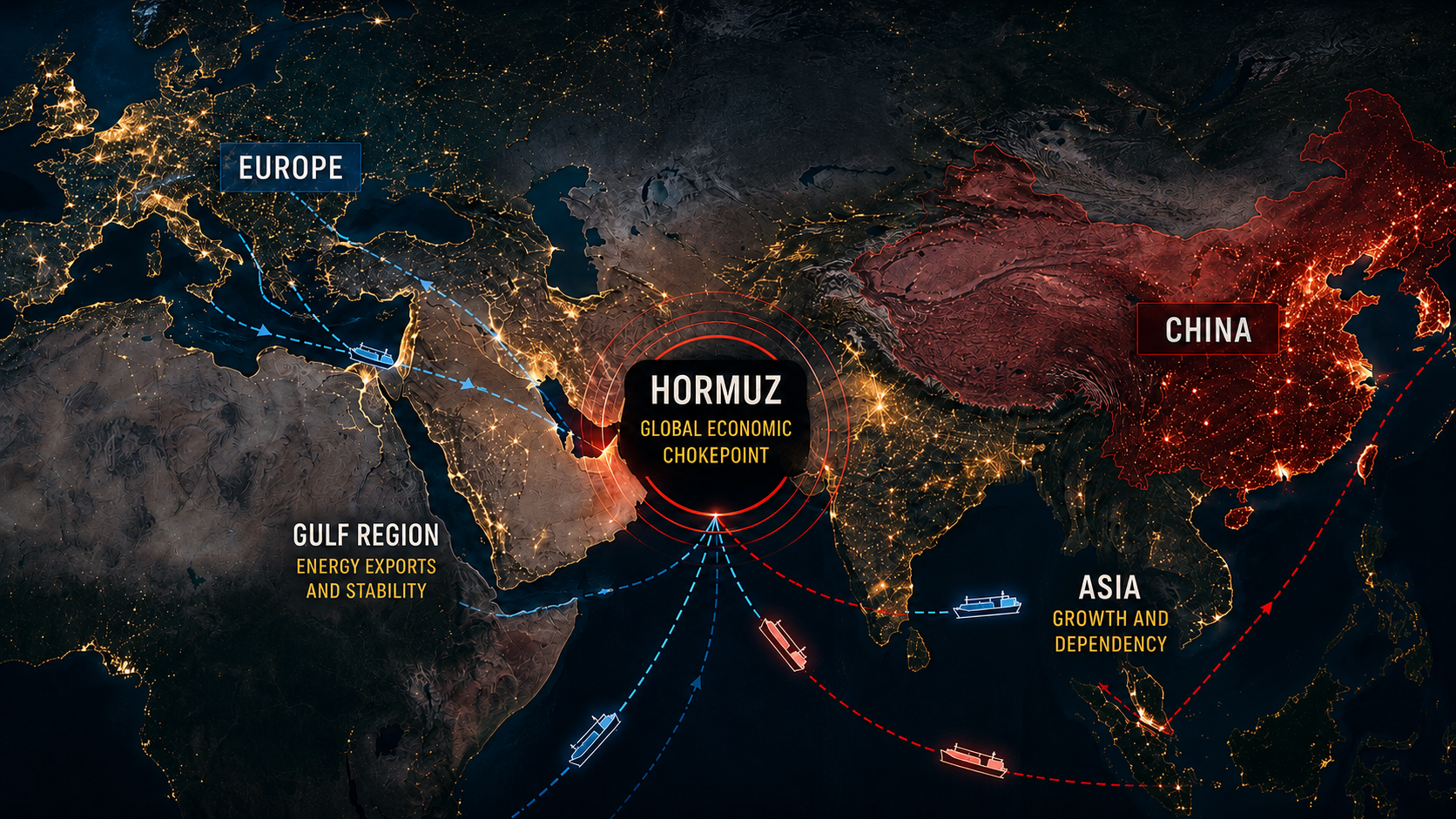
Global chokepoints can put energy prices, freight rates and international supply chains under pressure within a very short period of time. This Chokepoint Check tracks current developments along strategic maritime routes and assesses their potential impact on companies, markets and operational resilience.
The Strait of Hormuz, Bab el-Mandeb and the surrounding energy and port infrastructure are among the most sensitive nodes in global trade. Military escalation, attacks on vessels or infrastructure, political blockades and rising insurance risks can have significant economic consequences even when a route remains geographically open.
This hub brings together all Schaaf Media Chokepoint Checks. The focus is not on individual headlines, but on whether global trade and energy routes remain operationally reliable and commercially viable.
For companies, the critical question is not simply whether a maritime route is officially open or closed.
What matters is whether vessels can actually transit, insurance remains available, ports and energy infrastructure continue to operate and alternative routes remain economically viable.
The Chokepoint Check therefore monitors in particular:
The analysis connects geopolitical developments with their potential economic consequences.
The greatest risk does not necessarily arise from the complete closure of a single chokepoint.
A more serious scenario can emerge when several transport corridors and critical infrastructure assets come under pressure simultaneously.
If, for example, transit through Hormuz is restricted while risks in the Red Sea increase and alternative pipelines, refineries or export terminals are also threatened, the effective redundancy of the entire system declines.
These interdependencies are at the core of the Chokepoint Check.
Each edition focuses on the most important changes since the previous situation update.
Key areas include:
Maritime Situation
Shipping activity, attacks, blockade threats, transit volumes and vessel routing.
Energy Supply
Oil, LNG, refineries, pipelines, export terminals and alternative transport routes.
Critical Infrastructure
Ports, water and power infrastructure, as well as strategically relevant industrial facilities.
Geopolitical Escalation
Military activity, regional actors, alliances and political decisions.
Business Impact
Potential consequences for freight rates, insurance, energy prices, procurement and operational resilience.
The Chokepoint Check is part of Schaaf Media’s Geo-Radar.
Main overview: Geopolitical News Analysis of the Last 48 Hours
Middle East Escalation Check: 5 Key Signals Across Hormuz, Bab al-Mandab and Critical Gulf Infrastructure on August 14, 2026
The situation in the Strait of Hormuz deteriorated again on August 14: two ADNOC vessels were attacked while transiting the strait, while commercial traffic remained well below normal levels with only nine commodity-vessel transits recorded. At the same time, Asian refiners are increasingly preparing for a prolonged disruption by replacing or supplementing uncertain Gulf supplies with concrete purchases from the United States and West Africa.
Middle East Escalation Check: 5 Signals for Hormuz, Bab el-Mandeb and Gulf Infrastructure – August 10, 2026
Jazan and Mocha come under attack while Hormuz remains politically blocked. The escalation increasingly links Saudi Arabia, Yemen, energy infrastructure and both maritime chokepoints into a single interconnected risk system.
Middle East Escalation Check: 5 Signals for Hormuz, Bab el-Mandeb and Gulf Infrastructure – August 8, 2026
Hormuz remains severely constrained, with only very limited transit activity, while attacks on ADNOC-linked vessels and a new regional defence alliance broaden the risk picture. Bab el-Mandeb, by contrast, shows tentative signs of operational recovery.
Middle East Escalation Check: 5 Signals for Hormuz, Bab el-Mandeb and Gulf Infrastructure – August 6, 2026
Visible shipping activity declines simultaneously at Hormuz and Bab el-Mandeb. At the same time, attacks on Saudi oil tankers and renewed tensions in Lebanon further increase regional risk.
Middle East Escalation Check: 5 Signals for Hormuz, Bab el-Mandeb and Gulf Infrastructure – August 4, 2026
A commercial vessel is hit in the Strait of Hormuz and transit declines further. At the same time, Iran rejects reports of ongoing talks with the United States, reducing expectations of a rapid normalization.
Middle East Escalation Check: 5 Signals for Hormuz, Bab el-Mandeb and Gulf Infrastructure – August 2, 2026
A planned new wave of U.S. strikes is temporarily suspended and the reopening of Hormuz becomes part of a potential negotiation framework. Operational conditions nevertheless remain critical because no reliable implementation mechanism is in place.
Middle East Escalation Check: 5 Signals for Hormuz, Bab el-Mandeb and Gulf Infrastructure – July 31, 2026
Hormuz remains far from normal operations despite isolated tanker transits. At the same time, drone attacks near Damietta and increased military activity raise risks along the Suez route.
Middle East Escalation Check: 5 Signals for Hormuz, Bab el-Mandeb and Gulf Infrastructure – July 29, 2026
Iran claims operational control over Hormuz and reports attacks on several oil tankers. At the same time, military fronts widen again and the previously visible pause in attacks comes to an end.
Middle East Escalation Check: 5 Signals for Hormuz, Bab el-Mandeb and Gulf Infrastructure – July 27, 2026
The military pause does not lead to a recovery in shipping activity. Hormuz remains geographically passable, but continues to be commercially difficult to use for regular, insurable large-scale transport.
Middle East Escalation Check: 5 Signals for Hormuz, Bab el-Mandeb and Gulf Infrastructure – July 25, 2026
The maritime escalation spreads to Saudi Arabia and Yemen. Numerous vessels and crews remain stranded around Hormuz, while attacks and counterattacks also make the Bab el-Mandeb corridor increasingly unreliable.
Middle East Escalation Check: 5 Signals for Hormuz, Bab el-Mandeb and Gulf Infrastructure – July 23, 2026
For the first time, Bab el-Mandeb is directly affected operationally alongside Hormuz. Tanker attacks, mine risks and initial rerouting indicate that two major global energy and trade corridors are now under simultaneous pressure.
You are currently viewing a placeholder content from X. To access the actual content, click the button below. Please note that doing so will share data with third-party providers.
More Information