Executive Intelligence. Industrial Risk. Geopolitics.
Strategic Sparring
for Decision-Makers
Risk intelligence across technology, law, markets and power dynamics.

Verdeckte Geschäftsrisiken, strategische Widersprüche und kritische Abhängigkeiten frühzeitig erkennen.
Kostenlose Analyse starten →
Verdeckte Machtstrukturen, Führungsrisiken und organisatorische Blockaden frühzeitig erkennen.
Kostenlose Analyse starten →
Geopolitische Risiken, globale Abhängigkeiten und kritische Lieferkettenrisiken frühzeitig erkennen.
Kostenlose Analyse starten →
Identify hidden business risks, strategic contradictions and critical dependencies at an early stage.
Start Free Analysis →
Identify hidden power structures, leadership risks and organizational blockers at an early stage.
Start Free Analysis →
Identify geopolitical risks, global dependencies and critical supply-chain vulnerabilities at an early stage.
Start Free Analysis →
Verdeckte Geschäftsrisiken, strategische Widersprüche und kritische Abhängigkeiten frühzeitig erkennen.
Kostenlose Analyse starten →
Verdeckte Machtstrukturen, Führungsrisiken und organisatorische Blockaden frühzeitig erkennen.
Kostenlose Analyse starten →
Geopolitische Risiken, globale Abhängigkeiten und kritische Lieferkettenrisiken frühzeitig erkennen.
Kostenlose Analyse starten →
Identify hidden business risks, strategic contradictions and critical dependencies at an early stage.
Start Free Analysis →
Identify hidden power structures, leadership risks and organizational blockers at an early stage.
Start Free Analysis →
Identify geopolitical risks, global dependencies and critical supply-chain vulnerabilities at an early stage.
Start Free Analysis →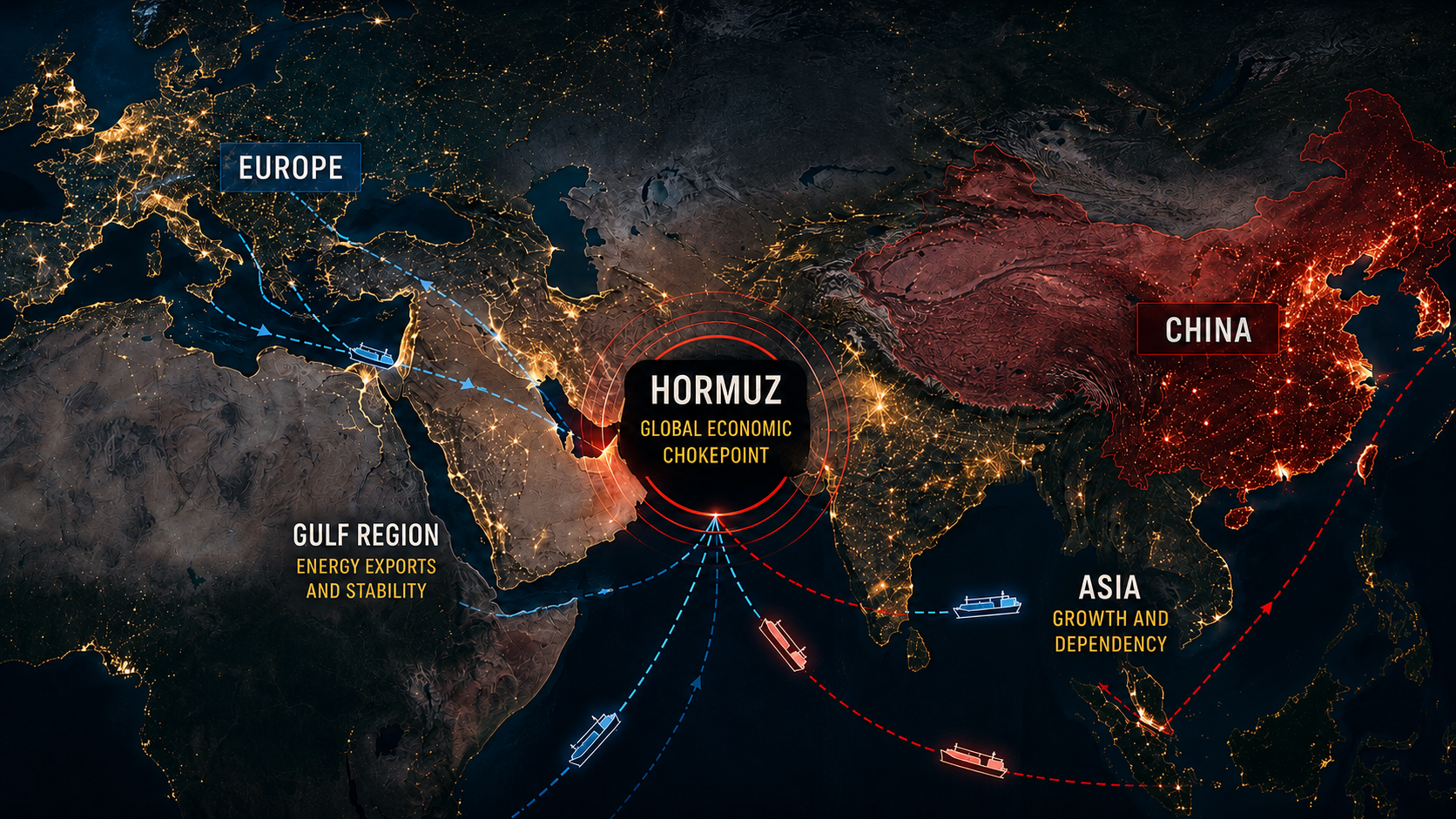
This Chokepoint Check assesses current pressure on the Strait of Hormuz, Bab al-Mandab and the Gulf region’s critical water, power, port and energy infrastructure. The key question is not only whether a route remains geographically open, but whether transport, insurance coverage, energy supply and site operations remain operationally viable.
Today’s development does not represent a free reopening, but rather a selective access regime under Iranian control.
Iran is allowing several Iraqi oil tankers to transit Hormuz. The decision follows direct talks with Baghdad. At the same time, overall oil flows through the strait remain far below pre-war levels. For businesses, this means that a route being passable still does not make it freely or reliably accessible.
In addition to Houthi-related risks, the approach to Bab al-Mandab now faces another operational threat from Somali piracy.
AP confirmed on August 22 that the tanker Sibu 1 was hijacked by Somali pirates and is being taken towards Puntland. This brings the number of merchant vessels seized in the region since April to six. The threat now extends deep into the Gulf of Aden.
No sufficiently confirmed new attack signal has emerged for fixed Gulf facilities, but the consequences of existing LNG damage remain substantial.
Current market estimates put Qatar’s lost LNG exports since the start of the war at around 30 million tonnes. Two damaged LNG trains at Ras Laffan continue to remove around 17 percent of production capacity. Even a reopening of Hormuz would therefore not result in an immediate normalisation of export capacity.
Iran confirmed on August 22 that it would allow several Iraqi oil tankers to transit Hormuz. The move followed direct talks with Baghdad.
For Iraq, this provides operational relief. Systemically, however, the decision confirms that passages are being politically authorised rather than taking place under normal free-transit conditions.
Selective approvals increase political dependency and make long-term chartering, insurance and export planning more difficult for other market participants.
Verification Status: confirmed through Iranian and Iraqi statements. The scope and duration of the special arrangement remain unclear. Reuters, 22.08.2026 · SchaafMedia: Chokepoint Check – Hormuz, Trade Routes & Supply Chain Risks
AP confirmed on August 22 that Somali pirates hijacked the oil tanker Sibu 1 and are taking the vessel towards Puntland.
It is already the sixth merchant vessel seized in the region since April. The threat can therefore no longer be treated as an isolated hijacking incident.
Crew security, kidnap risk and additional insurance requirements are now affecting the same corridor already exposed to Houthi attacks and broader military tensions.
Verification Status: confirmed for the hijacking, vessel and current direction of travel. No connection to the Houthis has been established. Associated Press, 22.08.2026 · SchaafMedia: Middle East Escalation Check from August 20, 2026
Washington and Tehran intensified their rhetoric on August 22 ahead of a new US sanctions round announced for Monday. China remains the largest buyer of Iranian oil.
No new direct military confrontation occurred today. The US strategy is nevertheless shifting pressure towards Iran’s international trading partners, with China at the centre of that exposure.
Secondary sanctions could increasingly affect payment channels, tanker fleets, refineries and trading companies with exposure to Iran.
Verification Status: confirmed for the announced sanctions and current public positions. Details are expected on Monday. Reuters, 22.08.2026 · SchaafMedia: Iran Check – 5 Escalation Signals from August 21, 2026
Offers of Iranian crude to Chinese buyers have declined. At the same time, asking prices have risen significantly as the US blockade restricts Iranian exports.
According to Kpler, no visible Iranian crude supertankers have transited Hormuz since mid-July. AIS shutdowns may conceal some vessel movements.
Chinese independent refiners in particular are losing access to discounted crude supply. This increases procurement pressure and competition for alternative sources.
Verification Status: confirmed through current trading sources and Kpler data, published on August 21. Aaj English / Reuters, 21.08.2026 · directly relevant on 22.08. · SchaafMedia: Oil as a Weapon – Why Energy Dominates Geopolitics and Markets in 2026
Current market estimates put Qatar’s lost LNG exports since the start of the war at around 30 million tonnes. From January through July, exports were approximately 65 percent below the previous year’s level.
Two damaged LNG trains at Ras Laffan continue to remove around 17 percent of production capacity. Even if Hormuz reopened, the recovery in exports would therefore be gradual rather than immediate.
Qatar’s prolonged reduction in export capacity keeps procurement and price risks elevated for LNG buyers in Europe and Asia and extends reliance on alternative suppliers.
Verification Status: confirmed for the current export and capacity estimates. The original damage at Ras Laffan is older and is not treated as a new daily signal. Riviera Maritime Media, 21.08.2026 · directly relevant on 22.08. · SchaafMedia: Oil as a Weapon – Why Energy Dominates Geopolitics and Markets in 2026
Hormuz remains controlled while piracy creates additional pressure in the Gulf of Aden.
Tankers require political clearance while shipping companies face additional security and insurance requirements.
Iranian crude becomes scarcer while Qatar’s LNG export capacity remains significantly restricted.
Procurement, sanctions, energy security and transport capacity are becoming increasingly interconnected.
Hormuz remains politically controlled, while a series of confirmed piracy seizures is emerging in the Gulf of Aden.
Geographically open routes remain operationally unreliableNo new confirmed physical attack on fixed Gulf facilities was identified on August 22. The consequences of damaged LNG infrastructure nevertheless remain operationally significant in Qatar.
No new facility attack · existing damage continues to constrain export capacitySelective Hormuz transits, piracy, China-related sanctions risks and reduced LNG capacity are operating simultaneously.
Maritime, economic and geopolitical risks are fully interconnectedThe situation remains critical, but the nature of the risk is changing. Iran is selectively opening Hormuz to Iraq without normalising the corridor as a whole. At the same time, piracy is increasing pressure on the southern route while the economic conflict is extending further into China and global energy markets. The central risk is therefore becoming less about a single new wave of attacks and more about the institutionalisation of long-term disruption.
Note: This assessment was produced with support from our Geo-AI. AI can make mistakes. The analysis is intended as a source-based radar for potential escalation signals and does not replace fully verified intelligence, security, insurance or investment advice. In rapidly evolving situations, status, source availability and risk assessments may change at short notice.
Independent of the subject covered in this article, this separate Executive Briefing provides an in-depth analysis of another critical risk domain affecting European companies.
The 27-page Executive Briefing “Black Swan Risk Mapping for Europe’s Next Mobility and Infrastructure Shock” examines how geopolitical, infrastructural and administrative developments that are currently viewed in isolation could reinforce one another.
Based on the GFDD Framework™, the report shows how these dynamics could affect operational continuity, access to critical resources and the strategic resilience of companies.
The briefing includes a structured systemic-shock analysis and a directly applicable Business Exposure Checklist for CEOs, CFOs, COOs, investors and strategy teams.
You are currently viewing a placeholder content from X. To access the actual content, click the button below. Please note that doing so will share data with third-party providers.
More Information