Executive Intelligence. Industrial Risk. Geopolitics.
Strategic Sparring
for Decision-Makers
Risk intelligence across technology, law, markets and power dynamics.

Verdeckte Geschäftsrisiken, strategische Widersprüche und kritische Abhängigkeiten frühzeitig erkennen.
Kostenlose Analyse starten →
Verdeckte Machtstrukturen, Führungsrisiken und organisatorische Blockaden frühzeitig erkennen.
Kostenlose Analyse starten →
Geopolitische Risiken, globale Abhängigkeiten und kritische Lieferkettenrisiken frühzeitig erkennen.
Kostenlose Analyse starten →
Identify hidden business risks, strategic contradictions and critical dependencies at an early stage.
Start Free Analysis →
Identify hidden power structures, leadership risks and organizational blockers at an early stage.
Start Free Analysis →
Identify geopolitical risks, global dependencies and critical supply-chain vulnerabilities at an early stage.
Start Free Analysis →
Verdeckte Geschäftsrisiken, strategische Widersprüche und kritische Abhängigkeiten frühzeitig erkennen.
Kostenlose Analyse starten →
Verdeckte Machtstrukturen, Führungsrisiken und organisatorische Blockaden frühzeitig erkennen.
Kostenlose Analyse starten →
Geopolitische Risiken, globale Abhängigkeiten und kritische Lieferkettenrisiken frühzeitig erkennen.
Kostenlose Analyse starten →
Identify hidden business risks, strategic contradictions and critical dependencies at an early stage.
Start Free Analysis →
Identify hidden power structures, leadership risks and organizational blockers at an early stage.
Start Free Analysis →
Identify geopolitical risks, global dependencies and critical supply-chain vulnerabilities at an early stage.
Start Free Analysis →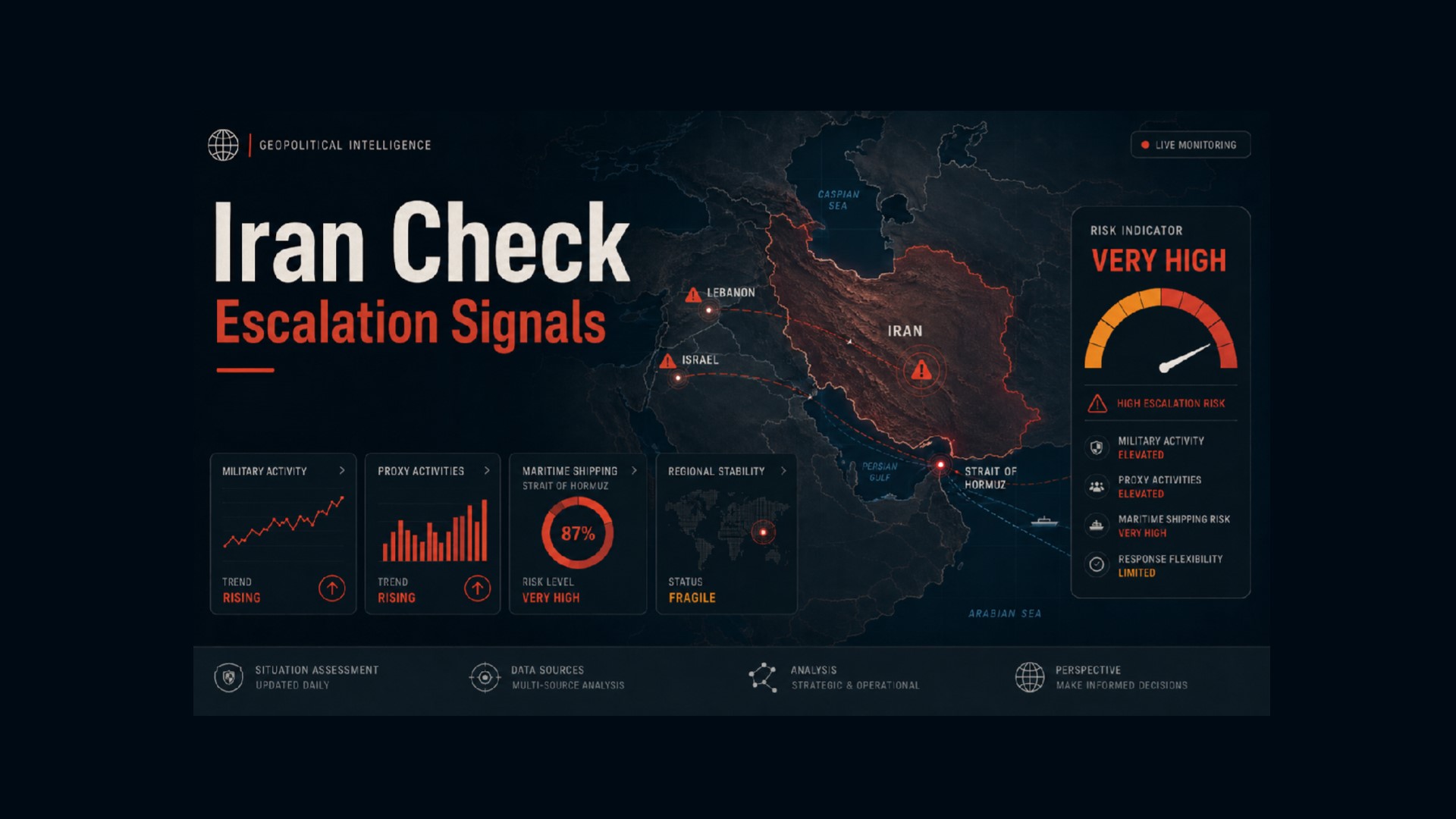
This escalation radar summarises five relevant signals as of September 10, 2026. It focuses on substantiated statements by official bodies, verified events and monitoring sources with potential implications for energy prices, supply chains, markets, maritime security, aviation and regional stability.
Only seven visible vessels transit the Strait of Hormuz on Wednesday, down from twelve the previous day and compared with a ten-day average of 14. No LNG tanker leaves the strait. Operational normalisation therefore remains fragile.
Iran-aligned Houthi forces are approaching strategic coastal locations such as Mocha and Dhubab. This increases the risk that, alongside Hormuz, the southern gateway to the Red Sea could come under greater military control or disruption.
Washington once again identifies the fortified Iranian facility near Natanz as a potential military target. Trump warns Tehran against further activity. Nuclear infrastructure therefore remains directly embedded in the military escalation logic.
| Actor | Type | Severity | Status | Source / Verification Status | Business Impact |
|---|---|---|---|---|---|
| Iran / United States / Oman / Hormuz / international shipowners | Hormuz traffic falls again to seven visible vessels | Critical · Level 5/5 | Commercial use of the Strait of Hormuz deteriorates again on September 10. Preliminary tracking data record only seven vessel movements for Wednesday, down from twelve the previous day. The ten-day average stands at 14. Four vessels leave the Gulf, while three enter. Particularly significant: No LNG tanker exits through the strait. Bab el-Mandeb, by contrast, records 28 vessels, roughly in line with its ten-day average. Power dynamics: The latest US-Iran attack cycle has once again reversed the tentative recovery in Hormuz traffic. The passage remains highly fragile from both a military and commercial perspective. | Confirmed by Reuters, September 10, 2026 . Verification status: confirmed regarding seven visible Hormuz transits, twelve the previous day and the ten-day average of 14. AIS shutdowns may mean that some vessel movements are not captured. Further reading: Schaaf Media · Strait of Hormuz Blockade 2026: Protecting Margins and Supply Chains in the Chokepoint Shock . | Critical business impact on oil, LNG, tanker charters, insurance, freight rates and Europe-Asia supply chains. The absence of outbound LNG tankers increases the risk to gas supply and price volatility in particular. |
| Houthis / Saudi Arabia / Yemen / Iran / Bab el-Mandeb | Houthis move towards strategic control around Bab el-Mandeb | Critical · Level 5/5 | The Yemen theatre gains a new operational dimension on September 10. According to Yemeni government sources, Houthi forces are moving closer to controlling strategic coastal locations such as Mocha and Dhubab. Both are located directly around Bab el-Mandeb. Fighting with Saudi-backed government forces is intensifying at the same time. Power dynamics: Iran-aligned forces could therefore gain significantly greater influence over the southern gateway to the Red Sea. This creates the risk of simultaneous structural pressure on Hormuz and Bab el-Mandeb. It represents a major cross-theatre escalation linking the Iran conflict, the Yemen war and global shipping. | Confirmed by Reuters, September 10, 2026 . Verification status: confirmed regarding the Houthi advance towards Mocha and Dhubab and the intensifying fighting. Full control of Bab el-Mandeb has not been confirmed. Background: Schaaf Media · Iran’s Proxies: The Hidden Escalation Map of the Middle East . | Critical business impact on Bab el-Mandeb, Suez, Saudi Arabia, oil transport, container shipping, insurance and delivery times. Simultaneous disruption of Hormuz and Bab el-Mandeb would significantly reduce key alternative routes for Gulf exports. |
| United States / Iran / Trump / Natanz / Pickaxe Mountain | Trump again identifies Pickaxe Mountain as a potential military target | Critical · Level 5/5 | Washington intensifies its military target signalling towards Iran’s nuclear programme on September 10. President Donald Trump says the United States has observed renewed activity at Pickaxe Mountain. The fortified facility includes two deep underground tunnel complexes near the damaged Natanz nuclear site. Trump warns Iran that further activity could trigger a major US strike. Power dynamics: Nuclear infrastructure therefore remains not only a diplomatic point of contention, but a specifically identified military escalation target. A strike could immediately trigger another major Iranian retaliation cycle. | Confirmed by Reuters, September 10, 2026 . Verification status: confirmed regarding Trump’s renewed strike threat and the reported observation of activity at the site. No new US strike on Pickaxe Mountain has taken place so far. Background: Schaaf Media · Iran Check: 5 Escalation Signals from September 8, 2026 . | Critical business impact on Iran, regional energy infrastructure, aviation, insurance, oil prices and business continuity. A strike on nuclear infrastructure could become a trigger for a significantly broader military escalation. |
| Iran / IAEA / UN Security Council / United States / United Kingdom / France / Germany | IAEA refers Iran to UN Security Council for first time in 20 years | High to critical · Level 4/5 | Nuclear-related political pressure is rising in parallel with the military escalation. The IAEA Board of Governors refers Iran to the UN Security Council over insufficient cooperation with investigations into uranium traces at undeclared sites. The decision was taken on September 9 with 23 votes in favour. Russia, China and Niger vote against. Iran rejects the allegations and describes the resolution as politically motivated. Power dynamics: The military conflict is therefore also being transferred into the international nuclear and sanctions architecture. Russia and China may constrain possible UN sanctions, but Iran’s political isolation is nevertheless increasing. | Current reporting: AP News, September 9, 2026 . Verification status: confirmed regarding the referral to the UN Security Council, the voting result and Iran’s rejection. The decision itself was taken on September 9; the AP report was also published on September 9. Further reading: Schaaf Media · Middle East Escalation Check from September 9, 2026 . | High to critical business impact on sanctions, banks, investment, export controls, compliance and Iran-related business. Additional nuclear pressure increases the risk of further financial and trade restrictions. |
| Saudi Arabia / Pakistan / Türkiye / Iran / Houthis / Mecca Joint Defence Agreement | Pakistan warns Iran – defence pact could be activated if spillover continues | High to critical · Level 4/5 | The Houthi attacks are increasingly reshaping the regional security architecture. Pakistan conveys a Saudi request to Iran to use its influence over the Houthis and prevent further attacks. At the same time, Pakistan’s Defence Minister Khawaja Asif says further spillover into Saudi Arabia could activate the joint defence agreement with Saudi Arabia and Türkiye. The pact provides that an attack on one member state is to be regarded as an attack on all three. Direct participation in strikes in Yemen has not yet been approved. Power dynamics: Iran’s indirect pressure through the Houthis could therefore have the opposite effect and push Saudi Arabia, Pakistan and Türkiye into closer security coordination. This represents a new regional alliance and deterrence dynamic. | Confirmed by Reuters, September 9, 2026 . Verification status: confirmed regarding the Pakistani warning, the possible activation of the defence pact and its defensive character. The source is from September 9; the development remains directly relevant on September 10 because of the continuing Houthi offensive. No military deployment by Pakistan or Türkiye has yet been approved. Background: Schaaf Media · Middle East Escalation Check from September 9, 2026 . | High to critical business impact on Saudi Arabia, regional military logistics, energy facilities, aviation, insurance and investment. Activation of the pact would move the Yemen conflict directly into a broader regional security architecture. |
The most important operational finding on September 10, 2026 is the renewed deterioration in Hormuz. Only seven visible vessels transit the strait, and no LNG tanker leaves the Gulf. The tentative recovery that had begun previously has therefore been significantly reversed.
At the same time, risk is increasing at the region’s second major chokepoint. Houthi forces are advancing towards strategic coastal locations around Bab el-Mandeb. If this trend continues, both of the region’s most important energy and trade corridors could come under military pressure simultaneously.
Washington is also intensifying its direct target signalling towards Iran’s nuclear programme. Trump is again threatening a strike on Pickaxe Mountain. In parallel, the IAEA’s referral of Iran to the UN Security Council is increasing international political pressure.
Particularly significant is the emerging alliance dynamic around Saudi Arabia. Pakistan is warning Iran that further Houthi attacks could activate the defence agreement with Saudi Arabia and Türkiye. No deployment has yet been approved, but Iran’s indirect escalation is increasingly generating an organised regional counter-coalition. The EASA CZIB for the Persian Gulf and Gulf of Oman remains active until September 30, 2026; no new revision was published on September 10.
The five most important signals for a European and German risk assessment are: the renewed fall in Hormuz traffic to just seven visible vessels, the Houthi advance towards Bab el-Mandeb and the resulting risk of a second simultaneously threatened chokepoint, Trump’s renewed strike threat against Iran’s Pickaxe Mountain nuclear facility, the IAEA’s first referral of Iran to the UN Security Council in 20 years, and the possible activation of the Saudi-Pakistani-Turkish defence pact if further Houthi spillover occurs.
Note: This assessment was prepared with the support of our Geo AI. AI can make mistakes. The analysis is intended as a radar for potential escalation signals and does not replace a fully verified intelligence assessment.
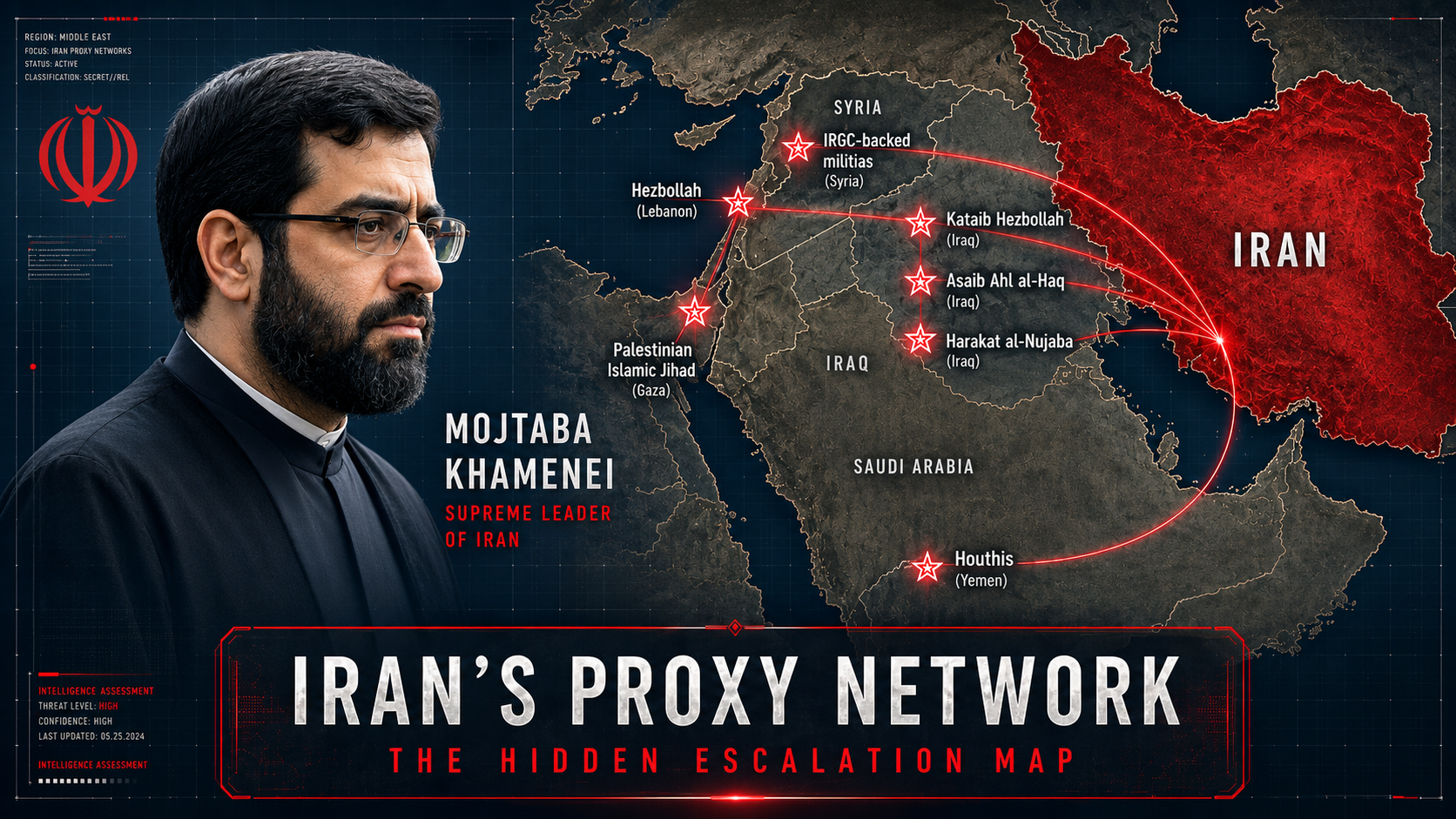
What decision-makers should watch now — before proxy escalation becomes a cost, compliance or supply-chain shock.
This 17-page executive briefing translates Iran’s proxy network into concrete business risks: energy price exposure, maritime chokepoints, war-risk premiums, sanctions, shadow fleets, supply-chain disruption and early-warning indicators for board-level decisions.
You are currently viewing a placeholder content from X. To access the actual content, click the button below. Please note that doing so will share data with third-party providers.
More Information